



Pull to refresh
Logo
Supreme Court declines Google challenge to patent office review policy

Supreme Court declines Google challenge to patent office review policy

Rule Changes

Justices leave 'settled expectations' rule in place; companion case from Google, Intel, and Apple still pending

Today: Supreme Court declines to hear Google's case

Overview

Updated 47 minutes ago

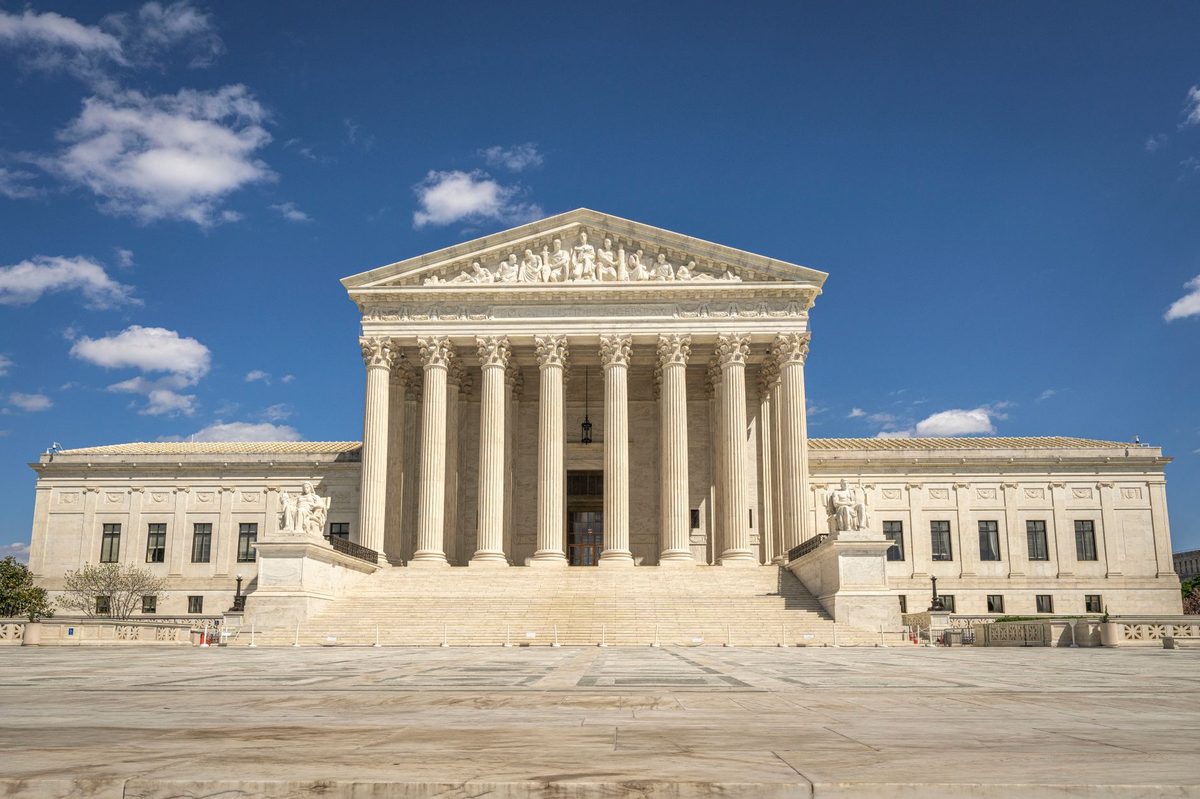
The Supreme Court on Monday declined to hear Google's challenge to a U.S. Patent and Trademark Office policy that makes it far harder to get older patents reexamined. The decision leaves intact a rule that, since 2025, has cut the share of accepted review petitions from 65% to 37%.

The policy rests on the idea of 'settled expectations': the agency says a patent in force for more than six years gives its owner a settled expectation of validity, so the Patent Trial and Appeal Board is more likely to reject review requests. Google argued the rule creates a time limit Congress never wrote into law, sheltering invalid patents and fueling a rise in litigation. The court gave no explanation, standard practice in denial orders.

Why it matters

Tech companies that want older patents cancelled now face higher litigation costs, since the patent office is far less likely to review them.

Questions about this story

Free account needed to ask — your question is kept and asked for you right after sign-up. Answers are public.

No questions yet — be the first to ask.

Key Indicators

37%
Share of IPR petitions granted in 2026
Down from 65% under the previous USPTO director, Kathi Vidal.
4 of 105
IPR petitions instituted in late 2025
Between the October 2025 rulemaking and year-end, 99 petitions were denied on discretionary grounds.
6 years
Patent age triggering settled expectations
The PTO treats patents in force beyond six years as carrying 'settled expectations' favoring denial of review.

Voices

Curated perspectives — historical figures and your fellow readers.

Ever wondered what historical figures would say about today's headlines?

Sign up to generate historical perspectives on this story.

People Involved

Organizations Involved

Timeline

September 2011 October 2026

8 events Latest: Today
Tap a bar to jump to that date
  1. PTO issues memo and proposed rulemaking

    Rule Change

    The agency formalizes discretionary denial factors, treating patents in force over six years as carrying settled expectations.

  2. America Invents Act creates inter partes review

    Legislation

    Congress creates a faster, cheaper alternative to patent litigation, allowing third parties to petition the PTO to cancel invalid patents.

Scenarios

1

Supreme Court grants companion case from Google, Intel, Apple

Possible Resolves by Q2 2027

Discussed by: Reuters, MLex

Google, Intel, and Apple brought a separate lawsuit challenging a related PTO policy on discretionary denials. The Federal Circuit ruled against them in February 2026, and Intel and Google asked the Supreme Court to hear that case. If granted, the Court could still address the core statutory question from the VirtaMove case through a different vehicle.

2

IPR institution rate stays below 40% through 2027

Likely Resolves by Jan 31, 2028

Discussed by: Patexia IP report, PTO's April 2026 report

The status quo holds: the PTO keeps citing settled expectations, the share of granted review petitions stays low, and tech companies shift more patent fights into district court, where older patents are harder to challenge.

3

Congress limits PTO's discretionary denial power

Unlikely Resolves by End of 2027

Discussed by: Patent reform advocates, tech industry lobbyists

Patent reform legislation restricting how the PTO can reject review petitions gains traction, targeting the settled expectations rule specifically. The tech industry's litigation-cost argument gives the measure a constituency, but the politically divided Congress makes passage unlikely in the near term.

Historical Context

3 moments from history that rhyme with this story — and how they unfolded.

April 2016

Cuozzo Speed Technologies v. Lee (2016)

The Supreme Court ruled that decisions by the Patent Trial and Appeal Board on whether to institute inter partes review are not subject to judicial review. The Court said Congress gave the PTO broad discretion over institution decisions.

Then

The ruling closed the courthouse door to petitioners angry about board denials.

Now

It established the principle that institution decisions are effectively final, which is exactly the principle Google now argues protects unlawful agency behavior.

Why this matters now

Cuozzo is the reason Google cannot get a court to review the PTO's settled expectations reasoning. Google's petition asked the Court to carve out an exception for denials that allegedly violate the statute.

April 2018

Oil States Energy Services v. Greene's Energy Group (2018)

The Supreme Court upheld inter partes review against a constitutional challenge arguing that patents are private property rights that only courts, not agencies, can revoke. The Court ruled 7-2 that IPR is a permissible exercise of the PTO's authority.

Then

Inter partes review survived as a mechanism for challenging patents.

Now

The ruling affirmed the PTO's broad control over the IPR process, making later challenges to agency discretion, like Google's, an uphill climb.

Why this matters now

Oil States shows the Court's consistent support for the administrative review regime and for deferring to the agency's judgment about how it operates that regime.

September 2011

America Invents Act (2011)

Congress created inter partes review as a faster, cheaper alternative to patent litigation. The law let third parties petition the PTO to reconsider whether a patent should have been issued, at any point during the patent's term.

Then

Tech companies became heavy users of the new process, filing thousands of petitions.

Now

The statute's silence on time limits is the crux of the current fight: Google says Congress intended review to be available at any time, while the PTO says its discretion includes the power to deny old patents.

Why this matters now

The settled expectations policy directly contradicts the law's design, Google argues, by imposing a six-year time limit Congress never wrote.

Sources

(5)