
Pull to refresh
Logo
Smart contact lens measures serotonin in tears non-invasively

Smart contact lens measures serotonin in tears non-invasively

New Capabilities

Lab-on-a-contact-lens sensor reads tear serotonin in pigs and humans, opening a route to real-time stress and dry-eye monitoring

4 days ago: Serotonin lens validated in pig and human tears

Overview

Updated 2 hours ago

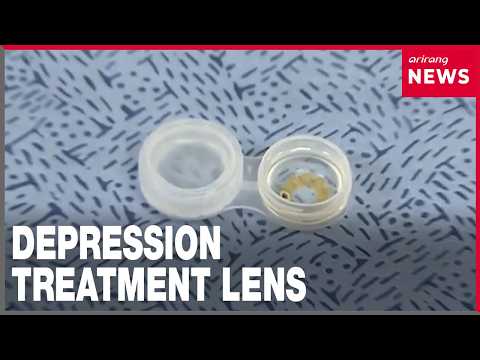
Serotonin, the neurotransmitter tied to mood, stress, and pain sensitization, has always required a blood draw to measure. A new contact lens reads it directly in tears. The lab-on-a-contact-lens (LoCL) sensor, described September 16 in Science Translational Medicine, detected serotonin in both pig and human tears using an electrochemical electrode embedded between two deformable polymer lenses.

The lens matters because tear serotonin is elevated in people with dry eye and aqueous tear deficiency, a condition linked to chronic ocular pain. A lens that tracks serotonin continuously gives clinicians a non-invasive window into stress, nociceptor sensitization, and eye health — no needle, no lab visit.

The team validated the sensor in vitro, ex vivo, and in vivo, framing it as a platform for wearable stress analysis and decentralized monitoring of metabolic states. The patent application (WO2025244735A3) describes a similar electrochemical sensor with working, counter, and reference electrodes, suggesting the group plans commercial development.

Why it matters

Tear serotonin tracks stress and dry-eye pain; a lens that reads it continuously could replace blood draws for monitoring both.

Questions about this story

Free account needed to ask — your question is kept and asked for you right after sign-up. Answers are public.

No questions yet — be the first to ask.

Key Indicators

2026-09-16
Paper publication date
Science Translational Medicine published the serotonin lens validation.
62
Patients in dry-eye serotonin study
2015 Ophthalmology study linking tear serotonin to aqueous tear deficiency.
-0.28
Serotonin vs. tear production correlation
Tear serotonin negatively correlated with Schirmer scores (P = 0.02).
10 pg/ml
Cortisol lens detection limit (predecessor)
2020 Science Advances graphene lens set the sensitivity benchmark for tear hormone sensing.

Voices

Curated perspectives — historical figures and your fellow readers.

Ever wondered what historical figures would say about today's headlines?

Sign up to generate historical perspectives on this story.

People Involved

Organizations Involved

Timeline

May 2015 September 2026

4 events Latest: 4 days ago
Tap a bar to jump to that date
  1. Serotonin lens validated in pig and human tears

    Latest Research

    Science Translational Medicine publishes the lab-on-a-contact-lens study showing real-time serotonin detection in vitro, ex vivo, and in vivo.

  2. Cortisol smart contact lens demonstrated

    Research

    Science Advances reports a graphene field-effect transistor lens detecting cortisol in tears at 10 pg/ml via smartphone.

  3. Tear serotonin linked to dry eye

    Research

    Chhadva and Galor publish in Ophthalmology showing tear serotonin correlates with aqueous tear deficiency across 62 patients.

Scenarios

1

Human clinical trial launches for stress-tracking tear lens

Possible Resolves by End of 2027

Discussed by: The study authors, whose in vivo work and patent position signal intent to translate; academic press analysis of tear-based wearables

The team or a licensee registers a human trial testing the serotonin lens in dry-eye patients or stress-monitoring cohorts. The Science Translational Medicine publication and existing PCT patent create the regulatory on-ramp. A positive trial would position the lens against blood-based serotonin assays and existing ocular biomarker tests.

2

Multiplexed tear biomarker panel expands the platform

Likely Resolves by End of 2027

Discussed by: Review literature on smart contact lenses, which repeatedly names multiplexed detection as the field's next hurdle

The group publishes a follow-on lens measuring serotonin plus a second biomarker (cortisol, lactate, or an inflammatory marker) in the same tear sample. Reviews in ACS Sensors and MDPI's Biosensors flag single-analyte limits as the main barrier to clinical adoption; a multiplexed device would clear it.

3

Commercial licensing or startup formation

Possible Resolves by End of 2027

Discussed by: Patent activity (WO2025244735A3) and the contact-lens biosensor industry trend

The inventors or their institution license the LoCL patent to a contact-lens or diagnostics company, or spin out a startup. The PCT filing protects the core electrode configuration, giving a licensee freedom to develop. A licensing announcement would mark the shift from academic prototype to product pipeline.

Historical Context

3 moments from history that rhyme with this story — and how they unfolded.

May 2015

Dry-eye serotonin correlation study (2015)

Galor and colleagues measured tear serotonin in 62 patients and found significantly higher levels in those with both dry-eye symptoms and aqueous tear deficiency, compared with symptomatic patients with normal tear production and with controls.

Then

The finding tied tear serotonin to nociceptor sensitization in chronic ocular pain.

Now

It gave tear serotonin a clinical rationale, creating demand for a way to measure it continuously — demand the contact lens now answers.

Why this matters now

This study is why the serotonin lens matters: without it, tear serotonin was an interesting molecule with no proven disease link.

2020

Cortisol smart contact lens (2020)

A team reported a soft contact lens with a graphene field-effect transistor that detected cortisol in tears at 10 pg/ml, readable by smartphone. It demonstrated that hormone-level tear sensing was feasible in a wearable format.

Then

The device validated tear fluid as a viable medium for endocrine biomarkers.

Now

It set the sensitivity benchmark and design template that the serotonin lens, published six years later, builds on.

Why this matters now

The serotonin lens is the direct successor, extending proven tear-hormone sensing to a neurotransmitter tied to stress and pain.

2000s–2010s

Continuous glucose monitors displace fingerstick testing (2000s)

Diabetes patients pricked fingers for blood glucose for decades. Continuous glucose monitors (CGMs) shifted sampling to interstitial fluid via a tiny wearable sensor, transmitting readings every few minutes to a receiver or phone.

Then

Early CGMs were bulky and imprecise; skeptics dismissed them as niche.

Now

CGMs became standard of care, with coverage in major health systems and a market valued in the tens of billions — proof that a non-invasive wearable can replace needles.

Why this matters now

The serotonin lens follows the same playbook: move an analyte assay from blood to a wearable surface, then let continuous data unlock new clinical uses.

Sources

(11)