



Pull to refresh
Logo
Empatica launches FDA-cleared Parkinson's home monitoring wearable

Empatica launches FDA-cleared Parkinson's home monitoring wearable

New Capabilities

WellPD tracks tremor, involuntary movement, and sleep at home, turning the data into daily summaries patients can share with care teams

Overview

Updated 1 hour ago

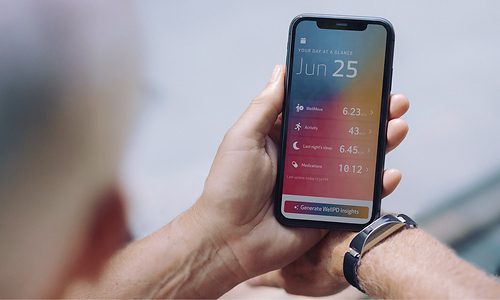
Parkinson's symptoms shift hour to hour, and patients describe them from memory during brief clinic visits. WellPD, launched today by Empatica, puts a continuous record on the wrist instead: an 11-gram sensor that tracks tremors, involuntary movements, sleep, and activity at home.

The device is FDA-cleared and prescription-only in the US. Its algorithms, built on Empatica's 2025 acquisition of PKG Health, have been used in more than 150 hospitals and rest on 70 peer-reviewed publications. A companion app converts the measurements into daily summaries showing how symptoms change around medication doses.

Why it matters

With objective data instead of recalled symptoms, patients and doctors can tune Parkinson's medication timing between visits.

Questions about this story

Free account needed to ask — your question is kept and asked for you right after sign-up. Answers are public.

No questions yet — be the first to ask.

Key Indicators

86.9%
Medication regimen prediction accuracy with wearable data
Adding wearable data to clinical scores improved optimal medication prediction by 33%, reaching 86.9% accuracy in research led by Dr. Ramdhani.
150+
Hospitals and clinical sites using PKG technology
The algorithms behind WellPD are used across more than 150 hospitals and clinical sites worldwide.
70+
Peer-reviewed publications supporting PKG algorithms
Empatica says the Parkinson's algorithms are backed by more than 70 peer-reviewed publications.
14 days
Battery life of the WellPD wrist band
The 11-gram, waterproof band runs 14 days on a charge, minimizing the need for frequent interaction.

Voices

Curated perspectives — historical figures and your fellow readers.

Sign up to generate historical perspectives on this story.

People Involved

Organizations Involved

Timeline

2025 October 2026

4 events Latest: Today
Tap a bar to jump to that date
  1. WellPD launches for home use

    Today Product Launch

    Empatica launches WellPD, an FDA-cleared and CE-marked home Parkinson's monitoring device, available to order in the US, Canada, the UK, Australia, New Zealand, and 14 European countries.

  2. Empatica announces Parkinson's FDA clearance

    Announcement

    Empatica announces the clearance, citing the platform's use in 150+ hospitals and the 86.9% medication-prediction accuracy finding.

  3. FDA clears Empatica's Parkinson's monitoring platform

    Regulatory

    FDA grants 510(k) clearance (K260374) for the Empatica Health Monitoring Platform for Parkinson's Disease Monitoring.

  4. Empatica acquires PKG Health

    Acquisition

    Empatica acquires PKG Health, gaining its Parkinson's monitoring algorithms used in 150+ hospitals.

Scenarios

1

Insurers reimburse WellPD for home Parkinson's monitoring

Possible Resolves by Oct 28, 2027

Discussed by: Empatica's launch materials cite the 86.9% medication-prediction accuracy and the analogy to continuous glucose monitors for diabetes; neurologists quoted in launch coverage call wearable data 'vital context' for clinicians.

If Medicare or a major private payor announces reimbursement, WellPD could follow the CGM trajectory from niche device to standard home monitoring for a chronic condition. The 86.9% accuracy finding on medication regimen prediction gives insurers a concrete clinical argument for coverage.

2

US prescription requirement keeps WellPD out-of-pocket for most patients

Possible Resolves by Oct 28, 2027

Discussed by: Empatica itself documents the US requirement, calling WellPD a 'prescription-only, FDA-cleared medical device' and citing FDA regulations; launch materials list no insurance coverage.

US buyers must get a doctor's prescription before shipment, and no reimbursement path is announced. If insurers stay silent, WellPD may remain an out-of-pocket purchase for patients who can afford it, limiting adoption to a self-pay segment.

3

Empatica expands the platform to new neurological conditions

Likely Resolves by Oct 28, 2027

Discussed by: The 510(k) names a broader health monitoring platform (EmbracePlus, EmbraceMini, Empatica Care, PKG Monitor, Care Portal) beyond WellPD; the company already holds clearances in epilepsy and sleep.

The FDA clearance covers multiple devices and indications under one platform. Building on its existing epilepsy and sleep work, Empatica could extend the same infrastructure to new conditions, leveraging the regulatory foundation already in place.

Historical Context

2 moments from history that rhyme with this story — and how they unfolded.

September 2017

Abbott FreeStyle Libre (2017)

Abbott's FreeStyle Libre glucose sensor won FDA clearance in 2017, letting people with diabetes see continuous glucose readings without daily fingerstick calibration. It shifted glucose monitoring from episodic measurements to a constant stream of home data.

Then

The Libre became the fastest-growing diabetes device and made continuous glucose data the new baseline for insulin management.

Now

It set a template for reimbursed home sensor devices in chronic disease, showing that regulators, insurers, and patients would embrace continuous monitoring once the clinical value was demonstrated.

Why this matters now

WellPD tracks the same arc for Parkinson's: a wearable that turns an episodic, recall-based condition into one monitored continuously with objective data. The question is whether reimbursement follows, as it did for CGMs.

September 2018

Apple Watch ECG clearance (2018)

Apple received FDA clearance for a single-lead electrocardiogram (ECG) on the Apple Watch in 2018, the first consumer wrist device with a clinical-grade heart measurement.

Then

The clearance opened the door for consumer wearables to carry FDA-cleared clinical claims and drew millions into wrist-based heart monitoring.

Now

It established the regulatory path for wrist-worn sensors to make clinical claims, normalizing the idea that a device on the wrist can be a medical instrument.

Why this matters now

WellPD is a purpose-built clinical device rather than a consumer watch, but it relies on the same FDA 510(k) pathway for wrist-based physiological measurement that Apple's ECG helped establish.

Sources

(8)