



Pull to refresh
Logo
Aramco and S-Oil open Shaheen complex as Korea pays rivals to shut crackers

Aramco and S-Oil open Shaheen complex as Korea pays rivals to shut crackers

Built World

The $7 billion Ulsan plant adds 3.2 million tons of petrochemical capacity in the same year Korean producers agreed to retire 2.7 million tons

Overview

Updated 25 minutes ago

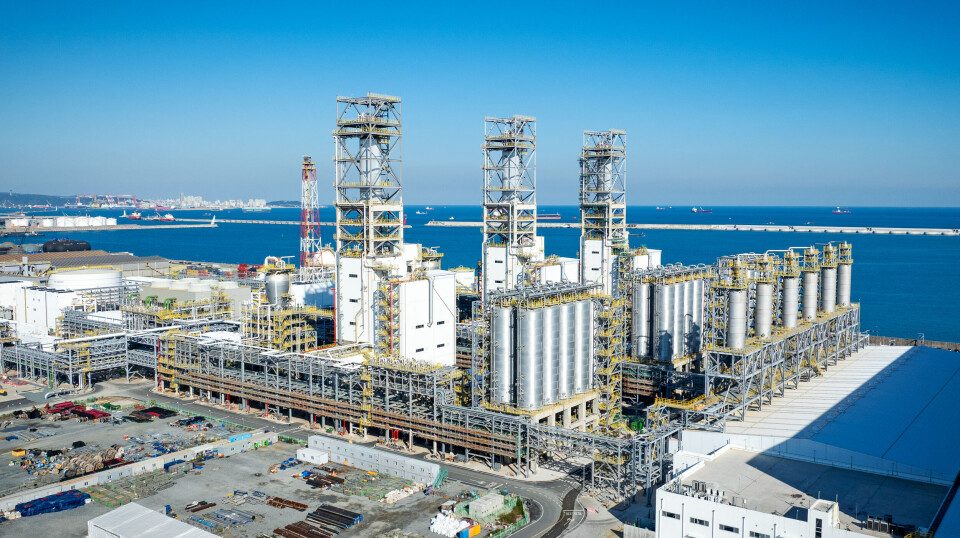
Saudi Aramco and S-OIL inaugurated the Shaheen complex in Ulsan on Nov. 25, 2026. The $7 billion plant holds the world's largest single steam cracker and will add 3.2 million tons of petrochemical capacity a year once commercial operations begin in 2027.

Shaheen runs on Aramco's thermal crude-to-chemicals process, which converts a larger share of each barrel into chemicals instead of fuels, cutting operating costs and feedstock bills. S-OIL expects chemicals to rise from 12% to 25% of its business. The awkward part is timing: Korean producers have pledged to cut 2.7 million to 3.7 million tons of cracker capacity, and Shaheen's 1.8 million tons of ethylene alone offsets most of the reductions proposed so far.

Why it matters

Korea promised to shrink its petrochemical industry. Shaheen's 3.2 million tons will decide whether that promise means anything.

Questions about this story

Free account needed to ask — your question is kept and asked for you right after sign-up. Answers are public.

No questions yet — be the first to ask.

Key Indicators

$7B
Shaheen project cost
Aramco's largest investment in South Korea, covering the cracker, crude-to-chemicals units and polymer plants.
3.2M t
Annual petrochemical capacity added
S-OIL's yearly output gain once the complex runs at full rates.
1.8M t
Ethylene from the Shaheen cracker
880,000 tons go to LLDPE and 440,000 tons to HDPE, leaving 580,000 tons for sale.
25%
Chemicals' share of S-OIL's portfolio
Up from 12% before Shaheen, according to Aramco.
2.49M t
Cracker capacity Korean producers offered to cut
Voluntary proposals against a national target of 2.7 million to 3.7 million tons.
63%
Aramco's stake in S-OIL
Held through subsidiary Aramco Downstream Asia on a non-diluted basis.

Voices

Curated perspectives — historical figures and your fellow readers.

Sign up to generate historical perspectives on this story.

People Involved

Organizations Involved

Timeline

August 2025 2027

9 events Latest: Yesterday
Tap a bar to jump to that date
  1. Commercial operations scheduled

    Upcoming Operations

    Shaheen is due to begin commercial production after commissioning and test runs.

  2. Aramco and S-OIL inaugurate Shaheen

    Latest Industrial

    The $7 billion Ulsan complex is inaugurated with the world's largest single steam cracker; commercial operations are due in 2027.

  3. Bank of Korea branch models Ulsan output loss

    Research

    The Bank of Korea's Ulsan branch estimates cracker cuts could shrink the city's output by up to 3.1%.

  4. Industry minister sets year-end deadline

    Policy

    Kim Jung-kwan tells ten petrochemical chief executives to finish restructuring talks within the year.

  5. Yeosu restructuring approved

    Restructuring

    A second plan clears, idling about 1.39 million tons; Daesan and Yeosu together account for roughly 2.49 million tons.

  6. Riyadh and Seoul sign energy memorandum

    Diplomacy

    The agreement covers oil, gas, refining and petrochemicals, and expands storage of Saudi crude in Korea's strategic reserve.

  7. Daesan restructuring approved

    Restructuring

    The ministry clears a plan that folds Lotte Chemical's Daesan cracker into a joint venture with HD Hyundai Oilbank, idling about 1.1 million tons.

  8. Sixteen producers submit restructuring plans

    Policy

    Producers file plans under the national target, proposing 2.49 million tons of cuts in total.

  9. Korean producers agree to shrink cracker capacity

    Policy

    The industry signs a voluntary agreement to cut naphtha cracker capacity by 2.7 million to 3.7 million tons, 18% to 25% of the total.

Scenarios

1

S-OIL files an Ulsan plan that leaves Shaheen untouched

Likely Resolves by End of 2026

Discussed by: Ministry of Trade, Industry and Energy; Chosun Biz and Aju Press reporting on the year-end talks

The ministry says S-OIL is a restructuring participant but that Shaheen's own units need not be cut, and it points to Daesan, where HD Hyundai Oilbank took part without closing its own cracker. A plan that retires older Ulsan assets or transfers volumes to a joint venture would satisfy the deadline without touching the new plant.

2

Shaheen starts commercial operations on schedule in 2027

Likely Resolves by End of 2027

Discussed by: Aramco and S-OIL, in statements at the inauguration

Both companies say commercial operations will begin in 2027 after commissioning and test runs. That timeline depends on the crude-to-chemicals unit, which is the first of its scale, running at stable rates.

3

Ulsan's cut target absorbs Shaheen's volume, forcing deeper third-party shutdowns

Possible Resolves by Q2 2027

Discussed by: Aju Press, citing ministry statements that Ulsan's cuts will be set after Shaheen runs stably

If the ministry counts Shaheen's 1.8 million tons of ethylene against Ulsan's share of the national reduction, S-OIL's neighbours bear the cuts. Korea Petrochemical Ind, SK Geo Centric and S-OIL remain split on how to account for the new volume, and Ulsan has made the least restructuring progress of the three complexes.

Historical Context

2 moments from history that rhyme with this story — and how they unfolded.

Through 2025

China's ethylene build-out (through 2025)

Chinese producers carried the country's annual ethylene capacity to roughly 60 million tons in 2025, according to the consultancy ChemOrbis. Korean crackers, which are smaller and tightly tied to downstream plants in Ulsan, Yeosu and Daesan, watched naphtha-based margins compress as that supply met more of China's own demand.

Then

Korea's petrochemical industry signed a voluntary agreement in August 2025 to cut cracker capacity by 2.7 million to 3.7 million tons, 18% to 25% of the 14.7 million tons then in place.

Now

ChemOrbis expects Chinese capacity near 86 million tons by 2030, so the oversupply outlasts Korea's current round of closures.

Why this matters now

Shaheen adds 1.8 million tons of ethylene into that same regional market, which is why its cost position matters more than its volume.

February-July 2026

The Daesan restructuring (2026)

HD Hyundai Oilbank and Lotte Chemical moved Lotte's Daesan naphtha cracker into their joint venture, HD Hyundai Chemical, each investing 600 billion won, and Lotte's Daesan cracker units shut. The ministry approved that plan in February 2026 and a Yeosu plan in July; together they idle about 2.49 million tons.

Then

HD Hyundai Oilbank took part in the consolidation without reducing its own cracker capacity, a detail the ministry now cites when describing what participation requires.

Now

Consolidation through joint ventures, rather than plant-by-plant shutdowns, became the shape of Korean petrochemical restructuring.

Why this matters now

S-OIL's argument that it can join the restructuring without cutting Shaheen rests on how the Daesan deal was structured.

Sources

(11)