

Pull to refresh
Logo
Daily Brief
Following
Why Ranks Sign Up
US trial backs drill-free liquid that stops childhood cavities

US trial backs drill-free liquid that stops childhood cavities

New Capabilities

A large Phase III study finds silver diamine fluoride halts most treated cavities in young kids without drilling or shots

Yesterday: Pivotal U.S. trial results published

Overview

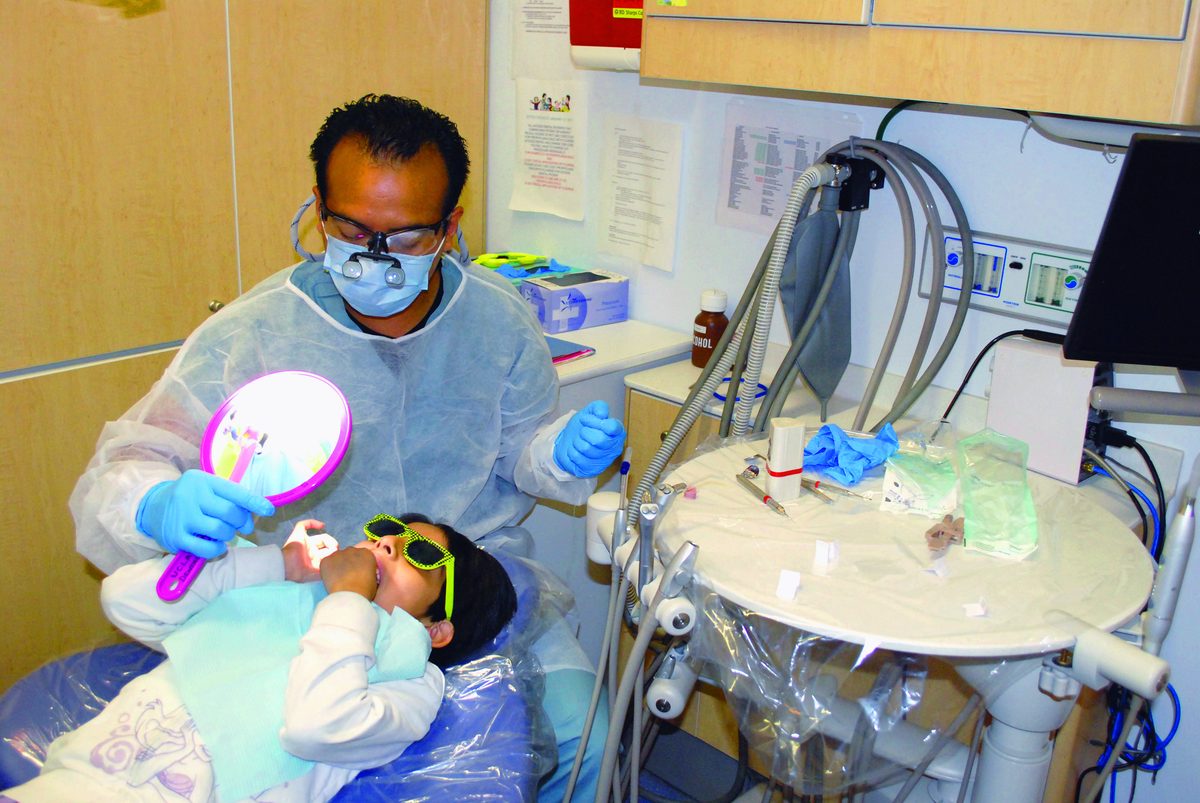
Every year, untreated tooth decay sends thousands of small U.S. children to emergency rooms, and fixing a cavity in a toddler often means a drill, a needle, or sedation. A new University of Michigan trial points to a simpler option: a liquid brushed onto the tooth in seconds.

In 830 children under six, one coat of silver diamine fluoride stopped about 54% of treated cavities from getting worse after six months, against roughly 22.5% for a placebo. The result, published in JAMA Pediatrics, is the large U.S. efficacy evidence the treatment has lacked.

Why it matters

Tooth decay is the most common chronic disease in U.S. children; a cheap brush-on liquid could stop it without a drill.

Questions about this story

No questions yet — be the first to ask.

Key Indicators

54%
Cavities halted with treatment
Share of treated cavities that stopped progressing six months after one application.
22.5%
Cavities halted with placebo
Share that stopped progressing in the comparison group.
830
Children enrolled
Kids under age six recruited across Michigan, New York, and Iowa.
Permanent
Dark stain on treated spot
The main tradeoff: the liquid turns the arrested decay black for good.

Voices

Curated perspectives — historical figures and your fellow readers.

Ever wondered what historical figures would say about today's headlines?

Sign up to generate historical perspectives on this story.

Play

Exploring all sides of a story is often best achieved with Play.

Log in to play. Track your picks, climb the leaderboards. Log in Sign Up
Predict 3 ways this could play out. Contrarian picks score more — points lock when the scenario resolves. Log in to play
Higher or Lower Two numbers from this story. Guess which is bigger. 5 rounds to set a streak. Log in to play
Connections Sixteen names from the news. Find the four hidden groups of four. Log in to play

People Involved

Organizations Involved

Timeline

January 1969 July 2026

4 events Latest: Yesterday
Tap a bar to jump to that date
  1. Pivotal U.S. trial results published

    Latest Research

    University of Michigan researchers report in JAMA Pediatrics that one coat stopped about 54% of treated cavities in kids under six, versus 22.5% with placebo.

  2. Breakthrough therapy status granted

    Regulatory

    The FDA gives SDF breakthrough therapy designation for arresting cavities, signaling interest in a faster review path.

  3. FDA clears SDF as a device for sensitivity

    Regulatory

    The FDA clears SDF as a Class II device to treat tooth sensitivity. U.S. dentists start using it off-label to arrest cavities.

  4. SDF first studied in Japan

    Background

    Researchers in Japan begin studying silver diamine fluoride, which reduces tooth sensitivity and appears to stop decay.

Historical Context

3 moments from history that rhyme with this story — and how they unfolded.

January 1945

Grand Rapids water fluoridation (1945)

Grand Rapids, Michigan became the first city to add fluoride to its drinking water in a controlled study. Over the next decade, tooth decay in local children fell sharply, by roughly 60% in some measures.

Then

The results convinced public health officials that cheap, community-wide fluoride could cut cavities dramatically.

Now

Water fluoridation spread across the U.S. and became a standard, if sometimes contested, public health tool.

Why this matters now

Like SDF, fluoride was a low-cost preventive proven in Michigan that reshaped cavity care once the evidence was solid.

1970s to 1980s

Dental sealants gain ground (1970s–1980s)

Thin resin coatings painted onto children's molars were shown to prevent decay in the grooves where cavities often start. Studies confirmed they worked, yet insurance and Medicaid coverage lagged for years.

Then

Sealants became a recommended preventive measure, especially for kids at higher risk.

Now

Coverage eventually widened, but uptake stayed uneven across income and geography.

Why this matters now

It shows how a cheap, proven dental tool can still take years to reach the children who need it most.

1994 onward

WHO promotes atraumatic restorative treatment (1990s)

The World Health Organization backed atraumatic restorative treatment, using hand instruments and glass ionomer to fill cavities without electric drills or power. It was designed for places short on dental equipment.

Then

The method expanded basic cavity care in low-resource settings worldwide.

Now

Drill-free approaches gained acceptance abroad faster than in the well-equipped U.S. market.

Why this matters now

SDF is another drill-free approach long used overseas that is only now getting rigorous U.S. validation.

Sources

(5)