
Pull to refresh
Logo
A shrunken bacterium dominates the body wall of deep-sea sea pigs

A shrunken bacterium dominates the body wall of deep-sea sea pigs

New Capabilities

Researchers propose Candidatus Abyssoplasma scotoplanesicola, a symbiont with a 649,000-base genome and surface proteins over 5,000 amino acids long

Overview

Updated 20 minutes ago

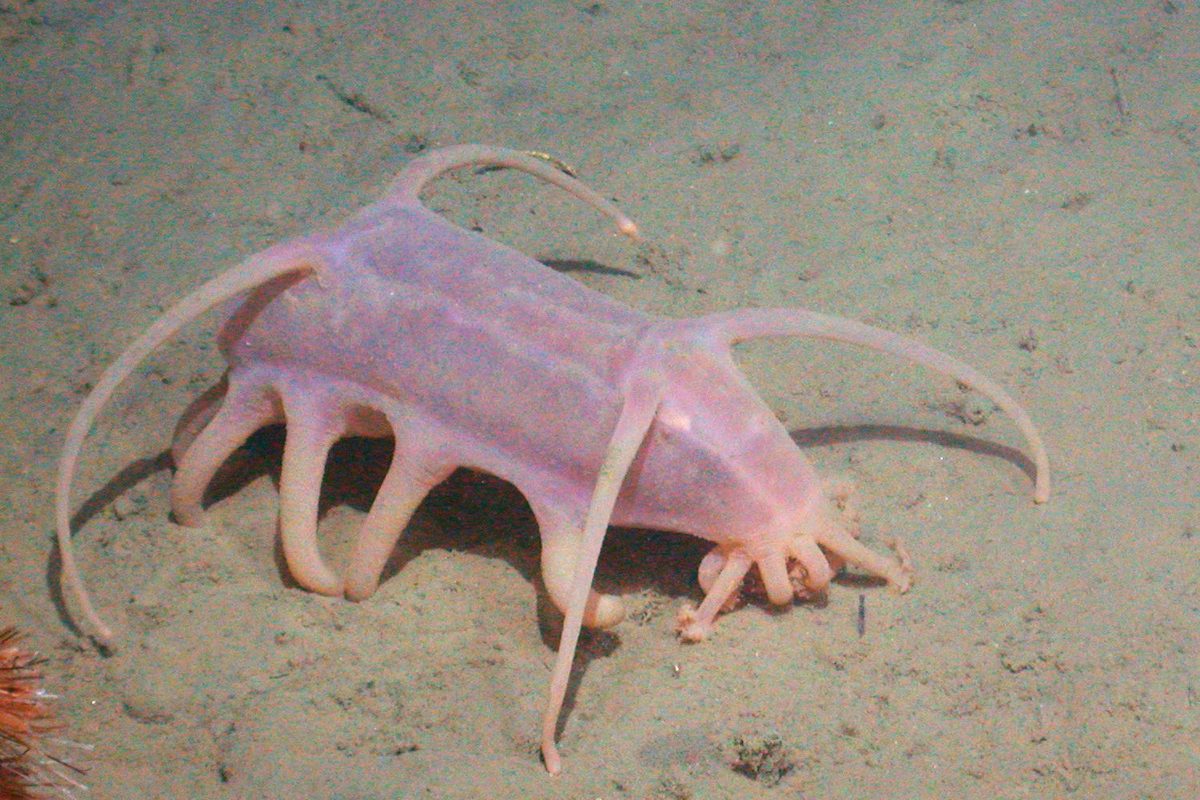
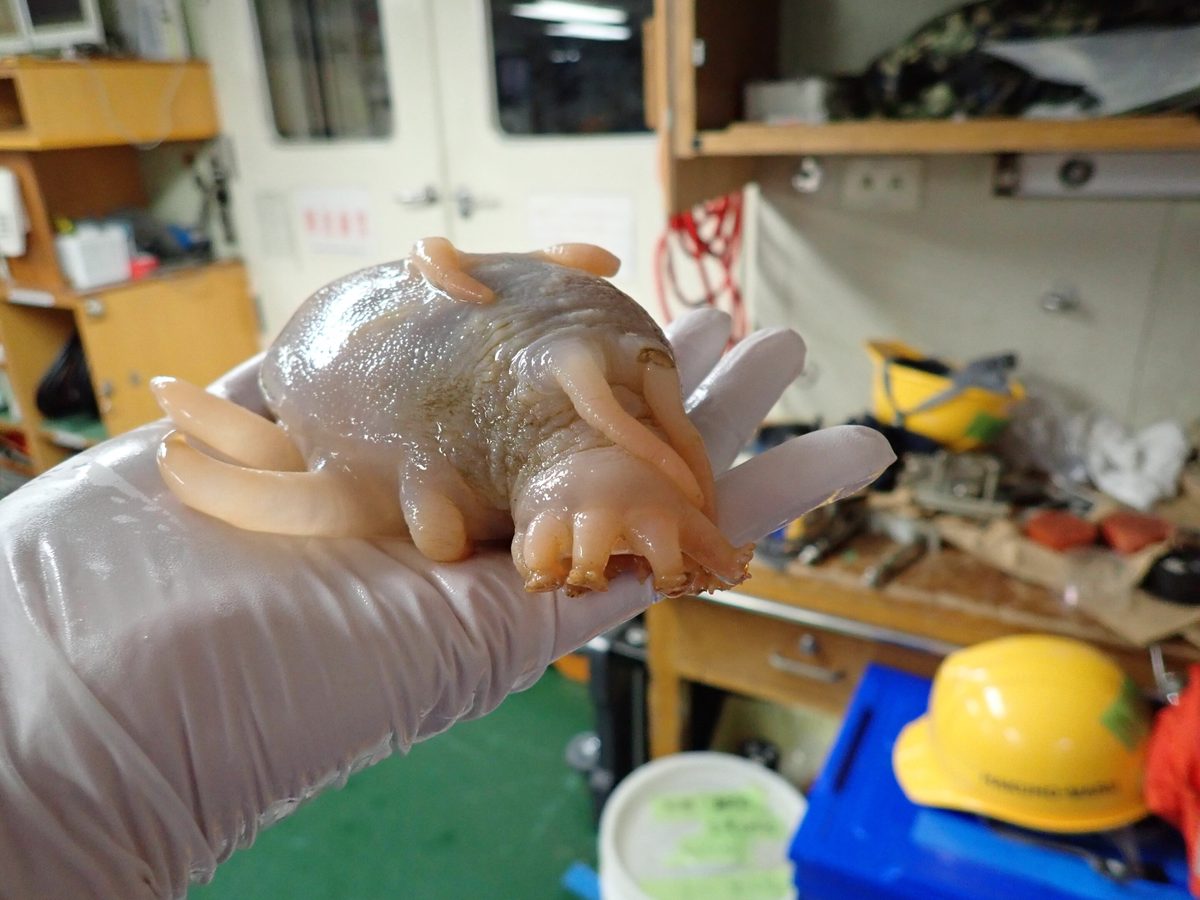
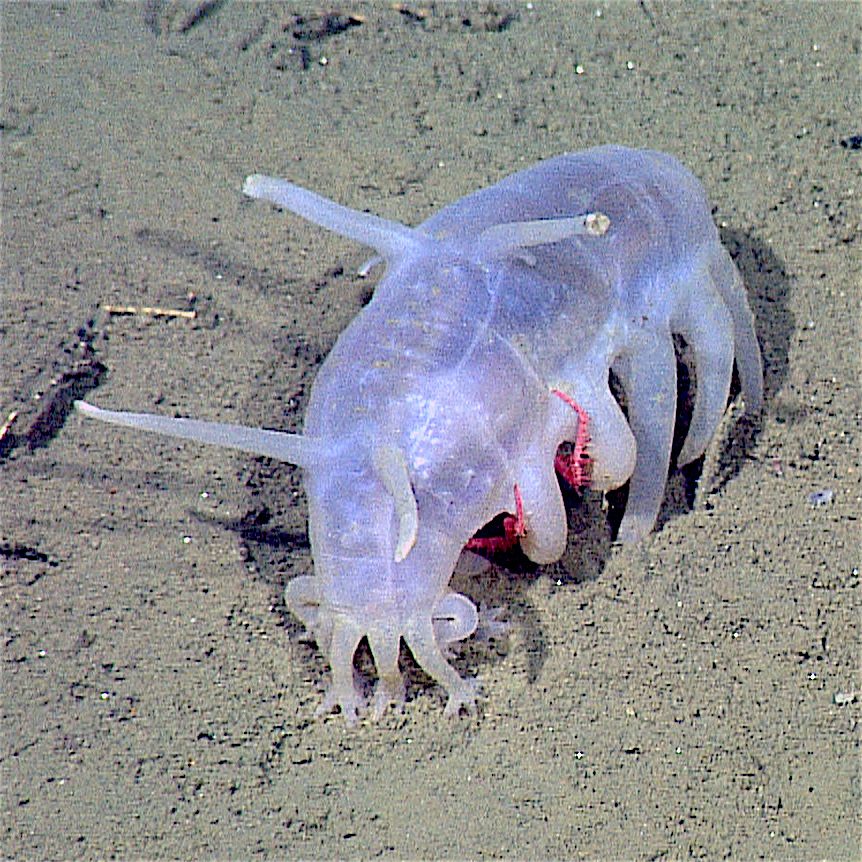
Sea pigs are pale, gelatinous sea cucumbers that graze the abyssal seafloor, some living more than 30,000 feet down. In three species sampled from the Northwest Pacific, one bacterium accounted for more than 70% of the bacterial genetic sequences found in their body walls.

Its genome is 649,000 bases, roughly a seventh of E. coli's, and it lacks genes for several energy-producing pathways most bacteria carry. Instead, 27.6% of the genome encodes surface proteins, some longer than 5,000 amino acids. The microbe appears to draw amino acids and other building blocks from sea pig tissue. Whether the sea pig gets anything back is unknown.

Why it matters

Sequencing keeps finding bacteria that cannot be cultured or live alone. This one shows how far a symbiont can strip down and still dominate host tissue.

Questions about this story

Free account needed to ask — your question is kept and asked for you right after sign-up. Answers are public.

No questions yet — be the first to ask.

Key Indicators

649,000
Bases in the symbiont's genome
A complete circular genome; E. coli's is roughly seven times larger.
27.6%
Share of the genome encoding surface proteins
Includes genes for proteins over 5,000 amino acids long.
>70%
Share of bacterial 16S rRNA sequences in body-wall samples
One bacterium dominated body-wall samples in all three sea pig species tested.
5,000+
Length of the largest predicted surface proteins, in amino acids
Average bacterial proteins run about 300 amino acids.
8
Sea pigs sampled on deep-sea expeditions
DNA was extracted from multiple tissues of each animal.

Voices

Curated perspectives — historical figures and your fellow readers.

Sign up to generate historical perspectives on this story.

People Involved

Organizations Involved

Timeline

August 2026 November 2026

4 events Latest: 3 days ago
Tap a bar to jump to that date
  1. ScienceDaily reports the discovery and the open questions

    Latest Publication

    The report restates the genome figures and notes that any benefit to the sea pig, such as pathogen defense, has not been demonstrated.

  2. Nautilus covers the difficulty of studying sea pigs

    Coverage

    A feature notes some sea pigs live more than 32,800 feet below the surface, which is why tissue samples are rare.

  3. University of Tokyo announces the findings

    Announcement

    The team reports the symbiont made up more than 70% of bacterial 16S rRNA sequences in body walls of three sea pig species. Genes for the largest surface proteins sit near clusters of defense-related genes.

  4. Preprint describes a dominant symbiont with a tiny genome

    Research

    A bioRxiv preprint reports a 649-kilobase complete circular genome from a Mycoplasmatota symbiont in deep-sea holothurians and proposes a new genus and species.

Scenarios

1

Follow-up study shows the symbiont blocks a sea pig pathogen

Uncertain Resolves by End of 2028

Discussed by: The research team, which named pathogen defense as an untested possibility in the University of Tokyo announcement

The bacteria sit in the body wall at high density, which is where a protective effect would show up. Testing it means challenging sea pig tissue, or a cultured relative, with a known pathogen and measuring whether the symbiont interferes. No such experiment has been reported.

2

Surveys find the symbiont in sea cucumber species beyond Scotoplanes

Possible Resolves by Q2 2028

Discussed by: Not yet addressed in published work; the study sampled three Scotoplanes species in the Northwest Pacific

The team found the same dominant bacterium across three host species, which raises the question of how wide its host range runs. Answering it requires sequencing body-wall samples from other deep-sea holothurians and matching the 16S rRNA sequence.

3

Researchers work out what the giant surface proteins do

Possible Resolves by Q2 2029

Discussed by: Yoshida, in the University of Tokyo announcement, who listed the proteins' function as an open question

The proteins are unusual on size alone: some exceed 5,000 amino acids against a bacterial average near 300. The team's hypothesis is that they help bacterial cells stick to each other or interact with host tissue, but that has not been tested.

Historical Context

3 moments from history that rhyme with this story — and how they unfolded.

February 1977

Galápagos Rift hydrothermal vents (1977)

Geologists diving in the submersible Alvin found clams, crabs and tube worms crowded around warm springs on the seafloor near the Galápagos Islands. Four years later, researchers identified sulfur-oxidizing bacteria inside tube worm tissue as the animals' food source.

Then

The find established chemosynthesis as the base of a deep-sea food web that runs without sunlight.

Now

It made animal-microbe symbiosis a central question in deep-sea biology, and made vent and abyssal animals routine targets for tissue sampling.

Why this matters now

Sea pigs are part of that same sampling tradition: animals pulled from the abyss and checked for the microbes living inside them.

September 2000

Buchnera aphidicola genome sequenced (2000)

Researchers sequenced the genome of Buchnera aphidicola, the bacterium that lives inside aphid cells and supplies amino acids the insect cannot get from plant sap. The genome was about 640,000 bases and had lost many genes for basic metabolism.

Then

Buchnera became the reference case for genome reduction in obligate symbionts.

Now

Later sequencing found even smaller symbiont genomes, in insects and in marine invertebrates, establishing a pattern of gene loss tied to host dependence.

Why this matters now

The sea pig symbiont's 649,000-base genome follows the same pattern: missing metabolic genes, retained genes tied to the host relationship.

1977-1980s

Ribosomal RNA as a universal microbe marker (1977 onward)

Carl Woese and George Fox used ribosomal RNA sequences to sort life into domains, work that turned one gene into a standard tool for identifying microbes. In the 1980s, Norman Pace's lab began cloning ribosomal RNA straight from environmental samples, revealing how much of the microbial world had never been grown in a lab.

Then

Microbes could be identified and compared from sequence alone.

Now

The approach led to the Candidatus convention for naming bacteria known only from sequence data.

Why this matters now

The sea pig study's main claim, that one bacterium holds more than 70% of body-wall sequences, rests on that marker, and the microbe carries Candidatus because nobody has cultured it.

Sources

(6)