



Pull to refresh
Logo
South Korea's Alaska LNG investment pledge faces commercial review

South Korea's Alaska LNG investment pledge faces commercial review

Money Moves

Trump announced a $54 billion commitment; Seoul says no decision has been made

2 days ago: Seoul clarifies no decision made

Overview

Updated 1 hour ago

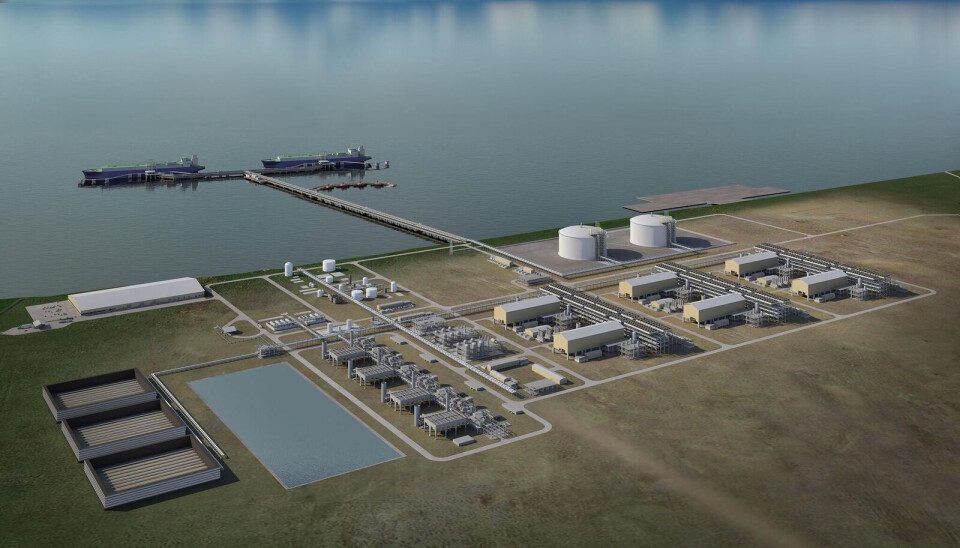
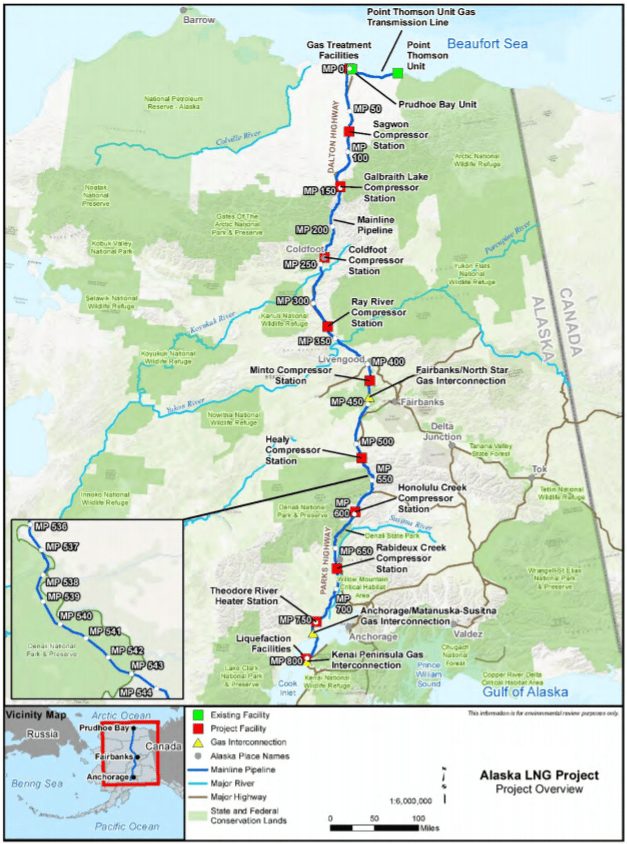
President Trump announced on September 30 that South Korea will invest $54 billion in the Alaska LNG project, an 807-mile pipeline and export terminal proposed for decades. South Korean officials immediately pushed back, saying no decision has been made and the project must pass commercial and legal review first.

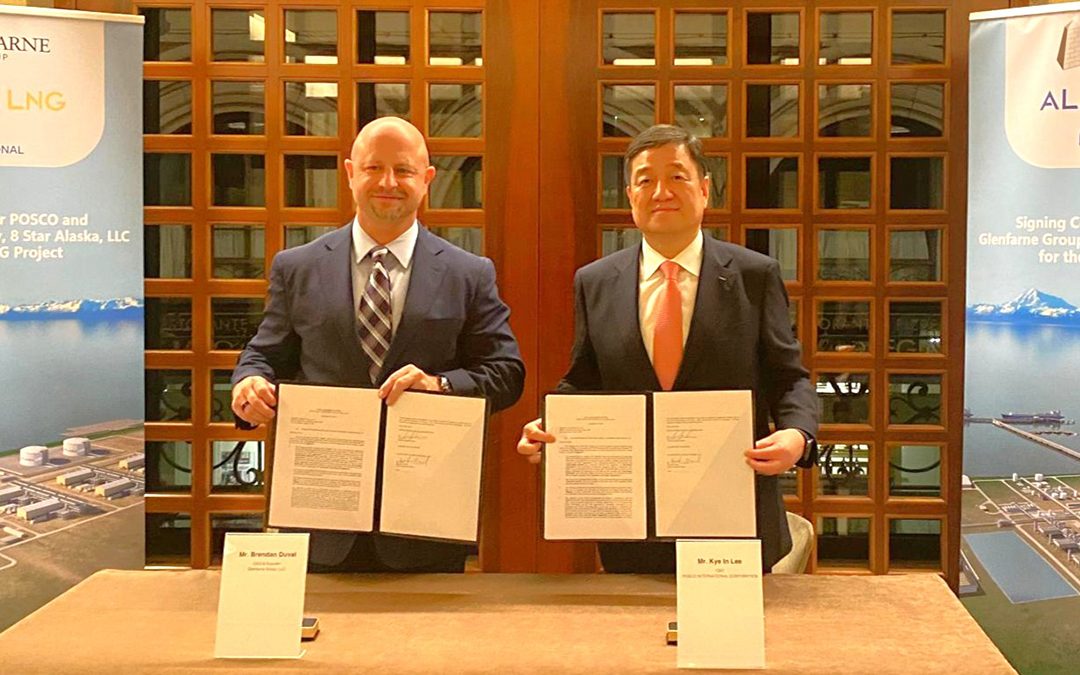
The gap matters because the project needs the money to move forward. Glenfarne Group, the lead developer, has non-binding agreements for 13 million metric tons of LNG per year but needs 16 million before it can make a final investment decision. South Korea's National Assembly also capped annual outbound investment to the US at $20 billion, well below the announced figure.

Why it matters

The pledge could unlock the largest US energy project in decades, or prove to be another false start for Alaska LNG.

Questions about this story

Free account needed to ask — your question is kept and asked for you right after sign-up. Answers are public.

No questions yet — be the first to ask.

Key Indicators

$54B
Announced South Korean investment
Trump announced this figure; Seoul says no amount has been agreed.
807 miles
Pipeline length
The pipeline would run from Alaska's North Slope to a liquefaction facility on the southern coast.
20M
Annual LNG capacity in metric tons
The export facility would produce up to 20 million metric tons of LNG per year.
13M
Committed offtake in metric tons per year
Glenfarne has non-binding agreements for 13 million tons; needs 16 million before final investment decision.
$20B
South Korea's annual outbound investment cap to US
National Assembly cap set in March 2026, below the announced $54 billion figure.

Voices

Curated perspectives — historical figures and your fellow readers.

Ever wondered what historical figures would say about today's headlines?

Sign up to generate historical perspectives on this story.

People Involved

Organizations Involved

Timeline

October 2025 October 2026

5 events Latest: 2 days ago
Tap a bar to jump to that date
  1. Seoul clarifies no decision made

    Latest Statement

    South Korean officials say no decision made on Alaska LNG investment, must pass commercial review.

  2. Trump announces $54B Alaska LNG investment

    Announcement

    Trump says South Korea will invest $54 billion in Alaska LNG, part of broader investment package.

  3. Minister says Alaska LNG under review

    Statement

    Industry Minister Kim Jung-kwan says project remains under review, must be commercially viable.

  4. South Korea caps US investment at $20B

    Regulation

    National Assembly sets $20 billion annual cap on outbound investment to the US.

  5. US-South Korea trade agreement reached

    Agreement

    Lee Jae Myung and Trump reach trade agreement during summit in South Korea, including investment framework.

Scenarios

1

South Korea signs binding Alaska LNG investment

Possible Resolves by Q1 2027

Discussed by: Reuters, Yonhap

South Korea completes its commercial and legal review and signs a binding investment agreement. This would require the National Assembly to approve funding beyond the $20 billion annual cap, and Glenfarne to secure the remaining 3 million tons of offtake commitments. The project would then move toward a final investment decision and construction.

2

South Korea declines Alaska LNG after review

Possible Resolves by Q1 2027

Discussed by: Yonhap, Korea JoongAng Daily

South Korea's review concludes the project isn't commercially viable, or the National Assembly declines to approve funding beyond the cap. The project would need to find other investors or stall again, as it has multiple times over the past decades.

3

South Korea commits partial funding, project scales back

Possible Resolves by Q1 2027

Discussed by: Homer News, CNA

South Korea invests in parts of the broader package, such as the Texas gas power plant and nuclear reactors, but defers or reduces the Alaska LNG investment. The project would need to find other funding sources or scale back its scope, potentially delaying construction in Nikiski.

Historical Context

3 moments from history that rhyme with this story — and how they unfolded.

1973-1977

Trans-Alaska Pipeline System (1973-1977)

Congress approved the Trans-Alaska Pipeline in 1973 after the oil crisis. Construction ran from 1974 to 1977, carrying oil from Prudhoe Bay on the North Slope to Valdez on the southern coast, crossing 800 miles of rugged terrain.

Then

The pipeline was built and began operations in 1977, on time and within budget.

Now

It has carried more than 18 billion barrels of oil and remains a critical piece of US energy infrastructure.

Why this matters now

The Alaska LNG project would follow a similar route and face similar construction challenges, but has been proposed for decades without reaching construction.

2008-2021

Keystone XL (2008-2021)

The Keystone XL pipeline was proposed in 2008 to carry Canadian oil to US refineries. It became a political battleground: the Obama administration rejected it in 2015, the Trump administration approved it in 2017, and the project was ultimately cancelled in 2021.

Then

The project was cancelled after years of legal battles and political fights.

Now

It showed how major pipeline projects can be announced with great fanfare but never built.

Why this matters now

The Alaska LNG project faces similar political and financial hurdles, and the gap between announcement and construction can span decades.

1970s-2017

Mackenzie Valley Pipeline (1970s-2017)

The Mackenzie Valley Pipeline was proposed in the early 1970s to carry natural gas from Canada's Arctic to southern markets. It was studied extensively, including a landmark inquiry, but was never built. The project was officially cancelled in 2017.

Then

The project was cancelled after decades of study and debate.

Now

It became a symbol of how difficult it is to build major Arctic energy infrastructure.

Why this matters now

The Alaska LNG project has been proposed in various forms since the 1970s, and the Mackenzie Valley Pipeline shows how such projects can be studied for decades without being built.

Sources

(10)