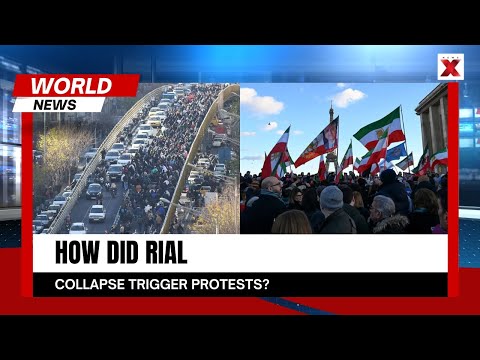
Iran's nationwide uprising, triggered by December 28, 2025 bazaar marches in Tehran, was crushed in what may be the deadliest massacre in the Islamic Republic's history. An internet blackout that began January 8 was partially restored around January 17-18, though connectivity remains severely restricted. Early reports confirmed 572 deaths; after internet restoration in late January, the Human Rights Activists News Agency documented at least 6,126 deaths, with estimates ranging from 12,000 to over 36,500.
Most deaths occurred during a 48-hour period on January 8-9 when IRGC and Basij forces opened fire on protesters across all 31 provinces. On January 17, Supreme Leader Khamenei acknowledged 'several thousand' deaths, while President Trump called him a 'sick man' and declared 'it's time to look for new leadership in Iran.' Over 42,000 have been detained, with at least 52 executions already carried out and the judiciary threatening swift trials for thousands more under 'mohareb' (enemy of God) charges.
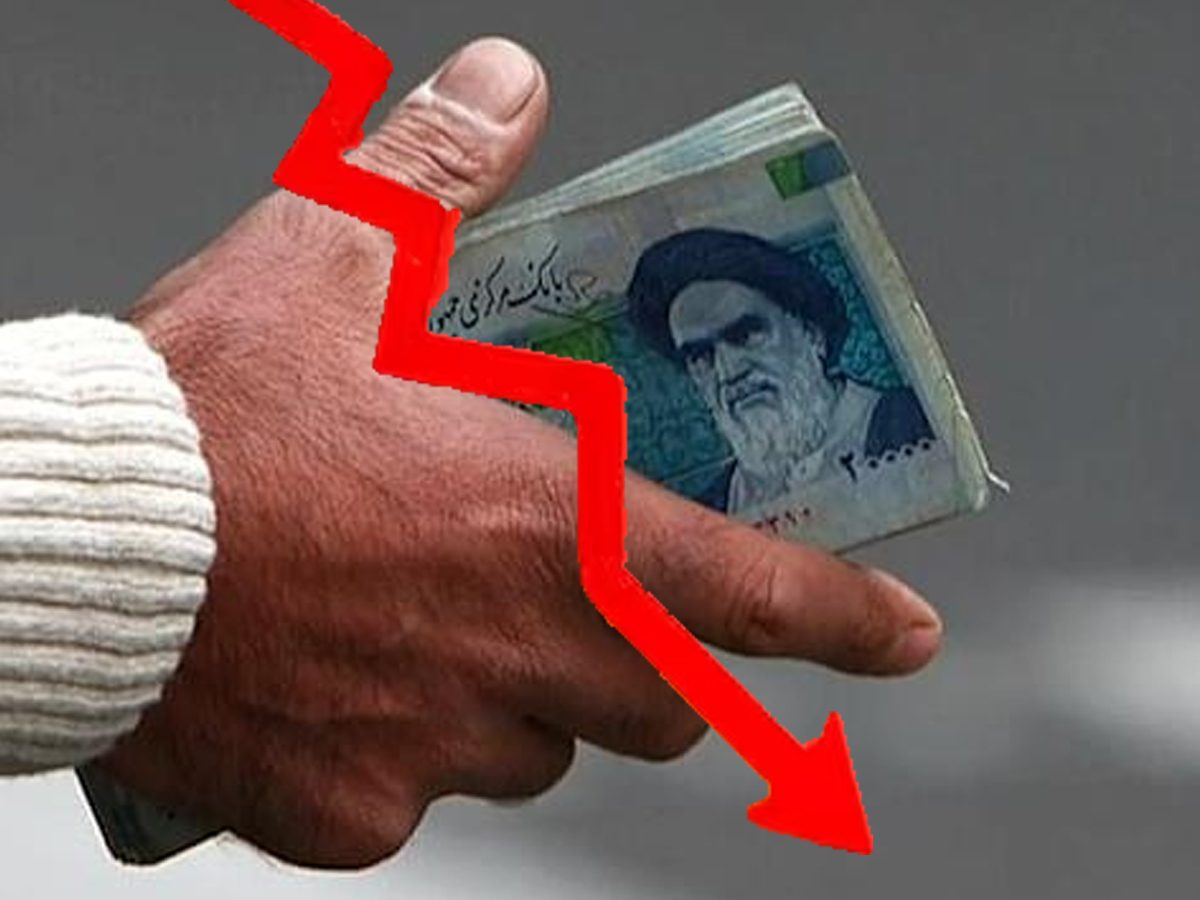
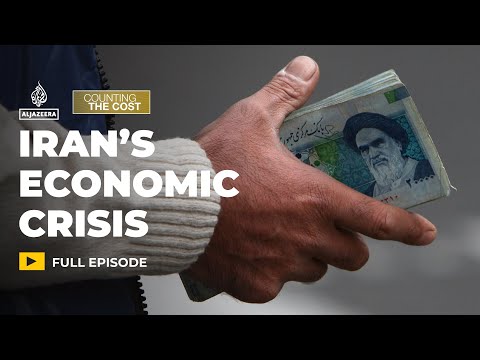
The regime survived but at catastrophic cost. The rial plunged to 1.5 million per dollar by late January—down from 32,000 at the time of the 2015 nuclear deal. A senior diplomat defected to Switzerland on January 18, and hundreds of IRGC junior officers have abandoned their posts.
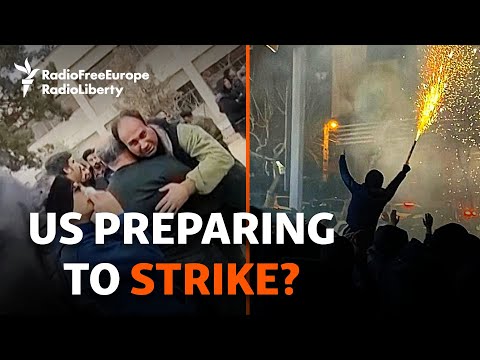
The USS Abraham Lincoln arrived in the Middle East on January 26 as Trump deployed what he called a 'massive armada,' warning Iran to negotiate nuclear limits or face attacks 'far worse' than the June 2025 strikes. On January 29, the European Union designated the IRGC as a terrorist organization—placing it on the same list as al-Qaeda and ISIS. Protests have subsided under overwhelming security force presence, but the regime faces international isolation, emerging evidence of mass killings, and ongoing executions that could trigger renewed unrest.
Questions about this story
Free account needed to ask — your question is kept and asked for you right after sign-up. Answers are public.
No questions yet — be the first to ask.
Key Indicators
6,126-36,500
Estimated Deaths
Human Rights Activists News Agency confirmed 6,126 killed (5,858 protesters, 214 security forces, 113 children, 53 civilians). Some estimates reach 36,500 based on hospital sources.
42,486
Detained
More than 42,000 protesters arrested across Iran since December 28, with at least 52 executions already carried out and thousands facing threatened mass executions under 'mohareb' charges.
1.5M:$1
Rial Exchange Rate
The Iranian rial fell to 1.5 million per dollar by January 27—down from 32,000 at the time of the 2015 nuclear deal.
72%
Food Inflation
Year-over-year food price increases have made basic goods unaffordable for millions.
31/31
Provinces Affected
Protests reached all 31 Iranian provinces by January 10, the widest geographic spread since 1979.
34 events
Latest: January 30th, 2026 · 8 months ago
Showing 8 of 34
JK to step
Tap a bar to jump to that date
Jump to
January 2026
Iran Warns of 'Hazardous Consequences' Over EU Designation
LatestDiplomatic
Iran's Foreign Ministry condemns EU's IRGC terrorist designation as 'illegal, political and contrary to international law.' Foreign Minister Araghchi accuses EU of 'fanning the flames' amid regional tensions.
Protests Largely Subsided But Iranians Remain Watchful
Current
As January ends, tensions on streets have cooled with large security force deployments visible. Personal accounts from Iranian women describe both hope and horror during demonstrations as internet access partially returns.
EU Designates IRGC as Terrorist Organization
International
European Union foreign ministers add Iran's Islamic Revolutionary Guard Corps to EU terrorism blacklist alongside al-Qaeda, Hamas and ISIS. Designation introduces asset freeze, prohibition on providing funds, and travel ban on IRGC members. EU foreign policy chief Kaja Kallas calls it 'decisive step' in response to violent crackdown.
Trump Deploys 'Massive Armada,' Threatens New Strikes
Military
Trump announces USS Abraham Lincoln carrier strike group heading to Iran, warns Tehran to negotiate nuclear limits or face attack 'far worse' than June 2025 strikes. Iran responds it will 'defend itself and respond like never before.'
Activist Death Toll Reaches 6,126
Crackdown
Human Rights Activists News Agency reports confirmed death toll of 6,126 (5,777 protesters, 214 government forces, 86 children, 49 civilians). Some medical sources suggest toll may exceed 30,000.
USS Abraham Lincoln Arrives in Middle East
Military
U.S. Central Command confirms USS Abraham Lincoln carrier strike group entered Middle East area of operations. Strike group includes flagship carrier with F/A-18 Super Hornets and three destroyers (USS Spruance, USS Michael Murphy, USS Frank E. Petersen Jr.).
Reports of Hundreds of IRGC Defections
Current
Western intelligence sources report hundreds of junior and mid-level IRGC and Basij officers have defected. Kurdish human rights groups report dozens of security officers arrested in Kermanshah for refusing to fire on protesters.
Iran Warns Trump Over Khamenei Threats
Diplomatic
Gen. Abolfazl Shekarchi, spokesman for Iran's armed forces, warns Trump: 'If any hand of aggression is extended toward our leader, we not only cut that hand but also we will set fire to their world.' Khamenei earlier warned Trump would 'be brought down' like 'world tyrants such as Pharaoh.'
Senior Iranian Diplomat Defects to Switzerland
Diplomatic
Alireza Jeyrani Hokmabad, deputy head of Iran's UN mission in Geneva, seeks asylum in Switzerland with his family. Reports indicate several Iranian diplomats have contacted European authorities about asylum.
Khamenei Acknowledges 'Thousands' Killed, Blames U.S.
Current
Supreme Leader publicly admits 'several thousand' died in protests—first official acknowledgment of massacre scale. Blames Trump, calls protesters 'rioters and terrorists' linked to U.S. and Israel.
Internet Partially Restored After 9-Day Blackout
Current
Limited internet access and SMS services restored in some areas after nine-day near-total shutdown. NetBlocks warns connectivity remains extremely low with regime generating false traffic to manufacture narrative of normalcy.
Trump Calls Khamenei 'Sick Man,' Calls for Regime Change
Diplomatic
President Trump tells Politico 'It's time to look for new leadership in Iran,' describing Khamenei as 'a sick man who should run his country properly and stop killing people.' Trump says Iran is 'the worst place to live anywhere in the world because of poor leadership.'
Protests Largely Subside After Brutal Crackdown
Current
Demonstrations that rocked Iran for three weeks have mostly subsided. People inside the country report protests abated since January 13. Security forces maintain heavy presence across cities.
Death Toll Estimates Reach 12,000-20,000
Crackdown
Iran International investigation concludes at least 12,000 civilians killed based on government sources, hospital data, and medical testimonies. CBS News sources suggest toll may reach 20,000. Most deaths occurred during 48-hour period January 8-9.
Judiciary Threatens Fast Trials and Executions
Crackdown
Iran's judiciary head Gholamhossein Mohseni-Ejei signals fast trials and executions for detained protesters despite Trump warnings. Later walks back execution of Erfan Soltani after international pressure.
At Least 52 Executions Carried Out During Protests
Crackdown
HRANA reports Iran executed at least 52 people between January 5-14. Many detainees subjected to torture and sexual assault in custody. Security forces raid hospitals to arrest and in some cases execute hospitalized protesters.
Death Toll Passes 500; Regime Signals Openness to Talks
Current
Confirmed deaths reach 572 with estimates of thousands more. Araghchi states Iran is 'ready for war but also for dialogue' as regime faces unprecedented dual pressure.
Trump Cancels All Iran Meetings
Diplomatic
Trump announces via Truth Social: 'I have cancelled all meetings with Iranian Officials until the senseless killing of protesters STOPS.' Urges protesters to 'TAKE OVER YOUR INSTITUTIONS' and says 'help is on the way.'
Trump Announces Iran Wants to Negotiate
Diplomatic
Trump says Iranian leaders called seeking talks. Announces 25% tariff on countries trading with Iran. VP Vance urges diplomacy before military action.
Iran's Foreign Minister Contacts U.S. Envoy
Diplomatic
Abbas Araghchi reaches out to Steve Witkoff amid Trump's military threats, first indication direct U.S.-Iran channel remains open.
Millions in Streets Across All 31 Provinces
Protest
Protests reported in 185+ cities across all provinces. Army pledges to defend 'national interests.' Some IRGC defections reported.
IRGC Warns Personnel Against Defection
Crackdown
IRGC Intelligence Organization issues statement warning 'defiance, desertion, or disobedience' will face 'trial and decisive action.' Later deletes language, acknowledges 'dealing with possible acts of abandonment.'
Khamenei Blames Protests on U.S. Influence
Crackdown
Supreme Leader accuses demonstrators of vandalizing 'their own country just to please the president of the United States' and calls protesters 'mercenaries for foreigners.'
Iran Imposes Nationwide Internet Blackout
Crackdown
Authorities impose near-total shutdown of internet and phone access—the worst in Iran's history—obscuring the scale of the crackdown.
Mass Killings Begin Under Internet Blackout
Crackdown
Following Pahlavi's coordinated protest call, IRGC and Basij forces open fire on demonstrators nationwide. Over 48 hours, an estimated 12,000-20,000 killed. Video from Kahrizak morgue shows at least 205 body bags.
Crown Prince Pahlavi Calls for Coordinated Protests
Opposition
Exiled Crown Prince issues video calling on Iranians to chant together at 8 PM Thursday and Friday, directly challenging the regime.
Rial Hits Record Low
Economic
Iranian rial falls to 1.5 million per dollar, breaking previous record. Government's attempted intervention on January 3 failed.
Khamenei Orders Crackdown; 11 Killed in Single Day
Crackdown
Supreme Leader declares 'rioters should be put in their place.' Security forces kill at least 11 protesters. IRGC announces 'tolerance period' is over.
December 2025
Protests Spread to 17 Provinces
Protest
Government places country on leave until January 4, citing weather and energy concerns. Protests now span 17 of 31 provinces.
Bazaar Protests Erupt in Tehran
Protest
Shopkeepers in Tehran's Grand Bazaar close shops and march into streets, protesting economic collapse. The rial hits 1.45 million to the dollar.
September 2025
UN Reimposed Sanctions via Snapback
International
United Nations re-imposes sanctions on Iran over its nuclear program, further pressuring the economy.
June 2025
Ceasefire Ends 12-Day War
Diplomatic
Trump announces ceasefire. Iran's nuclear program set back years, military infrastructure devastated, rial begins accelerating collapse.
Israel-Iran 12-Day War Begins
Military
Israel launches strikes on Iranian nuclear facilities and military bases. Over 12 days, Israel conducts 360 attacks across 27 provinces. The U.S. bombs three nuclear sites on June 22.
December 2024
Assad Regime Falls in Syria
Regional
Rebels overthrow Iran's key ally Bashar al-Assad, severing Tehran's land corridor to Hezbollah and costing Iran an estimated $30-50 billion in investment.
Scenarios
1
Regime Crushes Protests, Survives Weakened
Likely
Discussed by: Foreign Policy, Stimson Center, Al Jazeera analysts
The most likely near-term outcome based on historical precedent. The regime uses massive force during the internet blackout, kills thousands, arrests tens of thousands, and gradually restores order over weeks or months. The Islamic Republic survives but emerges economically devastated, internationally isolated, and dependent on Russia and China. Khamenei purges suspected disloyal IRGC members. The opposition remains fragmented without unified leadership. This mirrors the 2022 Mahsa Amini protests, which the regime suppressed despite 500+ deaths and 22,000 detentions.
Discussed by: The Times (UK), Iran International, Middle East Institute
Reports of IRGC members 'balking' at orders and the organization acknowledging 'possible acts of abandonment' suggest cracks in the security apparatus. If defections cascade—as happened in Romania 1989—the regime could collapse rapidly. Intelligence reports indicate Khamenei has an escape plan to Moscow. However, the IRGC's leadership has strong incentives to prevent collapse (they would face prosecution), and past protests saw security forces remain cohesive. This scenario becomes more likely if the economic situation makes paying security forces impossible.
3
U.S. Strikes Iran, Accelerating Instability
Uncertain
Discussed by: Axios, New York Times, ABC News military analysts
Trump has indicated military options remain 'on the table' and has leaned toward strikes to punish the regime. Targets could include IRGC facilities, remaining nuclear infrastructure, or security force command centers. Strikes could weaken the regime's capacity for repression but also risk rallying nationalist sentiment behind the government. The June 2025 precedent shows the U.S. is willing to strike Iran directly. VP Vance's faction is urging diplomacy first, making immediate strikes uncertain.
4
Diplomatic Off-Ramp: Sanctions Relief for Reforms
Unlikely
Discussed by: Axios, PBS, European diplomatic sources
Iran's outreach to Washington suggests the regime may be seeking a face-saving exit. A deal could involve: Iran commits to reducing enrichment capacity, releases detained protesters, and permits monitored reforms; the U.S. eases some sanctions and restrains Israel. This would require Khamenei to accept significant concessions while facing domestic fury. Past U.S.-Iran diplomatic efforts (2015 JCPOA, April 2025 talks) have collapsed. The Trump administration appears skeptical but has kept channels open through Witkoff.
5
Mass Executions Trigger International Intervention
Possible
Discussed by: Human Rights Watch, Amnesty International, U.S. State Department officials
Iran proceeds with threatened mass executions of the 18,400+ detained protesters, provoking international outrage. Trump follows through on military strike threats, targeting IRGC facilities and prison complexes. European nations impose unprecedented sanctions. The executions could galvanize a second wave of protests, but also risk rallying nationalist support for the regime. Precedent: Iran executed at least 10 protesters after the 2022 Mahsa Amini demonstrations.
6
Evidence of Massacre Emerges, Delegitimizing Regime
Likely
Discussed by: Iran International, investigative journalists, UN human rights monitors
As internet access gradually restores and survivors share testimonies, documentary evidence of the January 8-9 massacre spreads globally—videos, mass grave locations, hospital records showing 12,000-20,000 killed in 48 hours. The scale of killing exceeds even Tiananmen Square (est. 2,600 deaths). International Criminal Court opens investigation. The regime faces pariah status worse than North Korea, accelerating economic collapse and internal fractures.
7
Mass Executions Trigger Second Wave of Protests
Possible
Discussed by: Amnesty International, Iran Human Rights, Human Rights Watch
Iran proceeds with judiciary's threatened swift trials and executions of detained protesters under 'mohareb' (enemy of God) charges. Mass hangings, potentially involving hundreds of the 18,400+ detained, spark renewed nationwide protests despite heavy security presence. Trump follows through on military strike threats. International Criminal Court opens investigation. The executions could galvanize opposition but also risk further massacre.
8
U.S. Strikes Iranian Nuclear Sites to Force Negotiations
Uncertain
Discussed by: Trump administration officials, military analysts, Bloomberg
With 'massive armada' deployed and Trump warning time is 'running out,' U.S. conducts strikes on remaining Iranian nuclear facilities to force regime to negotiate. Targets could include enrichment sites, IRGC command centers, and security force infrastructure. Strikes aim to weaken regime's repression capacity while avoiding full regime collapse. Risk of miscalculation leading to broader regional conflict involving Israel, proxy forces.
9
Diplomatic Defections Cascade, Weakening Regime
Possible
Discussed by: European diplomatic sources, intelligence analysts
Following Hokmabad's defection and reports of multiple Iranian diplomats seeking asylum, senior regime officials abroad begin abandoning posts. European countries ease asylum procedures for Iranian officials. Defections include intelligence officers with knowledge of massacre details, providing evidence for international prosecutions. Regime's international operations compromised, increasing isolation and internal paranoia about loyalty.
10
EU Terrorist Designation Accelerates Economic Collapse
Likely
Discussed by: European diplomats, financial analysts, Iran International
The EU's January 29 designation of the IRGC as a terrorist organization triggers asset freezes and travel bans, compounding Iran's economic isolation. Combined with U.S. sanctions and the rial's collapse to 1.5 million per dollar, the regime struggles to pay security forces and import essential goods. IRGC-controlled businesses face European asset seizures. The designation emboldens other nations to impose similar measures, potentially accelerating the defection cascade as regime officials see their foreign assets frozen.
11
Ongoing Executions Spark International Intervention
Possible
Discussed by: Human rights organizations, UN officials, U.S. State Department
With 52 executions already carried out and 42,000+ detained facing threatened swift trials, the regime proceeds with mass executions despite international warnings. The executions—combined with documented torture, sexual assault of detainees, and hospital raids to kill wounded protesters—trigger emergency UN Security Council session. Trump follows through on threats with targeted strikes on prisons and IRGC command centers. Risk of galvanizing second wave of protests or rallying nationalist support behind regime.
Historical Context
3 moments from history that rhyme with this story — and how they unfolded.
1 of 3
December 1989
Romanian Revolution (1989)
Protests against Nicolae Ceaușescu's dictatorship began in Timișoara on December 16 after security forces tried to evict a Hungarian pastor. When Ceaușescu ordered troops to fire on demonstrators, protests spread nationwide. On December 21, a staged rally in Bucharest turned against him as crowds chanted 'Timișoara!' The army defected the next day. Ceaușescu and his wife fled by helicopter, were captured, given a drumhead trial, and executed on Christmas Day.
Then
Romania's Communist government collapsed in 10 days. Over 1,100 people died. It was the only violent overthrow of a Warsaw Pact regime in 1989.
Now
Romania transitioned to democracy, though former Communist officials initially dominated the new government. The revolution showed how quickly authoritarian regimes can collapse when security forces defect.
Why this matters now
Reports of IRGC defections and Khamenei's alleged Moscow escape plan echo Ceaușescu's final days. The key variable is whether Iranian security forces will fracture as Romanian forces did.
2 of 3
September 2022 – Spring 2023
Mahsa Amini Protests (2022-2023)
Mahsa Amini, 22, died in custody after Iran's morality police arrested her for wearing her hijab 'improperly.' Protests under the slogan 'Woman, Life, Freedom' erupted nationwide, with demonstrators openly calling for Khamenei's removal. Security forces killed over 500 people and detained 22,000. The regime executed at least 10 protesters after show trials.
Then
The government crushed the protests through sustained repression. By spring 2023, demonstrations had largely subsided.
Now
The political leadership remained unchanged. Morality police resumed patrols in July 2023. A UN probe found Iran responsible for Amini's death through 'physical violence' and concluded Tehran committed 'crimes against humanity.'
Why this matters now
The 2026 protests are more geographically widespread (all 31 provinces), started with regime-aligned bazaaris rather than students, and focus on regime change rather than social reform—potentially more threatening to the government.
3 of 3
1978-1979
1979 Iranian Revolution
Protests against Shah Mohammad Reza Pahlavi united secularists, Islamists, workers, and merchants. The bazaaris—traditional allies of the Shia clergy—played a crucial role by joining strikes and funding opposition. Despite security forces killing thousands, as many as 9 million Iranians marched in cities nationwide. The Shah fled on January 16, 1979. Ayatollah Khomeini returned from exile two weeks later.
Then
The monarchy fell and was replaced by an Islamic Republic. The Revolutionary Guards were established to protect the new order.
Now
Iran became a theocracy under clerical rule. The revolution demonstrated that the bazaari class can be decisive—their defection from the Shah helped doom his regime.
Why this matters now
The 2026 protests began with bazaaris abandoning the Islamic Republic, just as they abandoned the Shah in 1979. If the merchant class that helped install the clerics now turns against them, it signals a fundamental rupture in the regime's base.