

Pull to refresh
Logo
Alpine peaks across Northeast U.S. and Canada are greening as shrubs move in

Alpine peaks across Northeast U.S. and Canada are greening as shrubs move in

New Capabilities

Dartmouth analysis of 40 years of Landsat imagery finds vegetation up across most of the region's alpine zones

Today: Alpine greening study published in Ecosphere

Overview

Updated 1 hour ago

Dartmouth researchers analyzed 40 years of Landsat satellite imagery and found that alpine zones across the northeastern U.S. and Canada are turning greener. Vegetation increased significantly in 69% of the 35 zones studied, covering 88% of the region's alpine area.

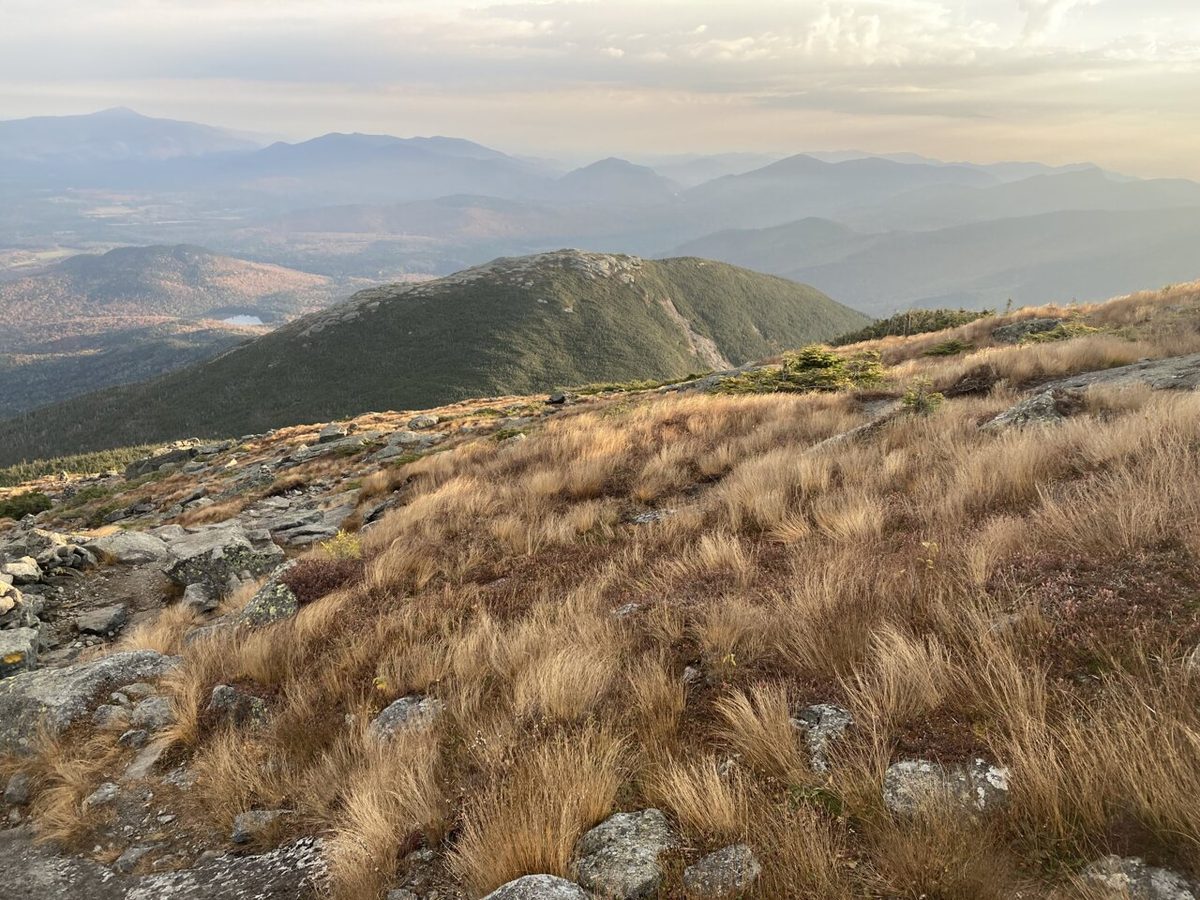
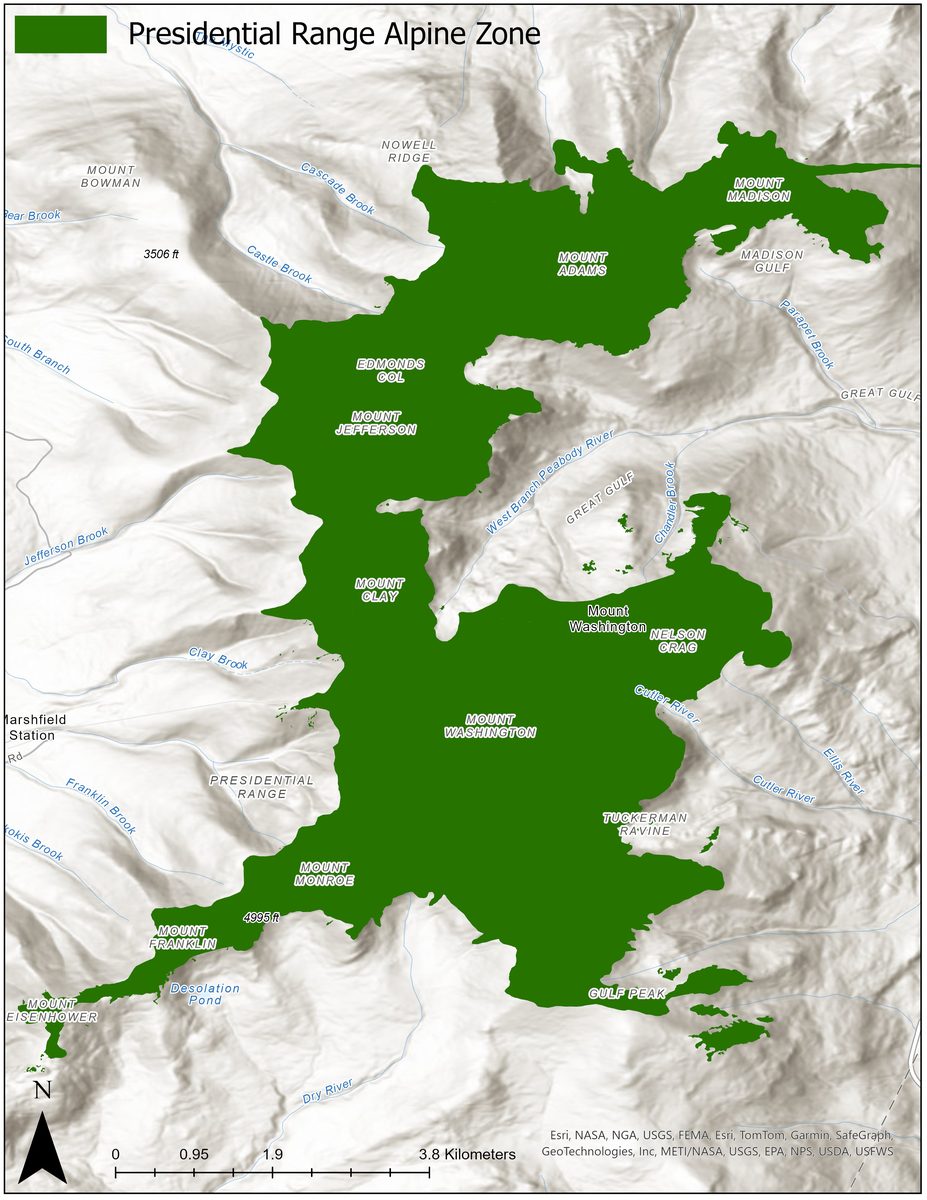
The change is not just treelines climbing up mountainsides. Inside the alpine zone itself, shrubs are replacing cushion plants and sedge meadows, especially in New Hampshire's Presidential Range and on Maine's Mount Katahdin.

Wind has long held these treelines lower than they sit at the same latitude elsewhere. Greening runs slower on exposed windy slopes and faster on sheltered ones, where lead author Jonathan Chipman says growth is being 'unleashed.'

Why it matters

Rare arctic-alpine plants on exposed Northeast summits risk losing ground as shrubs and trees advance into their habitat.

Questions about this story

Free account needed to ask — your question is kept and asked for you right after sign-up. Answers are public.

No questions yet — be the first to ask.

Key Indicators

69%
Alpine zones with significant vegetation increase
Of the 35 alpine zones analyzed across the northern Appalachians.
88%
Alpine area experiencing greening
These zones represent most of the region's alpine habitat.
130 sq km
Total alpine area studied
All alpine zones south of the St. Lawrence River large enough to track from satellites, roughly 50 square miles.
35
Major alpine zones analyzed
Sites span the Adirondacks, New England, and Quebec's Gaspé Peninsula.

Voices

Curated perspectives — historical figures and your fellow readers.

Ever wondered what historical figures would say about today's headlines?

Sign up to generate historical perspectives on this story.

People Involved

Organizations Involved

Timeline

January 1984 September 2026

3 events Latest: Today
  1. Alpine greening study published in Ecosphere

    Today Research

    Dartmouth-led analysis finds significant vegetation increases in 69% of 35 alpine zones, covering 88% of regional alpine area.

  2. Clean Air Act amendments cut nitrogen emissions

    Policy

    The U.S. law reduced Midwest power plant emissions that had been fertilizing alpine plants, a driver the study flags.

  3. Landsat imagery record begins

    Data

    Satellite images start accumulating, forming the 40-year baseline for the alpine greening study.

Scenarios

1

Rare alpine specialists decline as shrubs close in

Possible Resolves by End of 2027

Discussed by: The Dartmouth study authors, who warned accelerated growth may crowd out rare plants

The researchers noted that faster shrub and tree growth is not necessarily good news if aggressive flora push out arctic specialist species. Field surveys at permanent transects in the White Mountains and Adirondacks would document the decline, with losses likely fastest on sheltered slopes where greening is most pronounced.

2

Greening continues or accelerates as temperatures climb

Likely Resolves by End of 2028

Discussed by: The study authors, who link the trend to regional warming plus nitrogen and other factors

The 40-year record already shows sustained greening tied to warming. A follow-up analysis using newer Landsat data could show the trend continuing, with NDVI still rising across most alpine zones as milder conditions extend growing seasons on sheltered slopes. This is the straight-line projection of current warming.

3

Greening plateaus as the nitrogen legacy fades

Possible Resolves by End of 2028

Discussed by: The Dartmouth team and a 2022 study in IOPscience documenting non-monotonic Arctic greening

The late-20th-century nitrogen pulse from Midwest power plants acted as fertilizer for some alpine species, and post-1990 emissions cuts removed it. If nitrogen drove a meaningful share of the greening, growth could level off or slow even as temperatures keep rising, matching the 'two waves' pattern seen in northeastern Canadian tundra where greening was not steady.

Historical Context

3 moments from history that rhyme with this story — and how they unfolded.

1980s-present

Arctic tundra shrubification (1980s-present)

Satellite NDVI records since the 1980s show the Arctic tundra greening as shrubs expand into herbaceous tundra. Research in northeastern Canada found two distinct waves of greening centered around 1996 and 2011, only the first clearly tied to summer warming.

Then

Shrub cover increased across circumpolar tundra, documented in field plots and satellite records.

Now

Greening proved non-monotonic, with periods of growth and pause that temperature alone did not explain.

Why this matters now

The Northeast alpine study uses the same NDVI method and shows the same shrubification mechanism on mountaintops, making it a lower-latitude analog of Arctic change.

1990s-2010s

Alpine treeline advance in the European Alps (1990s-2010s)

Across the European Alps, treelines advanced upslope as temperatures warmed, shrinking alpine meadows and heath. Studies in the 1990s and 2000s documented trees colonizing former pasture and high-elevation grassland, driven by both warming and land abandonment.

Then

Alpine grassland habitat lost area to forest in many valleys.

Now

Treeline advance became a benchmark for climate impacts on mountain ecosystems across Europe.

Why this matters now

The Northeast study found treeline advance is slower than in the Alps because high winds keep trees below their temperature limit, a key contrast in the new findings.

1990s-2010s

Acid rain recovery after the Clean Air Act (1990s-2010s)

The 1990 Clean Air Act amendments cut sulfur and nitrogen emissions from Midwest power plants. Eastern U.S. lakes and forests began recovering from acidification over the following decades, linked to major emissions reductions.

Then

Nitrogen deposition fell sharply, reducing the fertilizer load on mountain ecosystems.

Now

Mountaintop plant communities are still adjusting to lower nitrogen, a factor shaping current growth patterns.

Why this matters now

The greening study identifies nitrogen deposition as a key driver alongside warming, one that fades over time as emissions regulations take effect.

Sources

(7)