

Pull to refresh
Logo
Taishan begins construction on its first Hualong One reactor

Taishan begins construction on its first Hualong One reactor

Built World

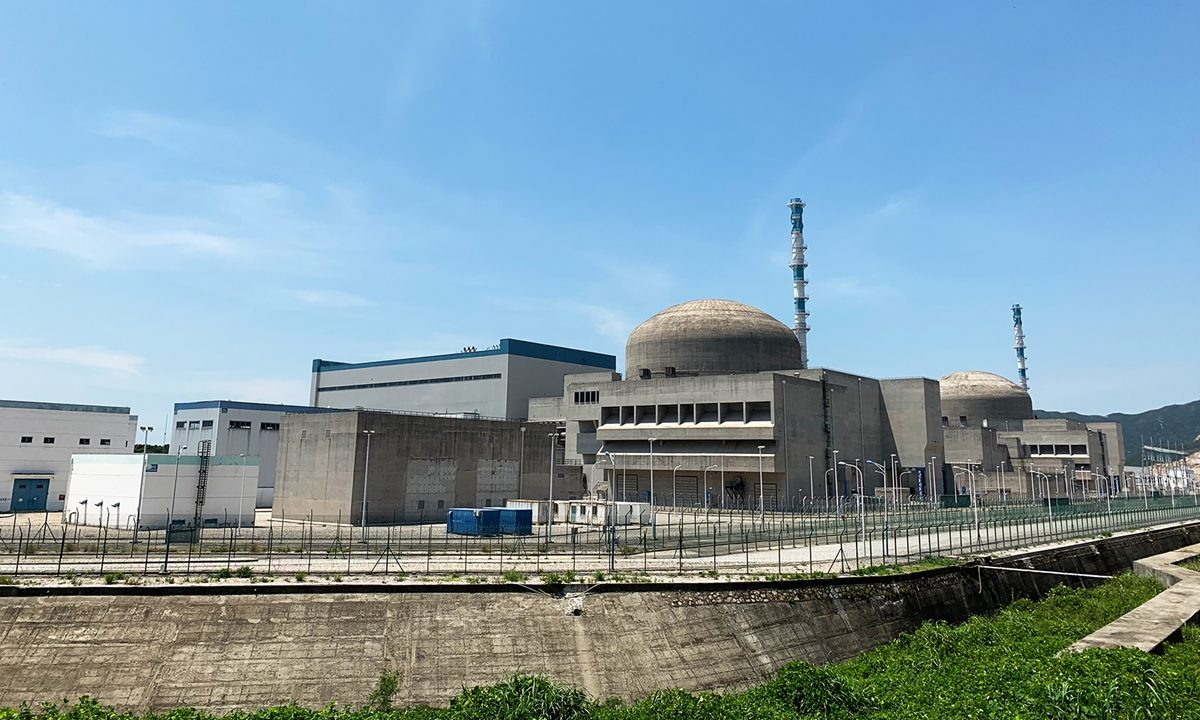
First concrete for unit 3 opens Phase II at a plant whose two operating reactors are French-designed EPRs

Overview

Updated 4 hours ago

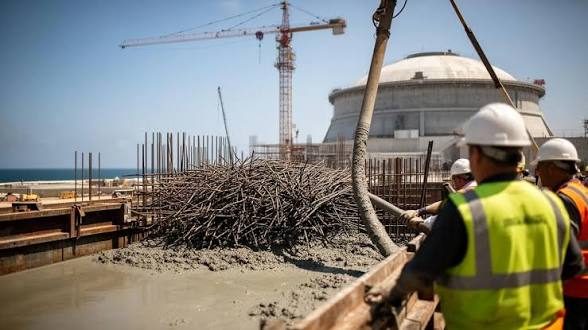
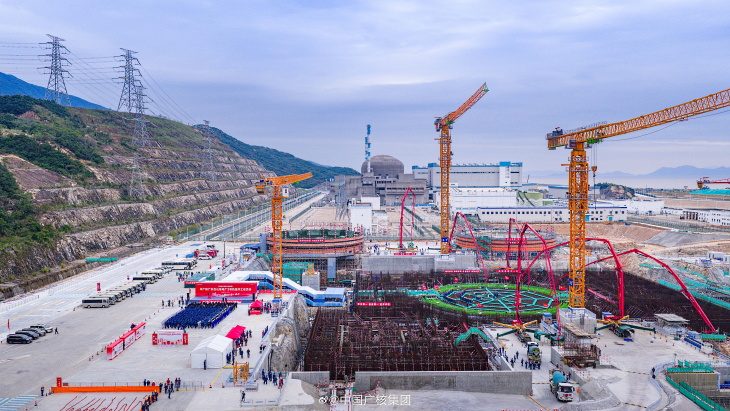
At 10:18 on the morning of 25 November 2026, crews at Taishan in Guangdong began pouring concrete for the nuclear island of unit 3. The pour ran about 8,823 cubic metres over 55 hours. It is the first Hualong One reactor at a plant whose two working units are French-designed EPRs.

Unit 3 is rated at 1,200 megawatts. CGN expects it to generate more than 9 billion kilowatt-hours a year, roughly the annual demand of a million people. The pour moves a project approved in April 2025 into civil construction, the first physical stage after licensing.

Why it matters

China approved ten reactors at once in 2025. How fast those units rise will set the cost of its nuclear programme and the pitch it sells abroad.

Questions about this story

Free account needed to ask — your question is kept and asked for you right after sign-up. Answers are public.

No questions yet — be the first to ask.

Key Indicators

1,200 MW
Installed capacity per unit
Each Hualong One at Taishan units 3 and 4 is rated at 1,200 megawatts.
8,823 m³
Concrete in the nuclear island raft foundation
Poured continuously over about 55 hours.
9 billion kWh
Expected annual generation from unit 3
CGN says that covers the yearly demand of about one million people.
6
Reactors planned at Taishan
Six units across three phases; two are operating.
10
Reactors approved by China's State Council in April 2025
Taishan units 3 and 4 were among the ten.

Voices

Curated perspectives — historical figures and your fellow readers.

Sign up to generate historical perspectives on this story.

People Involved

Organizations Involved

Timeline

2009 November 2026

7 events Latest: Yesterday
Tap a bar to jump to that date
  1. First concrete poured for Taishan 3

    Latest Construction

    CGN poured the nuclear island raft foundation on 25 November, about 8,823 cubic metres over 55 hours, starting Phase II.

  2. Regulator issues construction licences for Taishan 3 and 4

    Licensing

    Licences run to November 2036; unit 4's first concrete is held as a supervisory control point.

  3. State Council approves ten reactors, including Taishan 3 and 4

    Approval

    Premier Li Qiang presides over the meeting that clears the Taishan Phase II pair.

  4. Taishan 2 completes Phase I

    Operation

    Both EPR units are fully in commercial service, five years behind the original 2013-2014 target.

  5. Taishan 1 enters commercial operation

    Operation

    It became the first EPR reactor in the world to run commercially.

  6. Construction starts on Taishan unit 2

    Construction

    The second EPR at Taishan begins civil works.

  7. Construction starts on Taishan unit 1

    Construction

    Work begins on the first of two French-designed EPR reactors at the site.

Scenarios

1

Unit 4 clears the regulator's control point and pours first concrete

Likely Resolves by End of 2027

Discussed by: China's National Nuclear Safety Administration, whose licence notice sets the condition

The licence for unit 4 is already issued, but the regulator made its first concrete pour a control point that its South China regional office must release. Once that happens, the twin Hualong One follows unit 3 into civil construction, which is the normal pattern for paired units at Chinese sites.

2

CGN Power publishes a target commissioning date for Taishan 3

Possible Resolves by Q2 2027

Discussed by: Trade press covering the exchange filing, which noted it gave no schedule

The 25 November filing confirmed only the start of construction and named no expected first-power date. Chinese utilities typically add schedules in annual reports or later milestone filings. A published date would give outside analysts a benchmark to test against the actual completion date.

3

Taishan 3 enters commercial operation before 2033

Uncertain Resolves by End of 2032

Discussed by: Nuclear trade press, which cautions that another Hualong One site's schedule does not set this unit's delivery date

Civil construction, equipment installation and commissioning all sit between the concrete pour and an operating reactor. Taishan's first phase ran about nine years from construction start to commercial operation. A Hualong One built to a repeated design is intended to move faster, but CGN has not published a date.

Historical Context

2 moments from history that rhyme with this story — and how they unfolded.

2009-2019

Taishan Phase I: the first EPRs to run (2009-2019)

Taishan units 1 and 2 were built with the European Pressurised Reactor designed in France, with construction starting in 2009 and 2010. Both units ran about five years behind their original 2013-2014 target. Unit 1 nonetheless became the first EPR anywhere to enter commercial operation, in December 2018, with unit 2 following in September 2019.

Then

The delays made Taishan a reference case for first-of-a-kind reactor cost and schedule risk.

Now

CGN kept the site and its workforce but switched designs for the next phase, choosing the domestically developed Hualong One instead of more EPRs.

Why this matters now

Phase II is being built at the same site by the same company but with a different reactor family, so Taishan now tests whether a repeated domestic design moves faster than an imported first-of-a-kind one.

April 2025

China's April 2025 reactor approval round

On 27 April 2025, China's State Council, chaired by Premier Li Qiang, approved ten new nuclear reactors in a single meeting. Taishan units 3 and 4 were on the list. Approval set off site preparation and licensing, and the nuclear safety regulator issued the Taishan construction licences 19 months later.

Then

Approved units moved into licensing and site work in parallel rather than one at a time.

Now

CGN has now started four reactor units in 2026, with Taishan 3 the fourth.

Why this matters now

The 19-month gap between approval and first concrete shows how the batch-approval model converts a political decision into construction starts, and sets the clock for the units still to come.

Sources

(9)