
Pull to refresh
Logo
Tajikistan notifies the UN it will leave the International Criminal Court

Tajikistan notifies the UN it will leave the International Criminal Court

Rule Changes

The exit takes effect in November 2027, leaving Central Asia without a single ICC member state

Overview

Updated 21 minutes ago

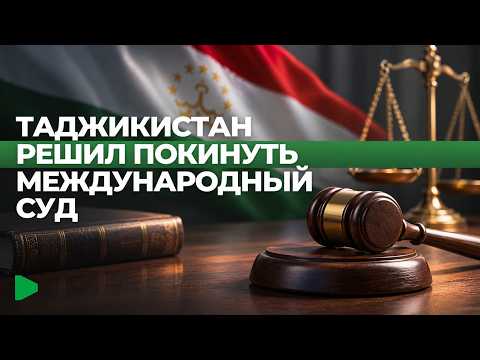
Tajikistan told the United Nations on 20 November 2026 that it will leave the International Criminal Court, a year after it declined to arrest Vladimir Putin on an ICC warrant. The exit takes effect on 20 November 2027.

Tajikistan is the fourth country to begin leaving since the US State Department urged states in July to quit the court, after Venezuela, Chad and Naoero. The court's 125 member states still include all seven countries whose withdrawals are pending, and Tajikistan must keep cooperating with cases opened before its exit date.

Why it matters

Seven pending exits would cut ICC membership to 118, and each departure narrows where the court's arrest warrants can be enforced.

Questions about this story

Free account needed to ask — your question is kept and asked for you right after sign-up. Answers are public.

No questions yet — be the first to ask.

Key Indicators

125
ICC member states
The total still includes the seven states whose withdrawals are pending.
7
Withdrawals pending
Seven states have notified the UN but remain members until each exit takes effect.
4
Exits started since July 2026
Venezuela, Chad, Naoero and Tajikistan began withdrawal after Washington's push.
1
Years between notice and exit
This indicator is measured in years; Article 127 sets a one-year waiting period after the UN receives notice.
0
ICC members left in Central Asia after 2027
Tajikistan is the region's last member state of the court.

Voices

Curated perspectives — historical figures and your fellow readers.

Sign up to generate historical perspectives on this story.

People Involved

Organizations Involved

Timeline

July 1998 November 2026

10 events Latest: Today
Tap a bar to jump to that date
  1. Tajikistan moves to leave ICC amid US push against court

    Today Statement

    The ICC Assembly and the EU regret the notice and ask Dushanbe to reconsider.

  2. Tajikistan files its withdrawal notice

    Treaty

    The UN receives the notification; the exit takes effect on 20 November 2027.

  3. Tajikistan's lower house backs withdrawal

    Legislative

    Deputy foreign minister cites the court's growing politicisation before the vote.

  4. US urges states to leave the ICC

    Statement

    The State Department says it will seek to disable the court's operations.

  5. Sahel states notify the UN of withdrawal

    Treaty

    Burkina Faso, Mali and Niger formally notify the UN after announcing their exit.

  6. Putin visits Tajikistan without arrest

    Diplomatic

    Dushanbe does not detain the Russian president despite the outstanding warrant.

  7. Tajikistan ratifies the Rome Statute

    Treaty

    Dushanbe deposits its ratification, becoming a state party to the court.

  8. Rome Statute adopted

    Treaty

    A diplomatic conference in Rome adopts the treaty creating the International Criminal Court.

Scenarios

1

Tajikistan exits the ICC on schedule in November 2027

Likely Resolves by Nov 20, 2027

Discussed by: UN treaty depositary schedule; ICC Assembly of States Parties statement

Under Article 127, a withdrawal notice takes effect one year after the UN receives it. Tajikistan's notice arrived on 20 November 2026, setting an exit date of 20 November 2027. Nothing in the Rome Statute requires other states to approve it, and Dushanbe has given no sign of reversing course since parliament approved the move in October.

2

Dushanbe reverses the decision before it takes effect

Unlikely Resolves by Nov 20, 2027

Discussed by: European Union and the Assembly of States Parties, both of which publicly asked Tajikistan to reconsider

The EU and the Assembly's presidency issued statements within hours of each other asking Tajikistan to stay and offering the Assembly as a forum for its concerns. A reversal would need a formal step by Dushanbe before the 2027 effective date, and no such step has been reported. Similar pressure worked in 2017, when South Africa and Gambia dropped their exit notices.

3

Another government files an ICC exit notice

Possible Resolves by Nov 20, 2027

Discussed by: ICC Assembly of States Parties; European Union statement listing six earlier withdrawal decisions

Tajikistan is the fourth state to start an exit since Washington's July push and the seventh with a withdrawal pending. Each new notice adds to the court's membership loss and to the argument that leaving is politically safe. The next notice would come through the same channel: a written notification to the UN Secretary-General.

Historical Context

3 moments from history that rhyme with this story — and how they unfolded.

October 2016 - October 2017

Burundi leaves the ICC (2016-2017)

Burundi's parliament voted to leave the court in October 2016, and the government notified the UN the same month. The ICC had already opened a preliminary examination into political violence in the country. The withdrawal took effect a year later, in October 2017.

Then

Burundi became the first state to leave the Rome Statute, and the court kept jurisdiction over crimes committed while it was a member.

Now

The exit set a template that other governments have followed, and it showed that pending investigations survive a member's departure.

Why this matters now

Tajikistan's notice is built the same way: a parliamentary vote, a UN notification, a one-year wait, and a court that keeps jurisdiction over conduct from the membership period.

October 2016 - March 2017

The African Union withdrawal wave (2016-2017)

South Africa, Burundi and Gambia each announced they would leave the ICC within months of one another, arguing the court targeted African states. South Africa's notice followed a domestic court ruling against the government's handling of an ICC warrant for Sudan's president.

Then

South Africa revoked its notice in March 2017 after a high court ruling, and Gambia's new government reversed its decision in February 2017.

Now

Two of the three exits were undone, and the court's membership losses slowed for nearly a decade.

Why this matters now

It is the clearest precedent for scenario two: an exit notice is politically reversible until the effective date, which is what the EU and the Assembly are urging on Dushanbe.

1986

The United States rejects ICJ compulsory jurisdiction (1986)

After the International Court of Justice ruled that US support for the Nicaraguan contras and the mining of Nicaraguan harbors violated international law, Washington withdrew from the court's compulsory jurisdiction. The case itself continued without US participation.

Then

The US pulled out of the mechanism that had produced a ruling against it, and the ICJ lost its most prominent compulsory-jurisdiction member.

Now

Washington's rejection became a standard reference for how powerful states respond when an international tribunal rules against them.

Why this matters now

The current US campaign against the ICC, which followed warrants for Israeli officials, follows the same pattern of a state attacking the tribunal that issued findings against it.

Sources

(9)