
Pull to refresh
Logo
Daily Brief
Following
Why Ranks Sign Up
Tesla expands driverless robotaxi service beyond Texas

Tesla expands driverless robotaxi service beyond Texas

New Capabilities

Miami becomes Tesla's first fully unsupervised market from day one, testing camera-only self-driving in a city known for hard rain

Today: Tesla confirms 5.2M sq ft Giga Texas expansion tied to Cybercab ramp

Overview

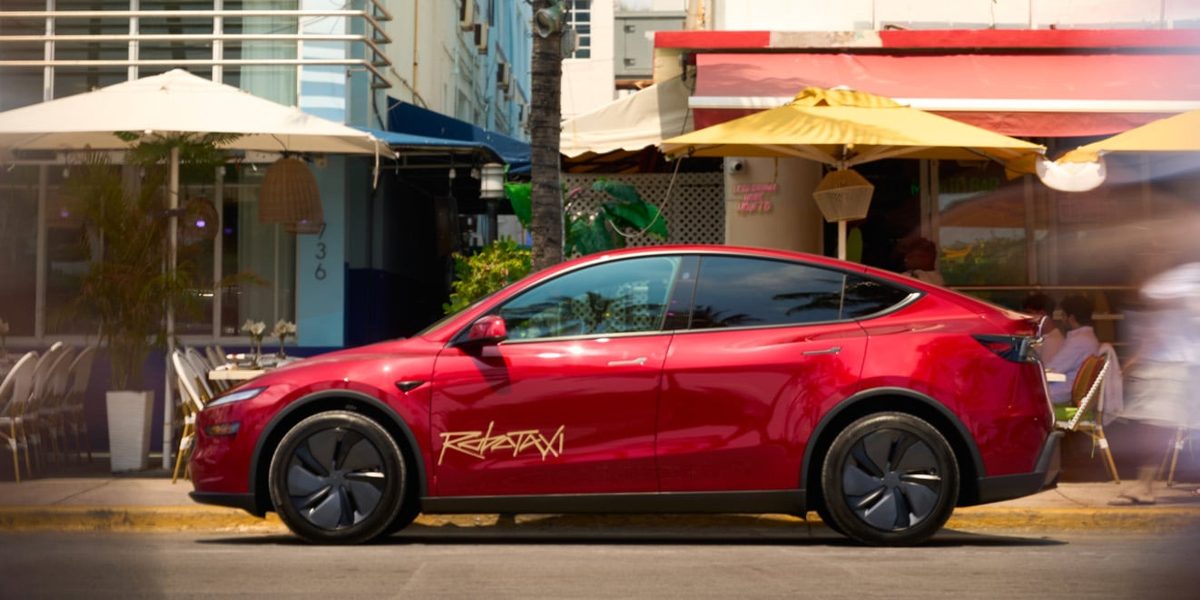
In western Miami-Dade County, you can now open an app and ride in a Tesla with nobody in the driver's seat. On July 6, 2026, Tesla began running its Robotaxi service on public Miami streets with no human safety monitor in the car. Tesla shares closed up 6.7% that day — lifted by the Miami launch and a Q2 delivery report that beat analyst estimates by about 18%.

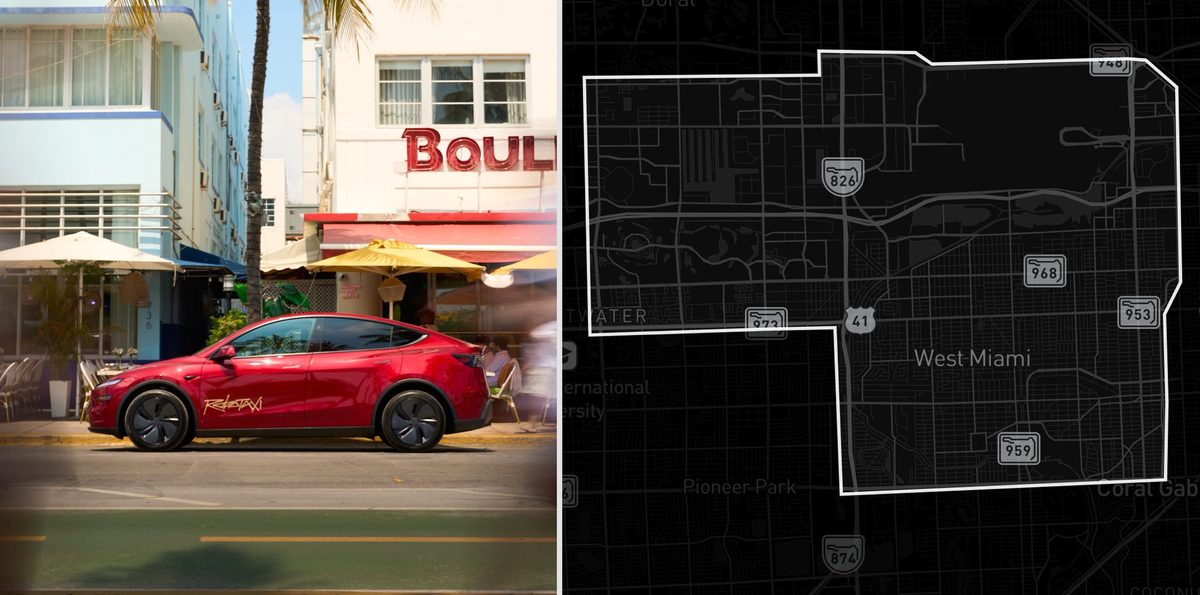
Miami is Tesla's first robotaxi market outside Texas, and its first to go fully driverless from day one. The service covers a 10-to-14-square-mile zone in western Miami-Dade, including the area around Miami International Airport. The camera-only self-driving system now runs in a city famous for sudden heavy rain — the exact condition federal regulators flagged as a possible weakness in March.

Why it matters

Driverless ride-hailing is now a real service you can pay for in a second state, running on cameras alone while regulators probe whether that is safe enough.

Questions about this story

No questions yet — be the first to ask.

Key Indicators

10-14 sq mi
Miami service zone
The area of western and central Miami-Dade where riders can hail a driverless Model Y, including the area near Miami International Airport.
0
Safety monitors in car
Miami launched with no human in the vehicle, unlike Tesla's Austin start.
~3.2M
Vehicles under federal probe
NHTSA's March analysis covers Tesla cars whose cameras may fail to detect reduced visibility.
6.7%
Tesla stock move
Shares closed up 6.7% on July 6, driven by the Miami launch and Q2 deliveries that beat analyst forecasts by about 18%.
2nd
State with paid rides
Florida joins Texas as a state with commercial Tesla robotaxi service.

Voices

Curated perspectives — historical figures and your fellow readers.

Ever wondered what historical figures would say about today's headlines?

Sign up to generate historical perspectives on this story.

Play

Exploring all sides of a story is often best achieved with Play.

Log in to play. Track your picks, climb the leaderboards. Log in Sign Up
Predict 4 ways this could play out. Contrarian picks score more — points lock when the scenario resolves. Log in to play
Higher or Lower Two numbers from this story. Guess which is bigger. 5 rounds to set a streak. Log in to play
Timeline Five events from this story — drag them oldest to newest. Log in to play
Connections Sixteen names from the news. Find the four hidden groups of four. Log in to play

People Involved

Organizations Involved

Timeline

June 2025 July 2026

9 events Latest: Today
Tap a bar to jump to that date
  1. Tesla confirms 5.2M sq ft Giga Texas expansion tied to Cybercab ramp

    Today Production

    Tesla confirmed the 5.2-million-square-foot Terafab North Campus buildout at Giga Texas, including chip R&D and Cybercab production lines — the announcement VP Lars Moravy had teased the previous week.

  2. Tesla launches driverless service in Miami

    Launch

    Tesla opened a fully unsupervised Robotaxi service across a 10-to-14-square-mile zone in Miami-Dade, its first market outside Texas. Shares rose about 1.5%.

  3. Tesla Q2 deliveries beat forecasts by 18%

    Financial

    Tesla delivered 480,126 vehicles in Q2 2026, up 25% year-over-year and about 18% above analyst estimates of roughly 406,600. The result combined with the Miami launch to push shares up 6.7% on July 6.

  4. Tesla seeks 5,000 Las Vegas permits

    Regulatory

    Tesla filed for up to 5,000 Las Vegas robotaxi slots while its active unsupervised fleet stood at roughly 20 cars.

  5. Tesla expands Austin service area

    Expansion

    Tesla widened its unsupervised Austin zone, though still running only a handful of vehicles.

  6. Federal regulators open safety probe

    Regulatory

    NHTSA opened an engineering analysis covering about 3.2 million vehicles over cameras that may fail in sun glare, fog, or rain.

  7. Unsupervised public rides begin in Austin

    Milestone

    Tesla moved some Austin cars to fully driverless public rides, with remote monitoring instead of an onboard monitor.

  8. First rides with no safety driver

    Milestone

    Tesla started testing Austin robotaxis with no human in the driver's seat, initially carrying employees.

  9. Tesla launches Austin robotaxi pilot

    Launch

    Tesla began paid rides in Austin with about ten Model Y cars and a safety monitor in the passenger seat.

Historical Context

2 moments from history that rhyme with this story — and how they unfolded.

October 2020

Waymo opens driverless rides to the public in Phoenix (2020)

Waymo opened its fully driverless ride service to the general public in the Phoenix suburbs, with no safety driver in the car. It was the first company to offer paid, no-driver rides to ordinary riders. Waymo used a mix of cameras, radar, and laser sensors.

Then

The service ran in a limited, mapped area and expanded slowly over the next few years.

Now

Waymo grew into paid service in San Francisco, Los Angeles, and other cities, becoming the benchmark rival Tesla is measured against.

Why this matters now

Waymo proved driverless ride-hailing can work commercially, but chose sensor-heavy hardware. Tesla is now attempting the same milestone with cameras alone.

October 2023

GM's Cruise loses its California permits after a pedestrian crash (2023)

A Cruise robotaxi in San Francisco struck and dragged a pedestrian who had been hit by another car. California regulators suspended Cruise's driverless permits, citing safety and a lack of transparency. GM later wound the unit down.

Then

Cruise halted driverless operations nationwide and faced federal scrutiny.

Now

GM ended its robotaxi ambitions, showing how fast a single crash and a regulator can shut a program down.

Why this matters now

It shows the downside risk hanging over Tesla's Miami launch: one serious incident plus a regulator can end a driverless service quickly.

Sources

(14)