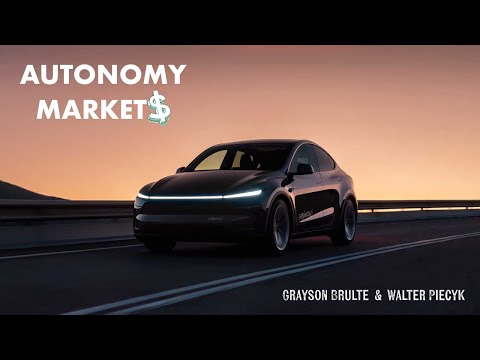
Nvidia and Uber announced plans to deploy 100,000 Level 4 autonomous robotaxis across 28 cities on four continents by 2028, using Nvidia's new DRIVE Hyperion 10 platform and Alpamayo, an open-source reasoning model. Five automakers—BYD, Geely, Stellantis, Lucid, and Mercedes-Benz—will manufacture vehicles with Nvidia's hardware pre-installed. Commercial rides begin in Los Angeles and San Francisco in the first half of 2027.
The announcement marks a shift in Uber's role from failed autonomous vehicle developer to the leading marketplace for other companies' self-driving fleets. It makes Nvidia the dominant supplier of computing hardware for autonomous driving—from Waymo's supplier Zeekr (a Geely brand) to Chinese operators like WeRide and Pony.ai. With Waymo already completing over 450,000 paid rides per week, the robotaxi industry is racing to scale instead of proving the technology works.
Questions about this story
Free account needed to ask — your question is kept and asked for you right after sign-up. Answers are public.
No questions yet — be the first to ask.
Key Indicators
100,000
Planned robotaxis by 2028
Target fleet size across the Nvidia-Uber partnership's 28-city deployment
28
Cities across four continents
Planned deployment spanning North America, Europe, Australia, and Asia
450,000+
Waymo weekly paid rides
Current industry leader's ride volume as of December 2025, tripling year-over-year
5.6%
Uber share price jump
Single-day stock increase to $78.83 on the announcement
2,000+
Teraflops per vehicle
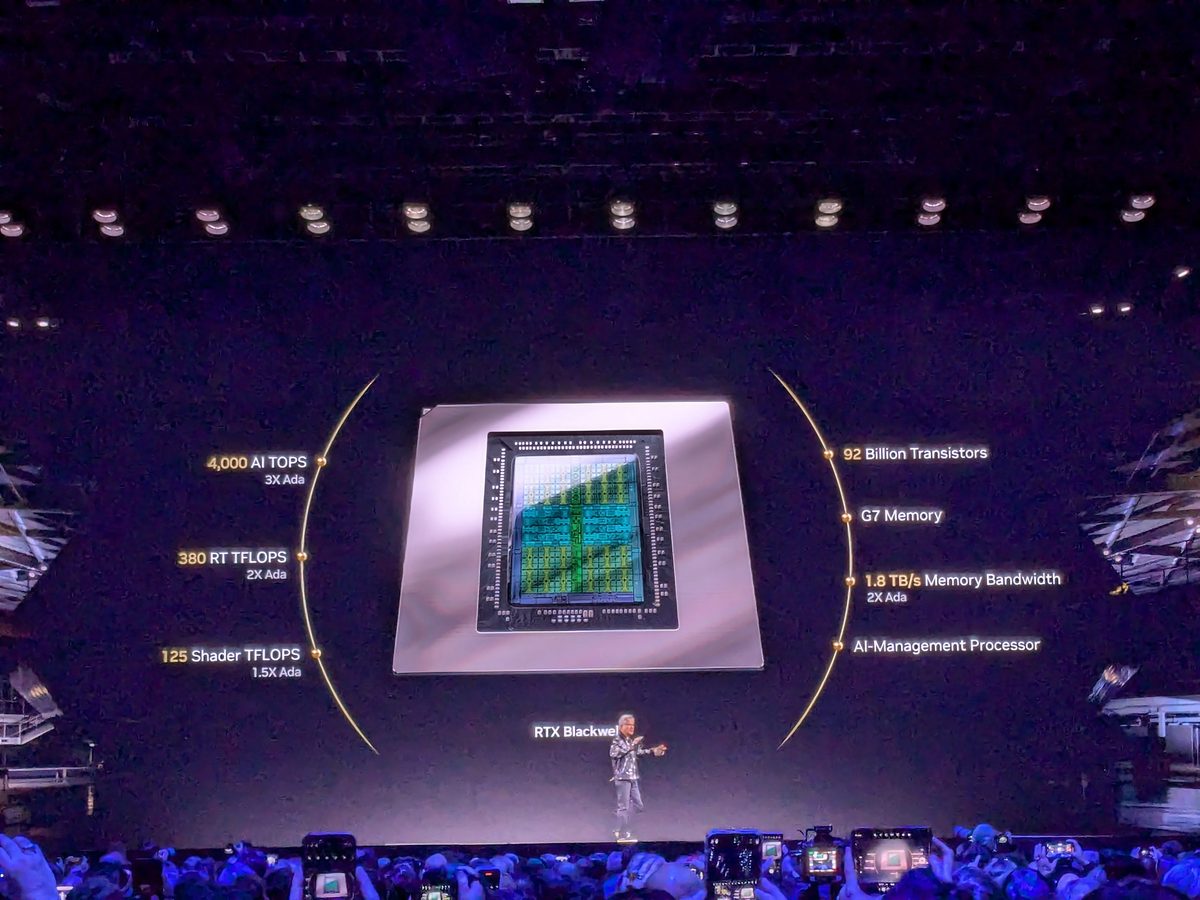
Computing power of the DRIVE Hyperion 10 platform using dual Thor processors
12 events
Latest: March 17th, 2026 · 7 months ago
Showing 8 of 12
JK to step
Tap a bar to jump to that date
Jump to
March 2026
Nvidia and Uber announce 28-city, 100,000-vehicle robotaxi plan
LatestPartnership
At Nvidia's GTC conference, Nvidia and Uber unveiled plans to deploy 100,000 Level 4 robotaxis across 28 cities by 2028 using the new DRIVE Hyperion 10 platform and Alpamayo AI model. Five automakers committed to manufacturing vehicles with Nvidia's hardware pre-integrated. Uber shares rose 5.6%.
Nvidia signs autonomous driving deals with BYD, Geely, Hyundai, Nissan
Partnership
At GTC 2026, Nvidia announced that BYD, Geely, Hyundai, Nissan, Stellantis, Lucid, and Mercedes-Benz would adopt its DRIVE Hyperion platform for Level 4 autonomous vehicles, making Nvidia's hardware the de facto industry standard.
Amazon's Zoox joins Uber platform for robotaxi rides
Partnership
Zoox, Amazon's autonomous vehicle subsidiary, agreed to offer rides through Uber's app starting in Las Vegas in summer 2026, with Los Angeles to follow in mid-2027.
Uber launched Uber Autonomous Solutions, a new division to manage all operational relationships with robotaxi, self-driving truck, and delivery robot partners.
December 2025
Waymo hits 450,000 weekly paid rides
Milestone
Waymo reported tripling its ride volume year-over-year, completing over 450,000 paid rides per week across Phoenix, San Francisco, Los Angeles, Austin, and Atlanta.
July 2025
Uber partners with Baidu for autonomous rides in Asia
Partnership
Uber partnered with Baidu's Apollo Go to deploy thousands of autonomous vehicles across Asia and the Middle East, expanding Uber's AV marketplace strategy beyond Western markets.
June 2025
Tesla launches limited robotaxi service in Austin
Launch
Tesla began offering supervised autonomous rides in Austin, Texas, with human safety monitors aboard. The fleet grew to roughly 135 vehicles by December 2025 but experienced well-documented performance issues.
April 2025
Aurora begins first commercial driverless trucking
Milestone
Aurora Innovation launched the first commercial driverless heavy-duty trucking on public roads, operating between Dallas and Houston. The company has since logged over 250,000 incident-free driverless miles.
December 2024
GM exits robotaxi business after spending $10 billion on Cruise
Business
General Motors announced it would stop funding Cruise's robotaxi development, writing off more than $10 billion in investment. The technology was redirected to GM's personal vehicle driver-assistance systems.
October 2023
Cruise robotaxi drags pedestrian in San Francisco
Incident
A General Motors Cruise robotaxi struck and dragged a pedestrian in San Francisco, leading California to revoke Cruise's testing permit and triggering the eventual shutdown of Cruise's robotaxi program.
December 2020
Uber sells self-driving unit to Aurora
Business
Uber sold its Advanced Technologies Group to Aurora Innovation, exiting direct autonomous vehicle development after spending billions. Uber retained a 26% stake in Aurora.
March 2018
Uber self-driving car kills pedestrian in Arizona
Incident
An Uber autonomous test vehicle struck and killed a pedestrian in Tempe, Arizona, becoming the first known fatal crash involving a self-driving car. Uber suspended all autonomous testing.
Scenarios
1
Nvidia becomes the 'Intel Inside' of autonomous driving as robotaxis reach millions of riders
Likely
Discussed by: Morgan Stanley, ARK Invest, and semiconductor analysts who see Nvidia replicating its data center dominance in the vehicle computing market
The 28-city deployment proceeds roughly on schedule, and Nvidia's DRIVE Hyperion becomes the standard computing platform for the majority of autonomous vehicles worldwide. By 2029, multiple operators running on Nvidia hardware collectively serve tens of millions of rides per week. Nvidia captures a recurring revenue stream from both hardware sales and software licensing, creating a new multi-billion-dollar business line alongside its data center GPU dominance. This scenario requires that Level 4 technology performs safely at scale and that regulatory approvals keep pace with deployment plans.
2
Deployment targets slip as regulatory and technical hurdles slow the 28-city rollout
Possible
Discussed by: Transportation safety researchers and autonomous vehicle skeptics who note that every major AV company has missed deployment timelines
The Los Angeles and San Francisco launches proceed in 2027, but scaling to 28 cities proves far harder than planned. Each city requires months of data collection, regulatory approval, and operational buildout. Safety incidents—whether from Nvidia-powered vehicles or competitors—trigger regulatory slowdowns. By 2029, the partnership has reached perhaps 10-12 cities rather than 28, and the 100,000-vehicle target is pushed back several years. The technology works, but the logistics of scaling across jurisdictions with different rules proves to be the real bottleneck.
3
A serious safety incident halts autonomous vehicle expansion industry-wide
Possible
Discussed by: Safety advocates and regulators who point to the Cruise and Uber precedents, where single incidents froze entire programs
A high-profile crash involving a Level 4 autonomous vehicle—whether on Nvidia's platform or a competitor's—kills or seriously injures passengers or bystanders, triggering a regulatory freeze similar to what followed the 2023 Cruise incident. Public trust, already fragile, collapses in the affected market. Cities pause or revoke operating permits. The industry doesn't die, but the timeline for mass deployment extends by three to five years as companies must meet substantially higher safety standards before resuming expansion.
4
Uber's marketplace model wins as vertically integrated competitors struggle to scale
Possible
Discussed by: Uber bulls and platform economics analysts who argue that Uber's network of riders and drivers creates an insurmountable distribution advantage
Uber's strategy of partnering with every major AV company—Waymo, Zoox, Nvidia's ecosystem, Baidu, Pony.ai, WeRide—means it can offer autonomous rides in far more cities than any single operator. Riders don't care which company built the car; they open Uber and get a ride. Waymo, Tesla, and others that insist on controlling the full stack find that building a rider network from scratch is as hard as building the technology itself. Uber becomes the dominant interface between autonomous vehicles and passengers, taking a cut of every ride without owning a single vehicle.
Historical Context
3 moments from history that rhyme with this story — and how they unfolded.
1 of 3
August 1981
IBM PC and the rise of Intel and Microsoft (1981)
IBM launched the Personal Computer in 1981 using an open architecture with Intel's 8088 processor and Microsoft's DOS operating system. IBM expected to control the market through its brand, but because the components were available to other manufacturers, dozens of companies began building IBM-compatible PCs. Within a decade, IBM's PC division was struggling while Intel and Microsoft—the component suppliers—captured the majority of the industry's profits.
Then
IBM sold millions of PCs and established the standard, but clones from Compaq and others quickly eroded its market share.
Now
Intel and Microsoft became two of the most valuable companies in the world by controlling the platform layer. IBM eventually sold its PC business to Lenovo in 2005.
Why this matters now
Nvidia is positioning DRIVE Hyperion as the standard computing platform that multiple automakers build vehicles around—the same structural role Intel played in PCs. If Nvidia succeeds, the automakers manufacturing robotaxis may find themselves in IBM's position: building the hardware while the platform supplier captures the most value.
2 of 3
March 2018 - December 2020
Uber sells self-driving unit after fatal crash (2018-2020)
In March 2018, an Uber autonomous test vehicle operating in Tempe, Arizona struck and killed Elaine Herzberg, a 49-year-old pedestrian—the first known fatality caused by a self-driving car. Investigations revealed the vehicle's software had detected Herzberg 6 seconds before impact but failed to classify her correctly. Uber suspended all autonomous testing, and in December 2020 sold its entire self-driving division to Aurora Innovation.
Then
Uber lost billions of dollars in self-driving investment and exited direct AV development. The safety operator in the vehicle was later charged with negligent homicide.
Now
Uber pivoted to a platform strategy, partnering with other AV companies rather than building its own technology. This asset-light approach is now the foundation of the Nvidia partnership.
Why this matters now
The Nvidia announcement represents the full-circle completion of Uber's pivot from autonomous vehicle developer to autonomous vehicle marketplace. The company that once tried to build self-driving cars and suffered a fatal crash is now positioning itself as the platform that connects every other company's self-driving cars to riders.
3 of 3
October 2023 - December 2024
Cruise shutdown after San Francisco pedestrian dragging (2023-2024)
In October 2023, a General Motors Cruise robotaxi in San Francisco struck a pedestrian who had been knocked into its path by another vehicle, then dragged her approximately 20 feet before stopping. California's Department of Motor Vehicles revoked Cruise's testing permit. Investigations revealed Cruise had withheld video footage from regulators showing the full extent of the dragging.
Then
Cruise's CEO resigned, and the company suspended all operations nationwide. GM laid off roughly 1,000 Cruise employees.
Now
In December 2024, GM announced it would stop funding Cruise's robotaxi program entirely, writing off more than $10 billion in cumulative investment. The technology was folded into GM's personal vehicle driver-assistance systems.
Why this matters now
The Cruise collapse is the clearest example of how a single safety incident can destroy a robotaxi program worth billions. Every company in the Nvidia-Uber partnership—and every regulator evaluating their applications—is operating in the shadow of what happened to Cruise. It also demonstrates why Uber's platform approach carries less risk than vertical integration: if one partner's technology fails, Uber can shift riders to another.