
Pull to refresh
Logo
Daily Brief
Following
Why Sign Up
Uber bets $1.25 billion on Rivian to build its own robotaxi fleet — again

Uber bets $1.25 billion on Rivian to build its own robotaxi fleet — again

Money Moves
By Newzino Staff |

Six years after abandoning in-house self-driving, Uber returns to fleet ownership with a 50,000-vehicle commitment

Today: Uber invests up to $1.25 billion in Rivian for 50,000 robotaxis

Overview

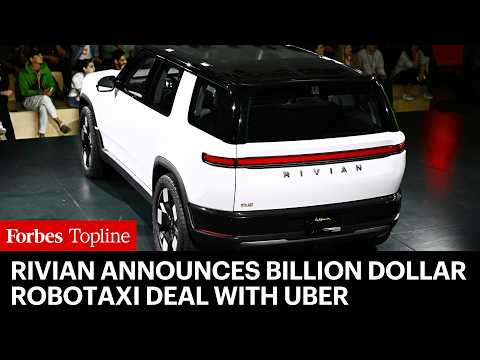
Uber sold its self-driving car unit in 2020 after burning billions and killing a pedestrian. Now it's spending up to $1.25 billion to do it all over again — this time with Rivian building the cars. The deal commits Uber to purchasing up to 50,000 autonomous R2 sport utility vehicles for deployment across 25 cities by 2031, beginning in San Francisco and Miami in 2028.

Why it matters

This deal reshapes who controls the future of urban transportation — and whether ride-hailing apps or carmakers capture the value.

Key Indicators

$1.25B
Uber's total investment commitment
Structured in five tranches tied to Rivian hitting autonomous driving milestones
50,000
Maximum robotaxi fleet size
Initial purchase of 10,000 R2 vehicles with an option for 40,000 more starting 2030
25
Target cities by 2031
Deployment begins in San Francisco and Miami in 2028, expanding across the United States, Canada, and Europe
400,000
Waymo's current weekly paid rides
Alphabet's robotaxi service already operates in 10 cities and is targeting 1 million rides per week by late 2026
$10B+
What GM lost on Cruise
General Motors folded its Cruise robotaxi program in December 2024 after accumulating over $10 billion in losses

Interactive

Exploring all sides of a story is often best achieved with Play.

Ever wondered what historical figures would say about today's headlines?

Sign up to generate historical perspectives on this story.

Sign Up

Debate Arena

Two rounds, two personas, one winner. You set the crossfire.

People Involved

Organizations Involved

Timeline

  1. Uber invests up to $1.25 billion in Rivian for 50,000 robotaxis

    Partnership

    Uber announced a $300 million initial equity investment in Rivian with up to $950 million more tied to autonomy milestones, committing to purchase up to 50,000 autonomous R2 vehicles for deployment in 25 cities by 2031.

  2. Uber announces Zoox robotaxi partnership

    Partnership

    Uber and Amazon's Zoox announced a multiyear deal to deploy Zoox's purpose-built robotaxis on the Uber app, beginning in Las Vegas in summer 2026 and Los Angeles in 2027.

  3. Rivian unveils custom autonomy chip and sensor platform

    Technology

    Rivian announced its RAP1 custom 5-nanometer chip and third-generation autonomy hardware, delivering 1,600 trillion operations per second of artificial intelligence compute with 11 cameras, 5 radars, and lidar.

  4. Tesla launches robotaxi service in Austin with limited fleet

    Industry

    Tesla began offering autonomous rides in Austin, Texas, but the service remained limited — after eight months, only about 35 vehicles were operating with 19% uptime and 15 reported crash incidents.

  5. General Motors shuts down Cruise robotaxi program

    Industry

    General Motors folded its Cruise robotaxi division after accumulating over $10 billion in losses and a severe accident in San Francisco where a robotaxi dragged a pedestrian.

  6. Uber partners with Waymo for robotaxi rides

    Partnership

    Uber and Waymo began offering autonomous rides through the Uber app in Austin and Atlanta, with over 100 Waymo vehicles on the platform.

  7. Uber sells self-driving unit to Aurora Innovation

    Corporate

    Uber sold its Advanced Technologies Group to Aurora in a deal valuing the combined company at $10 billion, with Uber's unit marked down to roughly $4 billion. Uber invested $400 million in Aurora and its chief executive joined Aurora's board.

  8. Uber spins out self-driving unit at $7.25 billion valuation

    Corporate

    Toyota, Denso, and SoftBank's Vision Fund invested $1 billion in Uber's Advanced Technologies Group, valuing the unit at $7.25 billion.

  9. Uber self-driving car kills pedestrian in Arizona

    Incident

    A self-driving Uber vehicle struck and killed 49-year-old Elaine Herzberg in Tempe, Arizona — the first known pedestrian death involving an autonomous vehicle. Uber suspended all testing.

  10. Uber launches self-driving car program

    Corporate

    Uber established its Advanced Technologies Group to develop autonomous driving technology in-house, entering a race with Google, General Motors, and others.

Scenarios

1

Uber becomes the operating system for autonomous mobility

Discussed by: Deutsche Bank analyst Benjamin Black, Evercore ISI analysts

Uber's multi-partner strategy pays off. By 2031, its app aggregates robotaxis from Rivian, Waymo, Zoox, and others across dozens of cities — much as it once aggregated human drivers. No single autonomous vehicle maker has the scale to match Uber's demand network, so they all route through its platform. Uber collects a high-margin take rate on every autonomous mile without bearing the full capital cost of fleet ownership. This scenario requires that no single competitor builds both a superior autonomous system and a consumer-facing ride-hailing network.

2

Waymo bypasses Uber entirely, captures the robotaxi market

Discussed by: Morgan Stanley analysts, autonomous vehicle industry observers

Waymo's growing independence from Uber accelerates. Having already expanded to multiple cities without Uber's platform, Waymo builds its own consumer brand and rider network. With 400,000 weekly rides and climbing, Waymo demonstrates that the technology leader doesn't need a middleman — riders open the Waymo app directly. Uber's Rivian fleet arrives in 2028 to find Waymo already dominant in its target cities, and the $1.25 billion investment becomes a stranded asset.

3

Rivian fails to deliver Level 4 autonomy on schedule

Discussed by: Morgan Stanley (maintains Underweight rating on Rivian), skeptical autonomous vehicle analysts

Rivian's autonomy stack, while impressive on paper, fails to reach the safety and reliability standards needed for unsupervised Level 4 deployment by 2028. Uber's milestone-based investment structure limits losses — only $300 million is committed upfront — but the delay leaves Uber without its own fleet while competitors advance. This mirrors the broader pattern in autonomous driving, where timelines have consistently slipped by years. Rivian's custom RAP1 chip is unproven in commercial autonomous driving at scale.

4

Capital intensity overwhelms both companies

Discussed by: Simply Wall Street analysts, industry skeptics citing General Motors' Cruise failure

The deal tests Uber's carefully cultivated capital-light narrative. Purchasing 50,000 vehicles, paying licensing fees for Rivian's software, and maintaining an autonomous fleet requires the kind of heavy investment Uber explicitly abandoned in 2020. If utilization rates disappoint or regulatory approvals stall, both companies face pressure — Rivian because it needs the revenue, Uber because it promised investors it wouldn't become a fleet operator again. General Motors spent $10 billion on Cruise before walking away.

Historical Context

Uber sells self-driving unit to Aurora Innovation (2020)

December 2020

What Happened

After spending an estimated $2.5 billion on autonomous vehicle development and suffering the reputational and legal fallout from the 2018 pedestrian death in Tempe, Arizona, Uber sold its Advanced Technologies Group to Aurora Innovation. The unit, valued at $7.25 billion just 18 months earlier, was marked down to roughly $4 billion. Uber invested $400 million in Aurora and chief executive Dara Khosrowshahi joined Aurora's board.

Outcome

Short Term

Uber cut its largest cost center and repositioned as a capital-light platform, contributing to its first-ever profitable quarter in 2023.

Long Term

Aurora has struggled to commercialize the technology at scale, and Uber's stake has declined in value — validating the sale decision but leaving Uber without its own autonomous capability as competitors advanced.

Why It's Relevant Today

The Rivian deal directly reverses the 2020 decision. Uber is returning to fleet ownership and capital commitment — but this time with milestone-based investment tranches designed to limit downside risk if the technology fails to materialize.

General Motors acquires and then abandons Cruise (2016–2024)

March 2016 – December 2024

What Happened

General Motors purchased autonomous driving startup Cruise for roughly $1 billion in 2016 and spent the next eight years pouring money into it — accumulating over $10 billion in operating losses at a rate of about $2 billion per year. In October 2023, a Cruise robotaxi struck a pedestrian in San Francisco and dragged her 20 feet, leading to a suspended operating permit and a crisis of public trust. In December 2024, General Motors shut down the robotaxi program entirely.

Outcome

Short Term

Cruise's workforce was cut by roughly 50%, and General Motors redirected remaining autonomous technology toward its Super Cruise driver-assistance system for personal vehicles.

Long Term

The Cruise failure demonstrated that even a major automaker with deep pockets could not sustain the capital demands of robotaxi development indefinitely. It became the cautionary tale for the industry.

Why It's Relevant Today

The Cruise collapse is the shadow hanging over every robotaxi investment. Uber's milestone-based structure for the Rivian deal — releasing capital only as autonomy targets are met — appears designed specifically to avoid the open-ended spending that sank Cruise.

Apple cancels Project Titan self-driving car (2024)

2014 – February 2024

What Happened

After roughly a decade and an estimated $10 billion in spending, Apple cancelled its autonomous vehicle project, known internally as Project Titan. The company had shifted its ambitions multiple times — from building a full car to developing autonomous driving software and back again — without producing a commercial product. The cancellation came as Apple redirected engineering resources toward artificial intelligence.

Outcome

Short Term

Approximately 2,000 employees were reassigned, many to Apple's generative artificial intelligence teams.

Long Term

Apple's exit reinforced the difficulty of autonomous vehicle development even for the world's most valuable technology company, narrowing the field of serious contenders.

Why It's Relevant Today

Apple, General Motors, and Uber itself have all abandoned autonomous vehicle programs after billions in losses. Rivian's pitch — that vertical integration of vehicle hardware, custom silicon, and software can succeed where others failed — remains unproven at Level 4 autonomy.

Sources

(10)