

Pull to refresh
Logo
Daily Brief
Following
Why Sign Up
Uber's robotaxi platform takes shape

Uber's robotaxi platform takes shape

New Capabilities
By Newzino Staff |

Q1 2026 earnings beat accompanies a 10,000-vehicle Rivian commitment with Hertz

Today: Q1 2026 results and Rivian–Hertz fleet announcement

Overview

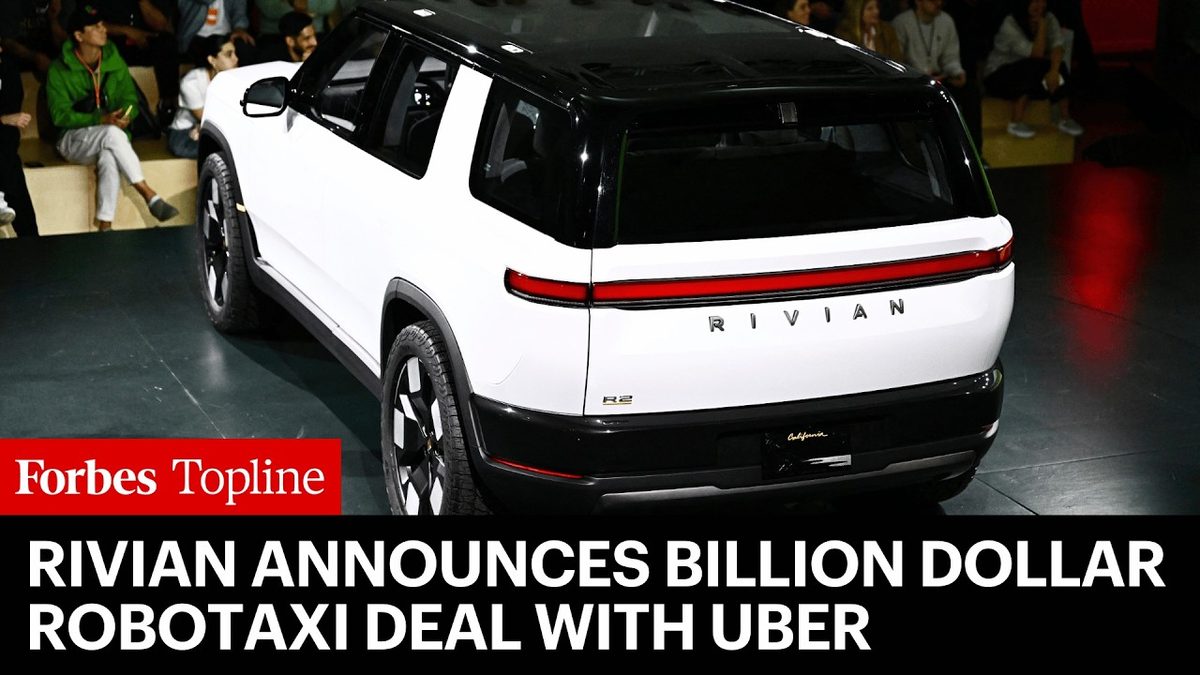
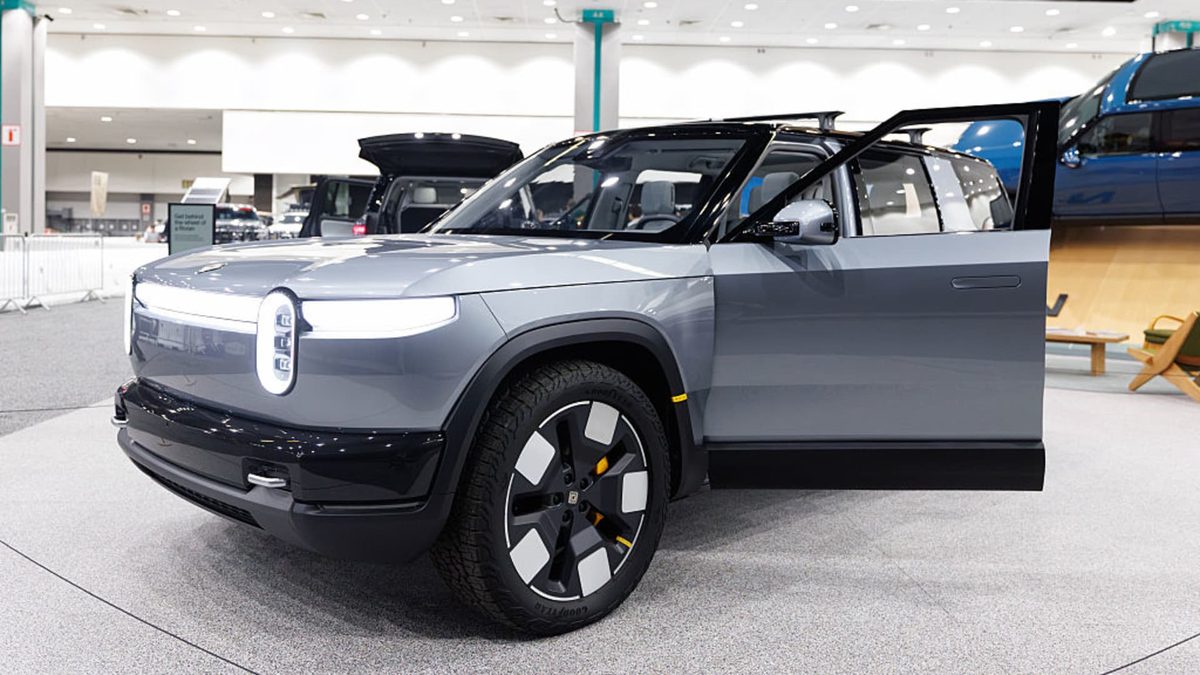
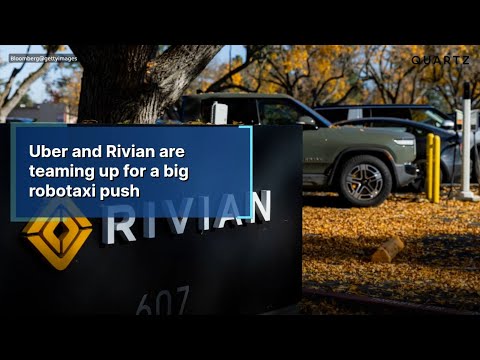
For most of its life, Uber has been a marketplace for human drivers with their own cars. On May 6, 2026, the company laid out the clearest version yet of a different model: a marketplace for robotaxis it neither owns nor operates. Alongside its first-quarter results—gross bookings of $53.7 billion, up 25% from a year earlier—Uber said it would deploy 10,000 Rivian R2 robotaxis on its network through Hertz's Oro Mobility unit, starting in San Francisco and Miami in 2028.

Why it matters

If Uber's robotaxi pivot works, future rides will have no driver—and Uber, not the carmaker or fleet operator, will set the price.

Key Indicators

$53.7B
Q1 2026 gross bookings
Up 25% year-over-year, beating the $52.8 billion Wall Street consensus.
10,000
Rivian R2 robotaxis committed
Largest single fleet commitment Uber has announced with any AV partner.
2028
Target deployment
San Francisco and Miami are the first two markets named for the Rivian–Hertz rollout.
$0.13
Q1 EPS vs. $0.70 expected
Earnings missed sharply on one-time items even as bookings beat.
~8%
Stock move on the day
Investors prioritized the bookings beat and Q2 guide over the EPS miss.
$56.25–57.75B
Q2 2026 bookings guide
Above consensus, implying continued mid-20% growth in the next quarter.

Interactive

Exploring all sides of a story is often best achieved with Play.

Ever wondered what historical figures would say about today's headlines?

Sign up to generate historical perspectives on this story.

Sign Up

Debate Arena

Two rounds, two personas, one winner. You set the crossfire.

People Involved

Organizations Involved

Timeline

  1. Q1 2026 results and Rivian–Hertz fleet announcement

    Earnings

    Uber reported Q1 gross bookings of $53.7 billion, raised Q2 guidance, and committed to 10,000 Rivian R2 robotaxis operated by Hertz's Oro Mobility unit in San Francisco and Miami starting in 2028.

  2. Waymo–Uber launch in Austin

    Partnership

    Robotaxi service in Austin went live exclusively through the Uber app, the first city where Waymo handed dispatch entirely to a third party.

  3. Waymo–Uber dispatch deal in Phoenix

    Partnership

    Waymo agreed to make its robotaxis available on the Uber app in Phoenix, marking Uber's first major step as an AV aggregator rather than operator.

  4. Uber sells self-driving unit to Aurora

    Corporate

    Uber exited the business of building its own autonomous vehicles, transferring its Advanced Technologies Group to Aurora in exchange for equity.

  5. Uber test vehicle kills pedestrian in Tempe

    Incident

    An Uber self-driving prototype struck and killed Elaine Herzberg in Arizona, prompting Uber to suspend its AV testing program and reassess its in-house effort.

Scenarios

1

Uber becomes the default app for autonomous rides

Discussed by: Bernstein and Wedbush analysts in post-earnings notes; CNBC coverage

If Rivian, Waymo and Wayve fleets all launch on Uber on schedule, the company captures the demand layer for autonomous rides the same way it captured the human-driver market. Network effects compound: more vehicles attract more riders, more riders attract more fleet operators, and Uber's pricing and routing software becomes the de facto standard. EPS converges with bookings growth as driver economics fade out.

2

Tesla's vertical robotaxi network splits the market

Discussed by: Tesla bulls; Morgan Stanley auto coverage

Tesla rolls out its own ride-hail app powered by its existing fleet of customer-owned and company-owned vehicles, refusing to dispatch through Uber. The market bifurcates: Tesla owns the cheap, vertically integrated end; Uber aggregates everyone else. Uber still grows but at a structurally lower margin than a winner-take-all outcome would deliver.

3

Robotaxi unit economics disappoint

Discussed by: Skeptical sell-side notes; transportation economists

Per-mile costs for AV fleets stay above human-driver costs through 2028 because of vehicle depreciation, insurance, charging downtime and remote-supervision overhead. Cities also cap or tax robotaxi rides to protect transit revenue and labor. Bookings keep growing, but contribution margin per autonomous ride ends up lower than the human-driven baseline, dragging Uber's blended take rate.

4

Regulators slow the 2028 launch

Discussed by: California PUC observers; municipal policy analysts

San Francisco's history with Cruise and Waymo suggests city and state regulators will scrutinize a 10,000-vehicle deployment closely. Permitting delays, geofencing restrictions, or post-incident suspensions push the meaningful launch from 2028 into 2029 or later, blunting the announcement's near-term impact on Uber's growth narrative.

Historical Context

Netflix DVD-to-streaming pivot (2007–2013)

January 2007–February 2013

What Happened

Netflix added streaming to its DVD-by-mail business in 2007, then spent six years deliberately shifting subscribers, content licensing, and capital toward the new medium. The 2011 Qwikster split-up briefly cost it customers, but by 2013 the company was producing original streaming content (House of Cards) and the DVD business was a runoff line item.

Outcome

Short Term

Subscriber count and stock price both took hits during the most aggressive phase of the transition.

Long Term

Netflix established itself as the dominant streaming platform years before competitors got serious, capturing a market it would have lost if it had clung to DVDs.

Why It's Relevant Today

Uber is attempting the same kind of business-model swap inside an existing customer base: keep ridesharing running while quietly converting the underlying supply from human drivers to autonomous fleets.

Uber's Advanced Technologies Group shutdown (2018–2020)

March 2018–December 2020

What Happened

Uber poured roughly $2.5 billion into building its own self-driving stack through ATG, only to suspend testing after the fatal Tempe crash in 2018 and ultimately sell the unit to Aurora in late 2020 in exchange for equity.

Outcome

Short Term

Uber removed a major source of operating losses and litigation risk from its income statement.

Long Term

The company decided AV technology was a commodity input it should buy rather than a differentiator it should build, which is the logic the Rivian–Hertz deal extends.

Why It's Relevant Today

The current strategy only works because Uber gave up on vertical integration. The Rivian announcement is the most concrete payoff so far from that 2020 retreat.

New York City taxi medallion collapse (2014–2018)

Mid-2014–2018

What Happened

Medallion prices in New York peaked above $1 million in 2014 before crashing as Uber and Lyft saturated the city. Owners who had borrowed against medallions faced insolvency; several drivers died by suicide as the collapse deepened.

Outcome

Short Term

Tens of thousands of taxi drivers and lenders absorbed catastrophic losses.

Long Term

Cities now treat any large mobility platform as a regulated entity rather than a disruptor, and labor groups have organized harder around platform work.

Why It's Relevant Today

Whatever the unit economics, a 10,000-vehicle robotaxi rollout in San Francisco and Miami will land in cities with vivid memories of what happened when ride-hail displaced the previous incumbent. Regulatory friction is likely to be heavy.

Sources

(3)