
Pull to refresh
Logo
Iran names missile-program veteran as defense minister during war with US and Israel

Iran names missile-program veteran as defense minister during war with US and Israel

Force in Play

Parliament approves Mehrdad Akhlaghi, ending eight months of interim leadership after the defense minister's death in February strikes.

Today: Parliament approves Akhlaghi as defense minister

Overview

Updated 1 hour ago

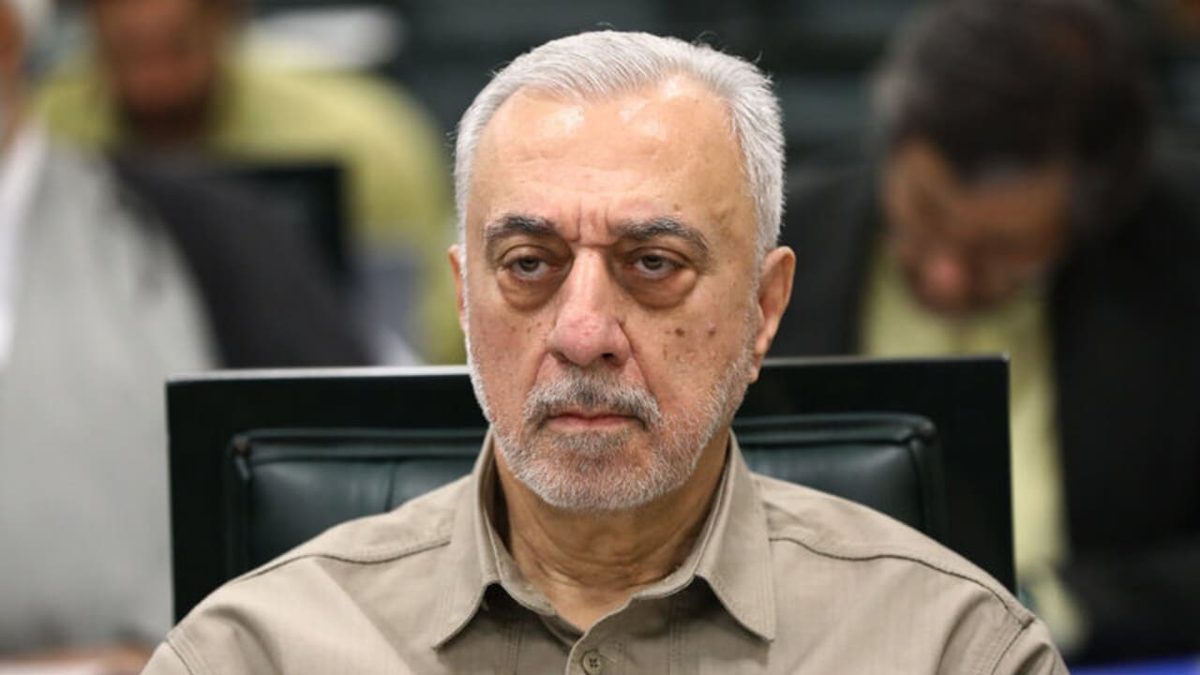
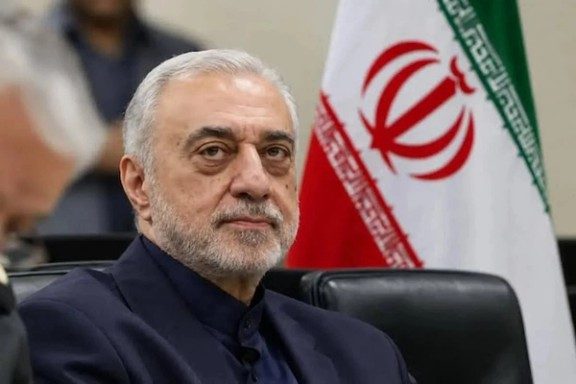
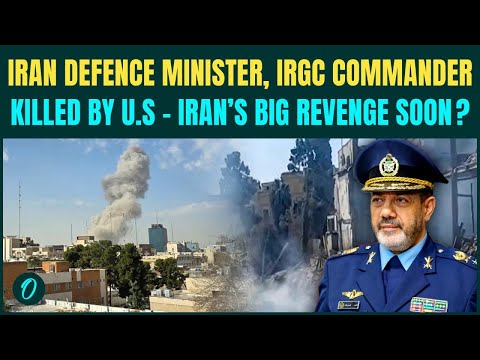
Iran's parliament voted Sunday to put Mehrdad Akhlaghi, a UN-sanctioned ballistic missile specialist, in charge of the country's defense industry. He takes over eight months after war with the United States and Israel killed his predecessor and the supreme leader on the conflict's first day.

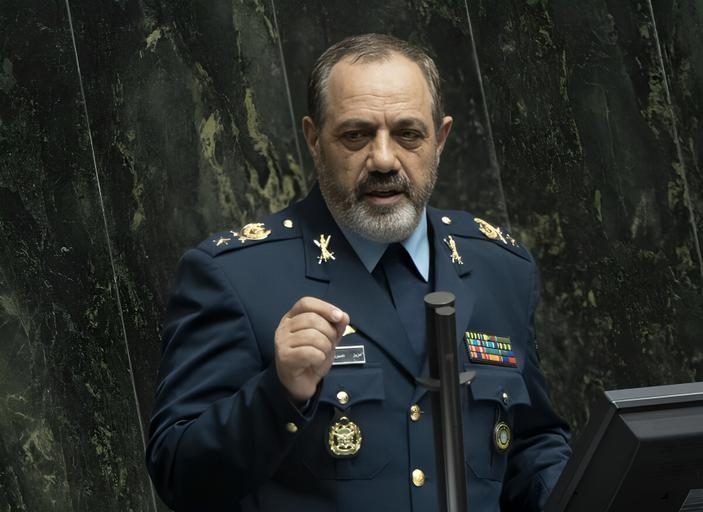
The vote formalizes a leadership change that began February 28, when US-Israeli strikes killed Defense Minister Aziz Nasirzadeh. Akhlaghi now manages the rebuilding of an industrial base that remains under active bombardment.

Why it matters

A UN-sanctioned missile specialist now controls Iran's defense industry mid-war; his choices shape whether the conflict escalates or winds down.

Questions about this story

Free account needed to ask — your question is kept and asked for you right after sign-up. Answers are public.

No questions yet — be the first to ask.

Key Indicators

237
Parliament votes in favor
237 of 277 lawmakers approved Akhlaghi's appointment on October 18.
42
Years in defense ministry
Akhlaghi has worked in Iran's defense sector for over four decades.
75%
Outsourcing target for defense output
Target for the Iranian year beginning March 2026, rising to 85% the following year.
6
Target development cycle (months)
Akhlaghi proposed cutting development time for certain new defense technologies to six months.

Voices

Curated perspectives — historical figures and your fellow readers.

Ever wondered what historical figures would say about today's headlines?

Sign up to generate historical perspectives on this story.

People Involved

Organizations Involved

Timeline

February 2026 October 2026

4 events Latest: Today
Tap a bar to jump to that date
  1. Parliament approves Akhlaghi as defense minister

    Today Government

    237 of 277 lawmakers vote to confirm Akhlaghi; Ebn-e-Reza becomes his deputy.

  2. Pezeshkian nominates Akhlaghi

    Nomination

    President Pezeshkian submits Akhlaghi's name to parliament for a vote of confidence.

  3. US-Israeli strikes open the war

    Conflict

    Strikes kill Defense Minister Nasirzadeh, Supreme Leader Khamenei, and other senior commanders.

  4. Ebn-e-Reza takes interim defense post

    Leadership

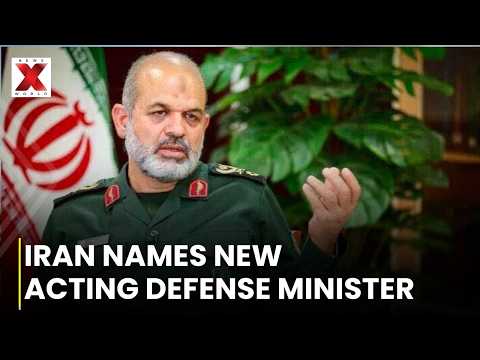
    Majid Ebn-e-Reza assumes the defense ministry in an acting capacity after Nasirzadeh's death.

Scenarios

1

War escalates as Akhlaghi pushes missile production surge

Possible Resolves by Apr 18, 2027

Discussed by: Al-Monitor, Iran International, Ynetnews

Akhlaghi's pledges to cut development cycles to six months, move factories into mountains, and expand missile and drone output point toward a production surge. If he follows through, expect more Iranian missile and drone attacks on US and Israeli targets, and more strikes on the fortified production sites he is building.

2

War winds down; Akhlaghi pivots to reconstruction

Unlikely Resolves by Apr 18, 2027

Discussed by: Ynetnews, The National

Foreign Minister Abbas Araghchi said Sunday the seven-day framework to end the war and reopen the Strait of Hormuz remains on the table, despite President Trump's rejection of it last month. If a ceasefire takes hold, Akhlaghi's mandate shifts from producing weapons under fire to rebuilding civilian and military infrastructure.

3

Rebuilding stalls under continued strikes and sanctions

Likely Resolves by Apr 18, 2027

Discussed by: Iran International, Al Jazeera

With production sites under bombardment and sanctions blocking imports of components and machine tools, Akhlaghi's target of outsourcing 75% of defense output by the Iranian year beginning March 2026 may prove unreachable. Reports of production shortfalls or missed deadlines would mark this scenario.

Historical Context

2 moments from history that rhyme with this story — and how they unfolded.

September 1980 - August 1988

Iran-Iraq War arms mobilization (1980-1988)

Facing a UN arms embargo and Western sanctions, Iran built a domestic missile and small-arms industry, eventually fielding the Shahab ballistic missile family with early foreign assistance to strike Iraqi cities. Factories were dispersed and hardened to survive bombardment.

Then

Iran sustained the eight-year war through domestic production when imports failed.

Now

Iran's defense industry became a permanent pillar of state power and the industrial base for its regional proxy network.

Why this matters now

Akhlaghi's mandate to rebuild domestic production and move factories underground mirrors that wartime push for self-sufficiency, but against a superior adversary striking his factories directly.

November 2020

Assassination of Mohsen Fakhrizadeh (2020)

When a remote-controlled bomb killed Mohsen Fakhrizadeh, the head of Iran's nuclear program, outside Tehran, the defense ministry and Islamic Revolutionary Guard Corps replaced him with lower-profile insiders without halting enrichment work.

Then

Nuclear work continued and enrichment advanced at Fordow and Natanz.

Now

Iran established a pattern of rapidly replacing assassinated officials with senior insiders to preserve program continuity.

Why this matters now

Akhlaghi's appointment extends that succession pattern, but at cabinet rank and mid-conflict, so the stakes are materially higher.

Sources

(10)