
Pull to refresh
Logo
Daily Brief
Following
Why
Iran's civilian government and Revolutionary Guards publicly split over war strategy

Iran's civilian government and Revolutionary Guards publicly split over war strategy

Force in Play
By Newzino Staff |

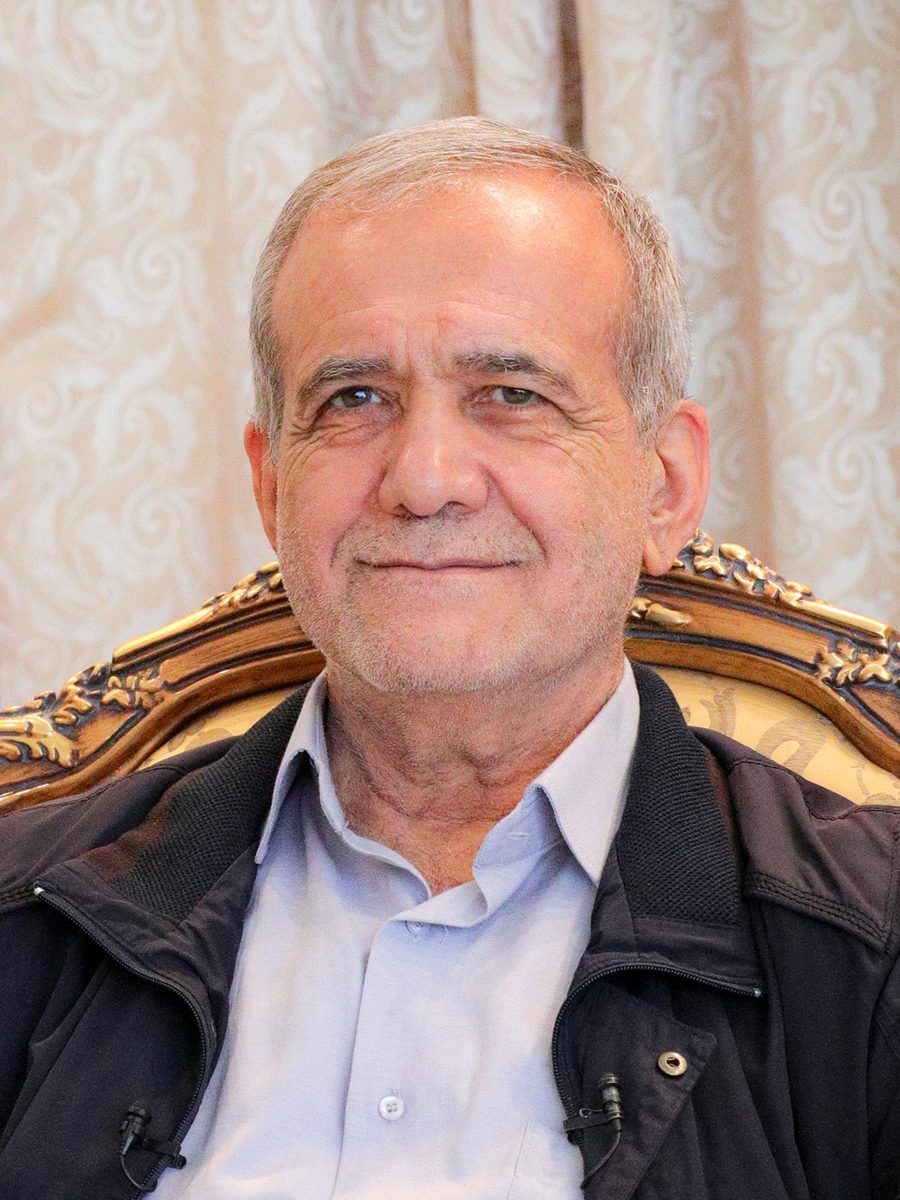
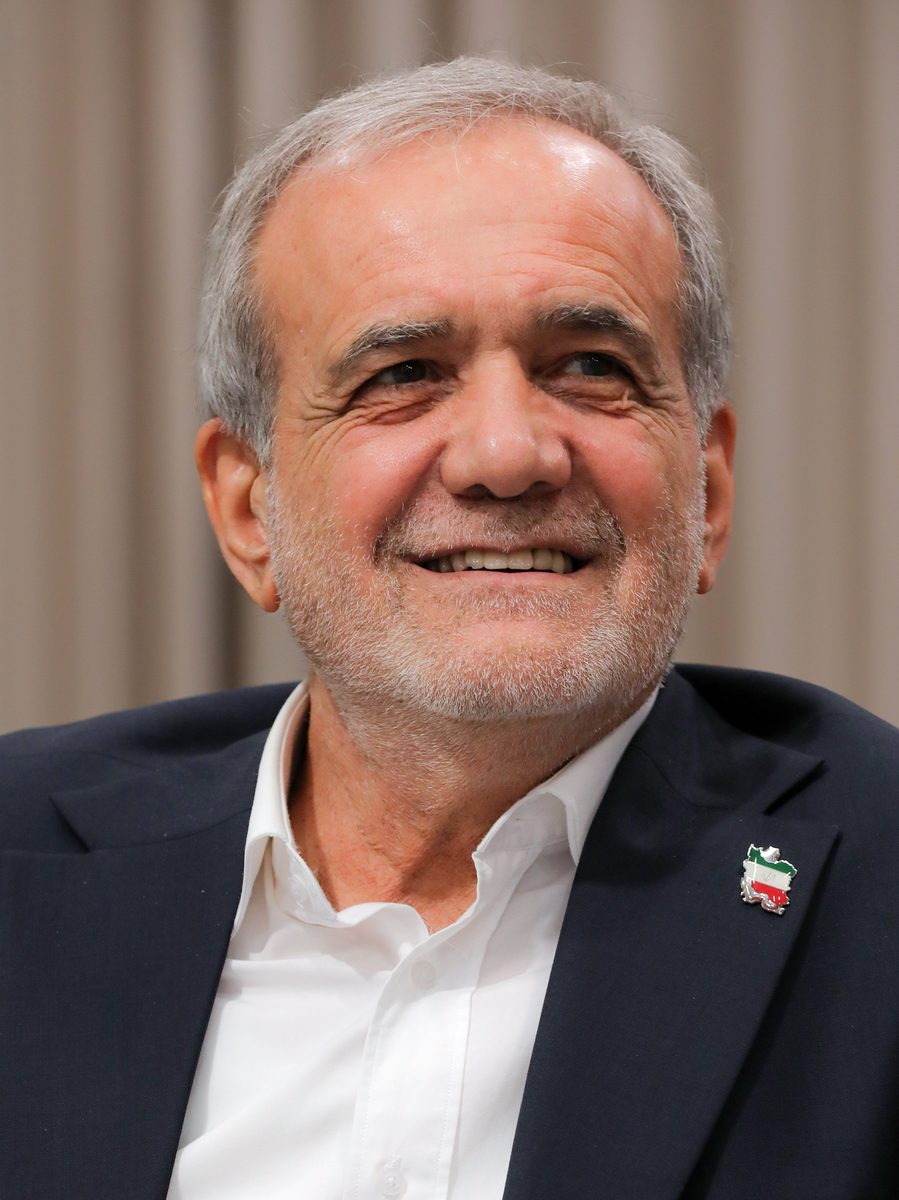
President Pezeshkian's apology to Gulf states was contradicted within hours by IRGC strikes, exposing a power vacuum after Khamenei's killing

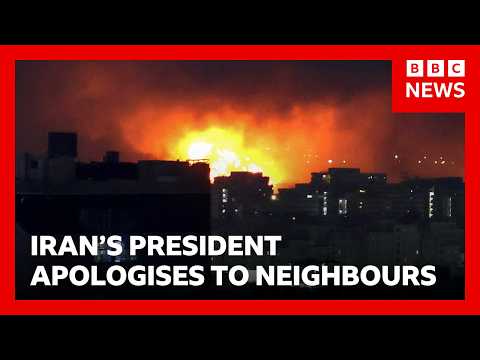
2 days ago: Pezeshkian apologizes to Gulf states, announces strike halt

Overview

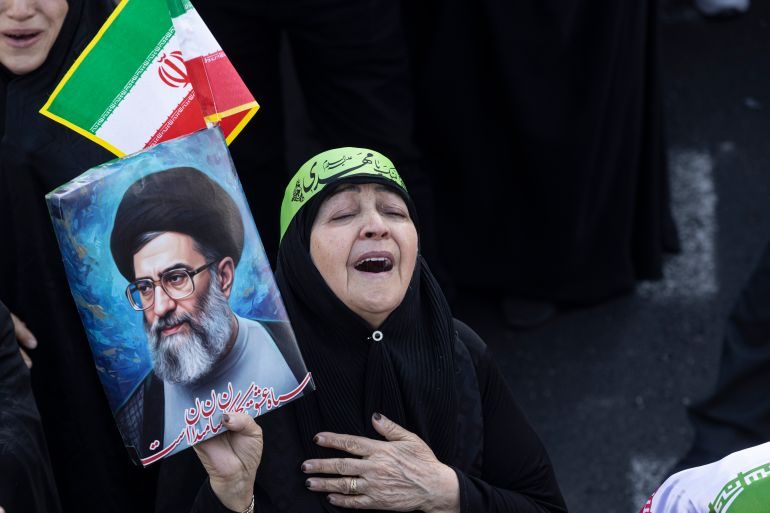
Iran's Supreme Leader controlled both the presidency and the Islamic Revolutionary Guard Corps (IRGC) for over four decades. Eight days after a joint United States-Israeli airstrike killed Ayatollah Ali Khamenei, that unified chain of command has visibly fractured: President Masoud Pezeshkian announced a halt to strikes on neighboring countries and personally apologized to Gulf states for hitting their civilian infrastructure, only for the IRGC to strike a U.S. air base in the United Arab Emirates (UAE) hours later and issue a statement telling the public to 'ignore Pezeshkian's words during the war.'

Key Indicators

~5 hours
Time between ceasefire pledge and contradicting strike
The IRGC struck the Al Dhafra Air Base in the UAE roughly five hours after Pezeshkian's televised announcement.
3
Members of interim leadership council
Pezeshkian (reformist president), Mohseni-Ejei (hardline judiciary chief), and Arafi (seminary head) hold supreme-leader powers jointly.
500+
Iranian missiles and drones launched since Feb 28
Iran's Fars News Agency reported over 500 ballistic and naval missiles and nearly 2,000 drones fired at targets in Israel and at U.S. bases across the Gulf region.
8+
Assembly of Experts members boycotting
At least eight members of the 88-seat body boycotted the vote to install Mojtaba Khamenei, citing IRGC pressure.

Interactive

Exploring all sides of a story is often best achieved with Play.

Ever wondered what historical figures would say about today's headlines?

Sign up to generate historical perspectives on this story.

Sign Up

Debate Arena

Two rounds, two personas, one winner. You set the crossfire.

People Involved

Masoud Pezeshkian
Masoud Pezeshkian
President of Iran, member of interim leadership council (Publicly overruled by IRGC; walked back apology under pressure)
Gholamhossein Mohseni-Ejei
Chief Justice of Iran, member of interim leadership council (Publicly contradicted Pezeshkian's ceasefire announcement)
Mojtaba Khamenei
Mojtaba Khamenei
Designated Supreme Leader of Iran (contested) (Selected by Assembly of Experts under IRGC pressure; legitimacy disputed)
Ayatollah Ali Khamenei
Former Supreme Leader of Iran (deceased) (Killed in US-Israeli airstrike on February 28, 2026)

Organizations Involved

Islamic Revolutionary Guard Corps (IRGC)
Military Organization
Status: Operating independently of presidential authority during wartime

Iran's ideological military force, which operates parallel to the regular army and answers directly to the Supreme Leader rather than the president.

Interim Leadership Council
Transitional governing body
Status: Holding supreme-leader powers; internally divided

A three-member body constitutionally empowered to exercise supreme-leader duties until a successor is installed, now visibly split between its reformist and hardline members.

Assembly of Experts
Assembly of Experts
Constitutional body
Status: Conducted contested Supreme Leader election under wartime conditions

The 88-member body of senior clerics constitutionally responsible for selecting, supervising, and if necessary dismissing Iran's Supreme Leader.

Timeline

  1. Pezeshkian apologizes to Gulf states, announces strike halt

    Statement

    In a televised address, President Pezeshkian said the interim leadership council had approved stopping attacks on neighboring countries and personally apologized for strikes on civilian infrastructure, attributing them to wartime miscommunication.

  2. IRGC strikes Al Dhafra Air Base in UAE, contradicting president

    Military

    Roughly five hours after Pezeshkian's announcement, the IRGC's navy drone unit struck the Al Dhafra Air Base south of Abu Dhabi. The IRGC issued a statement calling Pezeshkian's pledge a 'mistake' and instructing the public to 'ignore Pezeshkian's words during the war.'

  3. Mohseni-Ejei and hardliners publicly overrule Pezeshkian

    Political

    Judiciary chief Mohseni-Ejei said 'heavy strikes' on regional countries hosting U.S. forces would continue. Hardline lawmaker Hamid Rasai called the president's stance 'unprofessional, weak and unacceptable.' Pezeshkian later reposted his statement on social media with the apology removed.

  4. Second Assembly session; at least 8 members boycott

    Political

    A ratification vote was held, but at least eight Assembly members refused to attend, protesting what they called 'heavy pressure' from the Revolutionary Guards to impose Mojtaba Khamenei.

  5. Iran reports 500+ missiles and 2,000 drones fired since war began

    Military

    Fars News Agency reported that roughly 40 percent of launches targeted Israel and 60 percent targeted U.S. positions in the Gulf region.

  6. Assembly of Experts votes for Mojtaba Khamenei under IRGC pressure

    Political

    The Assembly held an emergency online session to select Khamenei's son Mojtaba as Supreme Leader. IRGC commanders made 'repeated contacts and psychological and political pressure' on members. A US-Israeli strike hit the Assembly's Qom offices before the count was completed.

  7. Iran confirms Khamenei's death; forms interim council

    Political

    Iranian state media confirmed Khamenei's killing. A three-member interim leadership council—Pezeshkian, Mohseni-Ejei, and Arafi—was formed to exercise supreme-leader powers. Iran declared 40 days of national mourning.

  8. IRGC launches mass retaliation across Gulf region

    Military

    Iran fired hundreds of drones and ballistic missiles at Israel and U.S. military bases in Qatar, Bahrain, the UAE, Kuwait, Iraq, Jordan, and Saudi Arabia. Strikes hit civilian infrastructure including a Bahrain water desalination plant and Kuwait's international airport.

  9. US-Israeli strikes begin; Khamenei killed

    Military

    Operation Epic Fury launched nearly 900 strikes in the first 12 hours. Ayatollah Ali Khamenei was killed in an Israeli strike on his Tehran compound, along with family members and dozens of senior officials.

Scenarios

1

IRGC consolidates wartime authority; Pezeshkian sidelined

Discussed by: NBC News, Al Jazeera analysts, Iran International, the Soufan Center

The IRGC continues operating as the de facto command authority, with Mojtaba Khamenei providing nominal clerical legitimacy as a figurehead Supreme Leader. Pezeshkian retains his title but loses any meaningful input on military decisions. This is the trajectory already underway: the Guards publicly overruled the president, faced no consequences, and pressured the succession process. In this scenario, Iran's war posture remains aggressive and Gulf states receive no credible ceasefire commitment.

2

Mojtaba Khamenei unifies command, restoring single chain of authority

Discussed by: Council on Foreign Relations, Times of Israel, Responsible Statecraft symposium

Mojtaba Khamenei consolidates enough legitimacy to function as a real Supreme Leader, not merely a IRGC-installed figurehead. He resolves the civilian-military split by subordinating the presidency to a clear chain of command, either siding with the Guards or negotiating a compromise on war strategy. This requires that Assembly of Experts holdouts fall in line and that Mojtaba survives continued targeting by US-Israeli forces—neither a certainty.

3

Power split paralyzes Iran's war effort, enabling a negotiated halt

Discussed by: CNN analysis, French-Iranian sociologist Azadeh Kian, UK House of Commons Library briefing

The rift between civilian leaders seeking de-escalation and the IRGC pursuing escalation produces contradictory signals that Gulf states, the U.S., or mediators exploit to broker a pause. Pezeshkian's apology, even if immediately contradicted, opened a diplomatic channel that didn't exist before. If sustained US-Israeli strikes continue degrading IRGC capabilities while civilian leaders maintain back-channel contact with Gulf governments, the military's ability to override the presidency could erode.

4

Internal fractures deepen into institutional collapse

Discussed by: Al Jazeera analysis, TIME, Washington Post reporting

The combination of wartime losses, contested succession, IRGC overreach, and civilian pushback fragments Iran's governing structure beyond repair. Assembly of Experts boycotters refuse to recognize Mojtaba, rival factions within the IRGC emerge as command losses mount, and the interim council ceases to function as a decision-making body. This is the scenario the US-Israeli operation was designed to produce—but Iran's institutions have survived severe crises before, and the IRGC's organizational depth makes full collapse unlikely in the near term.

Historical Context

Japan's Kwantung Army defies Tokyo (1931)

September 1931

What Happened

Officers of Japan's Kwantung Army staged the Mukden Incident—a false-flag bombing on a Japanese-owned railway—as a pretext to invade Manchuria, in direct violation of orders from the civilian government and the Imperial General Headquarters in Tokyo. Commander-in-chief General Shigeru Honjō expanded operations across Manchuria despite explicit instructions to localize the conflict.

Outcome

Short Term

The civilian government in Tokyo was unable to rein in the army. Japan occupied all of Manchuria within months and established the puppet state of Manchukuo.

Long Term

Military insubordination became normalized. By 1936, the army had sidelined civilian politicians from central government, setting Japan on the path to broader war in the Pacific.

Why It's Relevant Today

The Kwantung Army parallel is direct: a military force nominally subordinate to civilian authority acting on its own war strategy while the government issues contradictory public statements it cannot enforce. The key question for Iran is whether the IRGC's defiance produces the same long-term result—permanent military dominance over civilian authority.

Pakistan's military overrules civilian leaders on war and diplomacy (1990s–1999)

1990-1999

What Happened

During Prime Minister Nawaz Sharif's tenure, Pakistan's military repeatedly undermined civilian foreign policy. Army chief General Aslam Beg publicly contradicted government policy on the 1991 Gulf War. In 1999, Sharif's attempt to pursue peace with India—against the military's wishes—led directly to General Pervez Musharraf's coup, ending civilian rule.

Outcome

Short Term

Sharif was removed from power and sentenced to life in prison (later commuted). Musharraf ruled Pakistan for nearly a decade.

Long Term

Pakistan's military establishment permanently cemented its veto over foreign and defense policy, a dynamic that persists to this day.

Why It's Relevant Today

Pakistan illustrates what happens when a military with independent command structures and economic interests decides the civilian president's diplomatic positions are unacceptable. The IRGC's public instruction to 'ignore Pezeshkian's words' mirrors the pattern that in Pakistan ended with the military simply removing the elected leader.

Soviet succession crisis after Stalin's death (1953)

March-June 1953

What Happened

When Joseph Stalin died on March 5, 1953, no clear succession mechanism existed. A collective leadership formed among Georgy Malenkov (head of government), Lavrentiy Beria (secret police chief), and Nikita Khrushchev (party secretary). Beria, who controlled the security apparatus, initially appeared strongest—but his rivals combined against him within months.

Outcome

Short Term

Beria was arrested in June 1953 by military officers acting on orders from the other leaders, then executed in December. The immediate power struggle was resolved without state collapse.

Long Term

Khrushchev eventually emerged as sole leader by 1955, but only after years of maneuvering. The episode demonstrated that controlling the security forces is powerful but not decisive when other institutional players unite.

Why It's Relevant Today

Iran's interim council mirrors the post-Stalin collective leadership: a reformist, a hardliner controlling judicial/security powers, and a clerical figure, all jockeying for position while the state is under external pressure. The Soviet parallel suggests the player who controls armed forces has the advantage—but also that coalitions can form against overreach.

Sources

(18)