


Pull to refresh
Logo
Iran's economy falls into recession in first quarter of the US-Israeli war

Iran's economy falls into recession in first quarter of the US-Israeli war

Money Moves

Official data shows GDP shrank 10.1%; oil extraction plunged 26.4%

Yesterday: Statistical Center reports 10.1% GDP contraction

Overview

Updated 1 hour ago

Iran's economy contracted 10.1 percent in the three months ending June 20, the Statistical Center of Iran reported Sunday. That second straight quarterly decline meets the standard definition of a recession.

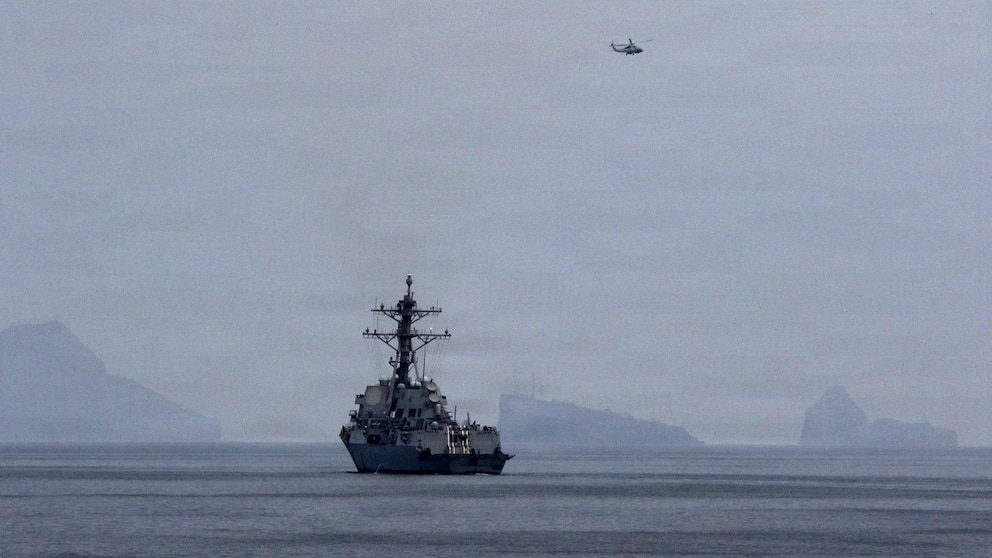
The fall tracks the war that opened with US-Israeli strikes on Feb. 28, which killed Iran's supreme leader and senior military officials. Oil and gas extraction dropped 26.4 percent, transport fell 17 percent, and unemployment rose to 9.1 percent from below 8. A US naval blockade of southern ports, still in place, has cut oil exports to roughly one-tenth of pre-war levels.

Why it matters

If the blockade holds and oil exports stay near a tenth of pre-war levels, Iran's foreign currency earnings and import capacity shrink further.

Questions about this story

Free account needed to ask — your question is kept and asked for you right after sign-up. Answers are public.

No questions yet — be the first to ask.

Key Indicators

-10.1%
Q1 2026 GDP growth, year-on-year
Second consecutive quarterly decline; the prior quarter posted negative 2.2 percent.
-26.4%
Oil and gas extraction output change
Hardest-hit sector; gas distribution fell 21.3 percent.
-4.6%
Non-oil GDP growth
GDP excluding petroleum contracted less than the headline figure.
9.1%
Unemployment rate
Up from below 8 percent pre-war; nearly half a million jobs lost by June.
~255,000 bpd
August oil loadings
Down from about 1.83 million barrels per day in March, per Kpler.
84%
Consumer price inflation, year-on-year (August)
Down from a 99 percent annual rate in May after the June 17 US deal.

Voices

Curated perspectives — historical figures and your fellow readers.

Ever wondered what historical figures would say about today's headlines?

Sign up to generate historical perspectives on this story.

People Involved

Organizations Involved

Timeline

February 2026 September 2026

5 events Latest: Yesterday
Tap a bar to jump to that date
  1. Statistical Center reports 10.1% GDP contraction

    Latest Economic data

    Q1 GDP fell 10.1% year-on-year; oil extraction down 26.4%; second straight quarterly decline confirms recession.

  2. Iran and US sign memorandum of understanding

    Diplomacy

    The deal eases the dollar by 15 percent and brings a brief lull in fighting.

  3. US naval blockades hit southern ports

    Conflict

    Two successive naval blockades target Iranian ports and related vessels; the second remains in place, choking trade.

  4. Iran blocks Strait of Hormuz

    Conflict

    Tehran retaliates, sending global oil prices surging as the conflict spreads across the region.

  5. US-Israeli strikes open war on Iran

    Conflict

    Bombing campaign kills Iran's supreme leader and senior military officials, beginning a vast offensive.

Scenarios

1

Détente holds, economy stabilizes

Likely Resolves by Dec 25, 2026

Discussed by: Responsible Statecraft, which notes the economy has repeatedly shrugged off collapse predictions

If the June 17 memorandum holds and the blockade eases, oil loadings recover from the August trough near 255,000 barrels per day. Inflation already fell from a 99 percent annual rate in May to about half that in July. The Pezeshkian government's practice of letting prices adjust rather than rationing has kept the economy functional so far.

2

Blockade persists, contraction deepens

Possible Resolves by Dec 30, 2026

Discussed by: Iran Chamber of Commerce and Kpler data

Manufacturers are burning through raw material inventories, with the August Purchasing Managers' Index at 46.9, below the 50 contraction line. If the blockade holds and oil exports stay near 255,000 barrels per day, oil revenue collapses, forcing money printing that re-accelerates inflation. A second straight quarter of double-digit contraction is plausible.

3

Government imposes rationing

Possible Resolves by End of 2026

Discussed by: Responsible Statecraft flagged the risk if food and fuel shortages emerge

The government has so far allowed prices to rise rather than fix them. When food and fuel imports fall far enough, that policy fails. Imported specialty medicines are already in short supply, and shortages of basics would force formal rationing.

Historical Context

3 moments from history that rhyme with this story — and how they unfolded.

September 1980 – August 1988

Iran-Iraq War (1980-1988)

Saddam Hussein invaded Iran in September 1980. Iraqi strikes on Kharg Island terminals cut Iran's oil exports from around 1.5 million barrels per day to near zero in the first year, collapsing GDP and state revenue.

Then

Iran lost most of its oil export revenue but kept functioning through import substitution and widespread rationing.

Now

The war ended in stalemate in 1988. Iran rebuilt slowly but carried a wartime economic model — state control and rationing — into the following decades.

Why this matters now

Shows Iran has absorbed extended foreign wars with heavy damage to oil infrastructure before, surviving through rationing and state management.

August 1990 – 2003

Iraq under UN sanctions (1990s)

After the 1991 Gulf War, the UN imposed comprehensive sanctions blocking nearly all Iraqi oil exports and imports, with the oil-for-food program as the exception. GDP fell by more than half in the early 1990s.

Then

Severe shortages of food, medicine, and basic goods; inflation soared; the regime controlled all distribution.

Now

Iraq's economy collapsed but the state survived for a decade until the 2003 invasion. Sanctions created dependency and corruption.

Why this matters now

The blockade of Iranian ports functions like an import cutoff, raising the question of how much economic pain a state can absorb before its control breaks.

May 2018 – January 2021

Iran under maximum pressure (2018-2021)

Trump withdrew from the 2015 nuclear deal and reimposed oil and banking sanctions. Iran's oil exports fell from around 2.5 million barrels per day to under 500,000; the rial collapsed and inflation hit roughly 40 percent.

Then

Growth stalled, but employment recovered from about 23 million to 25 million before the 2026 war.

Now

By purchasing-power-parity measure, per-capita GDP in 2025 was 9.6 percent higher than in 2018. Cash transfers cushioned the poor.

Why this matters now

The 2018-21 experience showed Iran could absorb severe sanctions without collapsing. The open question is whether war plus blockade now pushes past that threshold.

Sources

(9)