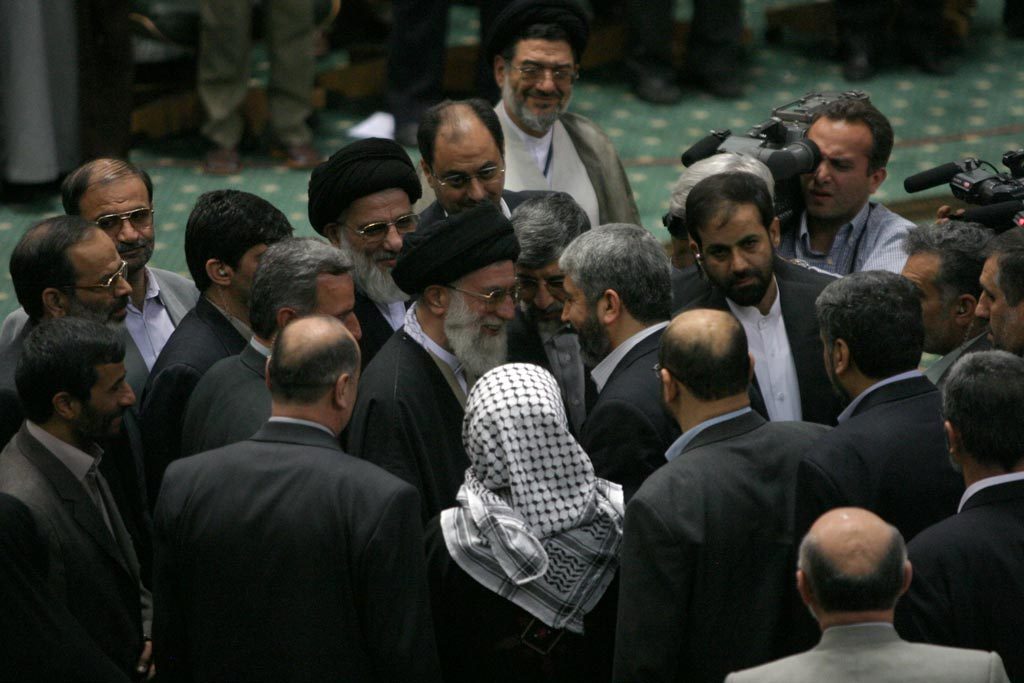
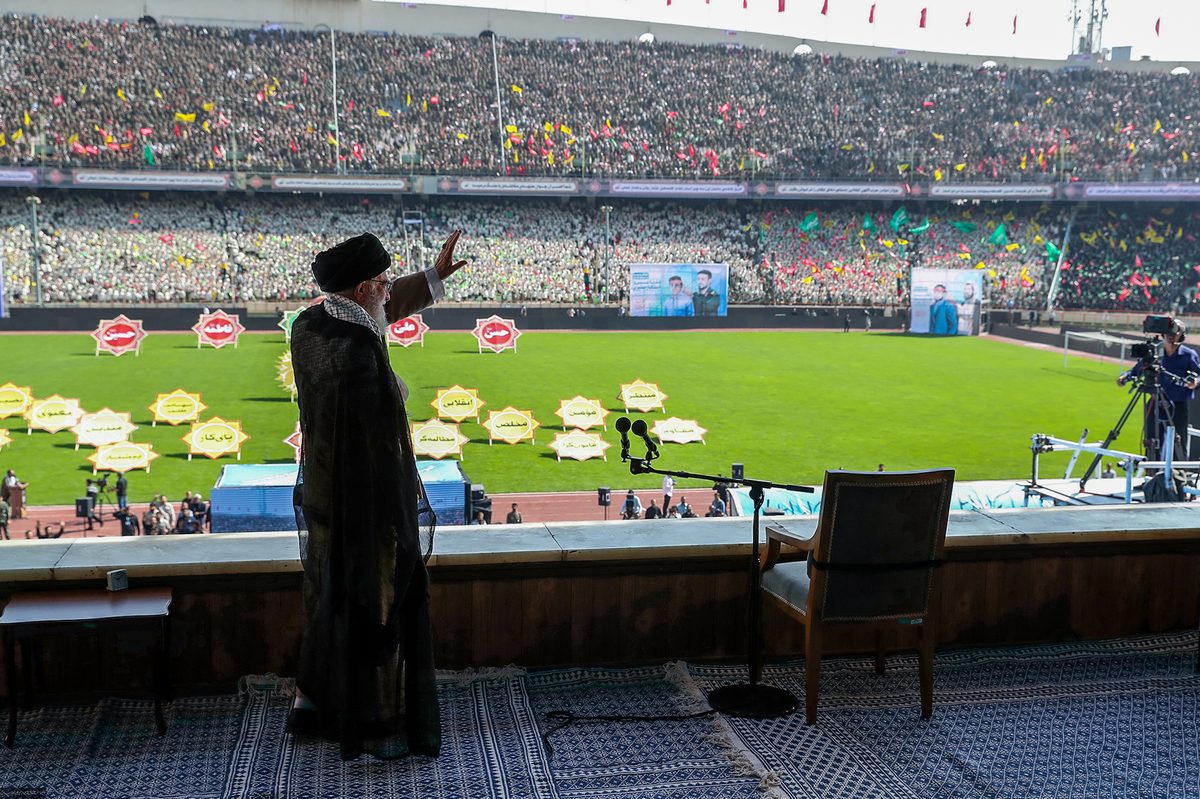
The Iranian rial lost half its value in six months, prompting merchants—the same traders who toppled the Shah in 1979—to shut down Tehran's Grand Bazaar on December 28. Within two weeks, the strike became the largest uprising since the Islamic Revolution; credible estimates range from 500 to 3,000 dead after a five-day internet blackout, with the IRGC firing live ammunition on crowds.
Iran faces three threats: protests demanding the regime's downfall, Trump threatening military strikes and 25% tariffs on nations trading with Iran, and Parliament Speaker Qalibaf vowing preemptive attacks on U.S. bases and Israel. The regime declared three days of mourning for 109 security forces killed, an implicit acknowledgment of the crackdown's scope. On January 13, Iran partially restored international phone calls but kept the internet dark, suggesting the worst violence may be over but the crisis is far from resolved.
Questions about this story
Free account needed to ask — your question is kept and asked for you right after sign-up. Answers are public.
No questions yet — be the first to ask.
Key Indicators
500-3,000+
Estimated killed
Death toll estimates vary widely due to internet blackout; HRANA reports 500+, MEK claims 3,000+
16,780
Detained
Arrests by security forces in nationwide crackdown as of January 12
109
Security forces killed
Government claim of officers killed, prompting three days of national mourning
5 days
Internet blackout
Near-total shutdown since January 8; international calls partially restored January 13
25%
Trump tariff
Tariff imposed January 12 on any country doing business with Iran
1.47M
Rials per dollar
Currency hit new record low January 6, continuing freefall from 430K in 2022
24 events
Latest: January 13th, 2026 · 9 months ago
Showing 8 of 24
JK to step
Tap a bar to jump to that date
Jump to
January 2026
Iran Partially Restores International Calls
LatestCensorship
Mobile phones able to make international calls for first time since January 8, though internet and SMS remain blocked—suggesting regime believes worst violence has passed.
Death Toll Estimates Surge Past 500
Violence
HRANA reports at least 500 killed; MEK claims over 3,000 dead; verification impossible due to internet blackout but indicates massive escalation in violence.
Trump Imposes 25% Tariff on Iran's Trading Partners
International
Trump announces 'effective immediately' 25% tariff on any country doing business with Iran, hitting China, India, Russia, Turkey—dramatically escalating economic warfare.
Iran Declares Three Days of National Mourning
Political
Government declares mourning for 109 security forces killed, without acknowledging protester deaths—framing officers as 'martyrs' killed by 'urban terrorist criminals.'
Trump Claims Iran Seeking Negotiations
International
Trump says Iran 'wants to negotiate' after threatening military action, while weighing 'strong options' including targeted strikes and cyber attacks.
HRW: Internet Blackout 'Concealing Atrocities'
International
Human Rights Watch warns five-day internet shutdown is hiding mass killings, with credible reports of large-scale executions by security forces.
Parliament Threatens U.S., Israel as 'Legitimate Targets'
Threat
Speaker Qalibaf warns Iran may strike preemptively on 'objective signs of threat' as MPs chant 'Death to America!'
Iran Claims 109 Security Forces Killed
Violence
Semiofficial Tasnim agency reports 109 officers killed nationwide—regime's first major casualty admission, suggesting intense armed clashes.
Rubio-Netanyahu Call on Intervention
International
Secretary of State and Israeli PM discuss possible U.S. military intervention; Israel on high alert.
Khamenei: Regime Will 'Not Back Down'
Statement
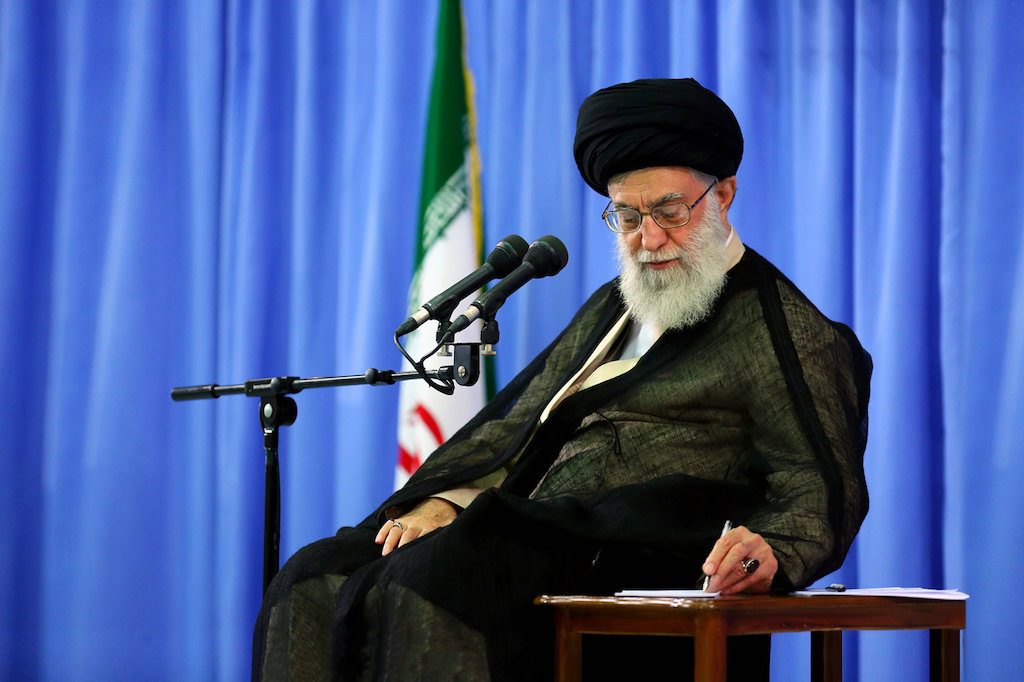
Supreme Leader accuses protesters of acting as 'mercenaries for foreigners' to please Trump.
Trump: 'Locked and Loaded and Ready to Go'
Threat
Trump escalates intervention warning: 'You better not start shooting, because we'll start shooting, too.'
Starlink Reportedly Activated in Iran
Technology
Reports claim Elon Musk enabled satellite internet to bypass blackout; Iran begins jamming signals.
Mass Protests After Pahlavi's Call
Protest
Exiled crown prince's appeal for coordinated 8 PM demonstrations draws huge crowds across Iran.
Iran Activates 'Kill Switch' Internet Blackout
Censorship
NetBlocks reports 99% of internet connectivity cut nationwide to suppress protest coordination.
Pezeshkian Orders Forces Not to Harm Protesters
Statement
President publicly tells security forces not to crack down, but IRGC answers to Khamenei, not him.
Rial Breaks 1.5 Million Per Dollar
Economic
New record low triggers sharp price increases; Grand Bazaar sit-in dispersed with tear gas.
Khamenei: 'Rioters Must Be Put in Their Place'
Statement
Supreme Leader signals crackdown after a week of protests; IRGC declares 'tolerance period over.'
Basij Opens Fire in Malekshahi
Violence
IRGC Basij forces shoot protesters marching toward base in Ilam province, killing 3-4 instantly.
2026
Trump Issues First Warning
International
U.S. president warns Iran he'll intervene if regime kills peaceful protesters.
December 2025
Hemmati Appointed Central Bank Chief
Political
Former central banker returns with mandate to stabilize currency and curb inflation.
Central Bank Governor Resigns
Political
Mohammad Reza Farzin resigns as protests erupt across Tehran, Isfahan, Shiraz, and Mashhad.
Merchants Strike in Tehran Bazaar
Protest
Shopkeepers at Alaeddin Shopping Centre and Grand Bazaar shut down shops as rial hits 1.42 million per dollar.
Pezeshkian Proposes Crisis Budget
Political
President's budget increases security spending 150% while wage increases lag far behind 42% inflation.
Rial Hits 1.31 Million Per Dollar
Economic
Iranian currency plunges to record low amid 42% inflation and 72% food price increases.
Scenarios
1
Violent Crackdown Crushes Uprising Without Foreign Intervention
Likely
Discussed by: Analysis from Critical Threats Project, Carnegie Endowment, and historical precedent from 2009 and 2022 protests
The IRGC escalates lethal force under full internet blackout, killing hundreds in a massacre hidden from the world. Mass arrests and executions of 'enemies of God' terrorize the population into submission within weeks. Trump's warnings prove hollow—domestic opposition and military caution prevent strikes. The regime survives bloodied but intact, having demonstrated it will pay any cost to maintain power. Economic crisis continues unresolved, setting stage for future unrest.
2
Limited U.S. Strikes Trigger Regional War
Possible
Discussed by: Netanyahu-Rubio discussions, Trump administration military planning reported by Washington Post, risk analysis from regional experts
After a particularly brutal massacre captured on smuggled video, Trump orders strikes on IRGC facilities. Iran retaliates against U.S. bases in Iraq and Syria, fires missiles at Israel, and attacks Gulf shipping. Israel joins with strikes on Iranian nuclear sites. Oil prices spike above $150/barrel, triggering global recession. The conflict draws in Hezbollah and Houthi forces, but stops short of full invasion. Protests initially surge then fade amid nationalist rally-around-flag effect. Regime damaged but survives.
3
Regime Fractures, Transition Government Negotiated
Unlikely
Discussed by: Opposition figures including Reza Pahlavi, analysts citing regime 'survival mode' admission, comparisons to 1979 tipping point
Protests expand despite crackdown as economic collapse deepens and IRGC rank-and-file waiver. Senior clerics break with Khamenei, declaring the killing un-Islamic. Military factions signal they won't fire on protesters. Facing collapse, regime hardliners negotiate exit with reformists and technocrats. Pezeshkian leads transitional government that ends mandatory hijab, releases prisoners, and schedules elections while maintaining Islamic government framework. Revolutionary Guards retain economic power. Pahlavi remains in exile. Slow, messy democratization begins.
4
Full Regime Collapse and Chaotic Transition
Unlikely
Discussed by: Comparisons to 1979 revolution by veteran Iran watchers quoted in The Economist, scenario planning by exiled opposition
The Grand Bazaar strike holds for weeks, strangling Tehran's economy. Army commanders refuse orders to shoot. Khamenei flees or dies. The Islamic Republic collapses in days, like the Soviet Union in 1991. What follows is chaos: competing opposition factions, regional ethnic tensions, IRGC commanders controlling fiefdoms, potential civil war. Pahlavi returns to cheering crowds but lacks governing infrastructure. International scramble to secure nuclear facilities. Iran fragments before eventually reconstituting under uncertain leadership—monarchist, democratic, military, or a new theocracy.
Historical Context
3 moments from history that rhyme with this story — and how they unfolded.
1 of 3
1977-1979
1979 Iranian Revolution
Economic crisis, corruption, and political repression under Shah Mohammad Reza Pahlavi triggered mass protests. The Grand Bazaar merchants funded opposition and conducted strikes that paralyzed Tehran. Oil worker strikes cost the government $60 million daily. Military wavered, then refused to shoot protesters. The Shah fled in January 1979; Ayatollah Khomeini returned from exile to establish the Islamic Republic.
Then
Shah's regime collapsed in weeks once military support evaporated; Islamic Republic established under Khomeini.
Now
47 years of theocratic rule, regional proxy conflicts, nuclear program, international isolation, and periodic protest movements brutally suppressed.
Why this matters now
The same merchant class in the same bazaar is using the same strike tactics against the government those merchants helped create—suggesting revolutionary-level instability.
2 of 3
June-December 2009
2009 Green Movement
Protests erupted after disputed presidential election returned Mahmoud Ahmadinejad to power. Three million gathered in Tehran on June 15. Video of Neda Agha-Soltan's death shocked the world. The regime deployed Basij forces in violent crackdown, killing dozens and arresting thousands. Protests driven underground within weeks but simmered for months.
Then
Regime crushed protests through mass arrests, show trials, and killings; Ahmadinejad retained presidency.
Now
Demonstrated regime's willingness to use extreme violence; intensified international sanctions; planted seeds for 2022 protests.
Why this matters now
Current protests are geographically broader and economically driven—harder to dismiss as election fraud—but the regime's playbook of internet cuts and violent suppression remains identical.
3 of 3
September 2022-January 2023
2022 Mahsa Amini Protests
22-year-old Mahsa Amini died in morality police custody after arrest for 'improper hijab.' Women-led protests demanding 'Woman, Life, Freedom' spread nationwide. Over 500 killed, 20,000 arrested. Regime executed protesters as 'enemies of God.' Movement faded after months of sustained crackdown but fundamentally challenged regime legitimacy.
Then
Regime violently suppressed protests through killings and mass executions; morality police temporarily scaled back enforcement.
Now
Permanently damaged regime's Islamic legitimacy, especially among youth; emboldened secular opposition; weakened enforcement of hijab laws.
Why this matters now
Current uprising emerged just three years later with fewer social restrictions but deeper economic desperation—showing the regime never addressed root grievances and now faces compounding crises.