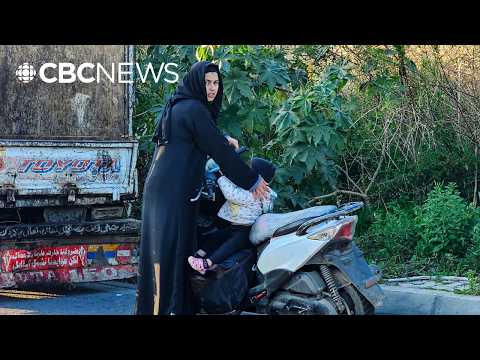
The US-Israeli war on Iran began February 28 and displaced up to 3.2 million people inside the country in two weeks, per the UN refugee agency.
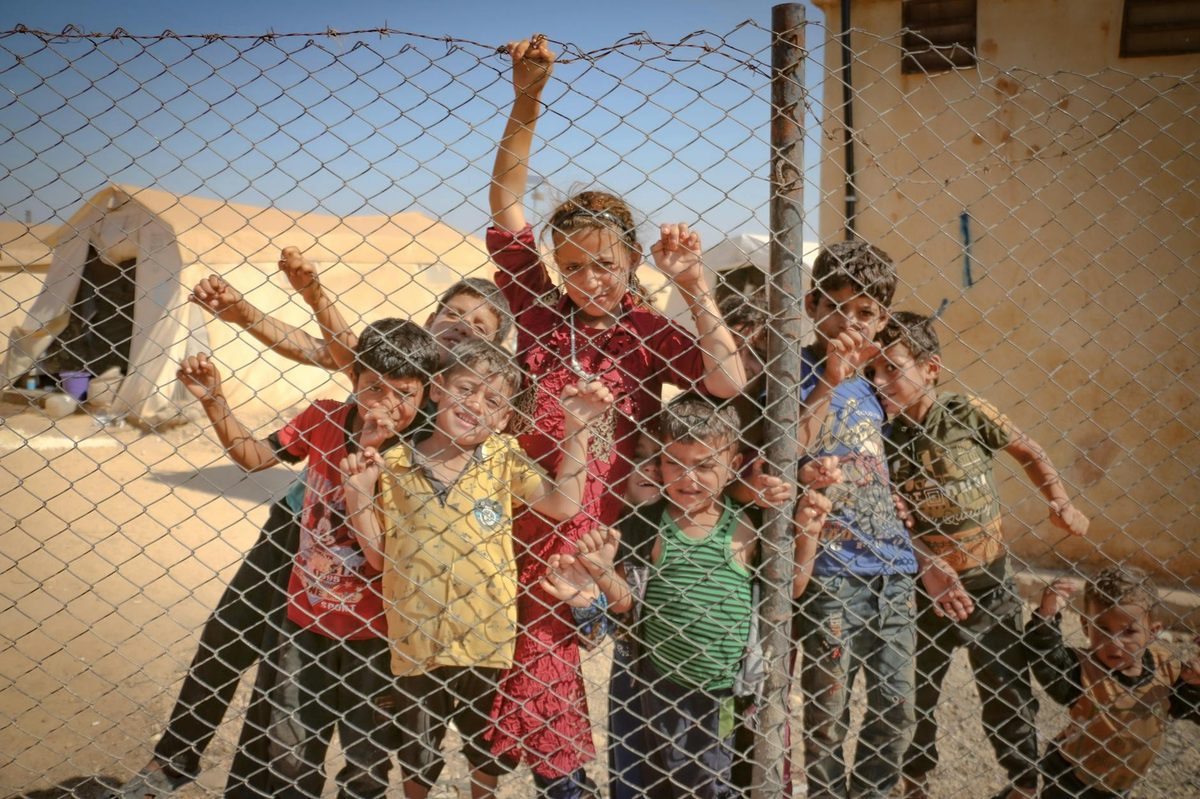
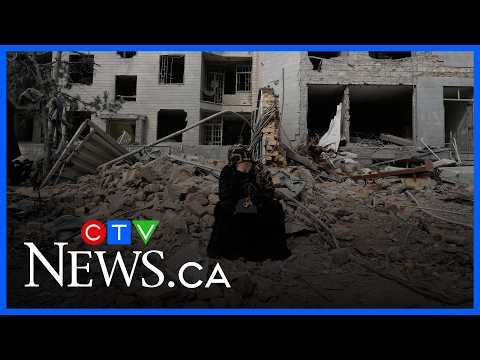
Most fled Tehran and other cities for northern and rural areas, and UNHCR's estimate held through late March. The flight has unfolded against collapsing infrastructure: over 10,000 civilian sites damaged, hospitals hit, internet cut to about one percent of normal. Cross-border escape stayed rare: only about 1,300 Iranians a day crossed into Turkey at the peak, and 33,000 crossed back. Afghan refugees already in Iran, about 4.25 million people with roughly two million undocumented, have nowhere safe to go.
Why it matters
Up to 3.2 million Iranians are displaced inside their own country, and neighbors like Turkey are walling the border to keep the crisis from spreading.
Questions about this story
Free account needed to ask — your question is kept and asked for you right after sign-up. Answers are public.
No questions yet — be the first to ask.
Key Indicators
3.2M
Internally displaced Iranians
Up to 3.2 million people displaced within Iran in the first two weeks of conflict; the UNHCR estimate held through late March.
60M
People with disrupted services
Estimated Iranians affected by outages and damage to electricity, water, internet, and medical services.
1%
Internet connectivity
Iran's internet dropped to roughly one percent of normal capacity in early March, cutting communication for millions.
85%
UNHCR funding gap
The UN refugee agency's regional operations for Afghanistan, Iran, Pakistan, and Central Asia remain 85 percent unfunded for 2026.
31
Hospitals damaged
At least 31 major hospitals hit by strikes by mid-March; the Red Crescent later counted 32 damaged medical facilities.
CHF 40M
IFRC emergency appeal
The International Federation of Red Cross and Red Crescent Societies launched a 40-million-franc appeal targeting five million people.
10,000+
Civilian sites damaged
Iranian Red Crescent reported more than 10,000 civilian sites damaged by March 17, including 65 schools and 32 medical facilities.
1,300/day
Daily crossings into Turkey
Roughly 1,300 Iranians a day fled via Turkey at the peak; more than 33,000 crossed back into Iran between March 3 and 24.
Images from Openverse under Creative Commons licenses.
Videos from YouTube.
Voices
Curated perspectives — historical figures and your fellow readers.
Ayn Rand
(1905-1982) ·Cold War · philosophy
Fictional AI pastiche — not real quote.
"When men surrender their minds to theocrats and their lives to the state, it is always the individual — the irreplaceable, particular human being with his one existence — who pays the price in rubble and flight. The mullahs built a civilization-sized altar to sacrifice; they should not be surprised that it burns."
0% found this insightful
Ever wondered what historical figures would say about today's headlines?
Sign up to generate historical perspectives on this story.
18 events
Latest: March 25th, 2026 · 6 months ago
Showing 8 of 18
JK to step
Tap a bar to jump to that date
Jump to
March 2026
UNHCR: displacement holds at 3.2 million as cross-border flows stay low
LatestHumanitarian
UNHCR's regional situation report kept its estimate at 1.9-3.2 million displaced Iranians. More than 33,300 Iranian nationals returned from Turkey between March 3 and 24, and 66% of those entering Turkey were families.
Turkey fortifies Iran border as neighbors prepare for refugee flows
Diplomatic
Turkey added 380 km of concrete wall and 203 optical towers to its frontier with Iran and readied contingency plans for refugee inflows. The Iranian Red Crescent reported more than 10,000 civilian sites damaged since the war began.
UNHCR reports 3.2 million Iranians internally displaced
Humanitarian
The UN refugee agency reported that up to 3.2 million people—600,000 to one million households—had been displaced within Iran in thirteen days of conflict, mostly fleeing Tehran and other cities for northern and rural areas. The agency warned the figure would continue rising.
New Supreme Leader vows to keep Strait of Hormuz closed
Political
Mojtaba Khamenei issued his first written public address as Supreme Leader, vowing to maintain the closure of the Strait of Hormuz. Oil prices climbed back above $100 per barrel.
IEA authorizes largest-ever oil reserve release
Economic
The International Energy Agency authorized its member countries to release 400 million barrels of strategic oil reserves—the largest coordinated release in history—in response to the Strait of Hormuz closure. The US would contribute 172 million barrels.
UN Security Council adopts resolution condemning Iran's Gulf attacks
Diplomatic
The Security Council adopted Resolution 2817 condemning Iran's retaliatory attacks on Gulf neighbors, passing 13-0 with China and Russia abstaining. The resolution did not address the US-Israeli strikes that initiated the conflict. Russia called the text "extremely unbalanced."
Girls' school bombing in Minab kills over 165, many children
Military
A strike on or near a girls' school in Minab killed at least 165 people, many of them children. The incident drew international condemnation, and over 40 US senators pressed Defense Secretary Pete Hegseth for an explanation.
UNESCO World Heritage sites in Isfahan damaged
Cultural
Strikes near Isfahan damaged the historic Naqsh-e Jahan Square complex, a UNESCO World Heritage Site, drawing concern from cultural preservation organizations.
Mojtaba Khamenei named new Supreme Leader
Political
Iran's Assembly of Experts selected Mojtaba Khamenei, 56-year-old son of the slain Supreme Leader, as his successor. He had never held elected office but had deep ties to the IRGC.
IFRC launches 40-million-franc emergency appeal for Iran
Humanitarian
The International Federation of Red Cross and Red Crescent Societies launched its emergency appeal to support five million people across thirty Iranian provinces, deploying over 2,100 response teams.
Iran's internet drops to one percent of normal capacity
Infrastructure
A combination of strikes on telecommunications infrastructure and government-imposed restrictions reduced Iran's internet connectivity to roughly one percent of normal levels, cutting off millions from communication and information.
Iran declares Strait of Hormuz closed
Military
Iran announced the closure of the Strait of Hormuz, a chokepoint through which roughly 20 million barrels of oil pass daily, and began attacking commercial shipping.
Iranian Red Crescent reports over 600 civilians killed
Humanitarian
The Iranian Red Crescent Society reported more than 600 civilians killed in the first four days of strikes. A separate human rights organization estimated 742.
Iran retaliates with missiles and drones across the Middle East
Military
Iran launched retaliatory strikes against US bases and assets in the United Arab Emirates, Qatar, Kuwait, Bahrain, Jordan, Saudi Arabia, Turkey, and other countries. Roughly 100,000 people fled Tehran in the first two days.
February 2026
US and Israel launch coordinated strikes on Iran
Military
The United States (Operation Epic Fury) and Israel (Operation Roaring Lion) launched nearly 900 strikes in the first twelve hours, targeting missile sites, air defenses, military facilities, and leadership compounds. Supreme Leader Ali Khamenei was killed in the opening attack.
Trump accuses Iran of reviving nuclear weapons program in State of the Union
Political
President Trump warned during his State of the Union address that the US was prepared to act against Iran's nuclear ambitions.
December 2025
Nationwide protests erupt across Iran
Civil Unrest
Mass protests broke out over economic collapse, including currency depreciation, inflation, and shortages. The Iranian government responded with lethal force, with estimated death tolls ranging from 7,000 to over 36,000.
June 2025
Israel launches Twelve-Day War on Iranian nuclear sites
Military
Israel struck Iranian nuclear facilities after the International Atomic Energy Agency reported Iran had acquired enough enriched uranium for nine nuclear warheads. The twelve-day conflict destroyed significant Iranian military infrastructure.
Scenarios
1
Displacement accelerates past 10 million as strikes continue
Likely
Discussed by: UNHCR assessments, The New Humanitarian, humanitarian analysts
If hostilities persist at their current intensity, the displacement rate of roughly 250,000 people per day could push the total well past 10 million within weeks. Iran's population of 88 million is heavily urbanized, with Tehran alone home to nearly 10 million. Continued strikes on urban infrastructure—hospitals, power, water, telecommunications—could trigger a second wave of displacement from mid-sized cities that have so far been secondary targets. The UNHCR's 85 percent funding gap would make a response at that scale extremely difficult to mount.
2
Cross-border refugee crisis spills into Turkey, Iraq, and Pakistan
Turkey has fortified its 560-kilometer border with Iran using 380 kilometers of concrete walls and 203 optical towers, and has prepared contingency plans including tent camps. So far, cross-border flows at the Kapikoy crossing remain roughly balanced at around 2,000 per day in each direction. But a sustained conflict or ground invasion could overwhelm border controls. Iraq and Pakistan, which border Iran's less-fortified east and west, could see larger uncontrolled flows, particularly of Afghan refugees who face barriers to staying in Iran and returning to Afghanistan.
3
Ceasefire or de-escalation stabilizes displacement at current levels
Uncertain
Discussed by: Trump administration officials, diplomatic analysts, Gulf state mediators
President Trump characterized the conflict as a "short-term excursion" and predicted it would end "very soon." If a ceasefire or significant de-escalation occurs within days, the majority of the 3.2 million displaced—who are temporarily sheltering with relatives or in rural areas—could begin returning home. However, the destruction of civilian infrastructure, particularly hospitals and water systems, would make some areas uninhabitable for months even after fighting stops.
4
Humanitarian access blocked, creating an invisible crisis
Possible
Discussed by: ICRC, Doctors Without Borders, UN Special Rapporteurs
Iran's near-total internet blackout has already reduced the country's connectivity to roughly one percent of normal. If international humanitarian organizations are denied or unable to maintain access—due to continued strikes, Iranian government restrictions, or infrastructure collapse—the displacement crisis could worsen dramatically without outside visibility. The precedent of Yemen, where years of conflict produced a humanitarian catastrophe with limited international attention, is frequently cited by aid organizations as the outcome to prevent.
Historical Context
3 moments from history that rhyme with this story — and how they unfolded.
1 of 3
March-June 1999
Kosovo War displacement (1999)
NATO's 78-day bombing campaign against Yugoslavia triggered one of the fastest mass displacements in post-Cold War history. Over 1.3 million ethnic Albanians were displaced—roughly 285,000 crossed into Albania in the first two weeks alone. Refugee camps in Albania and North Macedonia were overwhelmed within days.
Then
The UNHCR faced severe criticism for being unprepared for the speed of displacement. Emergency camps were erected across the region, and NATO countries accepted tens of thousands of refugees.
Now
The Kosovo crisis reshaped international humanitarian response planning. The UNHCR overhauled its emergency preparedness systems, and the speed-of-displacement metric became a standard planning variable.
Why this matters now
Iran's displacement rate—roughly 250,000 per day—exceeds even Kosovo's peak. The parallel illustrates how aerial campaigns against urban infrastructure can generate displacement faster than humanitarian systems can respond, and how the gap between military planning and humanitarian preparation creates compounding crises.
2 of 3
March 2003-2008
Iraq War displacement (2003-2008)
The US-led invasion of Iraq in March 2003 initially displaced hundreds of thousands from Baghdad and Basra. By 2008, an estimated 2.8 million Iraqis were internally displaced and another 2 million had fled to Syria and Jordan. The displacement accumulated gradually as sectarian violence spread following the initial invasion.
Then
Neighboring countries, particularly Syria and Jordan, absorbed millions of Iraqi refugees, straining their own infrastructure and economies. The humanitarian response was chronically underfunded.
Now
Iraq's displacement crisis persisted for over a decade. Many displaced families never returned. The experience demonstrated that military operations can set displacement trajectories that continue long after active hostilities end.
Why this matters now
Iran's displacement has already surpassed Iraq's initial phase in under two weeks. The Iraq parallel highlights the risk that even a short conflict can produce displacement that outlasts the fighting, particularly when civilian infrastructure—hospitals, water, electricity—is destroyed rather than merely disrupted.
3 of 3
March 2015-present
Yemen humanitarian crisis (2015-present)
A Saudi-led coalition began airstrikes against Houthi forces in Yemen in March 2015, targeting military and civilian infrastructure. Over a decade, the conflict displaced 4.5 million Yemenis internally—roughly 12 percent of the population. A naval blockade restricted food and fuel imports, contributing to what the UN called the world's worst humanitarian crisis.
Then
Hospitals and water systems were systematically degraded. Cholera outbreaks infected over 2.5 million people. Famine conditions spread across multiple provinces.
Now
Yemen became a cautionary example of how prolonged aerial campaigns combined with infrastructure destruction and blockades produce humanitarian catastrophes that receive diminishing international attention over time.
Why this matters now
The parallels between Yemen and Iran are structural: aerial campaigns targeting infrastructure, blockade of critical supply routes (Strait of Hormuz versus Yemeni ports), degradation of medical facilities, and a near-total information blackout. Humanitarian organizations have explicitly cited Yemen as the outcome they are trying to prevent in Iran.