
Pull to refresh
Logo
US and China agree to tariff cuts and AI dialogue after Xi visit

US and China agree to tariff cuts and AI dialogue after Xi visit

Rule Changes

Xi's first state visit to Washington in over a decade yields $30 billion in reciprocal tariff relief plus a new AI safety channel.

2 days ago: US and China announce tariff cuts and AI dialogue

Overview

Updated Yesterday

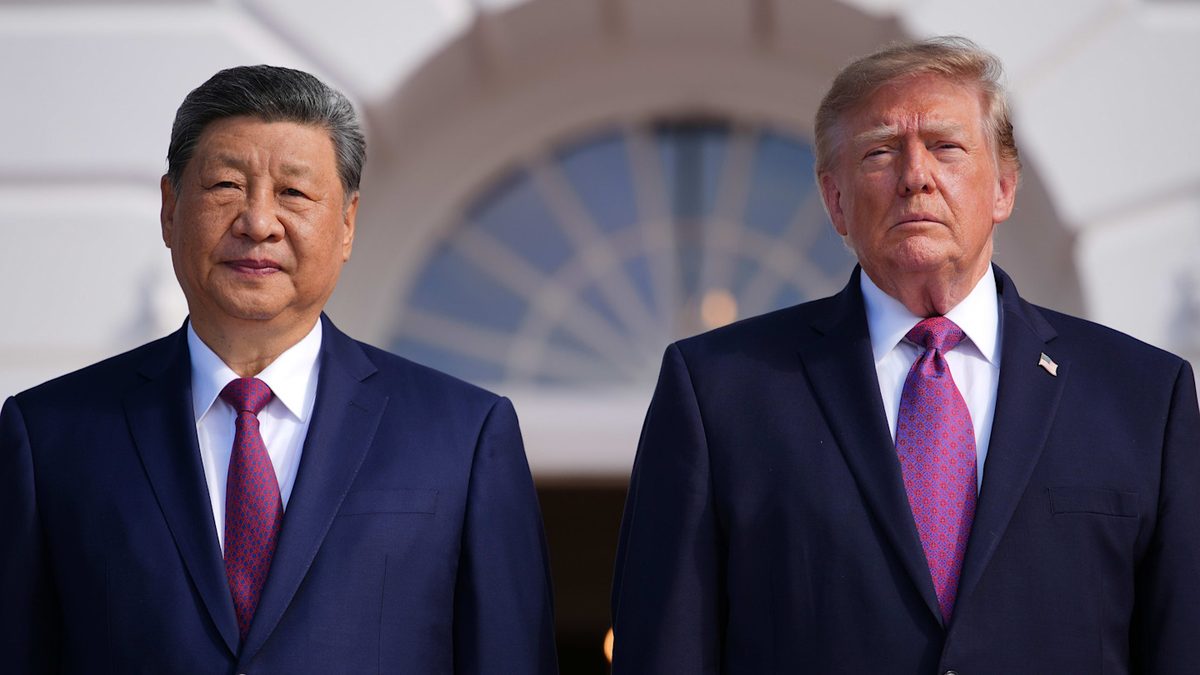
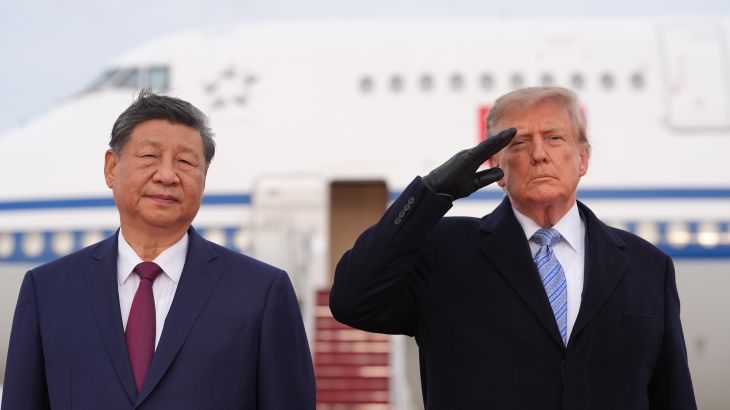
Chinese President Xi Jinping wrapped up his first state visit to Washington in more than a decade with a handshake on tariffs. The United States and China agreed Friday to cut tariffs on $30 billion of goods in each direction and to launch a formal dialogue on artificial intelligence.

The agreement is a truce, not a settlement. The tariff relief covers non-sensitive consumer goods like toys, appliances, and agricultural products, while the harder disputes, rare earth export controls and the permanent tariff structure, stay open. The current ceasefire runs into early January, and the leaders meet again at APEC in Shenzhen in November.

Why it matters

The deal starts unwinding a trade war that threatened global recession and creates the first formal US-China channel for AI safety talks.

Questions about this story

Free account needed to ask — your question is kept and asked for you right after sign-up. Answers are public.

No questions yet — be the first to ask.

Key Indicators

$30B
Reciprocal tariff reductions in each direction
Covers US exports of agricultural goods, wood, cosmetics, and medical devices, and US imports of small appliances, toys, and decorations.
10M metric tons
US coal China pledged to import in 2027 and 2028
China was a top-five buyer of US coal until slashing imports in 2025 amid the trade war.
8
Points in the US-China consensus agreement
Includes tariff relief, the AI dialogue, a trade council, an investment board, and military crisis communications.
2 months
Extension of the trade truce
The ceasefire, due to expire November 10, now runs into early January 2027.

Voices

Curated perspectives — historical figures and your fellow readers.

Ever wondered what historical figures would say about today's headlines?

Sign up to generate historical perspectives on this story.

People Involved

Organizations Involved

Timeline

October 2025 September 2026

3 events Latest: 2 days ago
  1. US and China announce tariff cuts and AI dialogue

    Latest Agreement

    White House and Chinese Foreign Ministry announce $30 billion in reciprocal tariff cuts, coal import commitments, and the US-China Super Intelligence Dialogue.

  2. Trade truce extended two months

    Diplomacy

    Treasury Secretary Scott Bessent says the ceasefire, due to expire November 10, is extended to allow time for a bigger deal.

  3. Trade war escalates

    Conflict

    China restricts rare earth exports to the US and slashes American coal imports after Washington imposes tariffs. The dispute threatens a global recession.

Scenarios

1

US and China expand trade deal beyond the $30 billion tranche

Possible Resolves by Feb 15, 2027

Discussed by: Treasury Secretary Scott Bessent, who said the truce extension allows time to work on a bigger trade deal.

The two-month extension gives negotiators until early January to broaden the agreement. A fuller deal would expand tariff relief beyond non-sensitive goods and resolve the rare earth dispute. The leaders meet again at APEC in Shenzhen in November, giving them a mid-point to check progress.

2

Trade truce expires without a fuller deal

Possible Resolves by Jan 31, 2027

Discussed by: Analysts quoted by PBS noting the summit produced no major breakthroughs.

If negotiations stall, the ceasefire expires in early January and tariff escalation resumes. Price increases would return to consumer goods, and China could expand rare earth controls. This would repeat the pattern of the 2019 Phase One deal, which paused escalation but never resolved the underlying dispute.

3

Super intelligence dialogue yields binding AI safety rules

Possible Resolves by Q2 2027

Discussed by: White House and Chinese Foreign Ministry, which scheduled the next dialogue round for November 2026.

The November dialogue could convert the incident communication channel into concrete commitments: mandatory incident reporting, transparency standards, or aligned export controls. Both leaders have framed AI as a shared risk. Success would mark the first formal US-China governance agreement on the technology.

Historical Context

3 moments from history that rhyme with this story — and how they unfolded.

February 1972

Nixon in China (February 1972)

Richard Nixon became the first US president to visit the People's Republic of China, ending more than two decades of frozen relations. The Shanghai Communiqué acknowledged deep differences between the two countries but committed both to avoid military confrontation and to pursue normalization.

Then

The visit opened the door to diplomatic recognition, completed in 1979, and gave both sides a framework for managing conflict.

Now

It established leader-level US-China summits as a tool for cooling crises without resolving the underlying ideological divide.

Why this matters now

Xi's 2026 visit used the same tool: summit diplomacy that lowers the temperature while leaving the core disagreements, tariffs in one case and ideology in the other, unresolved.

September 2015

Xi's first Washington state visit (September 2015)

On his first state visit to Washington, Xi and President Barack Obama agreed to curtail state-sponsored cyber theft of intellectual property and to coordinate climate policy ahead of the Paris Agreement.

Then

The cyber agreement was credited with reducing state-sponsored intellectual property theft in the years that followed.

Now

It showed rival governments can produce specific, verifiable commitments at summits, even in adversarial areas.

Why this matters now

The 2015 precedent supports hopes that the 2026 AI dialogue can yield concrete commitments rather than a standing conversation with no deliverables.

January 2020

Trump-Xi Phase One deal (January 2020)

The first Trump-Xi trade war ended in a partial truce: China pledged to buy an additional $200 billion of US goods, and Washington rolled back some tariffs. Most tariffs stayed in place.

Then

COVID-19 disrupted the deal, and China fell far short of its purchase targets, prompting continued tariff skirmishes.

Now

The episode showed that partial trade deals can pause escalation without resolving the underlying causes.

Why this matters now

The 2026 arrangement follows the same template: tariff relief on a limited tranche of goods, with the core dispute deferred to future talks.

Sources

(8)