
Pull to refresh
Logo
U.S. Navy doubles drone command capacity with second MD-5C ground control station

U.S. Navy doubles drone command capacity with second MD-5C ground control station

New Capabilities

Skunk Works' MDCX software now runs two stations for the MQ-25A Stingray tanker drone

Yesterday: Navy stands up second MD-5C station

Overview

Updated 1 hour ago

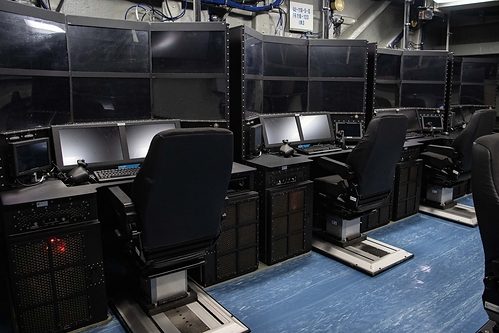
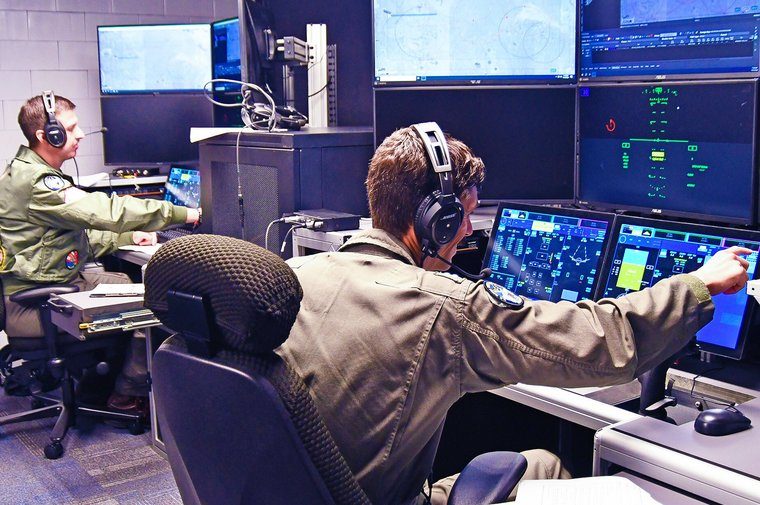
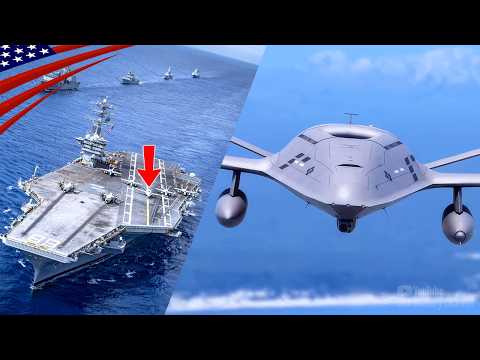
The U.S. Navy stood up its second operational MD-5C ground control station in five months, doubling how many MQ-25A Stingray tanker drones it can fly at once. The station runs on MDCX, the command-and-control software platform built by Lockheed Martin's Skunk Works division.

Each station is a crew of Air Vehicle Pilots who fly the uncrewed tanker from a carrier deck or a shore facility. The Navy has ordered 76 Stingrays and plans control centers on every carrier. The second station moves that build-out from planning to practice.

Why it matters

Two ground control stations let the Navy fly twice as many MQ-25 tankers, extending carrier strike range without putting crews at risk.

Questions about this story

Free account needed to ask — your question is kept and asked for you right after sign-up. Answers are public.

No questions yet — be the first to ask.

Key Indicators

2
Operational MD-5C ground control stations
The Navy doubled its fleet capacity to operate MQ-25A drones in five months.
76
MQ-25A Stingray aircraft planned
The tanker drones will replace crewed F/A-18E/F Super Hornets in the refueling role.
Feb 2029
Initial operational capability target
The Navy moved its IOC date from 2024 to February 2029 as integration work continues.

Voices

Curated perspectives — historical figures and your fellow readers.

Ever wondered what historical figures would say about today's headlines?

Sign up to generate historical perspectives on this story.

People Involved

Organizations Involved

Timeline

2020 September 2026

7 events Latest: Yesterday
Tap a bar to jump to that date
  1. Navy stands up second MD-5C station

    Latest Capacity expansion

    A second operational MD-5C ground control station goes live, doubling fleet capacity to operate the MQ-25A.

  2. MDCX controls MQ-25A first flight

    Flight test

    The MQ-25A Stingray flies for the first time, controlled by the MDCX platform from MidAmerica St. Louis Airport.

  3. USS Theodore Roosevelt becomes first deployable MQ-25 carrier

    Certification

    The Pentagon's Modernized Selected Acquisition Report calls CVN-71 the first fully operational, deployable MQ-25 capable carrier.

  4. MQ-25A connects with ground control system

    Integration milestone

    The MQ-25A and UMCS link for the first time during air vehicle and ground control station integration checkout testing.

  5. First live control of a UAV via UMCS

    Test milestone

    The UMCS controls a General Atomics MQ-20 Avenger in a live-fly demonstration.

  6. First test drone control center installed on carrier

    Installation

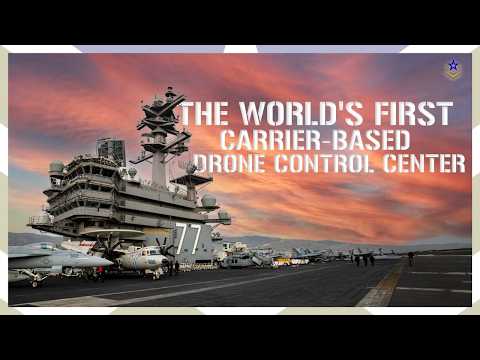
    An Unmanned Air Warfare Center is installed and tested aboard USS George H.W. Bush.

  7. Navy selects MDCX for MQ-25A ground control

    Program decision

    Lockheed Martin's MDCX is chosen as the ground control component for Boeing's MQ-25A Stingray.

Scenarios

1

MQ-25 hits initial operational capability by February 2029

Likely Resolves by Q1 2029

Discussed by: Pentagon Modernized Selected Acquisition Report (April 2026)

The MSAR sets IOC for February 2029. To hit it, the Navy must demonstrate carrier launch and recovery of the MQ-25 and integrate stations aboard the Theodore Roosevelt and Ronald Reagan. The second MD-5C gives the service margin to run more test sorties in parallel.

2

Carrier integration issues push MQ-25 IOC past 2029

Possible Resolves by Q1 2029

Discussed by: Program history of schedule slips (IOC moved from 2024 to July 2027 to February 2029)

Remaining gaps include at-sea networking, deck-handling procedures for the drone, and live launch-and-recovery testing in a busy carrier flight deck environment. The MSAR notes these steps still need work. A failure in carrier testing would push the date again.

3

MDCX expands to command Collaborative Combat Aircraft

Uncertain Resolves by Q2 2028

Discussed by: Capt. Daniel Fucito (PMA-268) and Breaking Defense reporting on the Navy's CCA program

Fucito says the control system will initially support the MQ-25 but also future unmanned systems such as Collaborative Combat Aircraft. The Navy has tapped four aerospace primes to design autonomous wingmen. If MDCX becomes the common control backbone, one station could fly tankers and combat drones.

Historical Context

2 moments from history that rhyme with this story — and how they unfolded.

2012-2016

UCLASS evolves into the MQ-25 (2012-2016)

The Navy's Unmanned Carrier-Launched Airborne Surveillance and Strike (UCLASS) program began as a stealthy strike drone. Budget pressure and shifting priorities converted it into the MQ-25 Stingray, a dedicated refueling tanker rather than a strike aircraft.

Then

The mission shifted from bombing to refueling, producing a simpler, cheaper drone.

Now

The Navy ordered 76 Stingrays and made the tanker the first uncrewed aircraft integrated into standard carrier air wing operations.

Why this matters now

The mission pivot explains why the Navy needs ground control stations at all: the Stingray is a workhorse logistics aircraft, not a one-off technology demonstrator.

May 2013

X-47B carrier demonstrations (2013)

Northrop Grumman's X-47B became the first unmanned aircraft to launch from and recover aboard an aircraft carrier, flying from USS George H.W. Bush. The demonstrator proved that autonomous carrier operations were technically possible.

Then

The flights validated launch, recovery, and autonomous flight control for uncrewed aircraft at sea.

Now

The success shaped the UCLASS program, which eventually evolved into the MQ-25A Stingray.

Why this matters now

The X-47B proved drones could work on carriers. The MD-5C is the control infrastructure that makes such operations routine rather than experimental.

Sources

(8)