

Pull to refresh
Logo
UK regulator clears Amazon drones to fly over more of Darlington

UK regulator clears Amazon drones to fly over more of Darlington

New Capabilities

Prime Air becomes the first drone operator worldwide to reach SAIL 4, expanding eligible households from about 600 to 8,000

Overview

Updated 1 hour ago

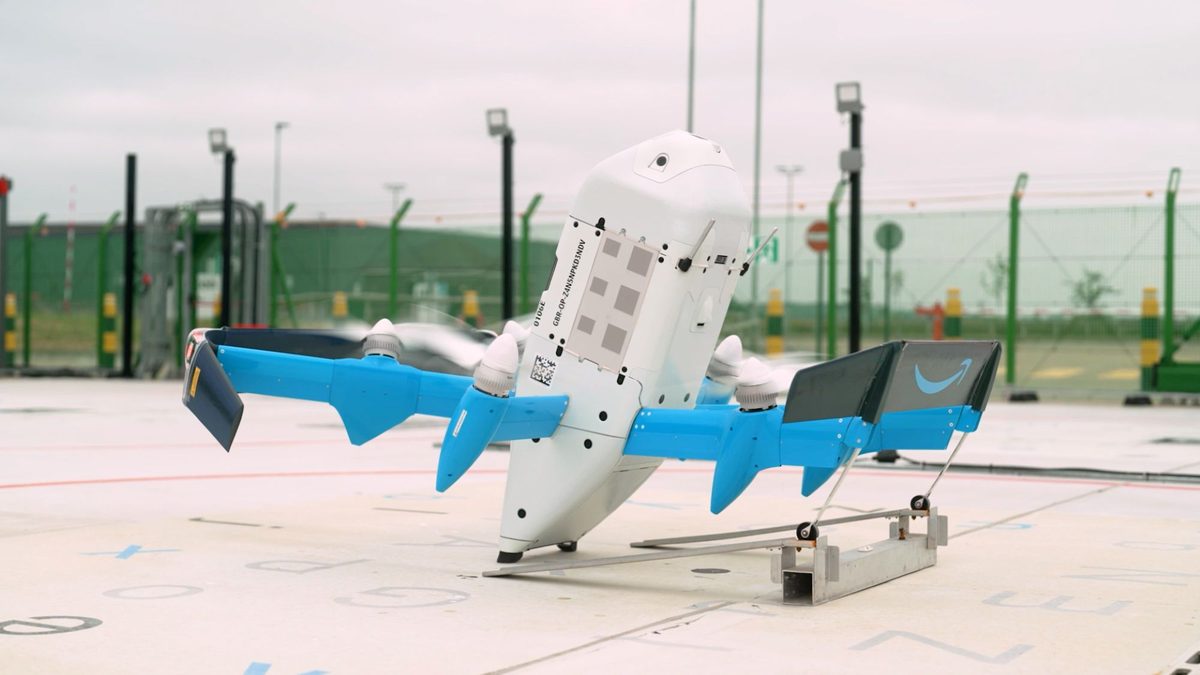
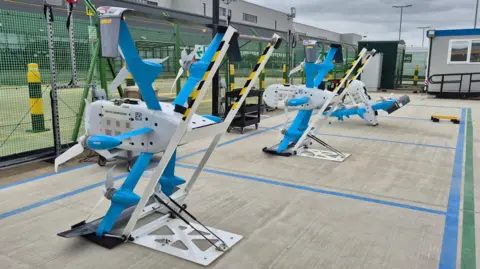
Amazon's Prime Air can now fly delivery drones over more of Darlington, after the UK Civil Aviation Authority (CAA) granted the company a SAIL 4 operating authorisation. The number of households eligible for drone delivery in the town rose from about 600 to roughly 8,000. Amazon says the approval is the first of its kind in the world.

The permission raises the safety bar Amazon must meet, but it does not mean the drones can fly anywhere. Flights still depend on a Temporary Reserved Area, tracking broadcasts and air traffic control procedures. The CAA has not yet fully assessed the drones' onboard detect-and-avoid system.

Why it matters

If drone delivery can work at this scale in a UK town, the same regulatory template could unlock it in other cities.

Questions about this story

Free account needed to ask — your question is kept and asked for you right after sign-up. Answers are public.

No questions yet — be the first to ask.

Key Indicators

8,000
Households eligible for drone delivery in Darlington
Up from about 600 before the SAIL 4 approval.
600
Households eligible before the approval
The previous authorisation covered less densely populated areas.
SAIL 4
CAA safety assurance level
The highest tier Amazon has reached in the UK's drone safety framework.
5 lb
Maximum package weight
Packages must also fit into a large shoebox.
2 hours
Promised delivery time
Amazon says eligible items arrive in under two hours; the BBC reports under an hour for some.

Voices

Curated perspectives — historical figures and your fellow readers.

Sign up to generate historical perspectives on this story.

People Involved

Organizations Involved

Timeline

2016 November 2026

6 events Latest: 2 days ago
Tap a bar to jump to that date
  1. CAA says detect-and-avoid system not fully assessed

    Latest Statement

    The regulator confirms Amazon still relies on a Temporary Reserved Area and air traffic control procedures to avoid crewed aircraft.

  2. CAA grants SAIL 4 approval

    Regulatory approval

    Amazon secures the world's first SAIL 4 operating authorisation and flightworthiness validation, expanding eligible households from about 600 to 8,000.

  3. Drone crashes into Darlington garden

    Incident

    The AAIB opens an investigation; no one is injured and Amazon says the drone responded as designed.

  4. Darlington drone deliveries begin

    Launch

    Prime Air starts beyond-visual-line-of-sight flights in less densely populated parts of Darlington.

  5. Amazon misses its own UK launch target

    Setback

    Amazon had hoped to deploy UK drone deliveries in 2024; the deadline slipped amid CAA negotiations.

  6. Amazon's first UK drone trial

    Milestone

    Amazon makes a handful of drone deliveries to rural areas near Cambridge, then stops.

Scenarios

1

Amazon announces a second UK drone delivery site

Possible Resolves by End of 2027

Discussed by: Amazon's public statements and UK Drone Guide analysis

Amazon says the Darlington approval lays the foundation for expansion across the UK. A second site would need its own operational authorisation and airspace arrangement, so the trigger is a new CAA approval paired with a public Amazon announcement.

2

CAA fully assesses Amazon's detect-and-avoid system

Possible Resolves by Q2 2027

Discussed by: The CAA and FLYER

The CAA says it is still assessing the MK30's Perception system. Completing that review would let Amazon rely less on reserved airspace and could make expansion to denser areas easier.

3

A drone crash suspends Darlington flights

Unlikely Resolves by Q2 2027

Discussed by: BBC reporting on the July 2026 crash and AAIB investigation

A serious crash or a cluster of incidents could force the CAA or Amazon to pause operations. The July 2026 garden crash did not stop flights, so the bar for a suspension is higher than a single accident.

4

Amazon scales back UK drone delivery

Unlikely Resolves by End of 2027

Discussed by: Industry analysts cited in UK Drone Guide and the Telegraph

Amazon has abandoned drone ambitions before, including after its 2016 Cambridge trial. A repeat would require the company to announce it is ending or sharply reducing Prime Air operations in the UK.

Historical Context

3 moments from history that rhyme with this story — and how they unfolded.

December 2016

Amazon's Cambridge drone trial (2016)

Amazon made a small number of drone deliveries to rural customers near Cambridge, its first in the UK. The flights were limited and heavily controlled.

Then

The trial generated headlines but did not become a regular service.

Now

Amazon spent the next decade negotiating with regulators before launching a sustained commercial operation in Darlington.

Why this matters now

It shows how long the gap can be between a demonstration and a routine service, and why the Darlington approval matters.

April 2019

Wing's FAA air carrier certification (2019)

Wing, owned by Google's parent company Alphabet, became the first drone delivery company to receive an air carrier certification from the US Federal Aviation Administration.

Then

Wing began limited deliveries in Virginia.

Now

The certification became a template for how regulators could approve drone delivery without treating every flight as an experiment.

Why this matters now

The SAIL 4 approval is the UK's version of that regulatory unlock, and the first at this safety level anywhere.

October 2016

Zipline's medical drone network in Rwanda (2016)

Zipline began delivering blood and medical supplies by drone in Rwanda, flying beyond visual line of sight on a routine schedule.

Then

The service cut delivery times for urgent medical supplies from hours to minutes.

Now

Zipline expanded to multiple countries and became a model for routine drone logistics.

Why this matters now

It demonstrates that routine drone delivery depends as much on airspace rules and local agreements as on the aircraft themselves.

Sources

(7)