
Pull to refresh
Logo
US proposes new tariffs on 14 trading partners under Section 301

US proposes new tariffs on 14 trading partners under Section 301

Rule Changes

Proposed rates of 20% to 40% replace the duties the Supreme Court struck down, with trade-deal caps lowering what would actually land

Overview

Updated 59 minutes ago

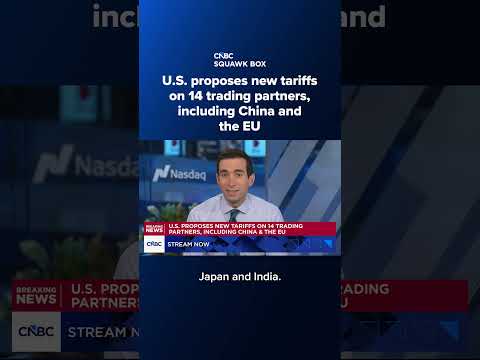
The Office of the United States Trade Representative (USTR) proposed new tariffs on goods from 14 trading partners on November 25, including China, the European Union, Japan, India and Vietnam. Proposed rates run from 20% to 40%, with China facing the highest at up to 40% and Vietnam next at up to 35%.

The proposal rebuilds Trump's tariff wall on a different legal footing after the Supreme Court struck down his emergency-powers duties in February. Caps written into trade deals already agreed with the EU and others mean the tariffs that eventually take effect next year will be lower than the announced ceilings.

Why it matters

If these duties survive consultation and court challenges, imported goods from Europe, China and Japan get more expensive for US buyers in 2027.

Questions about this story

Free account needed to ask — your question is kept and asked for you right after sign-up. Answers are public.

No questions yet — be the first to ask.

Key Indicators

14
Trading partners targeted
China, the EU, Japan, India, Vietnam and nine others.
40%
Maximum proposed rate on Chinese goods
The highest ceiling in the proposal.
35%
Proposed rate on Vietnamese goods
Could fall to about 20% if trade talks conclude.
25%
Proposed rate on Indian goods
Could fall to about 17% under a reciprocal deal.
15%
Cap on EU tariffs from the existing deal
The European Commission says the proposal stays within this limit.
Jan 10, 2027
Expiry of the US-China tariff truce
No extension was announced after the Trump-Xi meeting.

Voices

Curated perspectives — historical figures and your fellow readers.

Sign up to generate historical perspectives on this story.

People Involved

Organizations Involved

Timeline

April 2025 November 2026

6 events Latest: Yesterday
Tap a bar to jump to that date
  1. USTR proposes Section 301 tariffs on 14 partners

    Latest Policy

    Rates of 20% to 40% are proposed, capped lower by existing and pending trade deals.

  2. Republicans lose ground in the midterm elections

    Politics

    Trump continues the tariff push despite his party's poor result.

  3. Trump meets Xi; no truce extension announced

    Diplomacy

    The US-China tariff truce is set to expire on January 10, 2027.

  4. Trump announces 'Liberation Day' tariffs

    Policy

    The president invokes emergency powers to impose broad duties on nearly all trading partners.

Scenarios

1

Duties take effect in 2027 at the capped rates

Likely Resolves by Q2 2027

Discussed by: Capital Economics' Stephen Brown; USTR's notice of determination

USTR finishes the comment period, publishes a final action, and the new duties start early next year. The caps hold: EU goods at 15%, India near 17%, Vietnam near 20%. Brown expects only a marginal effect on US prices because the lists are narrow and replace duties already announced.

2

A court blocks the tariffs before they take effect

Possible Resolves by End of 2027

Discussed by: Chang Pao-Li of Singapore Management University; Atlantic Council analysts

Chang expects litigation. If a plaintiff persuades the Court of International Trade that the investigations do not support the rates, an injunction could freeze the duties. Section 301 survived earlier challenges, so this is a harder route than the emergency-powers cases that already succeeded.

3

Truce lapses and the full 40% lands on China

Possible Resolves by Q1 2027

Discussed by: Wendy Cutler of the Asia Society Policy Institute; Reuters

The US-China tariff truce expires on January 10, 2027. Without an extension, the proposed 40% ceiling on Chinese goods could be applied in full rather than capped. Beijing has signaled it can tolerate rates up to 20%, which puts the 20% line at the center of the negotiation.

4

Deals close and the proposed rates shrink

Possible Resolves by Q2 2027

Discussed by: CNBC reporting on the India and Vietnam negotiations

Reciprocal trade agreements under negotiation with India and Vietnam conclude, cutting their proposed rates to about 17% and 20%. More partners sign similar deals, and the Section 301 threat settles into a bargaining chip rather than a durable tariff.

Historical Context

3 moments from history that rhyme with this story — and how they unfolded.

June 1930

Smoot-Hawley Tariff Act (1930)

Congress raised duties on thousands of imported goods as the Depression deepened. Trading partners answered with their own tariffs on US products.

Then

US exports fell and the tariff wall made the downturn worse.

Now

The episode became the reference point for post-war trade liberalization, including the General Agreement on Tariffs and Trade.

Why this matters now

It is the standard warning about broad tariff walls, though the current duties target named practices in named countries rather than entire import categories.

March 2002 - December 2003

Bush steel safeguards (2002-2003)

President George W. Bush imposed tariffs of up to 30% on steel imports under Section 201 to protect domestic mills from a wave of foreign supply.

Then

The World Trade Organization ruled the tariffs illegal, and Bush withdrew them in December 2003, 21 months after imposing them.

Now

It showed that a legally grounded tariff can still be reversed by an international ruling and by pressure from domestic manufacturers that buy imported steel.

Why this matters now

The new duties rest on a different statute, but they face the same two-sided pressure: complaints from trading partners and cost complaints from US factories that import parts.

July 2018 - September 2019

Section 301 tariffs on China (2018-2019)

The first Trump administration used Section 301 to impose tariffs on thousands of Chinese product lines over intellectual property practices, escalating into a full trade war.

Then

China retaliated against US farm goods, and the two sides signed a Phase One agreement in January 2020.

Now

Most of the duties stayed in place under President Joe Biden, which is the precedent the current USTR is relying on.

Why this matters now

It explains the choice of Section 301: those duties survived a change of president and repeated court challenges, unlike the emergency-powers route.

Sources

(9)