



Pull to refresh
Logo
Daily Brief
Following
Why Sign Up
Pentagon consolidates Army and Navy laser weapons under Golden Dome shield

Pentagon consolidates Army and Navy laser weapons under Golden Dome shield

New Capabilities
By Newzino Staff |

Joint Laser Weapon System replaces shelved Army 'Valkyrie' and aims to fit on ships or in shipping containers

Today: Pentagon details Joint Laser Weapon System

Overview

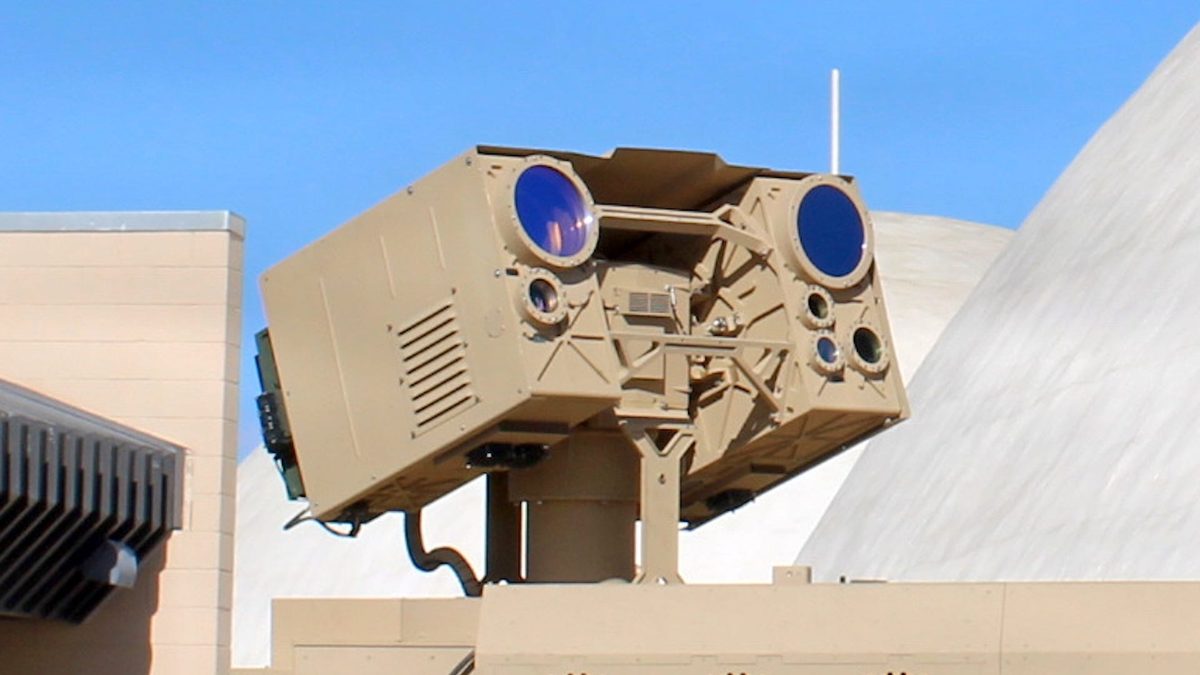
The U.S. military spent four decades chasing a laser that could shoot down a cruise missile. On April 28, 2026, the Pentagon detailed its latest attempt: the Joint Laser Weapon System, a containerized 150-kilowatt beam—scalable toward 500 kilowatts—that the Army and Navy will share, mounting it on trucks, ships, or anywhere a 20-foot container can sit.

Why it matters

If the laser works, the U.S. gains a per-shot cost measured in dollars instead of millions—rewriting the math of cruise missile defense for ships and the homeland.

Key Indicators

$675.93M
Combined Army-Navy R&D through FY2031
Joint funding line for the Joint Laser Weapon System and Joint Beam Control System.
150 kW
Initial laser power
Scalable toward 300–500 kilowatts as the Joint Beam Control System matures.
$185B
Total Golden Dome program estimate
Pentagon cost projection for the multi-layer homeland missile shield JLWS sits within.
24
Planned laser systems
Army's stated production goal across the coming fielding waves.
2028
Initial Golden Dome capability target
Pentagon's stated date for first integrated capability; full architecture in mid-2030s.

Interactive

Exploring all sides of a story is often best achieved with Play.

Ever wondered what historical figures would say about today's headlines?

Sign up to generate historical perspectives on this story.

Sign Up

Debate Arena

Two rounds, two personas, one winner. You set the crossfire.

People Involved

Organizations Involved

Timeline

  1. Pentagon details Joint Laser Weapon System

    Program Disclosure

    DOD discloses scope, funding, and architecture for the Army-Navy 150-kilowatt containerized laser, scalable toward 500 kW.

  2. Golden Dome leader cites 'pathways to pivot' on delays

    Statement

    Gen. Guetlein tells reporters the program has fallback options if interceptor or laser milestones slip.

  3. Space Force names 12 firms for space-based interceptors

    Procurement

    Up to $3.2 billion in agreements awarded for prototype kinetic interceptors in the Golden Dome's space layer.

  4. Pentagon submits FY2027 budget seeking $17.9B for Golden Dome

    Funding

    Department of War details the next-year request for the integrated missile defense architecture.

  5. Army formally redirects laser efforts to joint program

    Program Decision

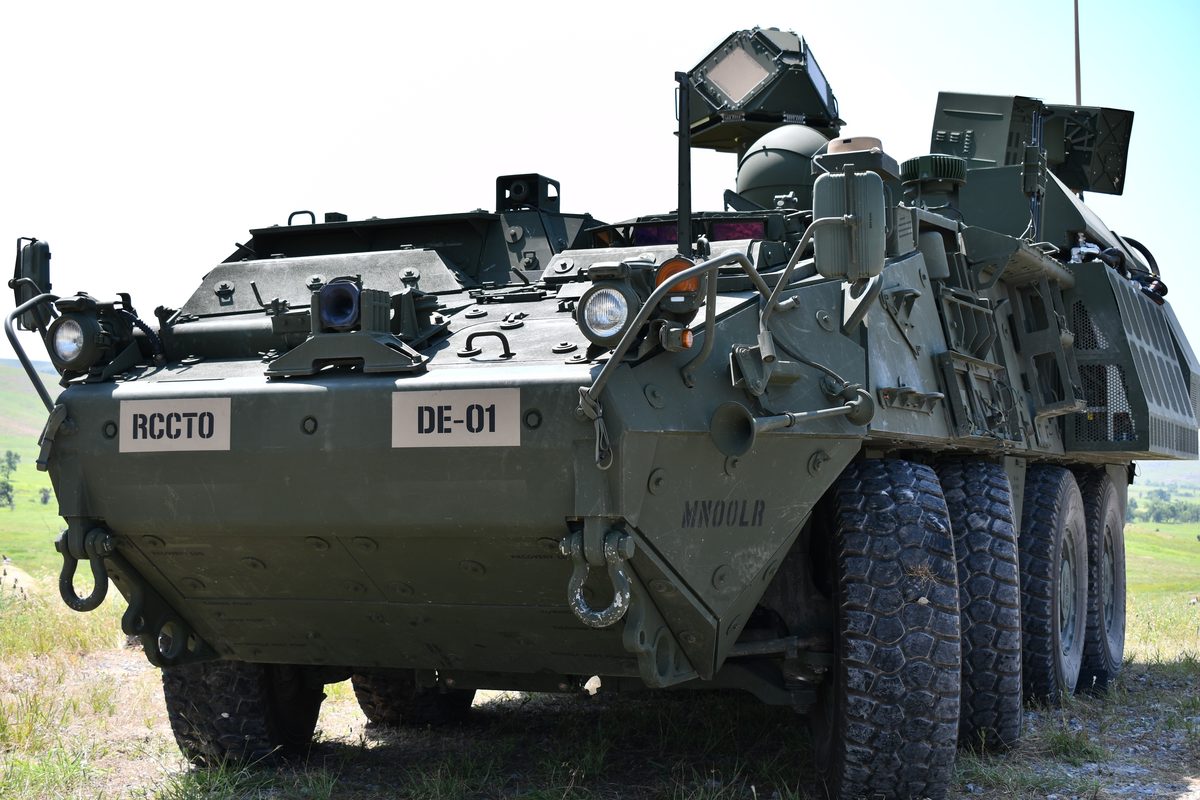
    Service confirms Valkyrie prototype will be used to inform the Joint Laser Weapon System with the Navy.

  6. CRS reports Valkyrie laser won't transition to production

    Program Decision

    Congressional Research Service confirms the Army's 300-kilowatt IFPC-HEL prototype will not become a program of record.

  7. FY2026 defense bill funds Golden Dome

    Funding

    Congress appropriates $13.4 billion for space and missile defense systems tied to the new architecture.

  8. Executive Order 14186 establishes Golden Dome

    Policy

    President signs the executive order directing a multi-layer, space-based homeland missile defense architecture.

Scenarios

1

JLWS fields on schedule, lasers join Golden Dome's terminal layer

Discussed by: Defense News, RealClearDefense, Pentagon program offices

The Joint Beam Control System contracts award on time in late 2026, containerized 150-kilowatt units roll out beginning in 2027, and the Navy mounts variants on Arleigh Burke-class destroyers while the Army positions ground units around fixed sites. Lasers handle low-cost cruise missile and drone threats, freeing kinetic interceptors for higher-end targets.

2

Power and beam-quality limits force another reset

Discussed by: Congressional Research Service, Military Times, National Defense Magazine

Atmospheric distortion, target hardening, and dwell-time requirements that defeated Valkyrie reappear in JLWS. The 150-kilowatt baseline proves insufficient against fast, hardened cruise missile bodies, the 300–500-kilowatt scaling slips beyond FY2031, and the program is restructured or absorbed into a successor effort.

3

Budget pressure trims the laser layer in favor of interceptors

Discussed by: Breaking Defense, arms control analysts

With Golden Dome's overall cost at $185 billion and space-based interceptor contracts already worth up to $3.2 billion, congressional appropriators cut the comparatively small JLWS line to protect higher-priority kinetic and space layers. Procurement targets fall well short of the planned 24 systems.

4

Lasers field but stay confined to short-range, low-end threats

Discussed by: Defense industry analysts, MDA officials

JLWS reaches initial deployment, but operational testing shows it reliably engages drones and small cruise missiles only at short ranges. The system is fielded as a complement, not an alternative, to Patriot, SM-6, and space-based interceptors—useful but not the cost-curve breakthrough advocates hoped for.

Historical Context

Strategic Defense Initiative ('Star Wars') (1983–1993)

March 1983 – May 1993

What Happened

President Ronald Reagan announced a research program to build a layered shield against Soviet ballistic missiles, including space-based lasers, kinetic interceptors, and ground-based radars. The Strategic Defense Initiative Organization spent roughly $30 billion across a decade pursuing technologies—including the Mid-Infrared Advanced Chemical Laser, which destroyed a supersonic Vandal missile in 1989—but never delivered a deployed shield.

Outcome

Short Term

President Bill Clinton renamed the office the Ballistic Missile Defense Organization in 1993 and refocused it on theater defense after technology gaps proved larger than budgets could close.

Long Term

Many SDI lines of work seeded today's missile defense systems, but the lesson of cost overruns and over-promised lasers shaped how Congress now scrutinizes architectures like Golden Dome.

Why It's Relevant Today

JLWS sits inside a layered shield of similar ambition. The SDI experience is the reason cost growth and schedule slippage in Golden Dome draw immediate skepticism.

AN/SEQ-3 LaWS aboard USS Ponce (2014)

August 2014

What Happened

The Navy installed a 30-kilowatt solid-state laser, the AN/SEQ-3 Laser Weapon System, on the amphibious transport USS Ponce in the Persian Gulf. It became the first operationally deployed laser weapon, cleared by the fleet commander to engage drones and small boats.

Outcome

Short Term

LaWS demonstrated that a laser could be fielded, powered, and operated on a working warship without disrupting the rest of the ship's systems.

Long Term

It established the modular, lower-power solid-state path the Navy has followed ever since, making a containerized 150-kilowatt JLWS a credible step rather than a leap.

Why It's Relevant Today

JLWS's containerized, ship-deployable design is a direct descendant of LaWS. The class of problems—power, cooling, beam control at sea—is the same.

Boeing YAL-1 Airborne Laser (1996–2011)

1996 – December 2011

What Happened

The Air Force and Missile Defense Agency mounted a megawatt-class chemical oxygen-iodine laser on a modified Boeing 747 to shoot down ballistic missiles in boost phase. The aircraft destroyed two test missiles in 2010, but the program had cost more than $5 billion and the operational concept required the jet to loiter near hostile territory.

Outcome

Short Term

Defense Secretary Robert Gates cut the program to a research effort in 2010, and the airframe was retired to the boneyard in 2012.

Long Term

The cancellation pushed the Pentagon away from chemical lasers entirely and toward the solid-state, electrically pumped systems that JLWS now uses.

Why It's Relevant Today

YAL-1 is the cautionary tale every laser-defense advocate confronts: a system can technically work, destroy real targets, and still be canceled if the operational concept and cost don't close. JLWS's containerized, multi-platform approach is partly an answer to that lesson.

Sources

(12)