

Logo
Daily Brief
Following
Why
Virginia Swears In Its First Woman Governor After 250 Years

Virginia Swears In Its First Woman Governor After 250 Years

Democratic Sweep Brings Unified Government and Policy Reversals to the Commonwealth

Overview

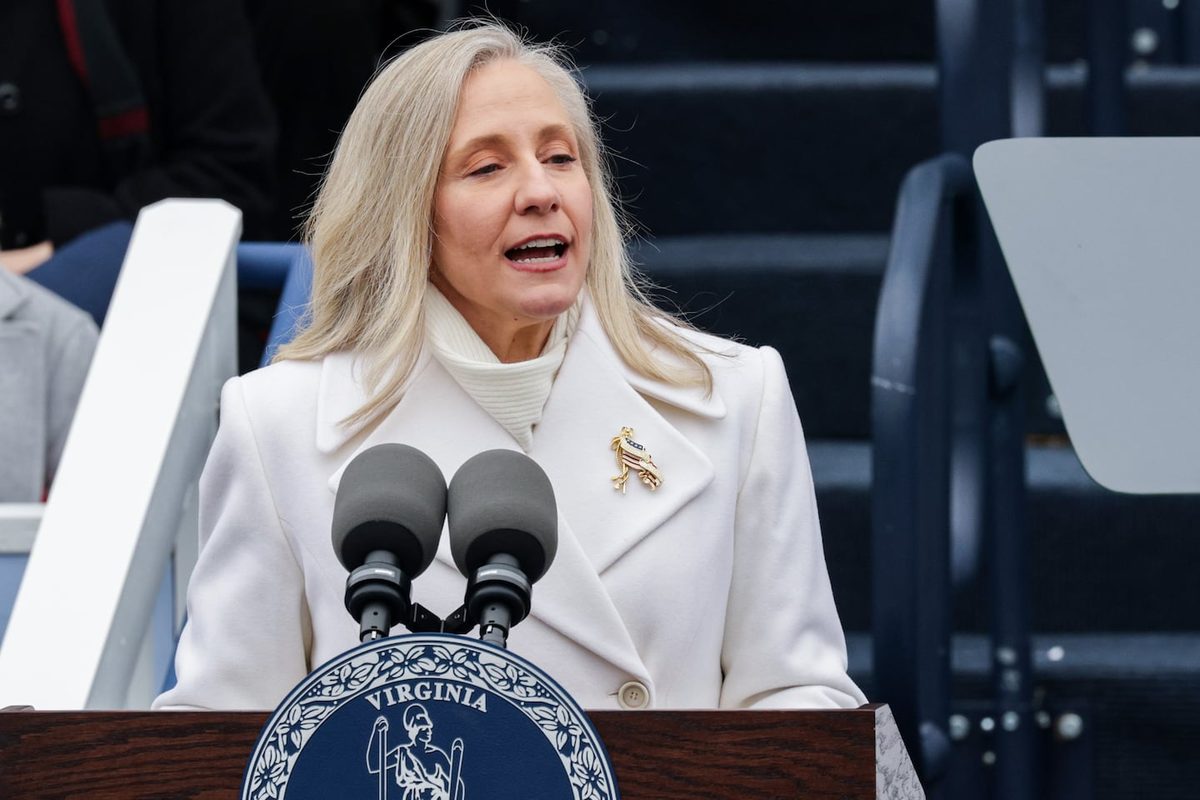
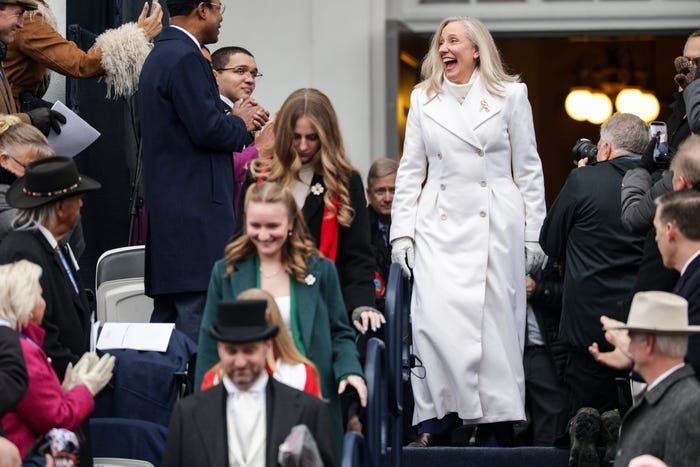
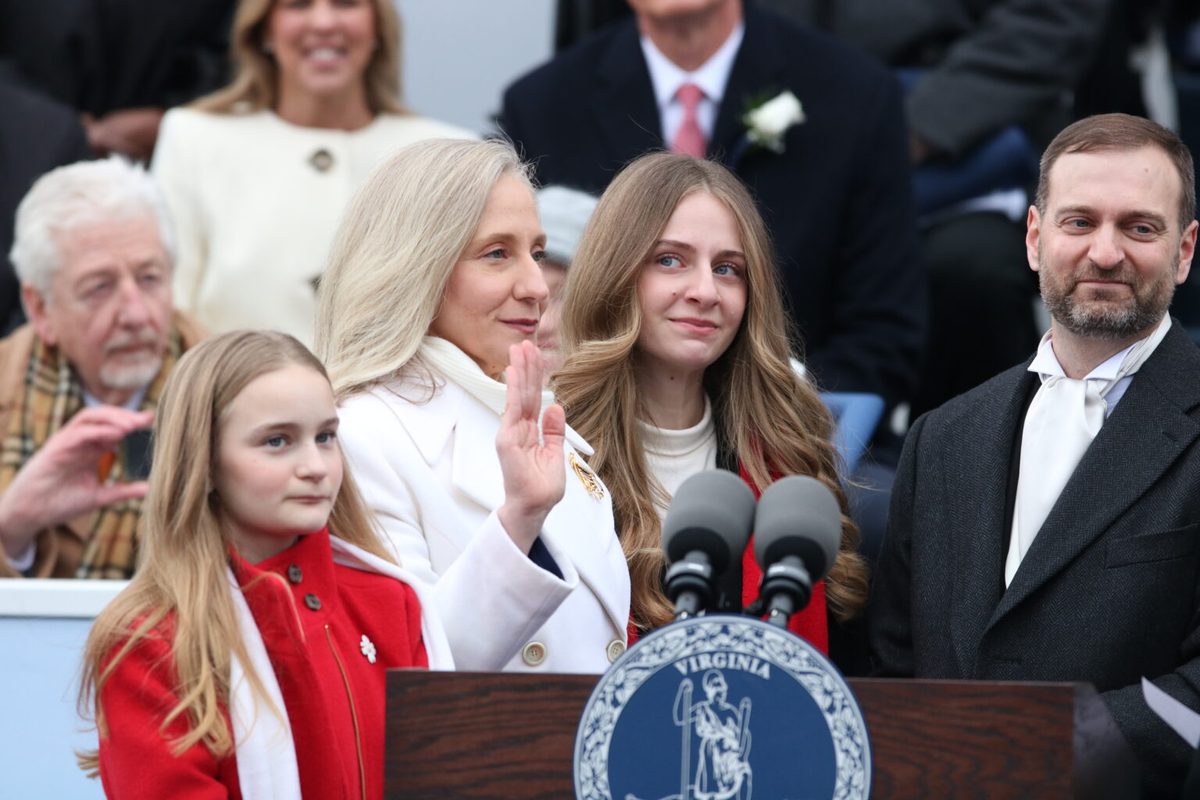
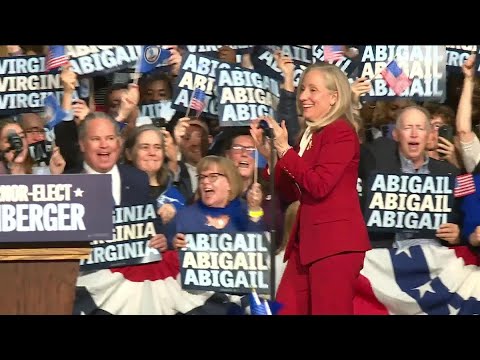
For 250 years and 74 governors, Virginia had never elected a woman to its highest office. Abigail Spanberger, a former CIA case officer, changed that on January 17, 2026, taking the oath on the Capitol steps in Richmond alongside two other history-makers: Ghazala Hashmi, the first Muslim woman to hold statewide office in the U.S., and Jay Jones, Virginia's first Black attorney general.

Within hours of being sworn in, Spanberger signed 10 executive orders, including one rescinding her predecessor's directive requiring state police to assist federal immigration enforcement. Democrats now control the governorship, a 64-36 House majority, and a 21-19 Senate edge—their first trifecta since 2021. The party has queued up constitutional amendments on abortion rights, voting rights, and marriage equality, all heading toward a November 2026 ballot.

Key Indicators

250
Years Without a Woman Governor
Virginia had been governed exclusively by men since Patrick Henry's inauguration in 1776.
15.4%
Spanberger's Victory Margin
The largest gubernatorial margin for either party in Virginia since 2009.
64-36
House Democratic Majority
The largest Democratic House majority in nearly 40 years.
23,500
Federal Jobs Lost in Virginia
DOGE-related layoffs in 2025 that became a central campaign issue.

People Involved

Abigail Spanberger
Abigail Spanberger
75th Governor of Virginia (Inaugurated January 17, 2026)
Ghazala Hashmi
Ghazala Hashmi
Lieutenant Governor of Virginia (Inaugurated January 17, 2026)
Jay Jones
Jay Jones
Attorney General of Virginia (Inaugurated January 17, 2026)
Winsome Earle-Sears
Winsome Earle-Sears
Former Lieutenant Governor of Virginia (Lost 2025 gubernatorial race by 15 points)
Glenn Youngkin
Glenn Youngkin
Former Governor of Virginia (2022-2026) (Term ended January 17, 2026)
L. Douglas Wilder
L. Douglas Wilder
Former Governor of Virginia (1990-1994) (Attended Spanberger's inauguration on his 95th birthday)

Organizations Involved

DE
Democratic Party of Virginia
Political Party
Status: Controls governorship, House of Delegates, and State Senate

State affiliate of the Democratic Party, now holding unified control of Virginia government for the first time since 2021.

Virginia General Assembly
State Legislature
Status: Democratic majority in both chambers

The oldest continuous legislative body in the Western Hemisphere, now controlled by Democrats in both the 100-seat House and 40-seat Senate.

Timeline

  1. Spanberger Inaugurated as Virginia's First Woman Governor

    Inauguration

    Abigail Spanberger takes the oath of office in Richmond, becoming Virginia's 75th governor and first woman to hold the position in 250 years. Hashmi and Jones are also sworn in. Spanberger immediately signs 10 executive orders, including one rescinding Youngkin's immigration enforcement directive.

  2. Senate Approves Constitutional Amendments

    Legislative

    The State Senate passes all four constitutional amendments, sending them to the November 2026 ballot for voter approval.

  3. General Assembly Opens, Passes Four Constitutional Amendments

    Legislative

    The 2026 session begins. The House passes constitutional amendments on abortion rights, voting rights, marriage equality, and redistricting on day one.

  4. Democrats Sweep All Statewide Offices

    Election

    Spanberger defeats Earle-Sears by 15 points—the largest margin since 2009. Hashmi and Jones win lieutenant governor and attorney general races. Democrats expand House majority to 64-36.

  5. Federal Government Shutdown Begins

    Policy

    A federal government shutdown furloughs workers across Virginia, intensifying voter anger over DOGE layoffs and reshaping the gubernatorial race.

  6. Spanberger Pledges to Scrap Immigration Order

    Campaign

    Spanberger announces she will rescind Youngkin's Executive Order 47 on immigration enforcement if elected governor.

  7. Earle-Sears Wins GOP Nomination

    Campaign

    Lieutenant Governor Winsome Earle-Sears becomes the Republican gubernatorial nominee, the first Black Republican woman nominated for governor in U.S. history.

  8. Youngkin Orders State Police to Assist ICE

    Policy

    Governor Youngkin signs Executive Order 47, directing Virginia State Police and corrections officers to assist federal immigration enforcement under a 287(g) agreement.

  9. Trump Launches DOGE Initiative

    Policy

    President Trump and Elon Musk introduce the Department of Government Efficiency. Layoffs follow at federal agencies, disproportionately affecting Northern Virginia.

  10. Spanberger Announces Gubernatorial Campaign

    Campaign

    Three-term Congresswoman Abigail Spanberger announces she will run for governor, positioning herself as a centrist alternative focused on affordability.

  11. Democrats Retake Virginia House

    Election

    Democrats flip the House of Delegates 51-49, blocking Youngkin's bid for a Republican trifecta. Abortion rights dominate campaign messaging.

  12. Youngkin Defeats McAuliffe, Ends Democratic Trifecta

    Election

    Republican Glenn Youngkin defeats former governor Terry McAuliffe by 2 points, becoming the first Republican to win statewide in Virginia since 2009. Republicans also flip the House of Delegates.

Scenarios

1

Constitutional Amendments Pass, Lock In Progressive Priorities

Discussed by: Virginia Mercury, Planned Parenthood Advocates of Virginia, Democratic lawmakers

All four constitutional amendments—on abortion, voting rights, marriage equality, and redistricting—pass in November 2026. Virginia becomes the first Southern state to enshrine abortion rights in its constitution. The redistricting amendment reduces Republican congressional seats. These changes outlast any future Republican governor.

2

Federal-State Immigration Clash Escalates

Discussed by: Former AG Jason Miyares, ICE officials, immigration attorneys

Spanberger's rescission of the 287(g) agreement prompts the Trump administration to challenge Virginia's non-cooperation policy. Federal officials may attempt to withhold funding or pursue legal action, creating a federalism conflict similar to sanctuary city disputes in other states.

3

Fiscal Constraints Force Democrats to Scale Back

Discussed by: Weldon Cooper Center, fiscal analysts, Republican legislators

Cuts to Medicaid and ACA subsidies at the federal level strain Virginia's budget. Democrats must choose between new programs (cannabis regulation, minimum wage enforcement) and maintaining current services. Rural hospital closures become politically damaging.

4

Virginia Becomes 2026 Midterm Bellwether

Discussed by: National political analysts, Democratic and Republican strategists

Spanberger's landslide and the Democratic sweep are interpreted as a preview of the 2026 midterms. National Democrats adopt her DOGE-focused economic messaging. Republicans recalibrate on federal workforce issues in swing districts with high government employment.

Historical Context

Douglas Wilder Elected Governor (1989)

November 1989

What Happened

Douglas Wilder, the grandson of enslaved people who grew up in segregated Richmond, won Virginia's gubernatorial election by less than half a percent. He became the first African American elected governor in U.S. history. The margin was so narrow that Republicans requested a recount.

Outcome

Short Term

Wilder governed as a centrist, focusing on crime reduction and Northern Virginia infrastructure. He briefly sought the 1992 Democratic presidential nomination.

Long Term

Wilder's victory proved a Southern state could elect a Black governor 25 years after the Civil Rights Act. It took another 36 years for Virginia to elect a woman.

Why It's Relevant Today

Wilder attended Spanberger's inauguration on his 95th birthday. Both broke barriers in the former capital of the Confederacy; both won as centrists emphasizing economic pragmatism over ideological fights.

Ella Grasso Elected Connecticut Governor (1974)

November 1974

What Happened

Ella Grasso became the first woman elected governor in U.S. history who was not the wife or widow of a former governor. She had served in the state legislature, as secretary of state, and two terms in Congress before running for governor.

Outcome

Short Term

Grasso won re-election in 1978 before resigning due to illness in 1980. She was known for her hands-on response to a 1978 blizzard.

Long Term

Her victory established that women could win governorships on their own political credentials. Fifty-two years later, 53 women have served as governors.

Why It's Relevant Today

Spanberger, like Grasso, came to the governorship from Congress with her own political identity. Virginia is the 37th state to elect a woman governor—late, but with a commanding margin.

Virginia's 2021 Republican Sweep (2021)

November 2021

What Happened

Glenn Youngkin defeated Terry McAuliffe by 2 points in a state Biden had won by 10 points the previous year. Republicans also flipped the House of Delegates and won lieutenant governor and attorney general races. The defeat ended Virginia's Democratic trifecta after just two years.

Outcome

Short Term

Youngkin's education-focused campaign became a GOP template. Democrats lost their ability to advance progressive legislation.

Long Term

The loss forced Virginia Democrats to rebuild. They regained the House in 2023 and completed the sweep in 2025 with a 15-point margin—a 17-point swing in four years.

Why It's Relevant Today

The 2025 results represent a complete reversal of 2021. Where Youngkin won by emphasizing parental rights in schools, Spanberger won by emphasizing federal job losses—both tapped into immediate economic anxieties.

12 Sources: