
Pull to refresh
Logo
Construction begins on Vietnam's first company-controlled submarine cable

Construction begins on Vietnam's first company-controlled submarine cable

Built World

The 2,500 km VTS system, co-led by Viettel and Singtel, is due to carry 240 Tbps between Vietnam and Singapore from late 2030

Overview

Updated Yesterday

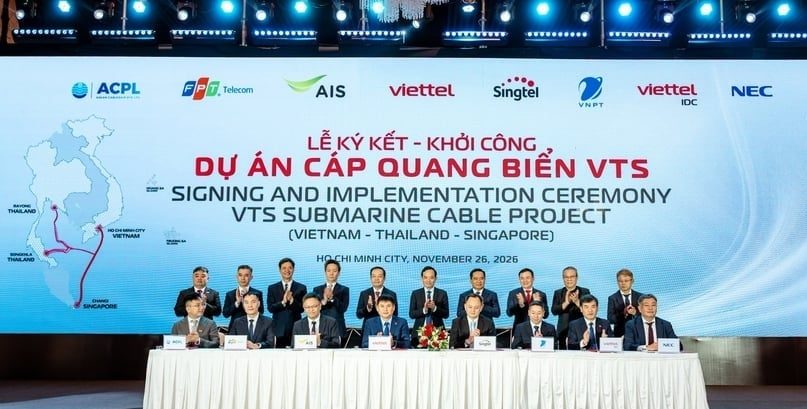
Vietnam's international internet traffic reaches the world through eight submarine cables that Vietnamese carriers help fund but do not design, own or route. On 26 November, a consortium co-led by Viettel and Singapore's Singtel began building the first such system the country will control.

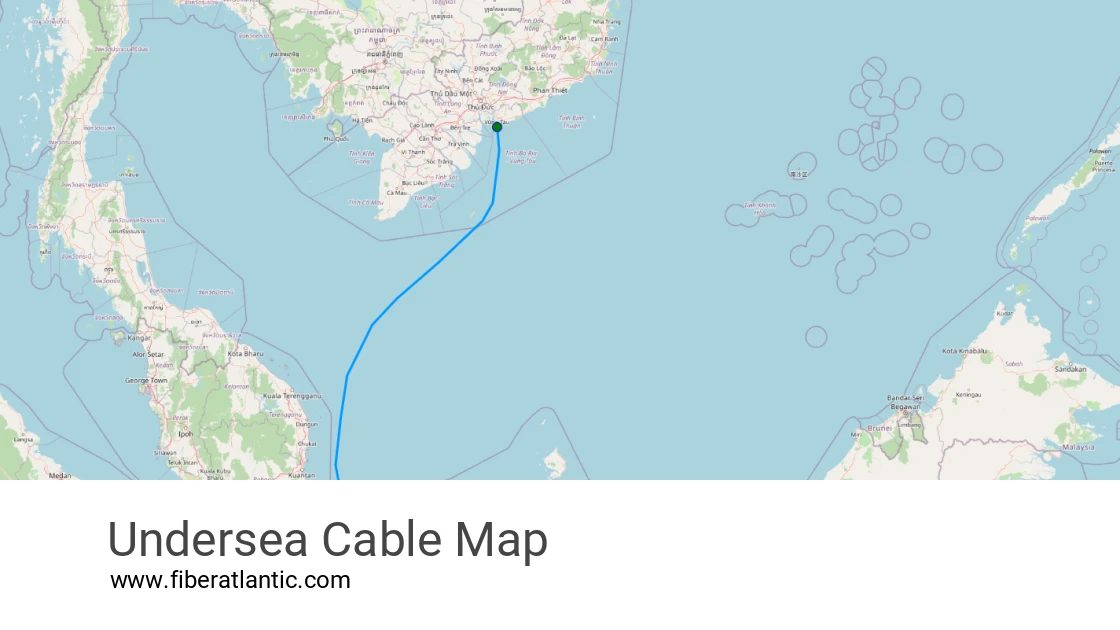
The Vietnam–Thailand–Singapore cable, known as VTS, is designed to carry 240 terabits per second on its 1,200 km Vietnam–Singapore trunk. That is about 2.5 times the combined capacity of every international cable now operating in Vietnam. Commercial service is scheduled for the fourth quarter of 2030.

Why it matters

Vietnam's cloud and AI buildout runs on bandwidth it rents from foreign-led cable groups; VTS would make a Vietnamese company the owner.

Questions about this story

Free account needed to ask — your question is kept and asked for you right after sign-up. Answers are public.

No questions yet — be the first to ask.

Key Indicators

600 Tbps
Design capacity of the full VTS system
Eight fibre pairs across roughly 2,500 km, with branches connecting Thailand.
240 Tbps
Capacity of the direct Vietnam–Singapore trunk
About 2.5 times the combined capacity of all international cables now in service in Vietnam.
12 ms
Designed round-trip latency
About half the current average on Vietnam's international routes.
2,500 km
Total cable length
Includes the 1,200 km trunk to Singapore and the Thai branches.
65%
Viettel's share of Vietnam's international connectivity
Viettel holds stakes in five of the country's eight international cable systems.
24%
Annual growth in Vietnam's international bandwidth demand
Demand doubles roughly every four years, according to the Ministry of Science and Technology.
3 m
Depth the main cable will be buried
Two to three times typical burial depth, to cut damage from anchors and fishing gear.

Voices

Curated perspectives — historical figures and your fellow readers.

Sign up to generate historical perspectives on this story.

People Involved

Organizations Involved

Timeline

April 2024 November 2026

5 events Latest: Yesterday
Tap a bar to jump to that date
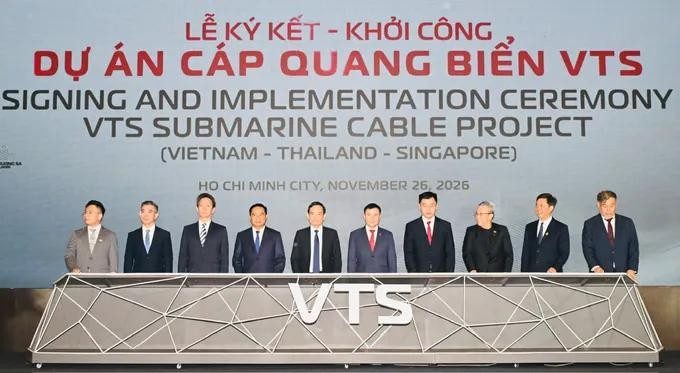
  1. VTS construction launched in Ho Chi Minh City

    Latest Launch

    Consortium signs build contracts with NEC and ASEAN Cableship and starts work on the 2,500 km system.

  2. Singtel swaps Gulf for AIS

    Partnership

    AIS Inter Venture takes 50% of AS VTS Investment, the project vehicle, for about US$17 million.

  3. Singtel names Gulf Development as Thai partner

    Partnership

    Gulf Development is announced as strategic partner on the project.

  4. National Assembly creates special cable mechanisms

    Policy

    Resolution 193/2025/QH15 sets specific mechanisms the ministry cites as underpinning VTS.

  5. Viettel and Singtel agree to build a direct cable

    Agreement

    The two carriers sign a memorandum of understanding for a direct Vietnam–Singapore submarine link.

Scenarios

1

VTS enters commercial service on schedule in late 2030

Possible Resolves by Q1 2031

Discussed by: Viettel, Singtel and Vietnam's Ministry of Science and Technology, all of which state a fourth-quarter 2030 target

Build contracts are signed and the route is comparatively short: a 1,200 km trunk with a single landing in Ho Chi Minh City. Meeting the date would make Viettel the first Vietnamese company to control an operating international cable, and give the city the direct Singapore gateway officials described at the launch.

2

Viettel controls a second international cable before 2031

Uncertain Resolves by Q2 2031

Discussed by: Tao Duc Thang, who set the target publicly at the launch ceremony

Viettel says it wants stakes in ten international systems and control of at least two by 2030, up from five today. VTS is the first. The second would require a majority position in an existing consortium cable or a new build, and neither has been announced.

3

Another consortium partner exits before the cable lands

Possible Resolves by Q1 2031

Discussed by: No party has predicted it; the September-to-November swap from Gulf Development to AIS is the precedent

Gulf Development was named strategic partner in September 2026 and replaced by AIS six weeks later, with AIS taking half of the project vehicle. A second change would follow the same pattern: equity and capacity commitments re-cut before the 2030 in-service date.

4

Simultaneous cable faults hit Vietnam again before VTS lands

Likely Resolves by End of 2030

Discussed by: Vietnam's Ministry of Science and Technology, which cites past faults on several cables at once as the reason for the strategy

Vietnam's eight systems run through a small number of routes, so damage on more than one at the same time has slowed national traffic before. Until VTS enters service, that exposure is unchanged, and a repeat outage would sharpen the government's argument for a southern route it controls.

Historical Context

3 moments from history that rhyme with this story — and how they unfolded.

January 2022

Hunga Tonga eruption severs Tonga's only cable (2022)

The volcanic eruption on 15 January 2022 cut the single submarine cable linking Tonga to Fiji, leaving the Pacific kingdom without international connectivity. Tongans relied on satellite links while a repair ship sailed from Papua New Guinea.

Then

Voice and data service returned in stages over roughly five weeks.

Now

The outage became the clearest recent case of a country with no alternate path: restoration depended entirely on a vessel travelling thousands of kilometres.

Why this matters now

Vietnam has eight cables rather than one, but its science and technology ministry cites simultaneous faults on several as the reason it wants a route it controls.

February–March 2024

Red Sea cable cuts (2024)

Three submarine cables through the Bab al-Mandab strait, including AAE-1 and SEACOM, were damaged within days of each other. The strait carried a large share of the data traffic between Europe and Asia.

Then

Repairs were delayed for weeks by security conditions and permits in Yemeni waters.

Now

The damage pushed operators to weigh route diversity more heavily, since one narrow waterway concentrated risk for dozens of networks at once.

Why this matters now

VTS applies the same logic at regional scale: a new southern path so Vietnam's traffic does not all run through the same waters.

2019–2022

Google's Equiano cable (2019–2022)

Google announced and funded its own cable running from Portugal down the west coast of Africa, instead of buying capacity in telecom-led consortiums. It entered service in 2022.

Then

The build added capacity on a route where Google's cloud traffic was growing fastest.

Now

Content and cloud companies became anchor investors in new cables, shifting who initiates and controls international capacity.

Why this matters now

Viettel is making the same move from consortium member to initiator, with a state-owned carrier rather than a cloud provider as the anchor.

Sources

(9)