
IAEA ceasefire takes effect to restore power to Zaporizhzhia nuclear plant
Built WorldEurope's largest nuclear plant has run on diesel generators since August 20 and could face a station blackout within days
Today: Seventh IAEA-brokered ceasefire takes effectNew here? Follow stories to track developments over time. Create a free account to get updates when stories you care about change.
Overview
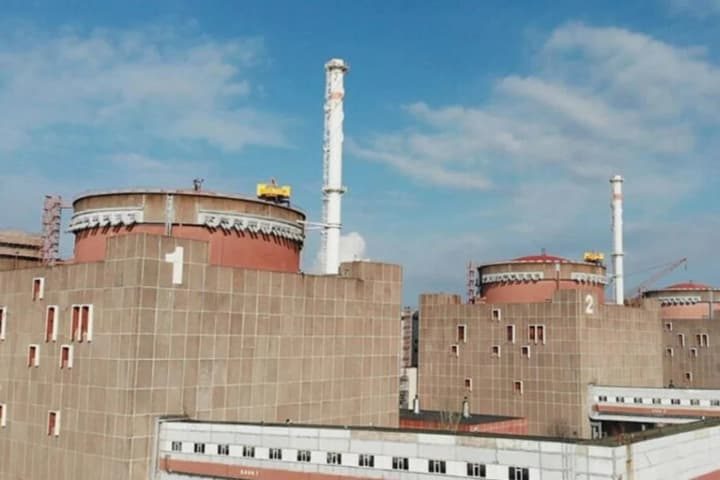
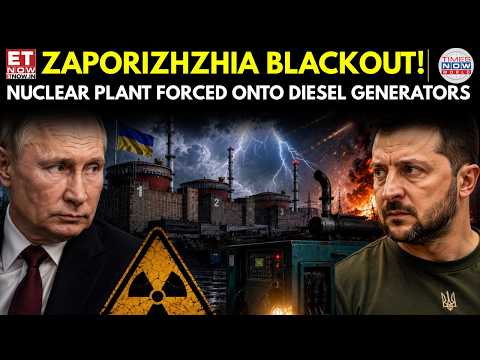
Updated 1 hour agoEurope's largest nuclear plant has run on emergency diesel generators since August 20, when military activity severed its last connection to the power grid. Diesel reserves are nearly gone, and the International Atomic Energy Agency (IAEA) warned the plant could lose all power within days.
On September 5, a seventh IAEA-brokered local ceasefire took effect so Ukrainian technicians could repair the damaged 330-kilovolt transmission line. Repairs began after the area was demined, with IAEA experts monitoring. All six reactors are shut down, but the plant still needs electricity to cool spent fuel.
Why it matters
With diesel nearly gone, a failed repair could leave spent fuel uncooled and release radiation across an active war zone.
Questions about this story
Free account needed to ask — your question is kept and asked for you right after sign-up. Answers are public.
No questions yet — be the first to ask.
Key Indicators
Voices
Curated perspectives — historical figures and your fellow readers.
Play
Exploring all sides of a story is often best achieved with Play.
Higher or Lower
A number from this story, against one from elsewhere in the news — guess which is bigger, then keep the chain going. 5 rounds, 3 strikes; a miss costs a strike and resets your streak.
Keyboard: ↓/L lower · ↑/H higher
0 points — sign up to put that on the leaderboard.
Connections
Sixteen names from the news. Find the four hidden groups of four. Four mistakes max.
Sign up to keep a daily streak — a new puzzle lands every day.
Exit debate?
Your progress in this debate will be lost.
- 1 Two AI personas square off on this story.
- 2 You predict who'll win each round — correct picks earn XP.
- 3 One crossfire question is yours to fire. Pick it carefully.
Couldn't generate a topic
Select Your Champions
Choose one persona for each side of the debate
DEBATE TOPIC
Choose personas with different perspectives for a more dynamic debate.
Select debater for this side:
No debate personas available right now.
Select debater for this side:
No debate personas available right now.
Who's Got This Round?
Make your prediction before the referee scores
The referee scores both sides on
Round Results
Set the Crossfire
Pick the question both personas must answer in the final round
Debate Oracle! You called every round!
Sharp Instincts! You know your debaters!
The Coin Flip Strategist! Perfectly balanced!
The Contrarian! Bold predictions!
Inverse Genius! Try betting the opposite next time!
XP Breakdown
Prediction History
People Involved
Organizations Involved
The UN agency responsible for nuclear safety and safeguards, maintaining a permanent presence at Zaporizhzhia since 2022.
Europe's largest nuclear plant, with six reactors, located in Enerhodar on the south bank of the Dnipro River.
Russia's state nuclear corporation, which runs the Zaporizhzhia plant as a subsidiary since its capture.
Timeline
March 2022 September 2026
-
Seventh IAEA-brokered ceasefire takes effect
Today Diplomatic agreementLocalized truce allows Ukrainian technicians to begin repairing the Ferroplavna-1 power line after demining. IAEA experts monitor the work.
-
Plant loses its last external power line
Infrastructure failureMilitary activity on the Dnipro River's north bank severs the 330 kV Ferroplavna-1 line, the plant's sole remaining grid connection.
-
Plant switches to emergency diesel generators
Emergency responseWith no grid power, the plant begins relying on backup diesel generators to cool six reactors and spent fuel pools.
-
Russian forces capture Zaporizhzhia NPP
Military seizureRussian troops take the plant after fighting, triggering a fire and international alarm.
Historical Context
3 moments from history that rhyme with this story — and how they unfolded.
Chernobyl disaster (1986)
A reactor explosion at the Chernobyl plant in northern Ukraine released massive radiation across Europe, forcing the evacuation of hundreds of thousands of people.
A 30-kilometer exclusion zone was established; 350,000 people were permanently relocated.
Chernobyl remains the benchmark for nuclear catastrophe, with billions spent on containment and cleanup.
Chernobyl is the reason nuclear safety at Zaporizhzhia carries such weight. A radiation release from Europe's largest plant would dwarf the 1986 disaster's scale.
Fukushima Daiichi meltdown (2011)
A magnitude 9.0 earthquake and tsunami knocked out external power and backup generators at Japan's Fukushima Daiichi plant, causing three reactor meltdowns and a major radiation release.
More than 150,000 people evacuated from the surrounding area; large zones remain contaminated.
Global nuclear safety standards were overhauled, with new requirements for backup power and emergency preparedness.
Fukushima showed what happens when a nuclear plant loses all cooling power. Zaporizhzhia's reliance on diesel generators is a direct parallel to the backup system that failed in Japan.
Zaporizhzhia NPP grid disconnections (2022)
The plant repeatedly lost external power lines during fighting in late 2022, at one point running solely on diesel generators while IAEA experts watched from inside.
Each outage was resolved through repairs or alternative connections, keeping cooling systems running.
The plant's power infrastructure degraded progressively, leaving it dependent on a single line by 2026.
The 2022 outages established the pattern of IAEA-brokered ceasefires and repair operations that continues today. They also demonstrated the plant can survive extended outages if diesel holds out.
