

Pull to refresh
Logo
Papal cipher from 1542 cracked with simulated annealing

Papal cipher from 1542 cracked with simulated annealing

New Capabilities

Optimization algorithm recovers the key to a Vatican letter that resisted cryptanalysts for 484 years

2 days ago: Crack reported publicly with full methodology

Overview

Updated 1 hour ago

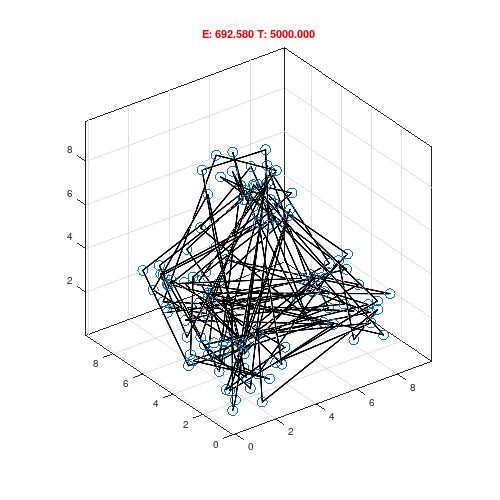
A 484-year-old papal letter, written in a numeric cipher with variable-length codes and decoy nulls, has been cracked using simulated annealing, an optimization algorithm from machine learning. The recovered key, 18 letters plus one null, held up whether the ciphertext's first or second half was solved independently.

The letter, sent April 1542 by Cardinal Alessandro Farnese to the papal nuncio at Emperor Charles V's court, discusses peace negotiations between the Emperor and France. It resisted every prior method for nearly five centuries, and the same approach could now be turned on other unsolved Vatican ciphers.

Why it matters

Simulated annealing just cracked a papal cipher that resisted every method for 484 years. The same technique could unlock other unsolved Vatican ciphers.

Questions about this story

Free account needed to ask — your question is kept and asked for you right after sign-up. Answers are public.

No questions yet — be the first to ask.

Key Indicators

484
Years between letter and crack
April 1542 to September 2026.
7+
Years Vatican Challenge stood unsolved
George Lasry posted the challenge in July 2019; it showed zero solves through September 16, 2026.
18
Letters recovered in the cipher key
Plus one null character; the key was identical whether each half of the letter was solved separately.
0
Solves displayed on challenge page before verification
MysteryTwister had not yet recorded Klee's September 15 submission as of September 16, 2026.

Voices

Curated perspectives — historical figures and your fellow readers.

Ever wondered what historical figures would say about today's headlines?

Sign up to generate historical perspectives on this story.

People Involved

Organizations Involved

Timeline

April 1542 September 2026

6 events Latest: 2 days ago
Tap a bar to jump to that date
  1. Crack reported publicly with full methodology

    Latest Publication

    Klee publishes his detailed report, documenting the simulated annealing approach and the stability of the recovered key across both halves of the letter.

  2. Klee submits recovered key and plaintext

    Breakthrough

    Simon Klee sends the recovered key, 18 letters plus a null, and the Italian plaintext to the MysteryTwister challenge organizers.

  3. Study lists Spagna 1A ciphertexts as unsolved

    Research

    Lasry, Beáta Megyesi, and Nils Kopal publish a study placing the Farnese letter's ciphertype in a separate cluster from other Vatican ciphers.

  4. Farnese letter posted as Vatican Challenge Part 5

    Challenge

    George Lasry sets the ciphertext on MysteryTwister with key, plaintext, and language unknown. It would stand unsolved for over seven years.

  5. Meister publishes cipher keys in papal cryptography study

    Publication

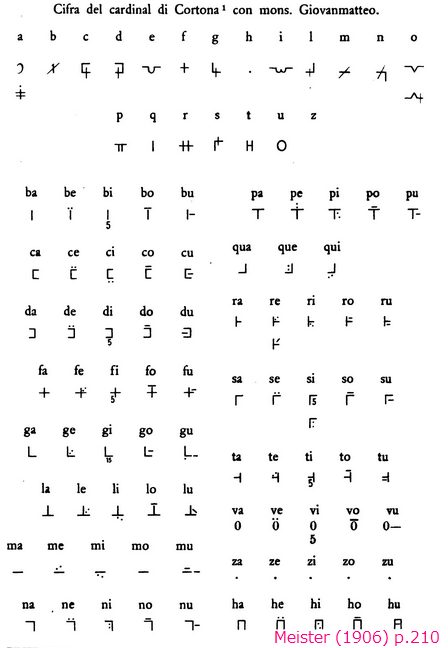
    Aloys Meister's study prints a cipher key for the Poggio correspondence, dated 1538-42, but it does not match this letter's cipher.

  6. Farnese sends encrypted letter to nuncio at Charles V's court

    Historical Event

    Cardinal Alessandro Farnese writes to Giovanni Poggio about peace negotiations, with key instructions carried in numeric cipher.

Scenarios

1

Vatican Challenge Part 5 marked solved

Likely Resolves by End of 2026

Discussed by: George Lasry and the MysteryTwister moderators

Lasry or the challenge moderators verify Klee's key against the letter, accept the submission, and update the challenge page. The page, which showed zero solves since 2019, would display the solution as accepted.

2

Independent verification or correction published

Possible Resolves by Q2 2027

Discussed by: Cryptologia, DECRYPT project researchers

Other cryptanalysts apply simulated annealing or manual methods to the letter and publish their own reading. They may confirm Klee's key, adjust disputed digit readings, or find transcription errors. Klee's report notes that no other cryptanalyst had yet verified or challenged the solution as of mid-September 2026.

3

Method spreads to other unsolved Vatican ciphers

Possible Resolves by End of 2027

Discussed by: DECRYPT project, historical cryptanalysis researchers

Researchers apply the same split-and-score approach with simulated annealing to other unsolved ciphertexts in the Vatican archives, including the Spagna 1A material and the 1721 Brussels letter. DECRYPT publications note that stochastic solvers are not bit-reproducible without recorded random seeds, so results will require careful documentation of search parameters.

Historical Context

2 moments from history that rhyme with this story — and how they unfolded.

1547 / 2022

Charles V's 1547 letter cracked (2022)

A coded letter from Holy Roman Emperor Charles V to his ambassador Jean de Saint-Mauris, dated 1547, was cracked in 2022. It revealed the emperor's fear of assassination by Italian mercenary leader Pierre Strozzi.

Then

The decipherment, published by French researchers, added new details about imperial court politics and Charles V's security concerns.

Now

Demonstrated that computational methods could crack 16th-century homophonic ciphers using keys recovered from related letters in the same correspondence.

Why this matters now

Same era and cipher type as the Farnese letter, and it preceded this crack by four years, showing the field's accelerating progress.

1721 / early 2020s

Short papal cipher from 1721, partial decipherment

A letter from the papal nuncio in Brussels to Rome, dated October 9, 1721, contains about 200 digit groups separated by commas. Lasry and colleagues needed to improve their algorithm — 5-gram scoring and an Old Italian corpus — to recover most of the key.

Then

Partial decipherment recovered most of the text, though three nomenclature elements (names or special terms) remained unidentified.

Now

Demonstrated that short homophonic ciphertexts push automated solvers to their limits, informing the methodological choices that later cracked the longer 1542 letter.

Why this matters now

The 1542 letter, with variable-length codes and nulls, is a harder variant of the same problem. The scoring-function and corpus lessons carry directly into Klee's successful approach.

Sources

(6)