
Pull to refresh
Logo
Seaweed missing since 1933 found in deep forests off Lord Howe Island

Seaweed missing since 1933 found in deep forests off Lord Howe Island

New Capabilities

Video surveys recorded a 22-fold expansion of deep Sargassum beds between 2009 and 2022, and snagged fronds included the first adult Sargassum howeanum collected in nearly 90 years

Overview

Updated 43 minutes ago

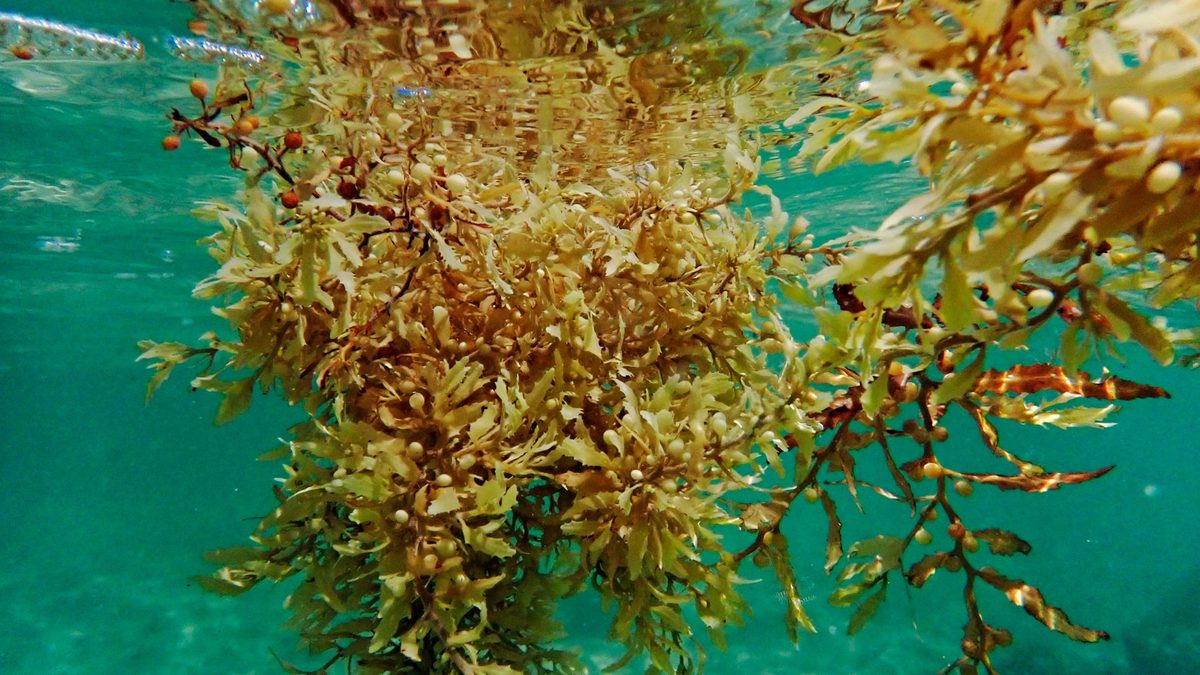
Botanist A.H.S. Lucas named Sargassum howeanum from a specimen collected near Lord Howe Island in 1933. For nearly 90 years after that, only immature fragments turned up. No adult plant with reproductive structures was found.

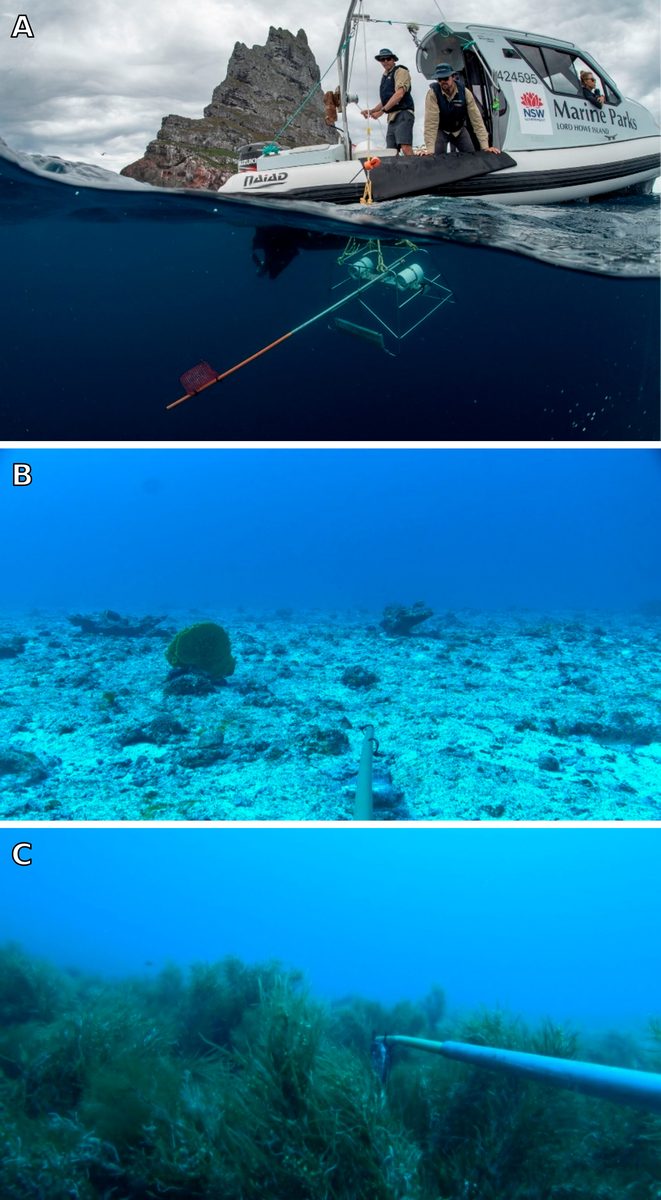
In 2022, cameras lowered to survey fish instead filmed dense seaweed canopies at 20 to 55 meters. Fronds that snagged on the frames turned out to be adult Sargassum howeanum, 53 and 72 centimeters long and carrying fruiting bodies. Across the same surveys, the deep forests expanded about 22-fold in cover between 2009 and 2022.

Why it matters

If cooler deep water shelters seaweeds from warming, the same zones could slow losses on shallow reefs.

Questions about this story

Free account needed to ask — your question is kept and asked for you right after sign-up. Answers are public.

No questions yet — be the first to ask.

Key Indicators

22×
Growth in deep Sargassum forest cover, 2009 to 2022
Camera surveys of the island's shelf recorded a 22-fold rise in macroalgal cover.
38 m
Maximum depth of observed forests
Canopies above 45% cover were recorded down to 38 meters at seven survey sites.
19.88°C
Mean spring sea temperature to 50 m, 2024
The marine heatwave year ran about 0.53°C warmer than the 2009 reading.
0.53°C
Warming at Lord Howe Island since 2009
Measured in average spring temperatures down to 50 meters depth.
7
Survey sites with more than 45% macroalgal cover
Out of 22 sites surveyed in spring 2022, between 20 and 55 meters deep.

Voices

Curated perspectives — historical figures and your fellow readers.

Sign up to generate historical perspectives on this story.

People Involved

Organizations Involved

Timeline

1933 November 2026

7 events Latest: Today
Tap a bar to jump to that date
  1. Survey results published and reported

    Today Publication

    The journal Ecology publishes the survey findings. ScienceAlert and The Conversation report the rediscovery.

  2. Marine heatwave hits the island

    Environment

    Spring temperatures average 19.88°C down to 50 meters. Coral and algae die across the shallow lagoon.

  3. Dense forests and adult specimens found

    Survey

    Spring surveys at 22 sites find canopies to 38 meters deep. Seaweeds snagged on the camera frames come up as adult S. howeanum.

  4. Expansion continues in cooler water

    Survey

    Cover rises again. Researchers later tie cooler conditions that year to better algal growth and survival.

  5. Seaweed beds begin to spread

    Survey

    Autumn surveys record a marked increase in the extent and cover of Sargassum forests.

  6. First camera surveys find mostly bare reef

    Survey

    Baited video at shelf sites records bare rock, red turf algae and scattered corals, with little macroalgal cover.

  7. Lucas names Sargassum howeanum

    Discovery

    Botanist A.H.S. Lucas collects and describes the species near Lord Howe Island. He records neither depth nor method.

Scenarios

1

Repeat survey finds the deep forests held through the 2024 heatwave

Possible Resolves by Q2 2029

Discussed by: The study authors, who call for repeat surveys to test the mesophotic depth refugium hypothesis

The 2024 heatwave killed coral and algae in the island's shallow lagoon. If the beds at 20 to 38 meters came through with cover intact, the case for a depth refuge gets stronger. The test depends on resurveying the same sites with the same camera method.

2

Heatwave strips the deep forests and the refugium case weakens

Possible Resolves by Q2 2029

Discussed by: The study authors, who note that cover varied widely between sites and years

Cover rose unevenly between 2017 and 2022, and the authors say that variability could signal resilience or susceptibility. A large drop after 2024 would suggest deep water is not the buffer the hypothesis predicts. Either result would be the first real stress test of the idea at this site.

3

No repeat survey, and the question stays open

Possible Resolves by End of 2029

Discussed by: Implicit in the study's own caveat that survey seasons and site coverage differed across years

The 2009, 2013, 2017 and 2022 campaigns did not sample identical sites in identical seasons. Without another survey using the same method, neither the refugium claim nor its failure can be settled. Monitoring programs are the only realistic source of that data.

Historical Context

2 moments from history that rhyme with this story — and how they unfolded.

2010

Mesophotic depth refugium hypothesis (2010)

Marine scientists led by Pim Bongaerts proposed that deeper reefs, buffered from surface warming and from plant-eating fish limited to shallower water, could shelter species under stress elsewhere. The idea gave deep reefs a conservation role beyond their own biodiversity.

Then

Researchers began surveying deeper water for species assumed to be in decline at the surface.

Now

Whether these zones are true refuges or simply different communities remains debated, as Bongaerts and Smith argued in 2019.

Why this matters now

The Lord Howe forests are the newest test case, and the 2024 heatwave gives researchers a natural experiment.

2014

Tropicalization of temperate reefs (2014)

A synthesis by Vergés and colleagues described how warming water and the poleward spread of tropical plant-eating fish were turning macroalgal forests on shallow temperate reefs into turf and leafy algae. The pattern became a standard expectation for warming coastlines.

Then

The paper framed algal forest loss as a predictable consequence of ocean warming.

Now

It set the baseline that later studies, including this one, measured their results against.

Why this matters now

Lord Howe's deep forests expanded as surface waters warmed, the opposite of the shallow-water pattern, which is why the authors point to depth as the difference.

Sources

(7)