
Pull to refresh
Logo
Daily Brief
Following
Why Sign Up
Apple enters budget laptop market for first time with $599 MacBook Neo

Apple enters budget laptop market for first time with $599 MacBook Neo

New Capabilities
By Newzino Staff |

The company that refused to make a cheap computer for 50 years just made one — and the PC industry is scrambling

7 days ago: MacBook Neo goes on sale

Overview

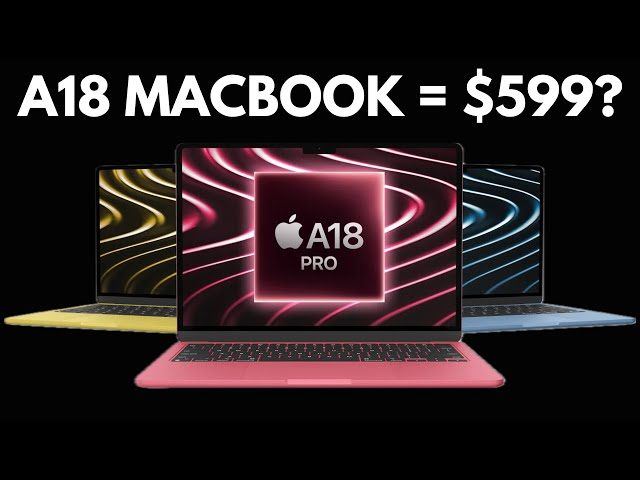
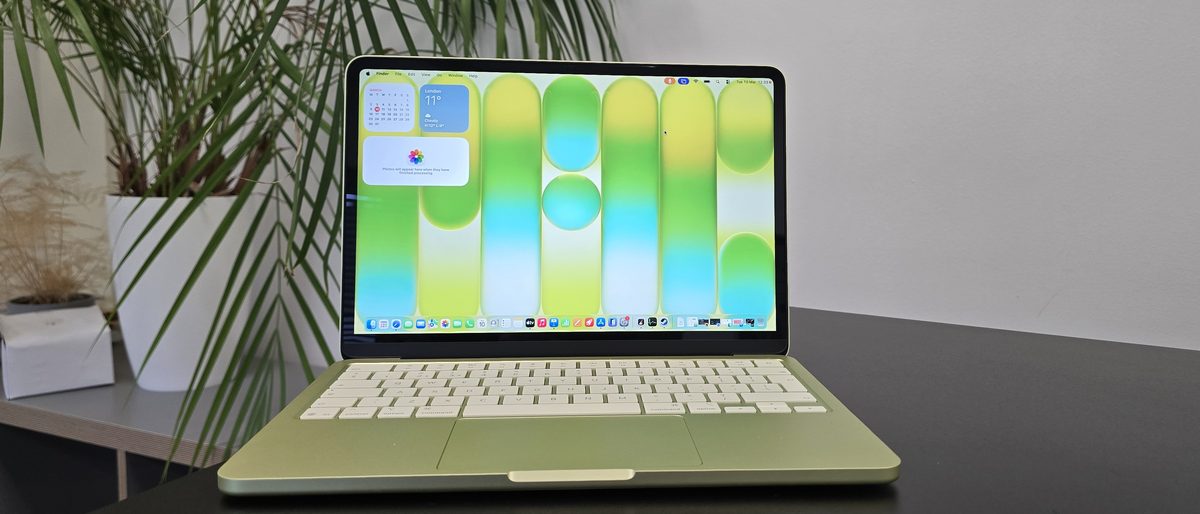
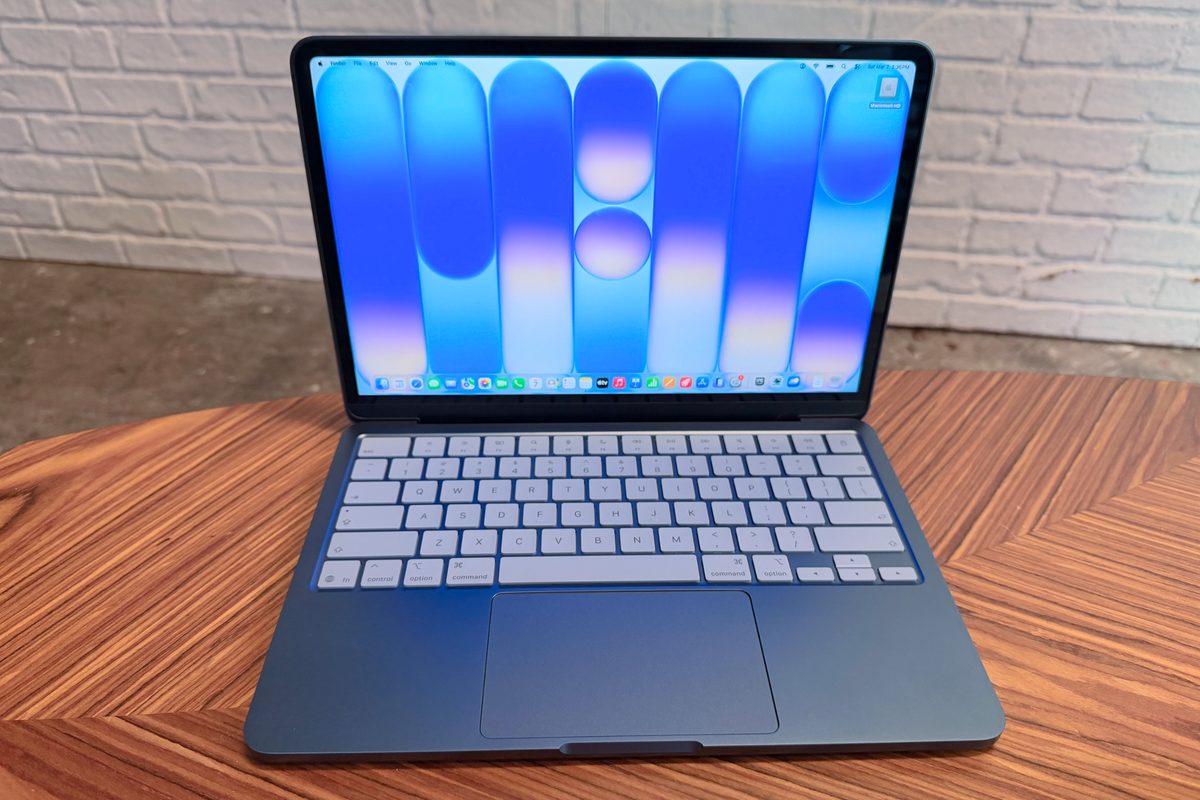
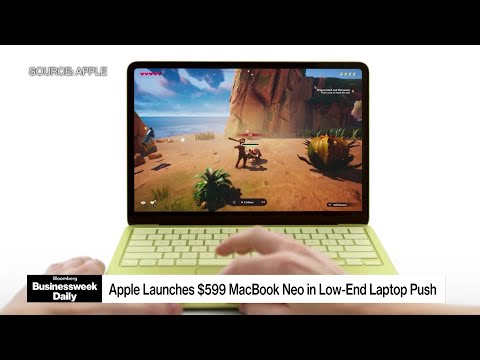
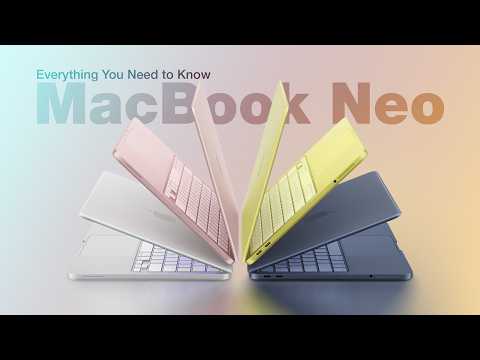
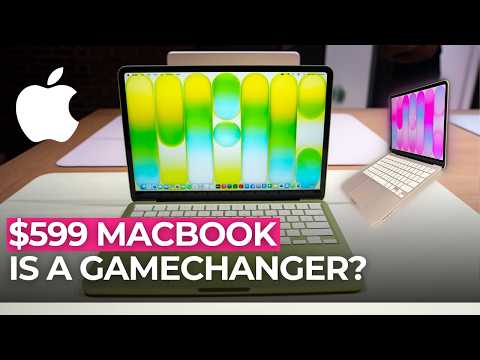
For nearly two decades, the cheapest new Mac laptop cost at least $999. On March 11, 2026, Apple began selling the MacBook Neo for $599 — $499 for students — making it the most affordable Mac laptop ever produced and the first Mac powered by an iPhone chip. The 13-inch aluminum laptop runs Apple's A18 Pro processor, delivers 16 hours of battery life, and ships in four colors, directly targeting the budget segment Apple's co-founder Steve Jobs once dismissed as 'just cheap laptops.'

Key Indicators

$599
MacBook Neo starting price
The lowest price Apple has ever charged for a new Mac laptop, $400 less than the next-cheapest MacBook Air at $1,099
60%
Chromebook share of education market
ChromeOS controls the majority of kindergarten through twelfth-grade computing, the segment Apple is now targeting
8.9%
Apple global PC market share
Apple ranks fourth globally behind Lenovo, HP, and Dell, with room to grow in budget segments it previously ignored
7
Products launched in one week
Apple released seven new products on March 11 including the MacBook Neo, iPhone 17e, iPad Air, updated MacBook Air and Pro, and two new displays

Interactive

Exploring all sides of a story is often best achieved with Play.

Ever wondered what historical figures would say about today's headlines?

Sign up to generate historical perspectives on this story.

Sign Up

Debate Arena

Two rounds, two personas, one winner. You set the crossfire.

People Involved

Organizations Involved

Timeline

  1. MacBook Neo goes on sale

    Product

    All seven products from Apple's announcement week became available for purchase, with the MacBook Neo shipping at $599 ($499 for education) as the most affordable Mac laptop ever produced.

  2. ASUS calls Neo a 'shock' to PC industry

    Industry Reaction

    ASUS co-chief executive Nick Wu said on an earnings call that the MacBook Neo's pricing was 'a shock to the entire market' and that all major PC vendors were 'seriously discussing how to compete.'

  3. Apple announces MacBook Neo and six other products

    Product

    Apple unveiled the $599 MacBook Neo alongside the iPhone 17e, M4 iPad Air, updated MacBook Air and MacBook Pro, Studio Display, and Studio Display XDR — its largest single-week product launch.

  4. Bloomberg reports budget Mac in development

    Report

    Bloomberg reported Apple was preparing to enter the low-cost laptop market for the first time, developing a budget Mac to rival Chromebooks and entry-level Windows personal computers.

  5. Apple opens AI models to developers

    Product

    At WWDC 2025, Apple released its Foundation Models framework, giving developers free access to on-device large language models with roughly 3 billion parameters — no cloud costs required.

  6. Apple Intelligence announced

    Product

    Apple unveiled Apple Intelligence, its on-device artificial intelligence suite, at the 2024 Worldwide Developers Conference. The system requires Apple Silicon to run, creating a hardware floor for AI features.

  7. Apple completes Intel transition

    Product

    Apple announced the M2 Ultra Mac Pro, discontinuing the last Intel Mac and completing the full transition to Apple Silicon across every Mac model.

  8. First M1 Macs ship

    Product

    Apple launched the M1 chip in MacBook Air, MacBook Pro, and Mac Mini, delivering dramatically better performance and battery life than Intel equivalents. The chip received near-universal acclaim.

  9. Apple announces Silicon transition

    Product

    Tim Cook announced Apple would replace Intel processors with custom-designed Apple Silicon chips across the entire Mac lineup, beginning a two-year transition plan.

  10. Steve Jobs dismisses cheap laptops

    Statement

    Apple co-founder Steve Jobs told investors Apple didn't know how to make a $500 computer 'that's not a piece of junk,' refusing to enter the booming netbook market during a global recession.

Scenarios

1

MacBook Neo captures millions of education users, reshaping school computing

Discussed by: Deepwater Asset Management managing partner Gene Munster; Evercore ISI analyst Amit Daryanani

Gene Munster estimated roughly 5 million students could switch to the MacBook Neo over three years, potentially adding billions in Mac revenue. At $499 for education — within striking distance of Chromebook pricing — school districts could begin adopting Macs at scale for the first time in over a decade. This scenario would accelerate if Apple pairs the Neo with aggressive institutional licensing, device management tools, and the free on-device AI development framework it released in 2025. The ecosystem lock-in from students growing up on macOS and Apple Intelligence could reshape the pipeline of future Mac buyers.

2

PC industry responds with aggressive budget offerings, neutralizing Apple's price advantage

Discussed by: ASUS co-CEO Nick Wu; Windows Latest analysis

Wu signaled that Microsoft, Intel, AMD, and all major PC vendors are 'seriously discussing how to compete.' If Qualcomm's Snapdragon X chips or AMD's next-generation mobile processors enable Windows laptops to match the Neo's battery life and performance at $399-$499, Apple's price advantage could evaporate. Microsoft could also respond by subsidizing Windows licenses for education or accelerating its own on-device AI features through Copilot. The Neo's 8 gigabytes of memory and limited port selection give competitors a clear spec advantage to market against.

3

MacBook Neo cannibalizes MacBook Air sales without meaningfully expanding Apple's market

Discussed by: Windows Latest analysis; industry skeptics on Hacker News

Some analysts argue the Neo targets a very specific buyer, and that many purchasers would have bought a MacBook Air anyway. If the Neo primarily shifts existing Apple customers to a cheaper product rather than attracting new ones, Apple's average selling price drops without a corresponding gain in market share. The MacBook Air starts at $1,099 — a $500 gap that could lead budget-conscious buyers who previously stretched for an Air to settle for the Neo instead. This would compress Mac margins without delivering the ecosystem expansion Apple is counting on.

4

Apple Intelligence becomes the defining differentiator in budget computing

Discussed by: AppleMagazine analysis; Evercore ISI

If Apple's on-device AI proves meaningfully more capable or private than Google's Gemini on Chromebooks or Microsoft's Copilot on Windows, the MacBook Neo could win on software rather than hardware specs. Apple's Foundation Models framework lets developers build AI features that run offline and cost nothing to operate — a significant advantage in schools with unreliable internet or privacy-conscious districts. A new generation of AI-native educational apps built exclusively for Apple Intelligence could create a software moat that competitors cannot match at any price point.

Historical Context

The Netbook Boom and Bust (2007-2012)

October 2007 - January 2013

What Happened

ASUS launched the Eee PC in late 2007 at around $399, igniting a global netbook craze that peaked at 20% of the portable computer market. During a recession, consumers snapped up cheap, underpowered laptops from ASUS, Acer, Dell, and HP. Steve Jobs refused to participate, calling netbooks 'just cheap laptops' and insisting Apple didn't know how to make a $500 computer that wasn't 'a piece of junk.'

Outcome

Short Term

Netbooks captured significant market share from 2008 to 2010, putting pressure on Apple's $999-and-up laptop pricing.

Long Term

Apple launched the iPad in 2010 and netbook sales collapsed. ASUS discontinued the Eee PC in January 2013. Apple's refusal to compete on price — and its choice to create a new category instead — became a celebrated case study in product strategy.

Why It's Relevant Today

The MacBook Neo marks Apple's first reversal of the Jobs-era principle that Apple should never make a cheap computer. The difference: Apple now controls its own chip design, letting it deliver performance that Jobs-era netbook components could not. Apple is competing on price without the quality tradeoffs Jobs feared.

Mac Mini Launch at $499 (2005)

January 2005

What Happened

Steve Jobs unveiled the Mac Mini at Macworld Expo for $499 — half the price of the next-cheapest Mac, the $799 eMac. Marketed with the tagline 'BYODKM' (Bring Your Own Display, Keyboard, and Mouse), it was designed to lure Windows switchers by eliminating the cost of peripherals they already owned. It was the cheapest Mac Apple had ever sold.

Outcome

Short Term

The Mac Mini attracted new users to the Mac platform and became a popular entry-level desktop, though it was not a blockbuster seller.

Long Term

The Mac Mini remains in Apple's lineup 21 years later and established the principle that Apple could sell lower-priced hardware as an ecosystem on-ramp — a strategy the MacBook Neo now extends to laptops.

Why It's Relevant Today

The MacBook Neo follows the same strategic logic as the Mac Mini: sacrifice per-unit margin to bring new users into the Apple ecosystem, where services revenue and cross-device purchases generate long-term value. The Neo's $599 laptop price is the portable equivalent of what the $499 Mini did for desktops.

Google's Chromebook Education Takeover (2013-2020)

2013 - 2020

What Happened

Google partnered with manufacturers to flood schools with $200-$400 Chromebooks running ChromeOS and Google Workspace for Education. By 2016, Chromebooks outsold both Macs and iPads in United States kindergarten through twelfth-grade schools. Apple's share of the education market — once dominant in the 1980s and 1990s with the Apple II and early Macs — fell to single digits as districts chose volume and manageability over Apple's premium experience.

Outcome

Short Term

Chromebooks captured roughly 60% of United States education computing by 2020, with 93% of school districts purchasing them by 2025.

Long Term

A generation of students grew up on ChromeOS and Google Workspace, potentially shaping their platform preferences into adulthood — the exact lifecycle flywheel Apple is now trying to replicate with the Neo.

Why It's Relevant Today

The MacBook Neo's $499 education price directly targets the market Google captured by undercutting Apple on price. Apple is attempting to reverse a decade-long trend with a product that matches Chromebook affordability while offering the full macOS ecosystem and on-device AI capabilities that ChromeOS lacks.

Sources

(15)