
Pull to refresh
Logo
Daily Brief
Following
Why Ranks Sign Up
Driverless cars face the safety test

Driverless cars face the safety test

New Capabilities

An independent insurance study puts Waymo's crash record up against human drivers

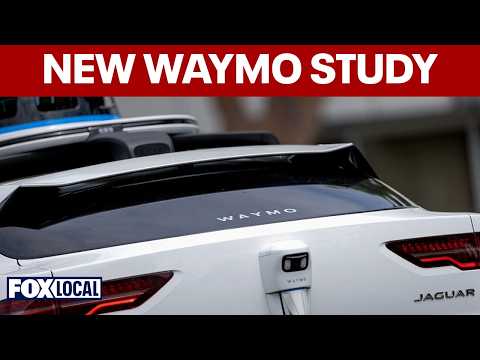
4 days ago: IIHS study finds Waymo 68% safer

Overview

For years, Waymo said its driverless cars were safer than people. On July 23, 2026, an independent insurance research group backed that claim with its own data.

The Insurance Institute for Highway Safety weighed 89 police-reportable Waymo crashes against more than 900,000 human crashes in the same four cities. Waymo's robotaxis were involved in 68% fewer crashes overall and 81% fewer that caused injuries. The debate now runs on third-party evidence, not company marketing.

Why it matters

Car crashes kill about 40,000 Americans a year. This is the first independent proof that driverless cars might cut that toll.

Questions about this story

No questions yet — be the first to ask.

Key Indicators

68%
Fewer crashes
Waymo's crash involvement rate versus human drivers across the four study cities.
81%
Fewer injury crashes
Reduction in crashes that resulted in injury, per the IIHS analysis.
89
Waymo crashes studied
Police-reportable Waymo crashes against more than 900,000 human crashes in the same places.
500K
Weekly robotaxi trips
Paid Waymo rides per week across 10 U.S. cities as of March 2026.
+4%
Austin outlier
In Austin alone, Waymo's crash rate ran slightly higher than human drivers.

Voices

Curated perspectives — historical figures and your fellow readers.

Ever wondered what historical figures would say about today's headlines?

Sign up to generate historical perspectives on this story.

Play

Exploring all sides of a story is often best achieved with Play.

Log in to play. Track your picks, climb the leaderboards. Log in Sign Up
Predict 4 ways this could play out. Contrarian picks score more — points lock when the scenario resolves. Log in to play
Higher or Lower Two numbers from this story. Guess which is bigger. 5 rounds to set a streak. Log in to play
Timeline Five events from this story — drag them oldest to newest. Log in to play
Connections Sixteen names from the news. Find the four hidden groups of four. Log in to play

People Involved

Organizations Involved

Timeline

October 2020 July 2026

7 events Latest: 4 days ago
Tap a bar to jump to that date
  1. IIHS study finds Waymo 68% safer

    Latest Study

    The Insurance Institute for Highway Safety reports Waymo cars were involved in 68% fewer crashes than human drivers.

  2. Feds set emergency-response deadline

    Regulatory

    After dozens of Waymos stalled on July 4, NHTSA gives robotaxi firms until month's end to fix responder failures.

  3. Waymo recalls about 3,900 robotaxis

    Recall

    Waymo issues a software recall after 13 cases of robotaxis entering active freeway construction zones.

  4. California pulls Cruise's permits

    Regulatory

    The California DMV suspends Cruise's driverless permits, and the company later winds down its robotaxi unit.

  5. Cruise robotaxi drags a pedestrian

    Incident

    A Cruise driverless car in San Francisco runs over and drags a pedestrian who was first struck by a human driver.

  6. Waymo opens driverless rides to the public

    Milestone

    Waymo begins offering fully driverless taxi rides to the public in Phoenix, the first such service in the U.S.

Historical Context

3 moments from history that rhyme with this story — and how they unfolded.

October 2023

Cruise pedestrian dragging (2023)

A human driver struck a pedestrian in San Francisco, throwing her into the path of a Cruise robotaxi. The driverless car ran her over and dragged her about 20 feet before stopping.

Then

California suspended Cruise's driverless permits within weeks. Executives resigned and operations halted.

Now

General Motors cut funding and wound down the Cruise robotaxi business in 2024, leaving Waymo as the clear U.S. leader.

Why this matters now

It shows how fast one incident can erase public trust. Waymo's strong crash data is the counterweight, but a single bad crash could still reverse the story.

2004-2011

Electronic stability control mandate (2007)

IIHS and federal researchers found electronic stability control cut fatal single-vehicle crashes by more than half. The technology automatically brakes individual wheels to stop skids.

Then

NHTSA issued a rule in 2007 requiring the system on new vehicles.

Now

Stability control became standard on all new U.S. passenger vehicles by the 2012 model year, preventing thousands of deaths.

Why this matters now

It is the clearest case of independent crash data driving a federal mandate. The Waymo study could start a similar path from evidence to rules.

2021-2024

Tesla Autopilot investigations (2021)

NHTSA opened probes into crashes involving Tesla's Autopilot driver-assist system, including cars striking parked emergency vehicles. Tesla marketed the feature as advanced but kept a human responsible.

Then

Tesla recalled about 2 million vehicles in 2023 to add driver-attention safeguards.

Now

The scrutiny sharpened the line between driver-assist systems, where a person must watch, and fully driverless cars like Waymo's.

Why this matters now

It shows regulators weighing safety claims against real crash data. The IIHS study gives the driverless side of that debate independent numbers.

Sources

(7)