Pull to refresh
Logo
Bayraktar TB3 tests anti-submarine warfare role from Turkish warship

Bayraktar TB3 tests anti-submarine warfare role from Turkish warship

New Capabilities

Naval drone drops sonobuoys and processes underwater data during Seawolf exercise

Today: TB3 drops sonobuoys from TCG Anadolu in ASW test

Overview

Updated 48 minutes ago

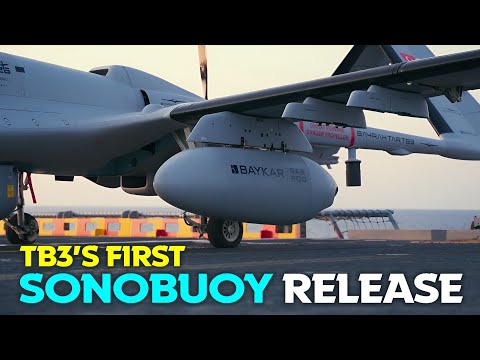
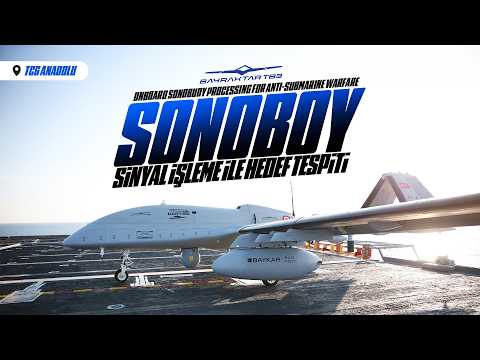
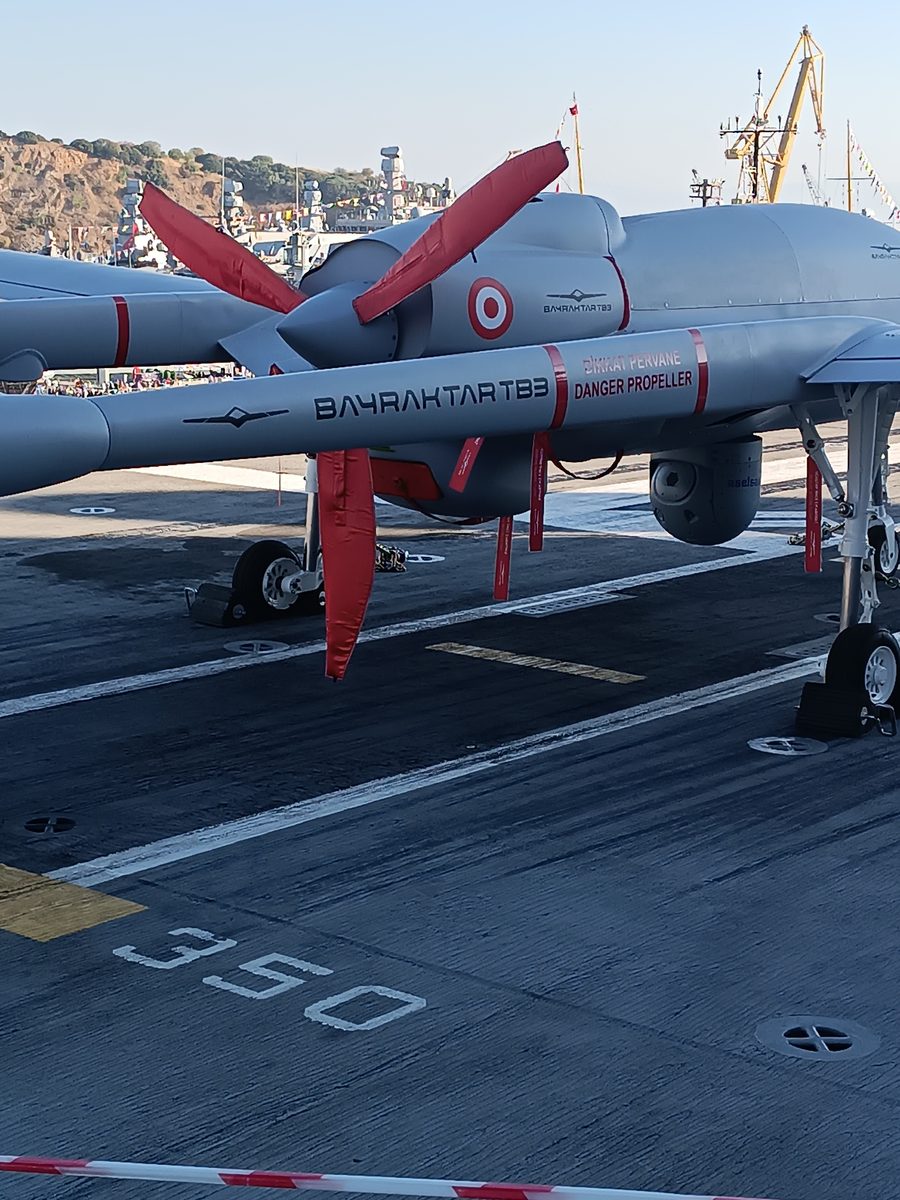
Turkey's Bayraktar TB3 drone flew off the short deck of the navy's TCG Anadolu landing helicopter dock, dropped two sonobuoys into the water, and processed the acoustic data in real time. It is the aircraft's first anti-submarine mission — work previously handled by manned patrol planes, helicopters, and warships.

The test came during Denizkurdu-I/2026, a Turkish naval exercise run September 20–25 across the Black Sea, the Marmara Sea, the Aegean, and the Eastern Mediterranean. A TB3 loiters for more than 21 hours, so it can keep underwater surveillance running far past what a ship or helicopter can sustain.

Why it matters

A drone can now hunt submarines from a short warship deck, extending underwater surveillance far beyond a ship's own sensors.

Questions about this story

Free account needed to ask — your question is kept and asked for you right after sign-up. Answers are public.

No questions yet — be the first to ask.

Key Indicators

2
Sonobuoys deployed in test
TB3 dropped two ASELBUOY sonobuoys via the SAS POD during the Denizkurdu exercise.
+21 hours
TB3 endurance
Long loiter time lets the drone stay on anti-submarine patrol far beyond helicopter range.
100
Ships in exercise
Denizkurdu-I/2026 included 100 ships, 50 aircraft, and 14,000 personnel.
14,000
Personnel in exercise
Naval, land, air, and coast guard units took part across four seas.

Voices

Curated perspectives — historical figures and your fellow readers.

Ever wondered what historical figures would say about today's headlines?

Sign up to generate historical perspectives on this story.

People Involved

Organizations Involved

Timeline

April 2023 September 2026

5 events Latest: Today
Tap a bar to jump to that date
  1. TB3 drops sonobuoys from TCG Anadolu in ASW test

    Today Capability Test

    TB3 deploys two ASELBUOY sonobuoys via the SAS POD and processes data from its own and a patrol aircraft's buoys.

  2. Denizkurdu-I/2026 exercise opens

    Exercise

    Turkish naval, land, air, and coast guard units drill across four seas with 100 ships and 14,000 personnel.

  3. TB3 completes TCG Anadolu deck trials

    Testing

    Between 2023 and 2025, the TB3 validates repeated takeoffs and landings from the ship's short deck.

  4. Baykar reveals folding-wing TB3

    Development

    The TB3's folding wings and short-takeoff design target operations from TCG Anadolu's small deck.

  5. TCG Anadolu enters service, built to host drones

    Milestone

    Turkey's largest warship joins the fleet after the F-35B plan collapsed, refocusing it on uncrewed aircraft.

Scenarios

1

Turkish Navy fields TB3 in operational ASW role

Likely Resolves by End of 2027

Discussed by: Defence Turkey and TurDef, which note the TB3 is set to join TCG Anadolu's ASW task force

The navy turns the test into routine practice. ASELBUOY integration reaches the TB3 fleet, and the drone flies extended sonobuoy patrols from TCG Anadolu in coordination with manned patrol aircraft.

2

Italy orders ASW-configured TB3 (Astore Levante)

Possible Resolves by End of 2027

Discussed by: TurDef, reporting Italy seeks a similar role and LBA Systems offers the TB3 with Leonardo's ULISSES sonobuoy processor

The Baykar-Leonardo joint venture LBA Systems lands an Italian order for a TB3 configured for anti-submarine work. The TCG Anadolu tests give buyers evidence the drone can do the job.

3

AKSUNGUR takes the lead in uncrewed ASW

Possible Resolves by End of 2027

Discussed by: TurDef, noting the larger AKSUNGUR is likely to follow for ASELBUOY integration

TB3's ASW role stays a proof of concept while Turkish Aerospace's AKSUNGUR, which carries more payload and stays aloft up to two days, becomes the navy's primary uncrewed ASW asset.

Historical Context

3 moments from history that rhyme with this story — and how they unfolded.

September-November 2020

Bayraktar TB2 at Nagorno-Karabakh (2020)

Azerbaijan used Baykar TB2 drones to destroy Armenian tanks, artillery, and air defenses during the Second Nagorno-Karabakh War. The small drones, little noticed beforehand, proved decisive in a 44-day conflict.

Then

Azerbaijan retook territory lost in the 1990s, and the TB2 became a global export success.

Now

The campaign established Baykar as a top-tier drone maker and showed that inexpensive uncrewed aircraft could reshape ground combat.

Why this matters now

The TB3 follows the same pattern — Baykar demonstrates a new capability, proves it in exercises, then fields or exports it. This naval ASW test is the maritime version of the TB2's 2020 emergence.

1950s-1980s

Airborne ASW with sonobuoys (1950s-1980s)

Navies moved anti-submarine warfare from surface escorts to aircraft such as the P-3 Orion, which drops sonobuoys that listen for submarines and transmit acoustic data back. The aircraft processes the signals and carries out the hunt.

Then

Submarines could no longer hide from long-range patrol aircraft, forcing navies to build quieter boats.

Now

Airborne sonobuoy ASW became standard across major navies — a mature, proven method.

Why this matters now

The TB3 performs the same sonobuoy mission as an Orion, but uncrewed and from a ship's short deck. It moves a proven ASW method onto an unmanned platform.

2010s-2020s

US Navy MQ-4C Triton maritime patrol (2010s-2020s)

The US Navy fielded the MQ-4C Triton, a large uncrewed aircraft that flies long maritime surveillance and anti-submarine support missions from land bases, extending the fleet's eyes without risking a crew.

Then

Triton became the Navy's maritime intelligence, surveillance, and reconnaissance backbone in the Pacific.

Now

Uncrewed maritime patrol became an accepted fleet tool, paving the way for smaller, ship-based drones.

Why this matters now

The TB3 adapts this idea to a short-deck ship, packing endurance and sonobuoy processing into an aircraft that operates from a light carrier. It is the ship-based, combat-capable version of the trend.

Sources

(8)