

Pull to refresh
Logo
Roketsan's KARAOK anti-tank missile downs a drone in first aerial intercept

Roketsan's KARAOK anti-tank missile downs a drone in first aerial intercept

New Capabilities

Turret-mounted weapon expands from armored targets to counter-drone role

Yesterday: KARAOK hits aerial target for first time

Overview

Updated 2 hours ago

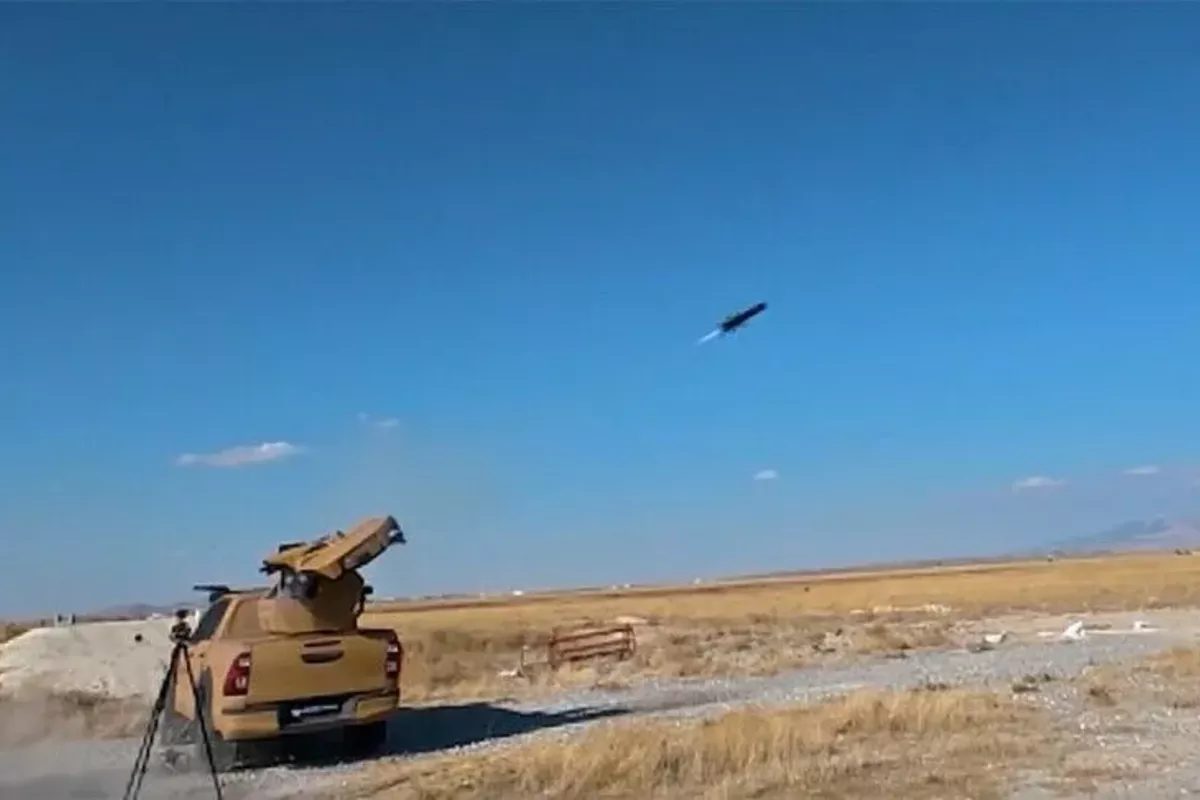
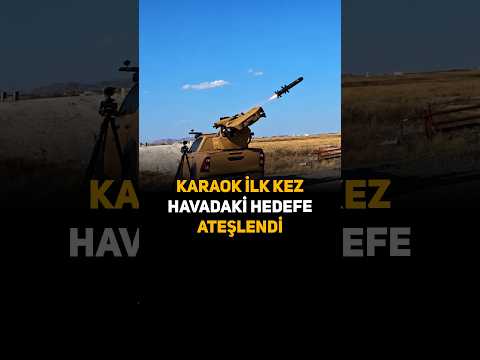
A missile built to kill tanks just shot down a drone. Roketsan's KARAOK intercepted a Shahed-type kamikaze drone on September 23, the first aerial target the Turkish anti-tank missile has ever engaged.

Fired from a turret on a light tactical pickup, the test makes KARAOK a dual-purpose weapon: it can destroy an armored vehicle, then engage low-flying aircraft. Frontline troops usually lack a dedicated counter-drone weapon, so one missile covering both tank and drone threats cuts what they must carry.

Why it matters

One shoulder-fired weapon could soon destroy tanks on the ground and drones overhead, closing a counter-drone gap without new hardware.

Questions about this story

Free account needed to ask — your question is kept and asked for you right after sign-up. Answers are public.

No questions yet — be the first to ask.

Key Indicators

1
First aerial intercept
KARAOK hit a Class 2 UAV resembling a Shahed-136 on September 23, 2026.
2.5 km
Maximum effective range
KARAOK's nominal range against ground targets exceeds 2,500 meters.
16 kg
Total system weight
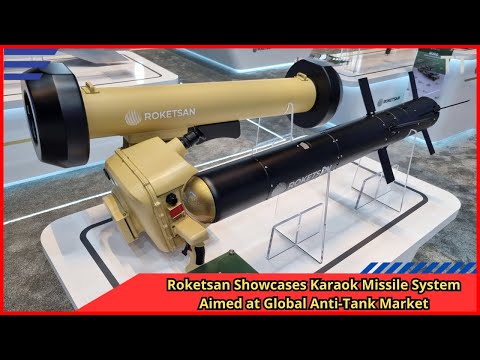
The complete man-portable system weighs under 16 kilograms.
2022
Year KARAOK entered Turkish service
The missile joined the Turkish Armed Forces after development starting around 2016.

Voices

Curated perspectives — historical figures and your fellow readers.

Ever wondered what historical figures would say about today's headlines?

Sign up to generate historical perspectives on this story.

People Involved

Organizations Involved

Timeline

January 2016 September 2026

3 events Latest: Yesterday
  1. KARAOK hits aerial target for first time

    Latest Test

    Launched from a turret on a light pickup, the missile intercepts a Shahed-type drone in flight.

  2. KARAOK enters Turkish service

    Milestone

    The missile joins the Turkish Armed Forces as a short-range anti-tank system.

  3. KARAOK development begins

    Development

    Roketsan starts work around 2016 on a man-portable, fire-and-forget anti-tank weapon.

Scenarios

1

KARAOK anti-drone configuration becomes a standard Roketsan product

Likely Resolves by Sep 23, 2027

Discussed by: The Defense News; TURDEF

Roketsan CEO Murat İkinci said the company is integrating new capabilities into its systems to address battlefield requirements. If the turret-mounted anti-drone configuration is commercialized, frontline units get a vehicle-based counter-UAS option using existing KARAOK missiles. Roketsan has not yet said whether the test configuration will become a standard product.

2

Anti-drone capability draws new export customers

Possible Resolves by End of 2027

Discussed by: The Defense News; TURDEF

Malaysia is already KARAOK's first foreign customer, buying 18 launchers to replace Russian Metis-M systems. The anti-drone demonstration could widen appeal among countries facing kamikaze drone attacks, including Gulf states and Ukraine, which absorb heavy Shahed strikes. A new order would signal the aerial capability actually sells.

3

Aerial intercept stays a demonstration; KARAOK remains ground-only

Unlikely Resolves by Sep 23, 2027

Discussed by: No analyst publicly predicts this; it is the default path if no product follows

Roketsan may treat the September 23 test as a technology demonstration and keep selling KARAOK primarily as an anti-tank weapon. The company has not committed to productizing the turret-mounted configuration. If demand from existing customers stays focused on armored targets, the aerial capability could remain a proof of concept.

Historical Context

3 moments from history that rhyme with this story — and how they unfolded.

2022-2025

FGM-148 Javelin's limited aerial use (2022-2025)

In Ukraine, some Javelin shots engaged slow, low-flying aircraft like helicopters, and the weapon showed limited capacity against such targets. But engaging aerial targets is not an official Javelin mission profile.

Then

Javelin stayed primarily an anti-armor system despite battlefield improvisation.

Now

Highlighted demand for a shoulder-fired weapon that can do both, a gap KARAOK is now positioning to fill.

Why this matters now

KARAOK is Javelin's closest equivalent, and it has now demonstrated a formal aerial engagement capability Javelin lacks.

2024-2025

Ukraine's Stugna-P anti-drone missions (2024-2025)

Ukrainian crews used Stugna-P anti-tank guided missiles against Russian reconnaissance and attack drones. The shots were wire-guided, requiring operators to steer onto aerial targets, and videos of confirmed hits circulated widely.

Then

Ukrainian ATGM teams logged drone kills, proving anti-tank missiles could track aerial targets despite slow guidance.

Now

Demonstrated that ATGM seekers could plausibly serve double duty as crude counter-UAS tools, encouraging manufacturers to formalize the role.

Why this matters now

KARAOK's automated imaging seeker does what Ukrainian crews improvised manually, replacing wire guidance with fire-and-forget tracking.

1990s-2020s

AGM-114 Hellfire's multi-role expansion (1990s-2020s)

The Hellfire began as a laser-guided anti-tank missile and over decades became a multi-role weapon fired from helicopters, drones, and ground vehicles. The improvised STASH system pairs Hellfires with RADA radars for air defense against drones.

Then

Hellfire became one of the most widely used U.S. munitions, employed against buildings, vehicles, and aircraft.

Now

Set a precedent: a missile designed for one target class can, with seeker and software updates, take on aerial threats.

Why this matters now

KARAOK follows the same path, adapting an armor-killing missile for counter-drone use through seeker software changes.

Sources

(8)