

Pull to refresh
Logo
Wernicke's area also plans speech, direct brain recordings show

Wernicke's area also plans speech, direct brain recordings show

New Capabilities

A Science study finds the region long cast as the brain's speech-comprehension center builds word-level plans about a quarter-second before a person speaks.

Overview

Updated 2 hours ago

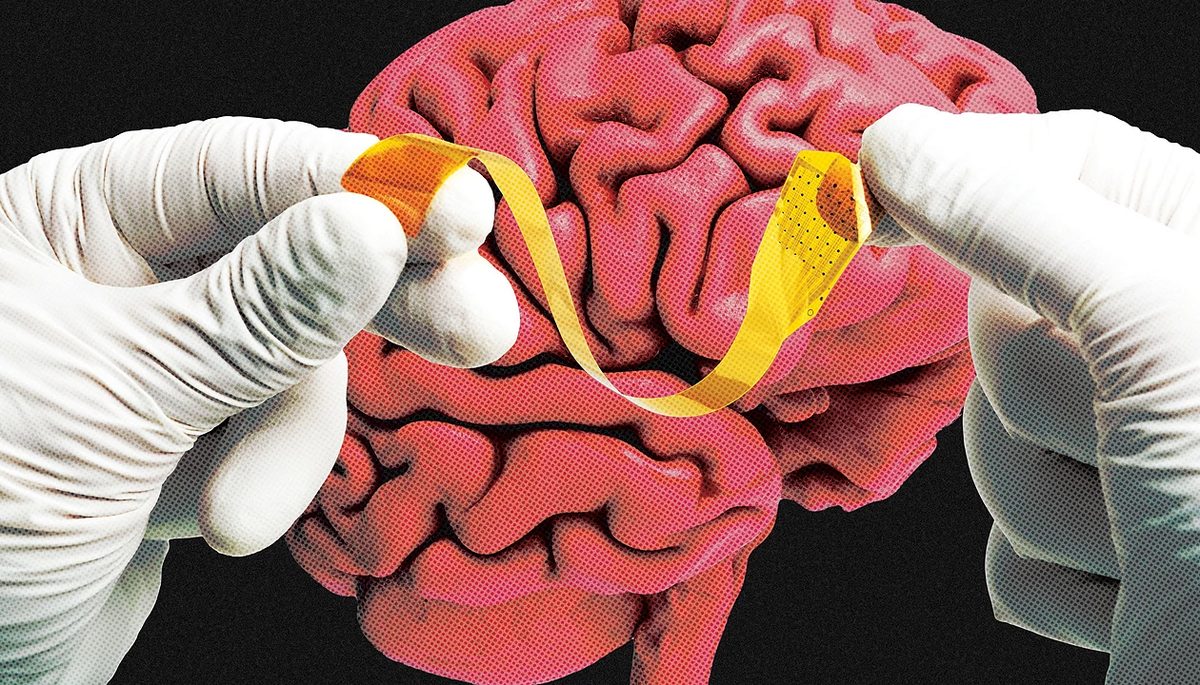
In 1874, Carl Wernicke proposed that a patch of the left temporal lobe stores the 'auditory image of words.' Textbooks have treated that patch as the brain's speech comprehension center ever since. Electrodes placed inside patients' heads now show the same patch also drafts the words a person is about to say.

The neurons fire roughly 250 milliseconds before speech begins. They carry whole-word properties: length, syllable count, how common the word is in English. That plan then passes to speech-planning areas in the frontal lobe and on to the motor cortex, which turns it into mouth movements.

Why it matters

Speech implants may gain a second signal source, one that could keep working when the motor areas current devices read from are damaged.

Questions about this story

Free account needed to ask — your question is kept and asked for you right after sign-up. Answers are public.

No questions yet — be the first to ask.

Key Indicators

250 ms
Lead time before speech
How far ahead of a spoken word the planning neurons become active.
150 years
Age of the textbook split
Wernicke's 1874 model assigned comprehension to the temporal lobe and production elsewhere.
2
Paralyzed participants decoded
Recordings from around the region decoded both attempted and heard speech in two people who could not speak.
15 years
Recordings pooled
The analysis drew on brain recordings collected in Edward Chang's lab over that period.

Voices

Curated perspectives — historical figures and your fellow readers.

Sign up to generate historical perspectives on this story.

People Involved

Organizations Involved

Timeline

1861 November 2026

4 events Latest: Today
Tap a bar to jump to that date
  1. Nature reports the finding

    Today Coverage

    Nature's research highlight describes how direct brain recordings settled a century-old puzzle about Wernicke's area.

  2. Science publishes the intracranial study

    Research

    Recordings, brain stimulation and lesion data show the left posterior superior temporal gyrus encodes whole-word properties before speech begins.

  3. Wernicke proposes the 'auditory image of words'

    Discovery

    Carl Wernicke linked posterior temporal lobe damage to problems both understanding and producing speech, and proposed the region held a word blueprint.

  4. Broca ties a frontal region to speech

    Discovery

    Paul Broca described a patient who could say almost nothing but 'tan' and, after the man's death, found damage in the left inferior frontal gyrus.

Scenarios

1

Independent lab reproduces the word-level planning signal

Possible Resolves by End of 2028

Discussed by: Neuroscience researchers commenting in Nature, Science and National Geographic

The result rests on recordings from a small number of patients at one institution. If another group with its own electrode array finds the same pre-speech activity encoding word length and frequency, the finding moves from a single-lab result to an accepted feature of the speech network.

2

A speech implant trial decodes words from the temporal lobe

Possible Resolves by Q2 2029

Discussed by: UCSF authors and outside neurotechnology researchers including Leigh Hochberg

The study decoded attempted and heard speech offline from this region in two paralyzed participants. The next step would be a device that uses the signal in real time, either alongside or instead of the motor-cortex electrodes current implants rely on.

3

The pre-speech signal turns out to be predicted sound, not a word plan

Unlikely Resolves by Q2 2028

Discussed by: Critics of the cortical-localization tradition, including questions raised by MIT's Evelina Fedorenko

The paper argues the activity is not feedback from hearing one's own voice, because it precedes word onsets in continuous speech. A competing study could still find that the neurons track expected sound or articulation rather than properties of whole words, which would leave the comprehension-versus-production split largely intact.

Historical Context

3 moments from history that rhyme with this story — and how they unfolded.

April 1861

Broca's patient 'Tan' (1861)

Paul Broca examined a man who had lost nearly all speech and could utter only the syllable 'tan.' After the patient died, Broca found a lesion in the left inferior frontal gyrus and argued that a specific brain region produced articulate language.

Then

The case gave the new field of brain localization its first solid anchor for a higher cognitive function.

Now

Broca's area became the textbook site of speech production, the half of the model the new study leaves partly intact.

Why this matters now

The production side of the 19th-century map still holds; the comprehension side is what the new recordings revise.

1874

Wernicke's 'auditory image of words' (1874)

Carl Wernicke described patients with posterior temporal lobe damage who could not understand speech and produced fluent but meaningless output. He proposed the region held an auditory blueprint of words that could be translated into movements for speaking.

Then

Wernicke's area was folded into a two-center model: temporal cortex for understanding, frontal cortex for producing.

Now

Because the region sits in the auditory cortex, later textbooks demoted its production role to passive monitoring of one's own voice.

Why this matters now

The new recordings largely restore Wernicke's original claim, with a word-level code rather than a sound image.

2021–2023

Speech neuroprosthetics from motor cortex (2021–2023)

Teams at UCSF and elsewhere decoded intended words from electrodes over the motor cortex in people with paralysis, publishing results in the New England Journal of Medicine and Nature. The devices read the signals that command the vocal tract.

Then

Participants regained the ability to produce words through a computer, though the exchanges were mostly one-directional.

Now

Speech implants became a real research program, with motor cortex as the default signal source.

Why this matters now

Motor cortex can itself be damaged in some people who cannot speak. A signal earlier in the chain offers a fallback.

Sources

(9)