
Pull to refresh
Logo
A worm's brain circuit erases one smell while keeping another

A worm's brain circuit erases one smell while keeping another

New Capabilities

Kyushu University researchers trace selective forgetting to a neuropeptide and a three-neuron pathway.

Overview

Updated 1 hour ago

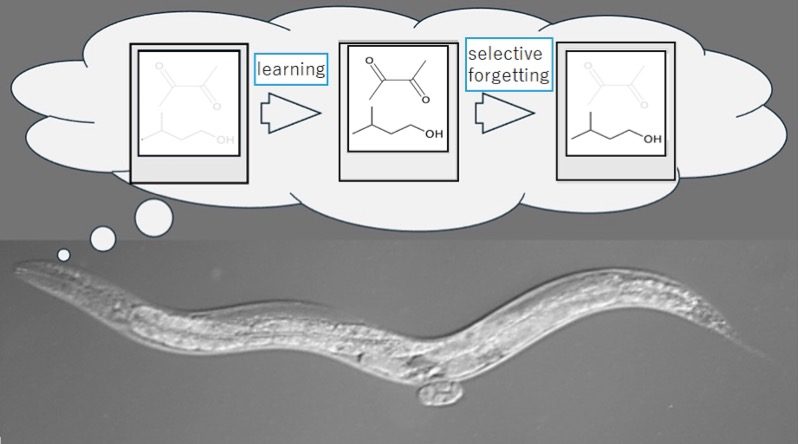
A nematode worm can learn two smells, then forget one while remembering the other. Researchers at Kyushu University traced that selective erasure to a peptide signal, NLP-47, and a circuit running from AWC sensory neurons through AIZ interneurons to the AWA neurons that store the memory.

The finding matters because forgetting is an active process. Animals must discard irrelevant memories to adapt, and the paper shows the brain can target a single memory for deletion. The same receptor family exists in mammals, including humans, though its role there is unknown.

Why it matters

If the same receptor family governs human memory, it could explain how brains discard specific memories and what goes wrong in dementia or PTSD.

Questions about this story

Free account needed to ask — your question is kept and asked for you right after sign-up. Answers are public.

No questions yet — be the first to ask.

Key Indicators

302
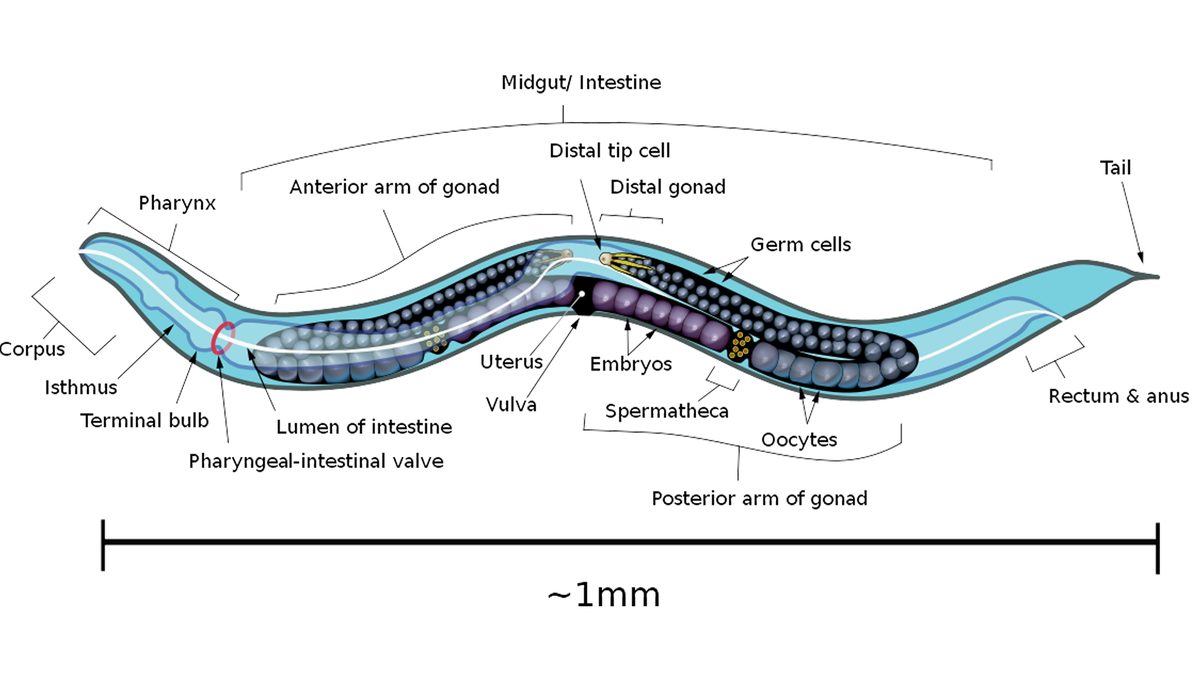
Neurons in C. elegans
The worm has exactly 302 neurons, making each circuit traceable.
2
Odors tested together
Researchers trained worms on diacetyl and isoamyl alcohol at the same time.
4 hours
Typical forgetting window
Diacetyl memory faded after about four hours while isoamyl alcohol memory remained.
1
Forgetting peptide identified
NLP-47 carries the forgetting signal from AWC neurons.
1
Receptor identified
GNRR-1 receives NLP-47 in AIZ interneurons.

Voices

Curated perspectives — historical figures and your fellow readers.

Sign up to generate historical perspectives on this story.

People Involved

Organizations Involved

Timeline

2013 November 2026

3 events Latest: 2 days ago
  1. Selective forgetting circuit mapped molecule by molecule

    Latest Research

    Onishi et al. identify NLP-47, GNRR-1 and an AWC-AIZ-AWA glutamate circuit that erases diacetyl memory while sparing isoamyl alcohol memory.

  2. AIA interneurons linked to olfactory forgetting

    Research

    A separate study found AIA interneurons indispensable for behavioral forgetting of diacetyl olfactory adaptation.

  3. Ishihara team finds neurons that drive active forgetting

    Research

    The team identified neurons that cause active forgetting of a specific odor memory in C. elegans, but not the molecules that activate the pathway.

Scenarios

1

Independent labs replicate the NLP-47 forgetting circuit

Likely Resolves by Nov 2, 2027

Discussed by: Not yet named; replication is a standard check in neuroscience.

A second research group repeats the C. elegans experiments and confirms that NLP-47 signaling through GNRR-1 in AIZ neurons selectively erases diacetyl memory without touching isoamyl alcohol memory. This would show the result is not specific to one lab's worm strain or training protocol.

2

Rodent study ties GnRH receptor to specific memory loss

Possible Resolves by Nov 2, 2028

Discussed by: The Current Biology authors, who note GNRR-1 relatives appear in the rodent hippocampus.

A rodent study tests whether GnRH receptor signaling in the hippocampus regulates forgetting of a specific memory. The worm result would not prove the same circuit exists in mammals, but it would give researchers a concrete target to test.

3

Review articles propose forgetting pathway as a drug target

Possible Resolves by Nov 2, 2027

Discussed by: Not yet named; follows from the authors' conclusion about dementia and PTSD.

Reviewers connect the worm circuit to human disorders and argue that GNRR-1 or related GnRH signaling could be studied as a target for dysregulated forgetting. This would be a proposal for research, not evidence that a treatment works.

Historical Context

2 moments from history that rhyme with this story — and how they unfolded.

2013

Active forgetting neurons in C. elegans (2013)

Ishihara's team showed that C. elegans can actively forget a learned odor. They identified neurons that caused the erasure, but could not find the molecular signal that switched the pathway on.

Then

The work established C. elegans as a model for tracing forgetting to specific neurons.

Now

It set up a decade-long search for the molecules that carry the forgetting signal.

Why this matters now

The 2026 paper fills that gap by naming NLP-47 and GNRR-1.

2022

AIA interneurons and olfactory forgetting (2022)

A study in eNeuro found that AIA interneurons are required for proper behavioral forgetting of diacetyl olfactory adaptation. Loss of AIA impaired chemotaxis recovery after adaptation.

Then

The result implicated interneurons downstream of AWA and AWC in forgetting.

Now

It broadened the circuit map beyond sensory neurons.

Why this matters now

The new paper adds AIZ interneurons and a peptide signal between AWC and AWA.

Sources

(4)