

Pull to refresh
Logo
Edible batteries that dissolve in the body could power ingestible medical devices

Edible batteries that dissolve in the body could power ingestible medical devices

New Capabilities

Rice-paper-inspired cells run gut devices for three days in pigs, then dissolve safely

Today: Bioresorbable battery announced

Overview

Updated 1 hour ago

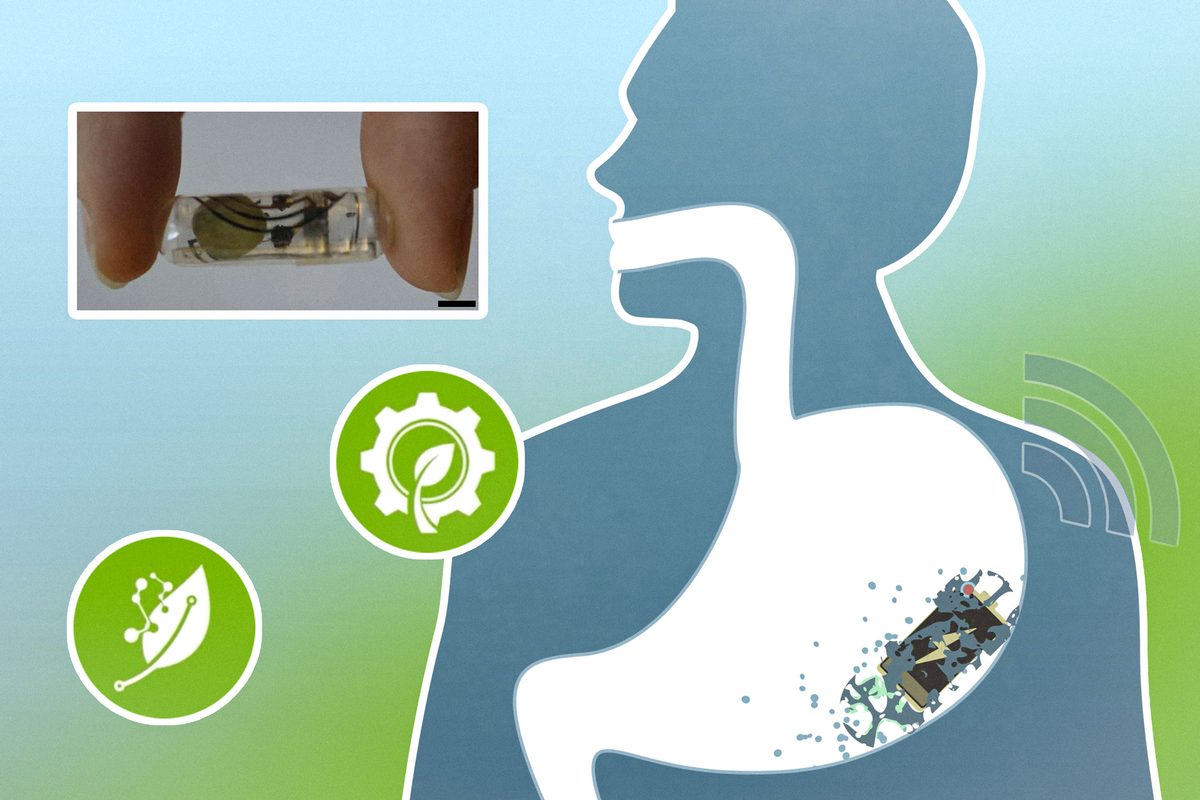
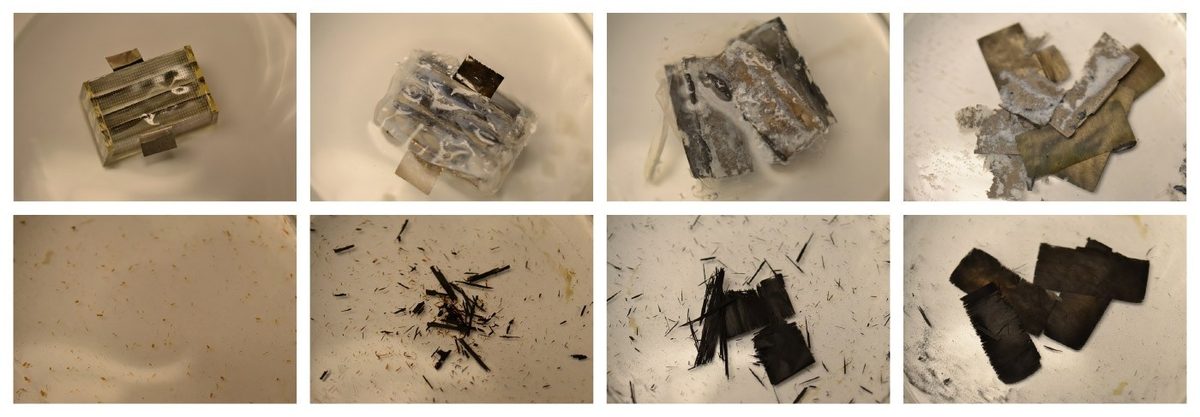
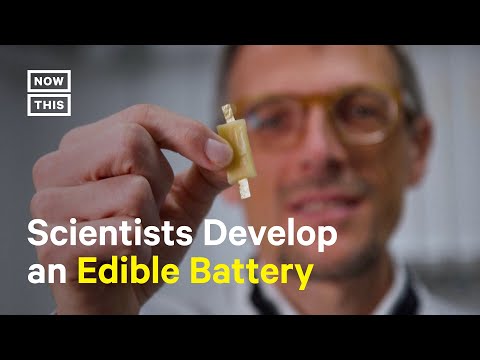
MIT researchers have built a battery from magnesium, molybdenum, cellulose, and beeswax that powers ingestible medical devices for three days, then dissolves into compounds the body absorbs. It is the first bioresorbable battery with enough power for clinically relevant functions.

Tested in pigs, the cells drove a transmitter that sent stomach data wirelessly over 1.5 meters and a capsule that boosted hunger-hormone levels by half. Conventional ingestible-device batteries can leak toxic metals or splinter into sharp plastic pieces if their casings fail—this design removes that risk.

Why it matters

Ingestible medical devices currently risk toxic leaks or sharp fragments if their batteries fail; this battery dissolves into nutrients the body absorbs.

Questions about this story

Free account needed to ask — your question is kept and asked for you right after sign-up. Answers are public.

No questions yet — be the first to ask.

Key Indicators

1.84 V
Battery output voltage
Enough to power wireless transmission and gastric stimulation devices.
3 days
Full-power runtime in gastric acid
Performance holds for about three days, then declines; cells break down within weeks.
50%
Ghrelin increase after stimulation
Twenty minutes of stomach stimulation raised the hunger hormone by about half in animal tests.
1.5 m
RFID transmission range from inside the gut
The battery enabled continuous broadcasting, unlike earlier passive tags with limited range.

Voices

Curated perspectives — historical figures and your fellow readers.

Ever wondered what historical figures would say about today's headlines?

Sign up to generate historical perspectives on this story.

People Involved

Organizations Involved

Timeline

2023 September 2026

3 events Latest: Today
  1. Bioresorbable battery announced

    Today Publication

    Study in Nature Chemical Engineering shows magnesium-molybdenum batteries power RFID and ghrelin-stimulating devices in pigs, then dissolve.

  2. SAFARI passive RFID system reported

    Research

    The lab unveiled a RFID tag for medication-adherence monitoring, powered by harvested energy with limited communication range.

  3. Traverso lab reports degradable stomach-stimulation capsule

    Research

    The capsule delivered electrical current to the stomach lining but ran on silver oxide coin batteries, not bioresorbable cells.

Scenarios

1

SAFARI ingestible system enters human trials

Likely Resolves by End of 2028

Discussed by: MIT research team; Traverso's group expects the trial to begin in roughly two years

The battery turns SAFARI from a passive RFID tag into a self-powered transmitter with 1.5-meter range. If the planned trial proceeds, the system could become the first ingestible monitor powered by a fully bioresorbable battery.

2

Bioresorbable battery powers an FDA-cleared ingestible device

Possible Resolves by End of 2030

Discussed by: Traverso and colleagues, who cite sensing and therapeutic applications

Beyond gut monitoring, the battery could power drug-delivery capsules and implantable stimulators. A commercial device would need FDA clearance backed by human safety data from the planned trials.

3

Three-day runtime limits the battery to short-term uses

Uncertain Resolves by End of 2028

Discussed by: Nature's report, which notes performance fades after roughly three days in gastric acid

Devices that must run for weeks on end would still need conventional batteries or wireless power. A longer-lived variant, using new electrolytes or electrode designs, would lift this ceiling.

Historical Context

3 moments from history that rhyme with this story — and how they unfolded.

August 2001

Given Imaging PillCam (2001)

Given Imaging won FDA clearance for the PillCam, a swallowable capsule with a tiny camera. Patients could get a painless look at their small intestine that had previously required endoscopy.

Then

Capsule endoscopy became a standard diagnostic tool, with millions of capsules used worldwide.

Now

It established ingestible electronics as a real product category, but every capsule still ran on a conventional battery.

Why this matters now

Shows the market MIT's battery could serve: pill-sized devices are proven clinically, but their power source remains the weak link.

July 2016

Abbott Absorb bioresorbable stent (2016)

Abbott's Absorb stent, a tiny mesh tube that props open a clogged artery then dissolves, won FDA approval. It was the first fully bioresorbable coronary stent on the US market.

Then

Abbott pulled it from sale in 2017 after slow sales and concerns about higher clot risk in some patients.

Now

The episode tempered enthusiasm for absorbable implants, showing that material safety alone does not guarantee commercial or clinical success.

Why this matters now

MIT's battery faces the same translation gauntlet: dissolving is an advantage, but it must prove clinical benefit and survive in a regulated market.

March 2023

Italian edible rechargeable battery (2023)

Researchers at the Italian Institute of Technology, led by Mario Caironi, built a fully edible rechargeable battery from food-grade materials operating at 0.65 volts.

Then

It ran for 12 minutes at a tiny 48-microamp current, enough for a proof of concept but not for real medical devices.

Now

It showed batteries could be made entirely from safe materials, opening the door for higher-powered successors.

Why this matters now

MIT's cell reaches 1.84 volts and drives real devices, crossing the threshold from demonstration to clinical use.

Sources

(2)