
MIT builds working transistors out of living bacteria
New CapabilitiesBacterial circuits printed on growth plates can add numbers and route signals, pointing toward self-defending crops
3 days ago: Bacterial transistor story spreadsNew here? Follow stories to track developments over time. Create a free account to get updates when stories you care about change.
Overview
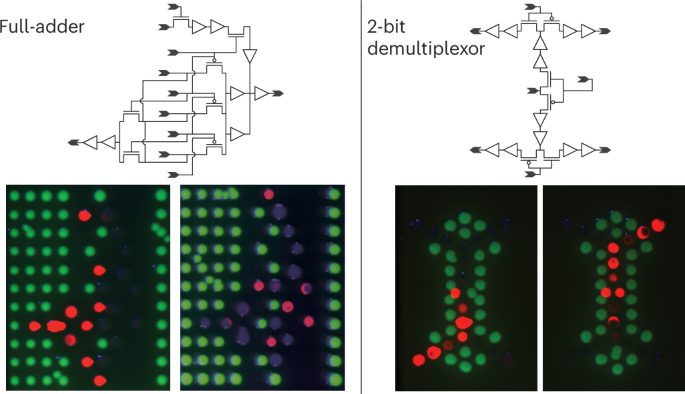
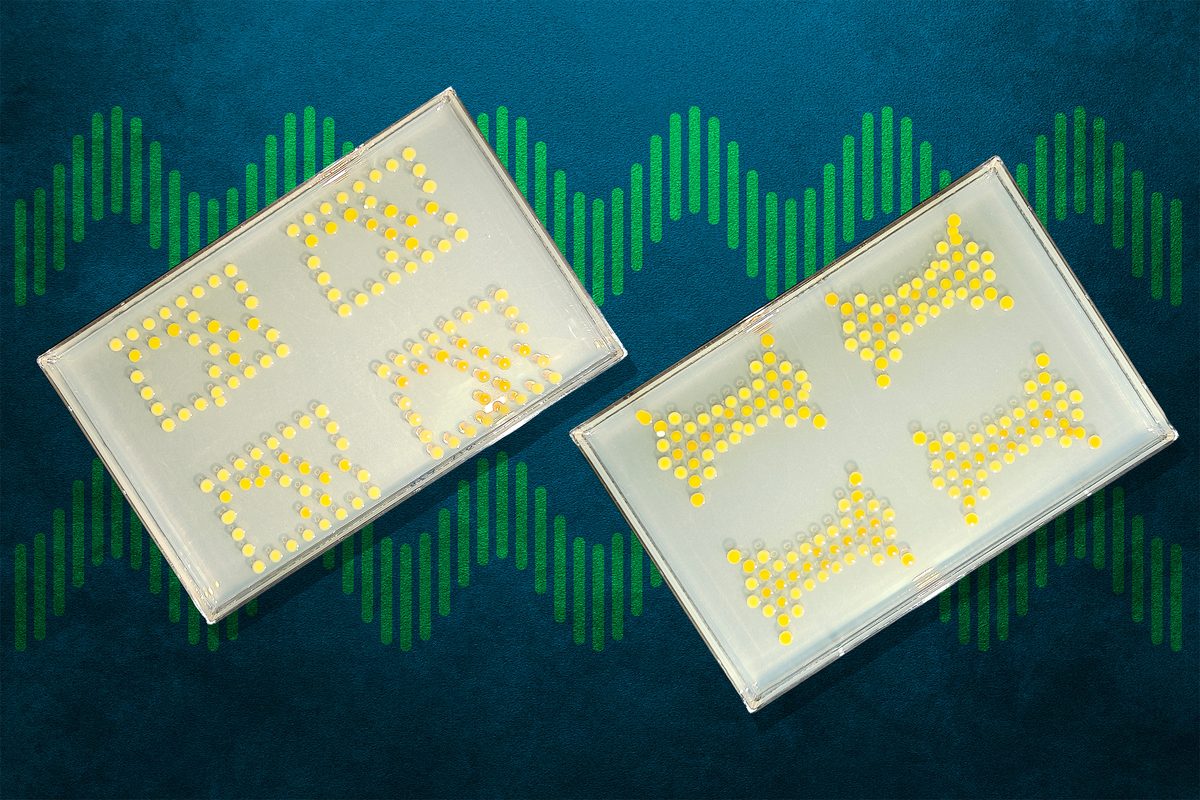
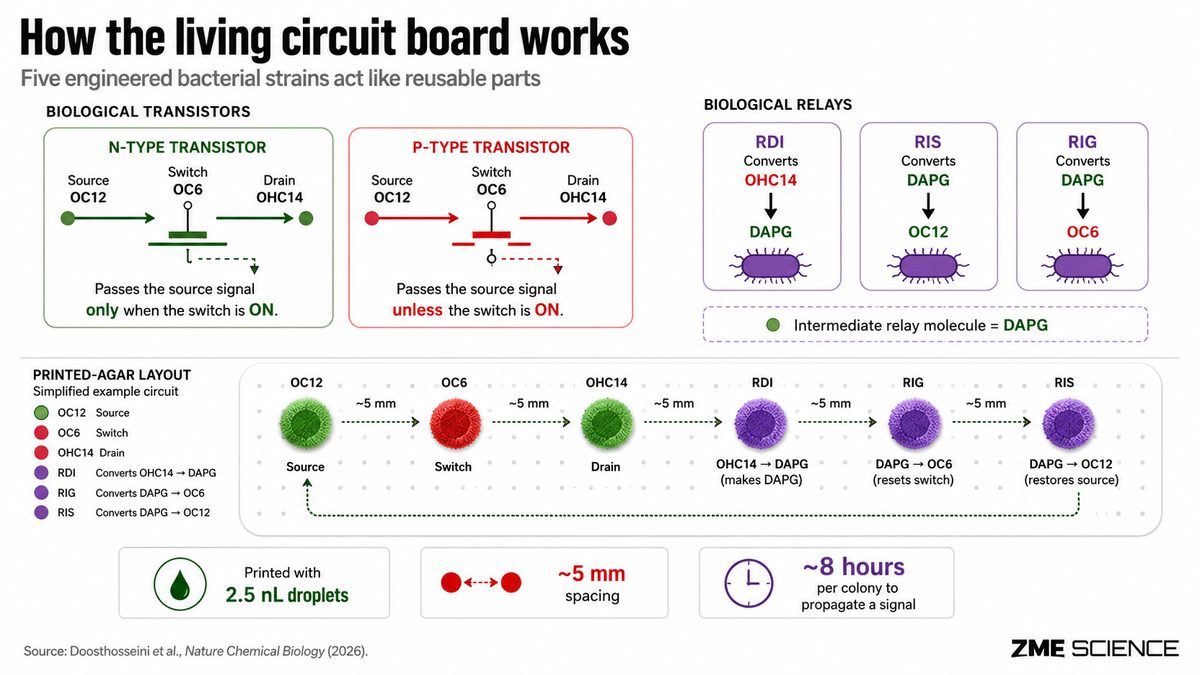
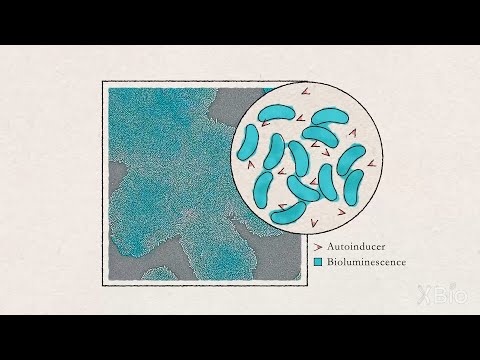
Updated 1 hour agoMIT researchers have built working transistors out of living bacteria. The cells are printed onto growth plates in patterns and wired together with chemical signals, forming circuits that add numbers, route signals, and perform logic operations.
Each calculation takes about eight hours, and the circuits stop working after about three days. But the bacteria naturally colonize plant surfaces, so the team envisions coating roots and leaves with living computers that detect drought, pests, or other threats and trigger defenses on their own.
Why it matters
Bacterial circuits could let crops detect threats and defend themselves without human intervention.
Questions about this story
Free account needed to ask — your question is kept and asked for you right after sign-up. Answers are public.
No questions yet — be the first to ask.
Key Indicators
Voices
Curated perspectives — historical figures and your fellow readers.
Play
Exploring all sides of a story is often best achieved with Play.
Higher or Lower
A number from this story, against one from elsewhere in the news — guess which is bigger, then keep the chain going. 5 rounds, 3 strikes; a miss costs a strike and resets your streak.
Keyboard: ↓/L lower · ↑/H higher
0 points — sign up to put that on the leaderboard.
Connections
Sixteen names from the news. Find the four hidden groups of four. Four mistakes max.
Sign up to keep a daily streak — a new puzzle lands every day.
Exit debate?
Your progress in this debate will be lost.
- 1 Two AI personas square off on this story.
- 2 You predict who'll win each round — correct picks earn XP.
- 3 One crossfire question is yours to fire. Pick it carefully.
Couldn't generate a topic
Select Your Champions
Choose one persona for each side of the debate
DEBATE TOPIC
Choose personas with different perspectives for a more dynamic debate.
Select debater for this side:
No debate personas available right now.
Select debater for this side:
No debate personas available right now.
Who's Got This Round?
Make your prediction before the referee scores
The referee scores both sides on
Round Results
Set the Crossfire
Pick the question both personas must answer in the final round
Debate Oracle! You called every round!
Sharp Instincts! You know your debaters!
The Coin Flip Strategist! Perfectly balanced!
The Contrarian! Bold predictions!
Inverse Genius! Try betting the opposite next time!
XP Breakdown
Prediction History
People Involved
Organizations Involved
Timeline
August 2026 September 2026
-
Bacterial transistor story spreads
Latest MediaThe ScienceDaily report circulates as a science news alert, drawing wider attention.
-
ScienceDaily covers bacterial circuits
MediaScienceDaily publishes a report on the bacterial transistor research.
-
MIT unveils bacterial transistors
ResearchMIT announces the research; paper published in Nature Chemical Biology.
Historical Context
3 moments from history that rhyme with this story — and how they unfolded.
First transistor (1947)
John Bardeen, Walter Brattain, and William Shockley at Bell Labs demonstrated the first point-contact transistor. It was crude, slow, and fragile compared to today's chips, but it proved that solid-state amplification was possible.
Transistors replaced vacuum tubes in radios and early computers over the following decade.
The transistor became the foundation of all modern electronics, with billions now fabricated on single chips.
Today's bacterial transistors are similarly crude and slow, but they prove that biological computation is possible, just as the first transistor proved solid-state electronics.
First integrated circuit (1958)
Jack Kilby at Texas Instruments demonstrated the first integrated circuit, wiring multiple transistors onto a single piece of semiconductor material. It eliminated the need to connect discrete components by hand.
Integrated circuits enabled smaller, cheaper, more reliable electronics.
The integrated circuit made modern computing possible, from smartphones to data centers.
The bacterial circuits are wired together by printing colonies in patterns, much like an integrated circuit routes signals between components, but using chemical signals instead of electrons.
Adleman's DNA computing (1994)
Computer scientist Leonard Adleman used strands of DNA to solve a seven-city Hamiltonian path problem, the first demonstration that biological molecules could perform computation. The experiment took days and required lab work.
The experiment showed DNA could compute, sparking a wave of research into biological computing.
DNA computing remained impractical for general use but inspired ongoing work in molecular computation.
Like Adleman's experiment, the bacterial transistors show biological systems can compute, but slowly and with significant limitations.
