
Pull to refresh
Logo
Euclid finds 31 ancient quasars, including the two most distant ever seen

Euclid finds 31 ancient quasars, including the two most distant ever seen

New Capabilities

A space telescope built to map dark energy has more than doubled the known quasars from the universe's first 770 million years

Overview

Updated 1 hour ago

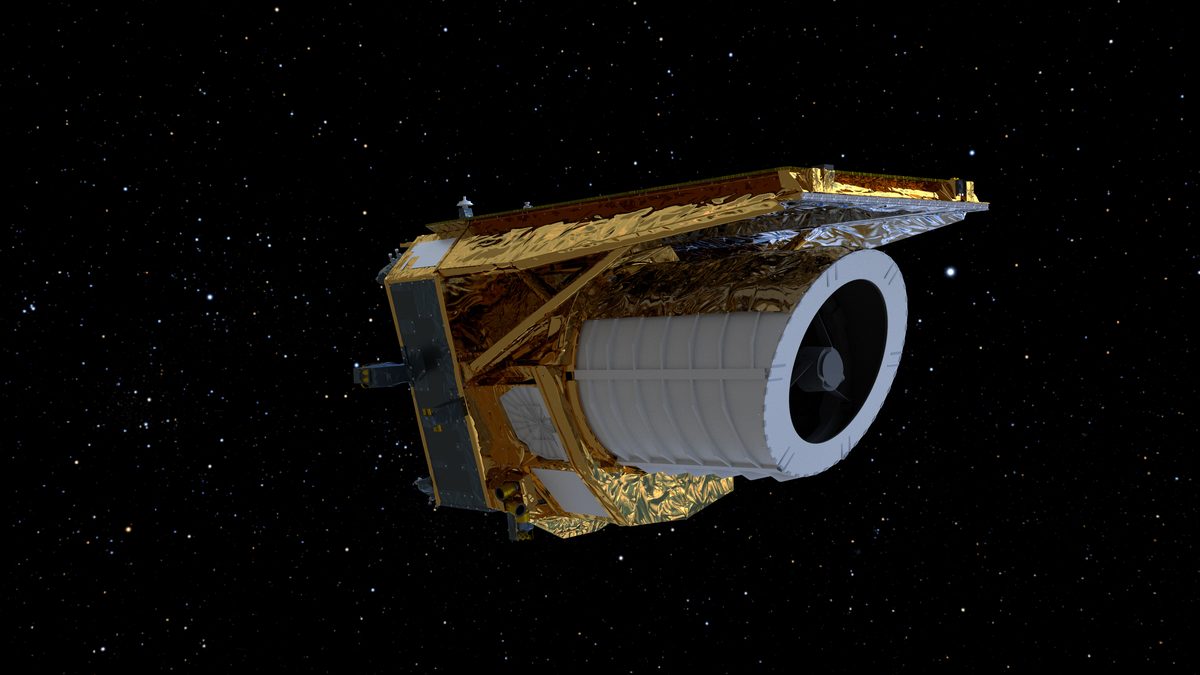
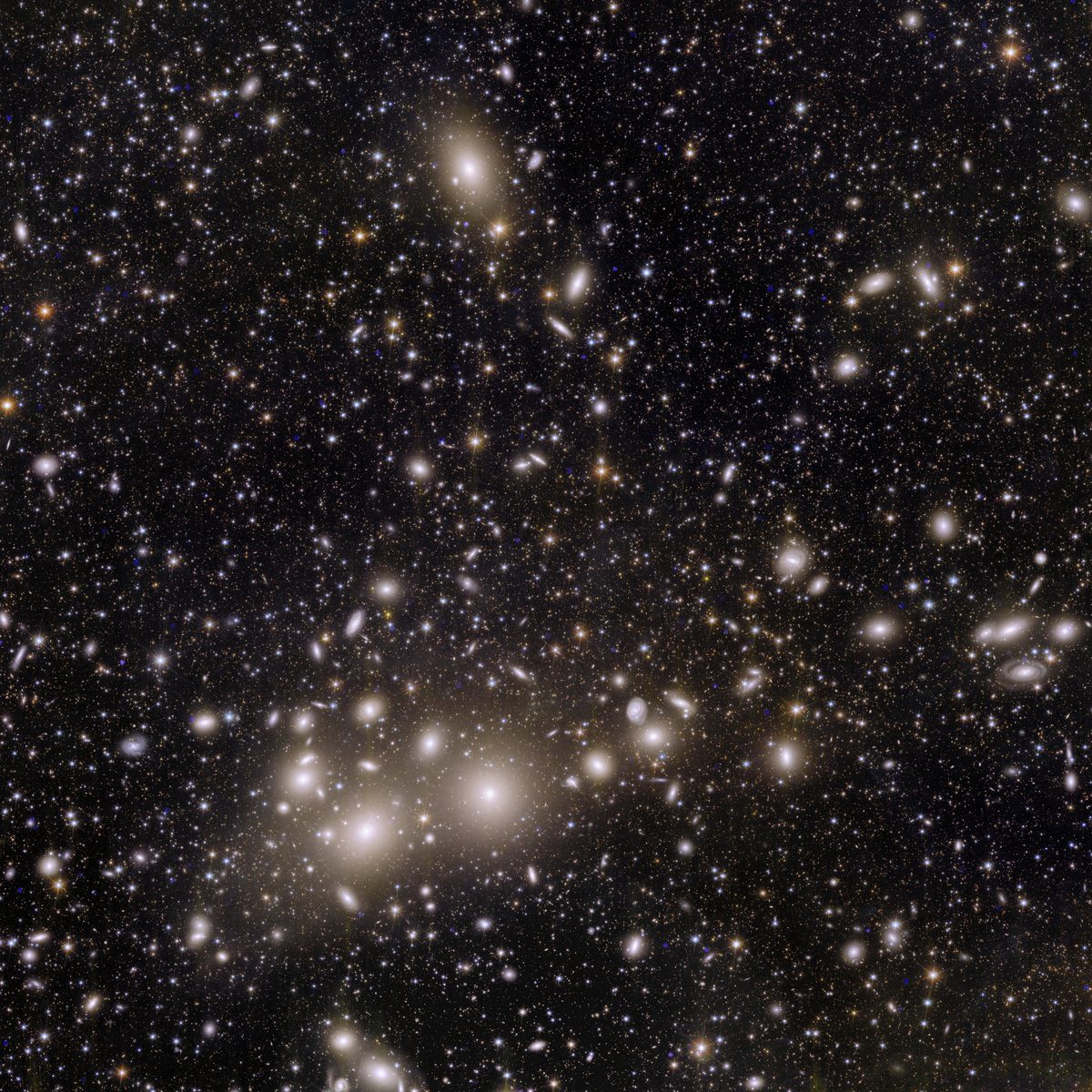
The European Space Agency's Euclid telescope found 31 quasars from the universe's first 770 million years. Two of them are the most distant ever confirmed. Both were already radiating as brightly as a trillion Suns when the cosmos was 670 million years old, about 5% of its present age.

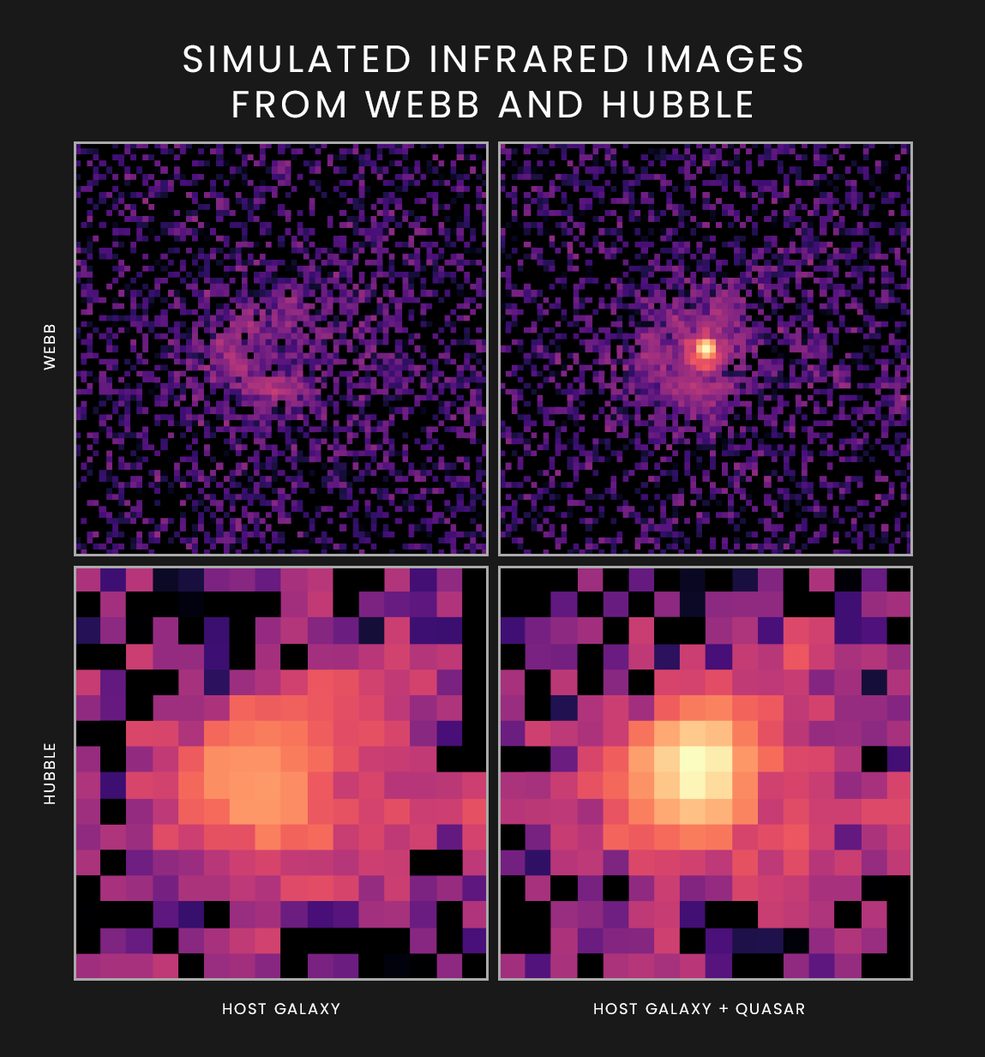
The count matters more than the record. Before this, astronomers had confirmed only nine quasars beyond redshift 7, and nearly all were extreme outliers. Euclid picked up objects 10 to 100 times fainter, which gives researchers a sample closer to the real population of early black holes.

Why it matters

Astronomers finally get a representative sample of the black holes that helped reionize the universe, not just the brightest oddities.

Questions about this story

Free account needed to ask — your question is kept and asked for you right after sign-up. Answers are public.

No questions yet — be the first to ask.

Key Indicators

31
Newly identified early quasars
All found in Euclid Wide Survey data and confirmed with ground-based spectroscopy.
12
Quasars at redshift 7 or higher
These date to the universe's first 770 million years.
23
Total quasars known beyond redshift 7
Up from nine before this result, according to the University of Arizona team.
7.77
Redshift of the most distant quasar
EUCL J172902.75+641018.1 broke the previous record of 7.64, set in 2021.
670 million years
Age of the universe when the record quasars shone
Roughly 5% of the universe's current age.

Voices

Curated perspectives — historical figures and your fellow readers.

Sign up to generate historical perspectives on this story.

People Involved

Organizations Involved

Timeline

January 2021 November 2026

4 events Latest: Yesterday
Tap a bar to jump to that date
  1. Euclid team reports 31 early quasars, two at record distance

    Latest Discovery

    EUCL J172902.75+641018.1 sits at redshift 7.77 and EUCL J125308.55+705432.3 at 7.69, both just over 13 billion light-years away.

  2. Euclid Wide Survey begins

    Operations

    The telescope starts routine survey observations, eventually intended to cover more than a third of the sky.

  3. Euclid launches

    Launch

    ESA sends the telescope to orbit with instruments for visible and near-infrared imaging across wide fields.

  4. Previous distance record set at redshift 7.64

    Discovery

    Ground-based surveys confirm a quasar from the universe's first billion years. The record stands for five years.

Scenarios

1

Euclid finds a quasar beyond redshift 8

Possible Resolves by Q2 2029

Discussed by: Daming Yang and the Euclid quasar team, who say the survey is only beginning

The current record is 7.77. Euclid's survey is still accumulating data over a third of the sky, and the same selection method that produced 31 quasars can be pushed fainter and farther. Yang's argument is that only more distant finds can settle how the first black holes grew so fast.

2

The redshift-7 quasar sample passes 100 objects

Likely Resolves by End of 2028

Discussed by: Antonio La Marca and the Euclid team, who describe the work as a first census

Euclid confirmed 12 quasars at redshift 7 or higher in roughly a year of survey operations, against a decade needed for the first ten. If that rate holds as more survey area is processed, the sample should grow by an order of magnitude.

3

Follow-up finds a star-forming host around the record quasar

Uncertain Resolves by Q2 2028

Discussed by: Silvia Belladitta's study of the second-ranked quasar, which found a dusty, rapidly star-forming galaxy

Belladitta's team already measured gas, dust and star formation around EUCL J125308.55+705432.3. The next test is whether the slightly more distant record holder sits in a similar environment, which would suggest early black holes and their galaxies grew together.

Historical Context

3 moments from history that rhyme with this story — and how they unfolded.

2001

Sloan Digital Sky Survey finds the first quasars past redshift 6 (2001)

A dedicated 2.5-meter telescope in New Mexico, paired with automated selection software, found quasars at redshift above 6 when only a handful were known. The survey covered a wide swath of sky rather than staring at one small patch.

Then

Within a few years, the count of redshift-6 quasars rose from a handful to dozens.

Now

Established the pattern that wide-field digital surveys, not targeted searches, set distance records and build samples.

Why this matters now

Euclid runs the same play from orbit, using infrared light to find objects whose light has been stretched out of the visible range.

December 1995

Hubble Deep Field (1995)

Hubble pointed at a tiny, empty patch of sky for ten consecutive days. The resulting image held thousands of distant galaxies and changed how astronomers thought about galaxy evolution.

Then

Deep fields became the standard method for studying faint, distant galaxies.

Now

Also clarified the limit: a narrow deep field finds faint objects but not rare bright ones scattered across the sky.

Why this matters now

Explains why Euclid's value for quasars is area as much as sensitivity. Rare objects need wide coverage.

2023-2024

JWST finds massive black holes in the early universe (2023-2024)

The James Webb Space Telescope measured black holes of millions of solar masses in galaxies at redshift 10 and beyond, earlier and heavier than many formation models predicted.

Then

Revived debate over whether early black holes grew from stellar remnants or started heavy.

Now

Made a census of the intervening population between redshift 6 and 8 more urgent, since that is where growth pathways can be compared.

Why this matters now

Euclid's fainter quasars fill in the population between those extreme detections and the well-studied quasars of later cosmic times.

Sources

(6)