

Pull to refresh
Logo
Euclid releases first major survey data covering 900 million galaxies

Euclid releases first major survey data covering 900 million galaxies

New Capabilities

The European Space Agency published 13 months of observations, about 14% of the sky its dark-energy telescope is built to map

Overview

Updated 53 minutes ago

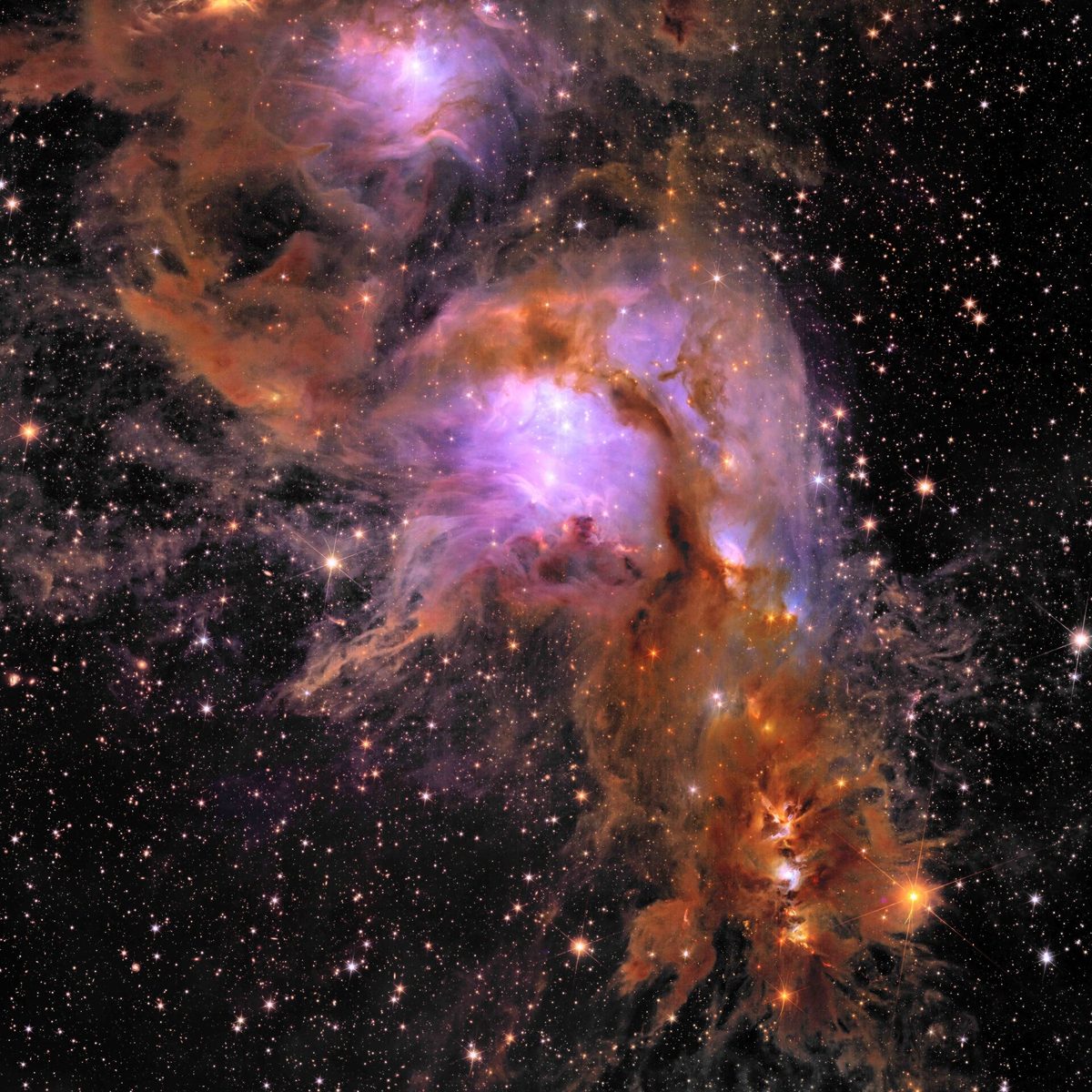
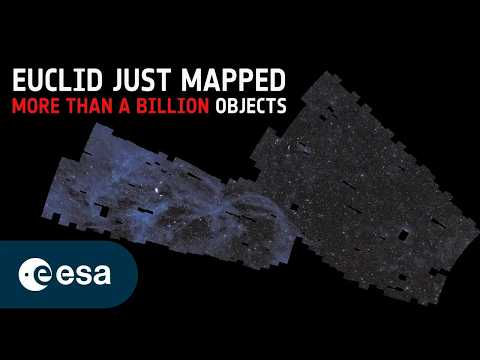
The European Space Agency released 13 months of observations from its Euclid space telescope on Nov. 12. The dataset covers 1,900 square degrees of sky and contains more than 900 million galaxies, about 15,000 candidate gravitational lenses and 60 million quasar candidates.

Euclid's purpose is to add the third dimension. It splits galaxy light into spectra to measure distance, which lets astronomers place each object in a 3D map and trace how the cosmic web grew over 10 billion years. That map is the instrument for testing what dark energy and dark matter actually are.

Why it matters

Thousands of gravitational lenses can now be studied as a population, turning rare one-off finds into a statistical tool for weighing dark matter.

Questions about this story

Free account needed to ask — your question is kept and asked for you right after sign-up. Answers are public.

No questions yet — be the first to ask.

Key Indicators

900M
Galaxies in the release
More than any previous survey has catalogued in a single data drop.
1.7 PB
Total data volume
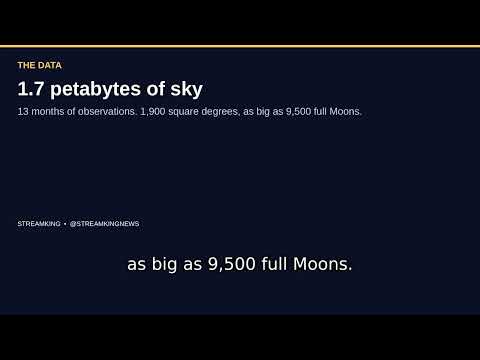
1.7 million gigabytes of observations and catalogues.
15,000
Strong gravitational lens candidates
Larger than every strong lens catalogue compiled in the previous half century combined.
60M
Quasar candidates
Brilliant cores of distant galaxies powered by supermassive black holes.
14%
Share of the planned sky survey
Euclid's six-year survey will cover more than a third of the sky.

Voices

Curated perspectives — historical figures and your fellow readers.

Sign up to generate historical perspectives on this story.

People Involved

Organizations Involved

Timeline

July 2023 2031

5 events Latest: Yesterday
Tap a bar to jump to that date
  1. Target date for the full 3D atlas

    Upcoming Mission goal

    Euclid aims to complete a 3D map spanning more than a third of the sky.

  2. Full Data Release 1 due

    Upcoming Planned release

    The complete release will add weak lensing observations and the first dark energy and dark matter results.

  3. ESA publishes DR1-Foundation

    Latest Data release

    Thirteen months of observations yield 1.7 petabytes covering 1,900 square degrees and 900 million galaxies.

  4. Earlier releases cover about 60 square degrees

    Data release

    Previous Euclid data drops rested on a few days of observations over a small patch of sky.

  5. Euclid launches from Florida

    Launch

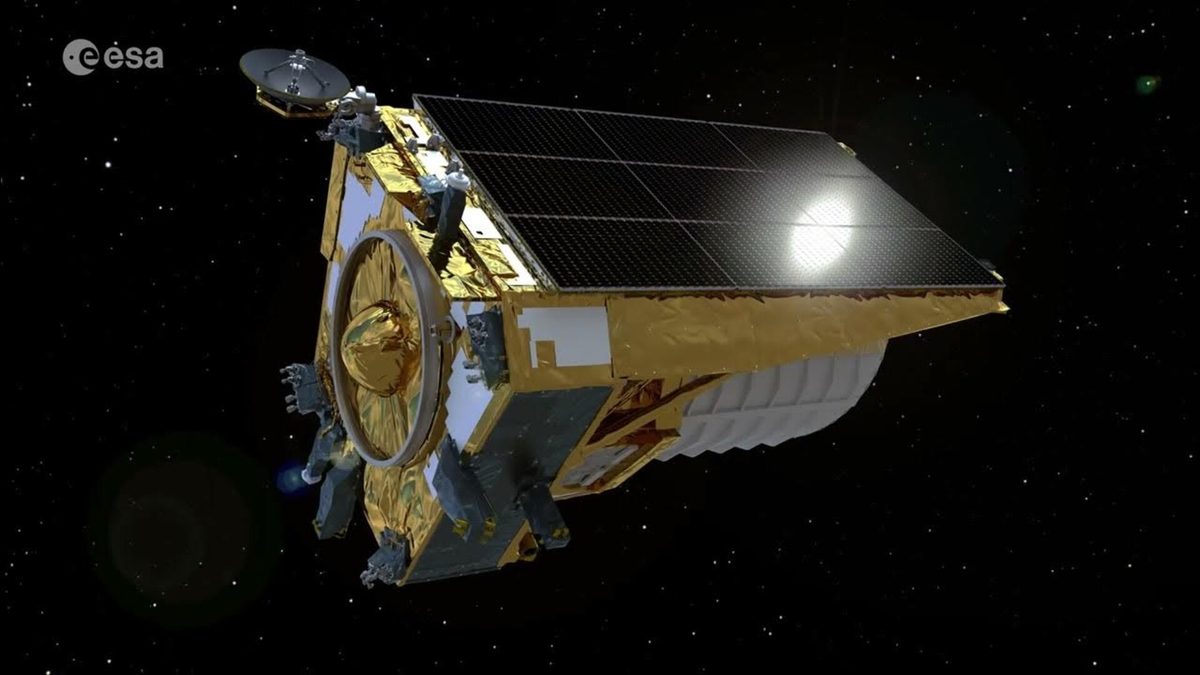
    The telescope begins a six-year mission to survey more than a third of the sky in visible and near-infrared light.

Scenarios

1

Euclid's first cosmology results tighten dark energy constraints

Likely Resolves by End of 2027

Discussed by: European Space Agency and Euclid Consortium scientists, who say the first dark energy and dark matter results arrive with the completed Data Release 1

The 1,900 square degrees released now are a foundation, not a cosmology measurement. ESA says the completed Data Release 1, due in mid-2027, will add weak lensing observations and the first results on dark energy and dark matter. If those results narrow the allowed range for dark energy's behaviour, Euclid starts paying off on the question it was built for.

2

The lens catalogue produces population-level dark matter measurements

Possible Resolves by Q2 2028

Discussed by: Natalie Lines and the Euclid Consortium strong lensing group

The 15,000 candidates were all found by one telescope in one way, which is what makes them usable as a sample rather than a curiosity cabinet. The test is whether teams publish mass estimates across many lenses, rather than single-object case studies. That work depends on confirming the candidates, since the list is explicitly labelled as candidates.

3

Euclid falls short of its full sky survey by 2031

Unlikely Resolves by End of 2031

Discussed by: Mission planners tracking survey progress against the published schedule

This release covers about 14% of the planned survey area after roughly 13 months of observing. Reaching more than a third of the sky by 2031 requires the pace to hold. A slowdown from instrument problems, data processing limits or budget pressure would leave the final atlas smaller than advertised.

Historical Context

3 moments from history that rhyme with this story — and how they unfolded.

December 1995

Hubble Deep Field (1995)

Astronomers pointed the Hubble Space Telescope at an apparently empty patch of sky for ten days and took 342 exposures. The resulting image held roughly 3,000 galaxies, most of them faint and distant, in an area about the width of a dime held at arm's length.

Then

The image showed that the early universe was crowded with galaxies and changed how astronomers planned deep surveys.

Now

It established the practice of staring at small patches of sky for a long time to study galaxy formation.

Why this matters now

Euclid inverts the tradeoff: instead of a tiny patch in extreme depth, it covers 1,900 square degrees in one release. The two approaches answer different questions about the same universe.

2000 to present

Sloan Digital Sky Survey (2000 onward)

A 2.5-meter telescope at Apache Point, New Mexico began a systematic digital survey of the sky, taking spectra as well as images. It produced the first large three-dimensional maps of galaxies and made survey data a shared public resource.

Then

Astronomers could measure how galaxies cluster in three dimensions rather than two.

Now

Wide-field surveys became the standard tool for cosmology, and their data releases set the expectation that catalogues are public.

Why this matters now

Euclid is the space-based successor to that model, adding distance measurements from orbit where the atmosphere does not blur or dim the light.

2013 to present

Gaia mission (2013 onward)

The European Space Agency's Gaia satellite set out to measure the positions, distances and motions of stars in the Milky Way, eventually cataloguing nearly two billion of them.

Then

Its first data releases reshaped the study of the galaxy's structure and history.

Now

Gaia showed that a single space telescope could produce a catalogue large enough to be a shared reference for an entire field.

Why this matters now

Euclid applies the same survey logic beyond the Milky Way, measuring distances to galaxies rather than stars to build a map of the cosmic web.

Sources

(10)