

Pull to refresh
Logo
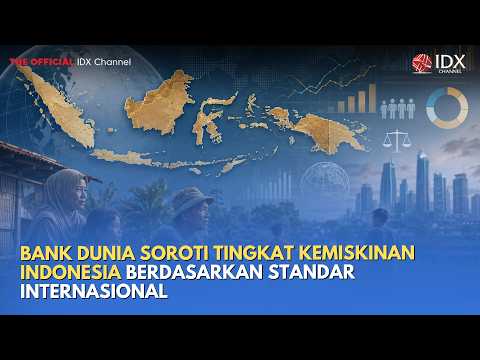
Indonesia cuts extreme poverty from 75% to under 2% in four decades

Indonesia cuts extreme poverty from 75% to under 2% in four decades

Money Moves

The world's fourth-most-populous nation now targets a 6.5% national poverty rate by 2027

2 days ago: Human Progress publishes four-decade analysis

Overview

Updated 1 hour ago

In 1984, three-quarters of Indonesians lived on less than $2.15 a day. By 2023, that share was below 2% — extreme poverty fell from 120 million people to 5 million.

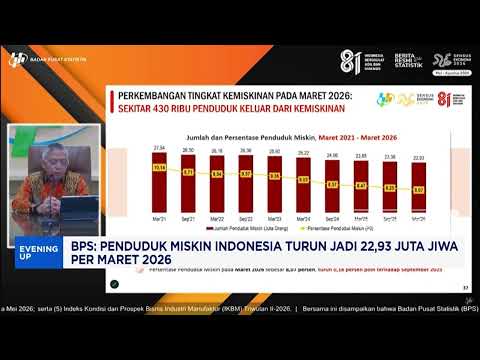
Indonesia matched China's record of rapid poverty reduction, just slightly behind. The government of President Prabowo Subianto now targets a national poverty rate of 6 to 6.5% by 2027, down from 8.07% in March 2026. Whether it gets there depends on whether growth reaches the roughly 59% of workers still in informal jobs.

International measures tell a more sobering story: on the World Bank's upper-middle-income line of $8.30 a day, 64.1% of Indonesians still fall below. Extreme poverty is close to solved; vulnerability is not.

Why it matters

Indonesia lifted some 115 million people out of extreme poverty; whether it hits its 6.5% target by 2027 will reveal how much further growth can reach.

Questions about this story

Free account needed to ask — your question is kept and asked for you right after sign-up. Answers are public.

No questions yet — be the first to ask.

Key Indicators

75% → <2%
Share below $2.15/day, 1984 to 2023
Extreme poverty fell from three-quarters of the population to under 2%, per Our World in Data.
115M
People lifted out of extreme poverty
From 120 million in 1984 to 5 million in 2023, a reduction of roughly 115 million.
8.07%
National poverty rate, March 2026
BPS's national measure, down from 8.25% in September 2025. The national line is about $3.60 per day.
6.0–6.5%
Government poverty target for 2027
President Prabowo Subianto's administration set this goal under its poverty-alleviation program.
64.1%
Below $8.30/day upper-middle-income line
The World Bank's higher benchmark for Indonesia's income class; reflects persistent vulnerability, not worsening conditions.

Voices

Curated perspectives — historical figures and your fellow readers.

Ever wondered what historical figures would say about today's headlines?

Sign up to generate historical perspectives on this story.

People Involved

Organizations Involved

Timeline

1984 October 2026

7 events Latest: 2 days ago
Tap a bar to jump to that date
  1. Human Progress publishes four-decade analysis

    Latest Analysis

    Human Progress reports Indonesia's extreme poverty fell from 86% below $3/day in 1984 to under 4% by 2025, framing it alongside China.

  2. National poverty rate falls to 8.07%

    Data point

    BPS reports the lowest national poverty rate in recent years, down from 8.47% a year earlier.

  3. BPS records extreme poverty at 0.85%

    Data point

    BPS measures extreme poverty at 0.85%, about 2.38 million people, down from 1.26% a year earlier.

  4. World Bank: 5.4% below international line

    Data point

    World Bank puts 5.4% of Indonesians below the updated international extreme poverty line.

  5. Extreme poverty falls below 2%

    Milestone

    Indonesia reaches upper middle-income status; extreme poverty drops from 120 million to 5 million people.

  6. Extreme poverty peaks at 83%

    Crisis

    The Asian financial crisis pushed the extreme poverty rate to 83%, its modern peak.

  7. Three-quarters of Indonesia below $2.15/day

    Data point

    Roughly 120 million Indonesians lived in extreme poverty, per Our World in Data.

Scenarios

1

Indonesia hits 6–6.5% national poverty target by 2027

Possible Resolves by End of 2027

Discussed by: Indonesian government officials; BPS data releases

The government's stated goal is a national poverty rate of 6.0–6.5% by 2027. Reaching it requires cutting the rate from 8.07% (March 2026) by roughly 1.5 to 2 percentage points in under two years. That pace is faster than the recent trend of about 0.4 points per year, so hitting the target depends on accelerating gains and avoiding the natural disasters that repeatedly hit poor households in high-risk areas.

2

Indonesia cuts poverty further but misses the 2027 target

Likely Resolves by End of 2027

Discussed by: World Bank analysts

Poverty keeps falling, as it has for most of four decades, but not fast enough to reach 6.5% by 2027. The rate lands somewhere between 6.6% and 8% in the March 2027 release. This is the most likely path if growth continues at recent rates, job creation stays biased toward informal work, and no major shock hits the economy.

3

Poverty reduction stalls or reverses

Unlikely Resolves by Q2 2027

Discussed by: World Bank Poverty & Equity Brief

The World Bank warns that high informality (59.4% of workers), underemployment at 33%, and repeated climate and disaster shocks could slow or reverse gains. A severe El Niño, a prolonged Middle East conflict affecting global prices, or a domestic disaster hitting the 22% of poor households in high-risk areas could push the poverty rate up in consecutive releases.

Historical Context

2 moments from history that rhyme with this story — and how they unfolded.

1981–2020

China's extreme poverty reduction (1981–2020)

In the early 1980s, over 90% of China's population lived below the $2.15 a day extreme poverty line. Market reforms and export-led growth lifted hundreds of millions out of destitution over four decades.

Then

Extreme poverty fell to near zero by 2020, when China declared it had achieved its poverty elimination goal.

Now

China became the reference case for how rapid growth reduces poverty, and the benchmark against which other developing countries are measured.

Why this matters now

Our World in Data and Human Progress explicitly compare Indonesia to China. Indonesia followed a similar path, slightly behind: from 75% below $2.15/day in 1984 to under 2% in 2023.

1960s–1990s

South Korea's transformation from aid recipient to donor (1960s–1990s)

In the early 1960s, South Korea was among the poorest countries in the world, with per capita income below that of many African nations and heavily dependent on foreign aid. Export-oriented industrialization and heavy state investment turned it into a high-income economy.

Then

By the 1990s, South Korea had joined the OECD and become a major donor of development aid.

Now

It demonstrated that a poor, aid-dependent country could reach high-income status within a few decades, and that the climb does not end at middle income.

Why this matters now

Indonesia has followed the first half of this arc, from extreme poverty to middle income. Whether it can emulate South Korea's continued rise into high-income status is the open question the 2027 target starts to answer.

Sources

(9)