Anchor

Millions of Afghans expelled from Pakistan and Iran arrive in Taliban-run Afghanistan
Force in PlaySix million people have been pushed across Afghanistan's borders since September 2023; the UN calls it the largest return movement in recent history
2 days ago: BBC documents deportees under Taliban ruleNew here? Follow stories to track developments over time. Create a free account to get updates when stories you care about change.
Overview
Updated 55 minutes agoNazia spent decades in Pakistan with her eight sisters and their children. In 2026, authorities deported the family to Afghanistan, a country she told the BBC she had never seen. She is one of six million Afghans pushed across the border since September 2023.
In September 2023, Pakistan launched a deportation plan for undocumented Afghans. Iran accelerated its own expulsions after its 12-day war with Israel and the United States in June 2025. The UN refugee agency calls the result the largest return movement in recent history.
They are arriving into a country where 21.9 million people, nearly half the population, need aid to survive. UNICEF says one million children face life-threatening malnutrition. Nearly 90 percent of returnee households are in debt.
Why it matters
Six million people have been pushed back into a country that cannot feed them, and nearly half of Afghanistan now depends on aid to survive.
Questions about this story
Free account needed to ask — your question is kept and asked for you right after sign-up. Answers are public.
No questions yet — be the first to ask.
Key Indicators
6 million
Afghans returned from Pakistan and Iran since September 2023
UNHCR calls it the largest return movement in recent history.
21.9 million
People in Afghanistan needing humanitarian aid this year
Nearly half the population, per UN estimates.
90%
Returnee households in debt
UNHCR monitoring finds most owe more than they earn in a month.
1 million
Afghan children facing life-threatening malnutrition
UNICEF warning issued in August 2026.
Related Media
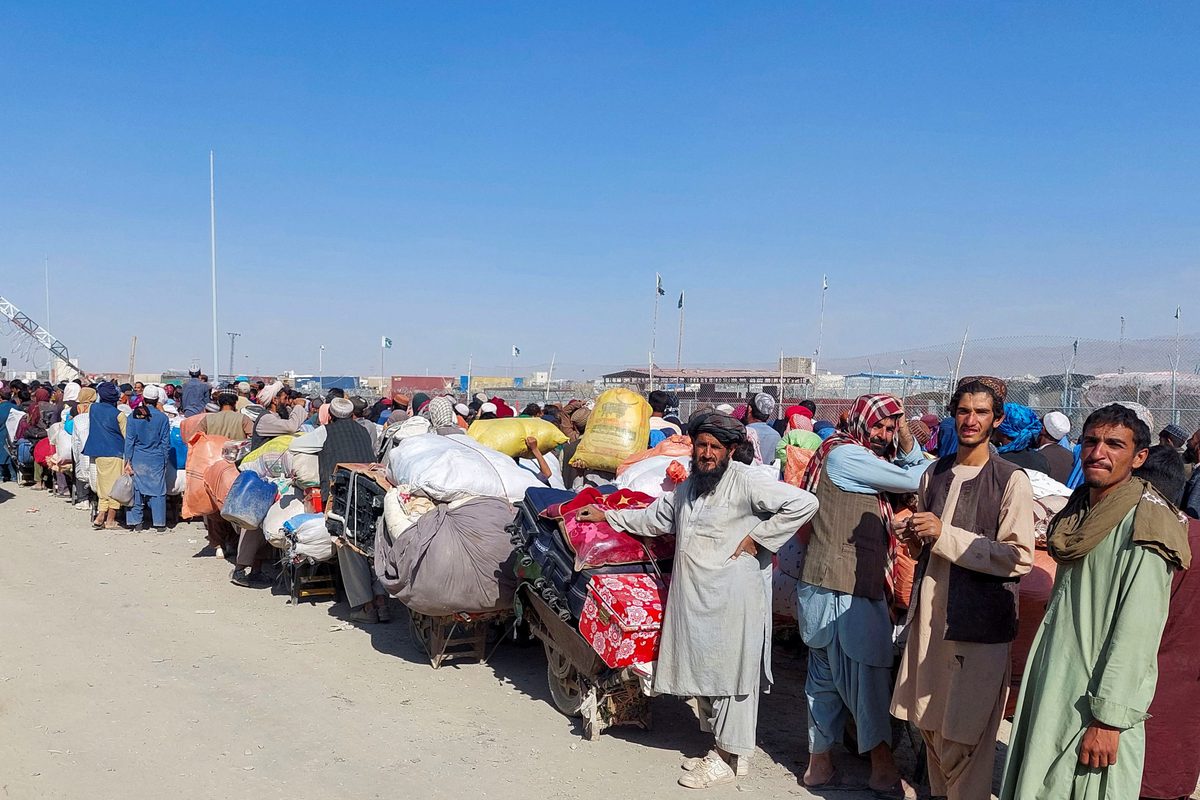
Border crossing with Afghanistan swamped by Afghans after Pakistani expulsion order | Reuters
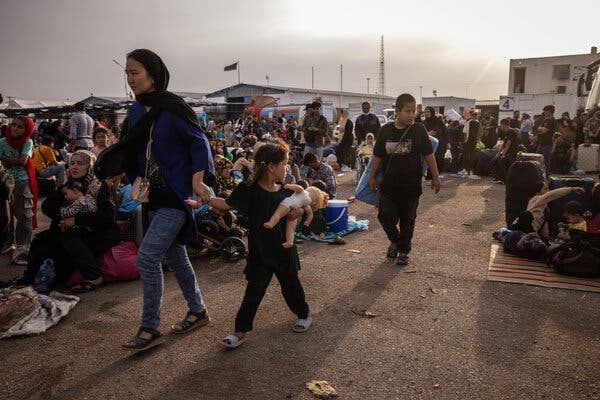
Afghan Women and Girls Deported From Iran Fear Returning to Afghanistan - The New York Times
15.0K views
2:50
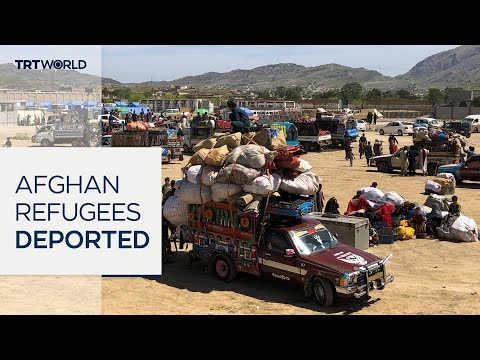
Millions of Afghan refugees forced to return home amid Taliban ...
TRT World
23.2K views
7:19
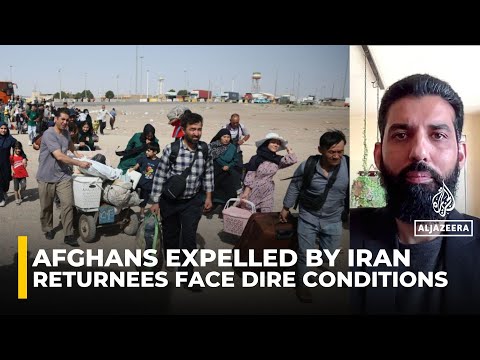
Afghans expelled by Iran return to face harsh winter and ...
Al Jazeera English
48.9K views
28:16
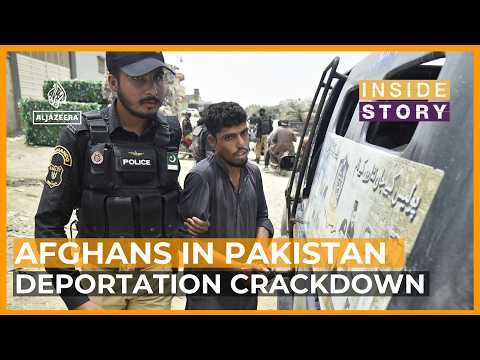
Why is Pakistan deporting Afghan migrants? | Inside Story
Al Jazeera English
Images from Openverse under Creative Commons licenses. Videos from YouTube.
Voices
Curated perspectives — historical figures and your fellow readers.
Play
Exploring all sides of a story is often best achieved with Play.
Most of these play right now — no account needed. Sign up to save scores, keep a streak, and unlock Debate and Predict.
Log in
Sign Up
WHO SAID WHAT?
Can you match the quotes to the right people?
Rounds
People
Per question
Scoring
- points for each correct match.
- time bonus when you answer in under seconds.
- streak bonus once you hit correct in a row.
Score:
Round /
streak
— Who said this?
Tip: press 1– to answer.
Score:
Round /
streak
+
Base +
⚡ Speed +
🔥 Streak +
Streak reset · the answer was
No answer in time · it was
Next Up
Round
of
Score
points
Correct
Best Streak
Time Bonus
Avg. Time
points — sign up to put that on the leaderboard.
Now try on this story
Higher or Lower
A number from this story, against one from elsewhere in the news — guess which is bigger, then keep the chain going. 5 rounds, 3 strikes; a miss costs a strike and resets your streak.
Example
Anchor
EU tariff revenue
$52B
Big for this kind of number
Mystery
Pentagon AI contract
?
Round 1
Streak: 0
Mystery
?
Keyboard: ↓/L lower · ↑/H higher
0 pts
Best streak: 0 · Rounds: 0
0 points — sign up to put that on the leaderboard.
Now try on this story
Connections
Sixteen names from the news. Find the four hidden groups of four. Four mistakes max.
Loading today's puzzle…
0/4 groups
Mistakes
Sign up to keep a daily streak — a new puzzle lands every day.
Now try on this story
Exit debate?
Your progress in this debate will be lost.
How it works
- 1 Two AI personas square off on this story.
- 2 You predict who'll win each round — correct picks earn XP.
- 3 One crossfire question is yours to fire. Pick it carefully.
Couldn't generate a topic
Select Your Champions
Choose one persona for each side of the debate
DEBATE TOPIC
Choose personas with different perspectives for a more dynamic debate.
SIDE A (PRO)
Select debater for this side:
No debate personas available right now.
SIDE B (CON)
Select debater for this side:
No debate personas available right now.
VS
Get ready to make your prediction...
Round of
Claim
Evidence
Stakes
Crossfire Answer
Closing Statement
Claim
Evidence
Stakes
Crossfire Answer
Closing Statement
Your Crossfire Question
Generating arguments...
Who's Got This Round?
Make your prediction before the referee scores
The referee scores both sides on
Correct predictions earn +20 XP
· Press 1 or 2 to pick
Evidence
40%
Logic
30%
Detail
20%
Style
10%
Round Results
Your Pick
Not this time
(%)
Overall Score
/10
Your Pick
Not this time
(%)
Overall Score
/10
Set the Crossfire
Pick the question both personas must answer in the final round
Crafting crossfire questions...
Choosing a question earns +10 XP crossfire bonus
🏆
Total XP Earned
Cred Change
Predictions
Debate Oracle! You called every round!
Sharp Instincts! You know your debaters!
The Coin Flip Strategist! Perfectly balanced!
The Contrarian! Bold predictions!
Inverse Genius! Try betting the opposite next time!
XP Breakdown
Base completion
+20 XP
Rounds played ( rounds x 5 XP)
+ XP
Correct predictions ( correct x 20 XP)
+ XP
Crossfire bonus
+10 XP
Accuracy
%
Prediction History
Round
You picked:
✓
✗
Now try on this story
Keep debating to level up your credibility and unlock achievements
People Involved
CG
Charlie Goodlake
UNHCR spokesperson in Afghanistan
Public face of the UN response to the return wave
Amina Khan
Director of the Centre for Afghanistan, Middle East and Africa at the Institute of Strategic Studies Islamabad
Warns deportations may fuel militant recruitment
Nazia
Deportee returned to Afghanistan
Returned with her family to a country she had never lived in
Zarina
Deportee at Torkham border crossing
Arrived with no resources and no tent
Organizations Involved
HC
UN High Commissioner for Refugees
UN Agency
Tracking and assisting the return wave
The UN refugee agency runs border reception camps and tracks every return from Pakistan and Iran.
Pakistan Interior Ministry
Government Ministry
Running the Illegal Foreigners Repatriation Plan
The ministry launched the 2023 deportation plan and ordered intensified arrests of undocumented Afghans in July 2026.
TA
Taliban-led government of Afghanistan
De facto government
Receiving returnees while cut off from most international funding
The Taliban-run administration receives the deportees while sanctions and restrictions on women and girls limit foreign aid.
International Organization for Migration (IOM)
UN Agency
Co-publishing return data with UNHCR
The UN migration agency tracks the return flow and helps returnees at border crossings.
Timeline
August 2021 September 2026
8 events
Latest: 2 days ago
Tap a bar to jump to that date
-
BBC documents deportees under Taliban rule
Latest ReportBBC reports six million expelled Afghans arriving in a country many have never seen.
-
Returns pass six million
MilestoneUNHCR says six million Afghans have returned since September 2023; one million returned in 2026 alone.
-
Pakistan orders stepped-up arrests
PolicyPakistan's Interior Ministry tells law enforcement to intensify arrests of undocumented Afghan migrants.
-
Human Rights Watch documents raids
ReportHuman Rights Watch reports door-to-door raids, late-night home searches, and arrests without warrants.
-
Pakistan-Afghanistan fighting escalates
ConflictBorder fighting between Pakistan and Afghanistan intensifies; expulsions and alleged abuse increase.
-
Iran accelerates deportations after war
PolicyIran speeds up expulsions of Afghans after 12-day war with Israel and United States.
-
Pakistan launches deportation plan
PolicyPakistan orders undocumented Afghans to leave or face arrest under a new repatriation plan.
-
Taliban takes Kabul
Regime ChangeTaliban seizes control of Afghanistan as millions of Afghans remain abroad.
Historical Context
3 moments from history that rhyme with this story — and how they unfolded.
1979-1989
Afghan exodus after the Soviet invasion (1979-1989)
The Soviet invasion in December 1979 sent up to six million Afghans fleeing to Pakistan and Iran, then the world's largest refugee population. Border camps in Pakistan grew into permanent settlements over a decade of war.
Then
Refugees survived on international aid while mujahideen factions fought Soviet forces from Pakistani soil.
Now
Three generations were born and raised outside Afghanistan, many never setting foot in the country. That population is the one now being pushed back.
Why this matters now
Today's six million returns roughly mirror the original exodus in scale, but they move into a far weaker state, under the same Taliban movement many original refugees fled.
1992-1996
Afghan return wave of the early 1990s (1992-1996)
After the Soviet withdrawal, an estimated three million Afghan refugees returned from Pakistan and Iran, at the time the largest voluntary repatriation in UNHCR's history.
Then
The returns reversed as civil war engulfed Kabul, and hundreds of thousands fled again.
Now
Four decades of conflict produced repeated cycles of flight and return across Afghan borders.
Why this matters now
It is the precedent for mass Afghan returns, and a warning that returns without stability and livelihoods do not stick.
2017-present
Rohingya repatriation failure (2017-present)
More than 700,000 Rohingya fled Myanmar's military crackdown in 2017 into Bangladesh. Repatriation agreements were signed, but almost no one returned voluntarily because refugees refused to go back without safety guarantees.
Then
The agreements produced token returns; the vast majority of Rohingya remain in Bangladesh's camps.
Now
The standard that returns must be voluntary, safe and dignified became the test for judging forced repatriation.
Why this matters now
UNHCR applies the same test in Afghanistan: most returnees from Pakistan say they had no choice, and 61 percent described their return as involuntary.
Sources
(5)Related Stories
Millions flee Iranian cities as US-Israeli strikes enter third week
Force in Play
Updated May 30
Pakistan and Afghanistan locked in escalating cross-border military cycle
Force in Play
Updated May 29
Pakistan-led ceasefire diplomacy inches forward as Iran and US trade escalation with negotiation
Force in Play
Updated Aug 17
Deadly winter storms sweep Afghanistan
Force in Play
Updated May 23
US-Iran conflict ignites deadly unrest across Pakistan
Force in Play
Updated May 30
UN keeps Afghanistan mission running, presses Taliban on women's rights
Rule Changes
Updated Jun 16