
Pull to refresh
Logo
Morocco opens first container terminal at Nador West Med port

Morocco opens first container terminal at Nador West Med port

Built World

A $5.5 billion complex on the Mediterranean aims to repeat Tanger Med's success

Overview

Updated 1 hour ago

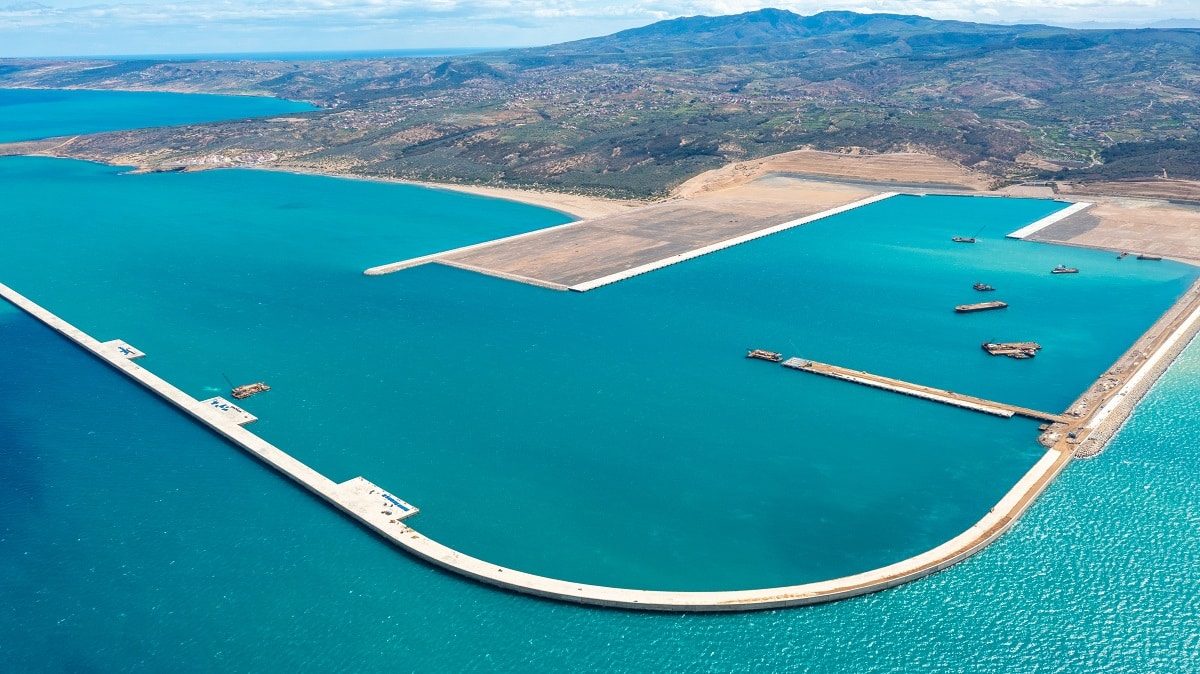
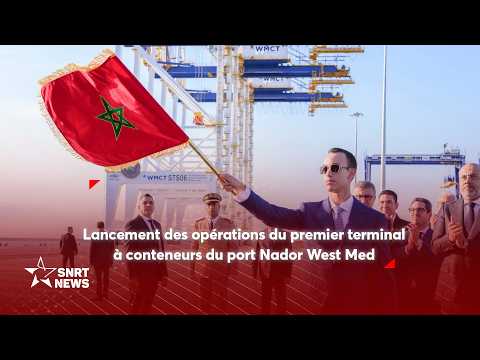
On October 31, the first commercial container came off a ship at Nador West Med, a new port on Morocco's eastern Mediterranean coast. Crown Prince Moulay El Hassan gave the signal to unload it, acting on King Mohammed VI's instructions. The East terminal is now open for business.

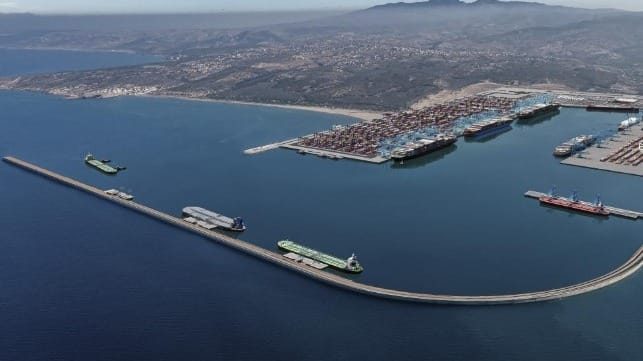
The terminal is the first piece of a 54 billion Moroccan dirham ($5.5 billion) port and industrial complex. Marsa Maroc and Terminal Investment Limited, the port arm of MSC, will run it for 25 years. Morocco wants the site to do for its eastern coast what Tanger Med did for the north: pull transshipment traffic, attract factories, and create jobs in a region with fewer of them.

Why it matters

Morocco is betting a second Mediterranean mega-port can pull shipping traffic and 34,000 jobs to its less-developed east.

Questions about this story

Free account needed to ask — your question is kept and asked for you right after sign-up. Answers are public.

No questions yet — be the first to ask.

Key Indicators

$5.5B
Total complex investment
Public and private spending on the port, industrial and logistics complex.
3.5M TEU
East terminal capacity target by 2030
Annual container capacity once the terminal is fully ramped up.
5.3M TEU
Planned port-wide container capacity
Combined capacity of the East and West terminals after April 2027.
34,000
Direct and indirect jobs near term
Expected employment from the complex, according to Moroccan officials.
25 years
East terminal concession length
Marsa Maroc and Terminal Investment Limited hold the operating contract.

Voices

Curated perspectives — historical figures and your fellow readers.

Sign up to generate historical perspectives on this story.

People Involved

Organizations Involved

Timeline

January 2026 December 2028

10 events Latest: Today
Tap a bar to jump to that date
  1. General cargo terminal targeted

    Upcoming Infrastructure

    A 22-hectare general cargo facility with 3 million tonnes of capacity is planned.

  2. Bulk terminal due to start

    Upcoming Infrastructure

    A 7 million tonne coal and bulk terminal is scheduled to begin operating.

  3. West container terminal due to start

    Upcoming Infrastructure

    The 1.8 million TEU facility, run by Marsa Maroc and CMA CGM, is scheduled to open.

  4. Royal statement outlines terminal rollout

    Today Government

    Officials confirm the West terminal for April 2027 and a planned total of 5.3 million TEU.

  5. Crown Prince opens East container terminal

    Launch

    Moulay El Hassan triggers the first container unloading at Nador West Med.

  6. CMA CGM finalises West terminal stake

    Business

    CMA CGM takes 49 percent of Nador Container Terminal alongside Marsa Maroc.

  7. MSC Nita completes terminal trials

    Operations

    A test call clears the East terminal for commercial service.

  8. Ro-ro terminal handed over

    Infrastructure

    The vehicle terminal, sized for 400,000 units, is delivered to the complex.

  9. King chairs Nador West Med progress meeting

    Government

    King Mohammed VI reviews the project; public and private investment stands at 51 billion dirhams.

  10. Marsa Maroc and TIL close East terminal partnership

    Business

    Regulators clear the deal, giving Marsa Maroc 50 percent plus one share and TIL the balance.

Scenarios

1

West terminal starts commercial operations in April 2027

Likely Resolves by May 31, 2027

Discussed by: Nador West Med and the Royal Office, which set the April 2027 date

Marsa Maroc and CMA CGM's Nador Container Terminal is scheduled to open the West facility in April 2027. If it does, the port's container capacity doubles to 5.3 million TEU and the complex gains a second global carrier as an anchor tenant.

2

Both container terminals reach combined 5.3 million TEU capacity by end of 2027

Possible Resolves by Jan 31, 2028

Discussed by: Royal Office statement and port officials

The East terminal is targeting 3.5 million TEU and the West terminal 1.8 million. Hitting the combined figure depends on equipment installation, labor, and shipping lines committing regular services to Nador rather than Tanger Med or Algeciras.

3

Morocco approves the LNG terminal by end of 2027

Uncertain Resolves by End of 2027

Discussed by: Construction Review and La Vie Eco, which note the LNG terminal awaits a government decision

The complex includes a planned liquefied natural gas terminal with 5 billion cubic metres of annual capacity. It is the one major piece without a final government green light. Approval would add an energy hub to the port's container and bulk business.

Historical Context

3 moments from history that rhyme with this story — and how they unfolded.

2007–present

Tanger Med (2007)

Morocco opened Tanger Med on the Strait of Gibraltar, betting a deep-water port could capture transshipment traffic between Europe, Africa and Asia. It grew into the leading container port in Africa and the Mediterranean.

Then

Shipping lines shifted routes, and the port became a hub for major carriers.

Now

Tanger Med anchored an industrial zone and made ports a central part of Moroccan economic policy.

Why this matters now

Nador West Med is explicitly modeled on Tanger Med, extending the same playbook to the eastern Mediterranean.

1979–present

Jebel Ali (1979)

Dubai opened Jebel Ali, a deep-water port built alongside a free zone. It became one of the busiest container ports in the world and the base for DP World.

Then

The free zone attracted traders and manufacturers who needed port access.

Now

The port helped turn Dubai into a global logistics and trade hub.

Why this matters now

Nador West Med pairs its terminals with a 700-hectare industrial and logistics platform, the same port-plus-zone model.

2013–present

Rotterdam Maasvlakte II (2013)

Rotterdam opened a new deep-sea port area on reclaimed land, adding automated container capacity. It helped Europe's largest port keep pace with bigger ships.

Then

The added depth and automation let Rotterdam handle the largest container vessels.

Now

Ports increasingly competed on draft, automation and rail links rather than location alone.

Why this matters now

Nador West Med's 18-metre draft is aimed at the same generation of very large container ships.

Sources

(10)