
Pull to refresh
Logo
Daily Brief
Following
Why Sign Up
Generic semaglutide floods India as patent expires, cutting prices up to 90%

Generic semaglutide floods India as patent expires, cutting prices up to 90%

New Capabilities
By Newzino Staff |

Over 50 branded generics launch overnight, opening a potential $6 billion market and signaling what's coming for the world's most lucrative drug class

Today: Over 40 companies launch generic semaglutide in India

Overview

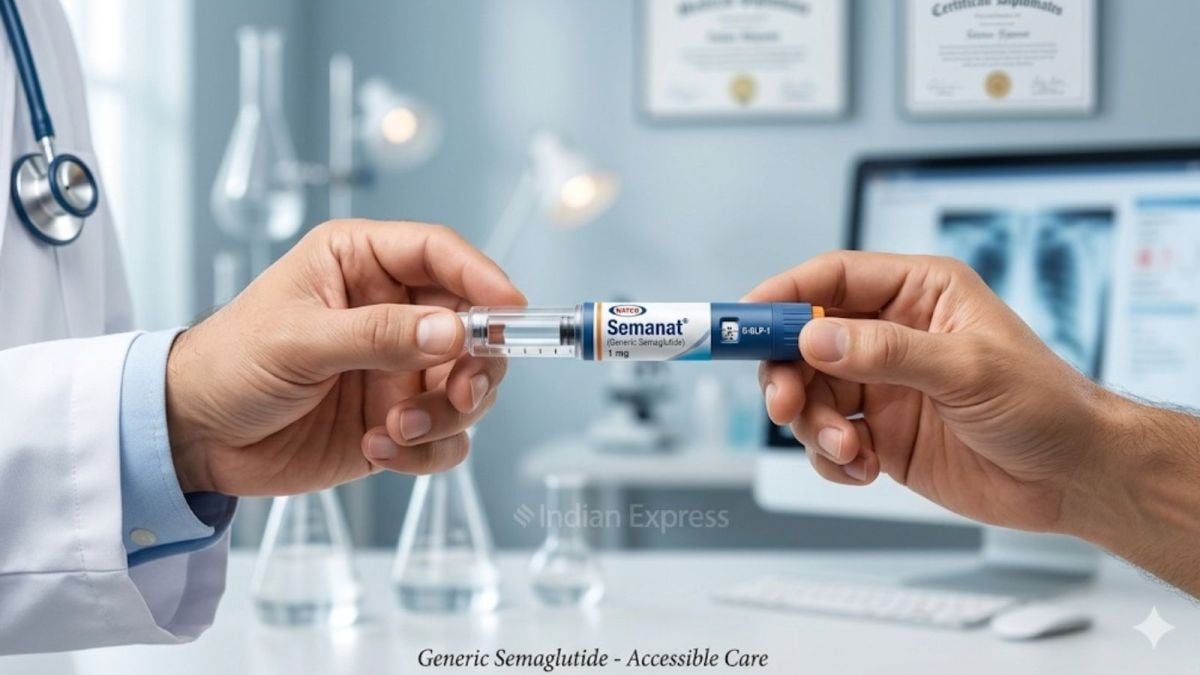
Only 200,000 of India's roughly 250 million people living with obesity have ever taken a GLP-1 receptor agonist—the class of drugs that includes Novo Nordisk's blockbuster Ozempic and Wegovy. On March 21, the day after Novo's last Indian patent expired, more than 40 companies began selling generic semaglutide at prices as low as 1,290 rupees a month—about $15, compared to $100-175 for the branded versions. It is the largest single-day generic launch in Indian pharmaceutical history.

Why it matters

A 90% price drop on the world's most in-demand drug class could reshape how 250 million Indians—and eventually billions globally—treat obesity and diabetes.

Key Indicators

50+
Generic brands launched
More than 50 branded generic semaglutide products entered the Indian market on the first day after patent expiry
~90%
Price reduction
Monthly treatment cost dropped from 8,800-16,400 rupees to as low as 1,290 rupees
200,000
Current Indian GLP-1 patients
Out of approximately 250 million Indians living with obesity and 101 million with diabetes
$62B
Global GLP-1 market (2025)
Projected to more than double by 2030 as generic access expands in emerging markets
~50%
Novo Nordisk stock decline in 2025
Shares suffered their worst year on record as patent cliff and competitive pressure mounted

Interactive

Exploring all sides of a story is often best achieved with Play.

Ever wondered what historical figures would say about today's headlines?

Sign up to generate historical perspectives on this story.

Sign Up

Debate Arena

Two rounds, two personas, one winner. You set the crossfire.

People Involved

Organizations Involved

Timeline

  1. Over 40 companies launch generic semaglutide in India

    Market

    More than 50 branded generic semaglutide products hit the Indian market from companies including Natco Pharma, Sun Pharma, Dr. Reddy's, and Zydus Lifesciences. Prices fall as low as 1,290 rupees per month—a 90% reduction from branded versions.

  2. Formulation patent expires; Novo secures Wegovy HD approval

    Patent

    Indian Patent No. 262697 expires, removing the last legal barrier to generic semaglutide in India. On the same day, Novo Nordisk receives FDA approval for Wegovy HD (7.2 milligrams)—a next-generation dose that generics cannot replicate.

  3. WHO issues first global guideline on GLP-1s for obesity

    Policy

    WHO recommends semaglutide, liraglutide, and tirzepatide for treating obesity as part of comprehensive care—its first-ever guideline endorsing pharmaceutical obesity treatment.

  4. Novo Nordisk cuts Wegovy prices 37% in India

    Market

    Pre-emptive price reduction ahead of patent expiry, lowering Wegovy from roughly 16,400 to 10,850 rupees per month. Analysts view it as an attempt to retain market share against incoming generics.

  5. WHO adds GLP-1 drugs to Essential Medicines List

    Policy

    The World Health Organization adds semaglutide, liraglutide, dulaglutide, and tirzepatide to its Essential Medicines List for type 2 diabetes patients with cardiovascular disease, kidney disease, and obesity.

  6. Delhi High Court allows Sun Pharma to export semaglutide

    Legal

    Court rules Sun Pharma may manufacture and export generic semaglutide to markets without patent protection, but blocks domestic Indian sales until the formulation patent expires.

  7. Novo Nordisk's primary semaglutide compound patent expires in India

    Patent

    Indian Patent No. 275964, covering the semaglutide compound itself, expires. A second patent covering formulations and delivery mechanisms (No. 262697) keeps generic launches blocked until March 2026.

  8. Wegovy approved for cardiovascular risk reduction

    Regulatory

    FDA expands Wegovy's label to include cardiovascular risk reduction in adults with obesity and established heart disease, broadening the eligible patient population significantly.

  9. FDA approves Wegovy for weight management

    Regulatory

    Higher-dose semaglutide (2.4 milligrams) approved under the brand Wegovy for chronic weight management, triggering a global demand surge that would outstrip manufacturing capacity.

  10. FDA approves Ozempic for type 2 diabetes

    Regulatory

    The United States Food and Drug Administration approves injectable semaglutide (brand name Ozempic) for type 2 diabetes treatment, launching what would become the world's best-selling drug class.

Scenarios

1

India becomes global manufacturing hub for affordable GLP-1 therapy

Discussed by: Bloomberg, JP Morgan analysts, and WHO access frameworks

Indian manufacturers scale production and begin exporting generic semaglutide to other post-patent markets—China, Brazil, Canada, and dozens of lower-income countries. Prices stabilize between $6 and $50 per month depending on the market. India replicates its role in the HIV antiretroviral revolution, becoming the primary supplier of affordable GLP-1 therapy for the developing world. WHO's pooled procurement framework accelerates distribution.

2

Quality concerns or supply issues slow generic adoption

Discussed by: Novo Nordisk executives, pharmaceutical quality analysts

Semaglutide is a complex peptide requiring sophisticated manufacturing. If any early generic batches show quality issues—inconsistent dosing, cold-chain failures, or adverse events—it could slow adoption and validate Novo Nordisk's strategy of competing on quality rather than price. India's Central Drugs Standard Control Organisation faces pressure to ensure consistent quality across 50-plus manufacturers, and any high-profile safety incident would shift the narrative significantly.

3

Generic competition accelerates Novo Nordisk's pivot to next-generation drugs

Discussed by: Fierce Pharma, CNBC, Eli Lilly investors

Novo Nordisk migrates its high-value patients and physician relationships toward patent-protected products: Wegovy HD, oral semaglutide formulations, and pipeline compounds like CagriSema (a semaglutide-amylin combination). If these next-generation drugs demonstrate meaningfully better outcomes, Novo retains premium market position while generics serve the mass market. This two-tier model—branded innovation for wealthy markets, generics for everyone else—becomes the template for the GLP-1 era.

4

Indian generic success pressures US and EU pricing before patents expire

Discussed by: I-MAK (Initiative for Medicines, Access & Knowledge), US Congressional critics, health policy researchers

Real-world evidence from millions of Indian generic semaglutide patients—demonstrating equivalent efficacy at 90% lower cost—intensifies political pressure on US and EU pricing. The Inflation Reduction Act's drug pricing negotiations, combined with the visible price gap, could push Novo Nordisk to preemptively lower prices in wealthy markets before US patents expire around 2032. Compounding pharmacies may also use Indian pricing data to argue for continued access to compounded semaglutide.

5

Regulatory crackdown on substandard generics triggers market consolidation

Discussed by: India's Central Drugs Standard Control Organisation (CDSCO), pharmaceutical quality experts, and health ministry officials

Within weeks of the March 21 launch, India's drug regulator begins inspecting manufacturing facilities of the 50+ generic semaglutide producers. If inspections reveal quality lapses—improper cold-chain storage, inconsistent peptide purity, or labeling violations—CDSCO could suspend licenses or mandate recalls. A high-profile quality failure could vindicate Novo Nordisk's quality-focused strategy and trigger consolidation, with only 10-15 of the largest, best-capitalized manufacturers surviving regulatory scrutiny. This would paradoxically reduce competition and allow remaining players to raise prices.

Historical Context

Indian generic HIV antiretrovirals (2001)

February 2001 - 2008

What Happened

Cipla, an Indian pharmaceutical company, offered a triple-combination antiretroviral therapy for less than $1 per day—compared to the roughly $15,000 per year charged by Western manufacturers. Cipla's founder, Yusuf Hamied, announced the price at a European Commission conference, triggering a global access revolution. By 2008, Indian-manufactured generic antiretrovirals supplied 87% of donor-funded purchases in developing countries, reaching 96 nations.

Outcome

Short Term

Drug prices in Africa fell to roughly $200 per patient per year within four years. Millions of people who would have died gained access to life-saving treatment.

Long Term

India cemented its role as the 'pharmacy of the world' for generic medicines. The episode shaped global norms around compulsory licensing, voluntary licensing agreements, and the balance between patent protection and public health access.

Why It's Relevant Today

India's generic semaglutide launch follows the same structural pattern: a life-changing drug priced beyond the reach of most patients in developing countries, followed by an explosion of Indian generic competition that drops prices by 90% or more. The question is whether GLP-1 generics will replicate the antiretroviral model's global reach.

Gilead's sofosbuvir and Indian generic hepatitis C treatment (2014-2016)

September 2014 - May 2016

What Happened

Gilead Sciences launched sofosbuvir (Sovaldi), a cure for hepatitis C, at $84,000 for a 12-week course in the United States—$1,000 per pill. Under global pressure, Gilead signed voluntary licensing agreements with seven Indian manufacturers covering 91 countries. The Indian Patent Office initially rejected Gilead's patent after challenges from access advocates, though it later reversed course. Indian generics ultimately brought the price down to roughly $4 per pill.

Outcome

Short Term

Generic sofosbuvir became available in India at roughly $900 for a full cure, compared to $84,000 in the US. Several countries launched mass hepatitis C elimination programs using Indian generics.

Long Term

The episode demonstrated both the power and limits of voluntary licensing—73 million hepatitis C patients lived in countries excluded from Gilead's license. It established a precedent for tiered global pricing of breakthrough drugs, with Indian generics serving low- and middle-income markets while wealthy countries paid dramatically more.

Why It's Relevant Today

Semaglutide's trajectory mirrors sofosbuvir's: a breakthrough drug with extraordinary demand, an Indian patent cliff that slashes prices by 90%+, and a resulting two-tier global market. The key difference is scale—obesity and diabetes affect far more people than hepatitis C, making the access stakes even larger.

India's compulsory license for Bayer's sorafenib (2012)

March 2012

What Happened

India's Controller General of Patents issued the country's first-ever compulsory license, allowing Natco Pharma to manufacture generic versions of Bayer's cancer drug sorafenib (Nexavar). Bayer had priced sorafenib at roughly 280,000 rupees per month; Natco offered it for 8,800 rupees. The decision cited Bayer's failure to make the drug reasonably affordable or available in adequate quantities.

Outcome

Short Term

Natco began selling generic sorafenib at about 3% of Bayer's price. Bayer's legal appeals were rejected by Indian courts.

Long Term

Although India has not issued another compulsory license since, the precedent established that Indian authorities are willing to use TRIPS-compliant flexibilities for public health. The mere threat of compulsory licensing gives Indian negotiators leverage in access discussions with multinational pharmaceutical companies.

Why It's Relevant Today

Natco Pharma—the same company that received India's only compulsory license—is now the first mover in generic semaglutide, launching at the lowest price point. The company's history of challenging pharmaceutical monopolies makes it a bellwether for how aggressively Indian generics will compete in the GLP-1 market.

Sources

(15)