



Pull to refresh
Logo
Gold becomes America's top export for the first time in decades

Gold becomes America's top export for the first time in decades

Money Moves

Central banks, led by China, are turning dollar reserves into gold and reshaping US trade

Today: Numismatic News documents gold's sustained top-export status

Overview

Updated 1 hour ago

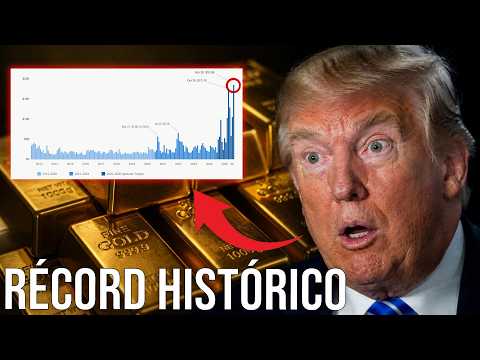
Gold became America's top export in October 2025, a position it had never held in at least two decades of Census records. It has topped the export charts in most months since, including a record $17.88 billion month in February 2026.

The surge reflects foreign central banks, especially China's, converting dollar reserves into bullion. The trade has narrowed the US deficit on paper, but government statisticians strip gold out of GDP because it is an asset transfer, not production.

Why it matters

Foreign central banks trading dollars for gold could raise US borrowing costs and weaken the dollar's reserve status.

Questions about this story

Free account needed to ask — your question is kept and asked for you right after sign-up. Answers are public.

No questions yet — be the first to ask.

Key Indicators

$17.88B
Record monthly US gold exports
February 2026 was the highest monthly gold export total in at least two decades of records.
$83.5B
US gold exports in 2025
Full-year 2025 exports made gold the fourth most exported US product across 1,231 categories.
3 of 5
Months gold was the top US export
October, November, and February were the months gold ranked No. 1 in the five-month span from October 2025 to February 2026.
$693.3B
China's US Treasury holdings, Feb 2026
Down from $1.096 trillion in April 2021 as the central bank shifted reserve holdings into gold.

Voices

Curated perspectives — historical figures and your fellow readers.

Ever wondered what historical figures would say about today's headlines?

Sign up to generate historical perspectives on this story.

People Involved

Organizations Involved

Timeline

April 2021 October 2026

11 events Latest: Today Showing 8 of 11
Tap a bar to jump to that date
  1. Numismatic News documents gold's sustained top-export status

    Today Reporting

    Numismatic News reports gold has topped all other US export categories almost every month since October 2025, tracing the trend to central bank reserve diversification.

  2. China's bullion strategy reshapes trade flows

    Analysis

    BusinessToday links elevated US gold exports to China's reserve diversification, noting exports exceeded $45 billion in late 2025.

  3. Gold exports cool from peak

    Trade data

    July gold exports fall to $5.03 billion, down 43% from June's $8.83 billion, as the arbitrage window narrows.

  4. FXStreet explains trade deficit distortion

    Analysis

    FXStreet details how the BEA strips gold from GDP, calling the narrowing trade deficit an artifact of asset flows.

  5. Gold exports hit record $17.88 billion

    Trade milestone

    February sets the highest monthly gold export total in at least two decades; gold ranks No. 1 for the third time in five months.

  6. Gold stays top export for second month

    Trade milestone

    November gold exports reach $12.45 billion, the second-highest monthly total on record, keeping bullion at No. 1.

  7. Gold hits record high

    Market event

    The precious metal reaches a then-record price, part of a safe-haven buying trend.

  8. Gold becomes No. 1 US export for first time

    Trade milestone

    October gold exports top $10 billion as gold hits a record high; bullion ranks as America's leading export.

  9. Gold tariff exemption compresses futures-spot spread

    Market event

    COMEX-London gold price gap collapses after tariff exemption, shifting bullion flows out of the US.

  10. Full-year gold exports hit $83.5 billion

    Trade data

    US gold exports for 2025 total $83.5 billion, making bullion the fourth most exported US product.

  11. Chinese Treasury holdings peak near $1.096 trillion

    Reserve shift

    China's US Treasury holdings reach their highest level before a multi-year reduction begins.

Scenarios

1

Gold exports normalize as arbitrage window closes

Likely Resolves by Q2 2027

Discussed by: Wells Fargo economists, Investopedia analysis

Much of the surge was driven by a price gap between COMEX futures and London spot prices, widened by tariff uncertainty in spring 2025. As the gap closed and prices stabilized, exports have already cooled from the February peak — July exports were $5.03 billion against June's $8.83 billion. If this continues, gold returns to historical export levels and drops off the top export list.

2

Central bank buying keeps gold exports historically elevated

Possible Resolves by Feb 15, 2027

Discussed by: Numismatic News analysis, Forbes reporting

If China and other central banks continue converting dollar reserves into gold, US gold exports remain well above historical norms even after the price arbitrage closes. Gold would stay in the top five export categories rather than fall back to its pre-2025 range. China's Treasury holdings have already declined from $1.096 trillion to $693 billion since 2021.

3

Dollar-reserve erosion accelerates gold buying

Unlikely Resolves by Jan 31, 2027

Discussed by: Numismatic News speculation, BusinessToday trade analysis

If dollar weakness or geopolitical tensions intensify, central bank gold buying would accelerate beyond current pace. US gold exports would break the February 2026 monthly record or push full-year exports past $100 billion. China's continued Treasury reductions, its promotion of alternative payment systems within BRICS, and its reportedly underreported gold reserves are the momentum behind this scenario.

Historical Context

3 moments from history that rhyme with this story — and how they unfolded.

August 1971

Nixon Shock (August 1971)

President Richard Nixon suspended the dollar's convertibility to gold, ending the Bretton Woods fixed-exchange-rate system. Foreign governments, led by France, had been redeeming dollars for gold, draining US reserves at $35 per ounce.

Then

The dollar devalued, exchange rates floated, and the official gold peg collapsed.

Now

The event ended gold's role as the anchor of the international monetary system, establishing the fiat-dollar era that has run for over half a century.

Why this matters now

Today's central bank gold buying reverses part of the post-1971 trajectory, as foreign governments again move reserves from dollars into gold.

2010 onward

Central banks turn net gold buyers (2010)

Central banks became net gold buyers in 2010 for the first time in two decades, after the 2008 financial crisis shook confidence in fiat currencies and US debt. The People's Bank of China and Russia were among the largest purchasers, buying hundreds of tonnes annually.

Then

Gold surged from under $1,000 per ounce in 2009 to records above $1,900 by September 2011.

Now

Central banks have been net buyers every year since, with annual purchases accelerating to record levels in 2022-2023.

Why this matters now

The current US export surge is an acceleration of this trend, with central bank diversification now large enough to show up in headline trade statistics.

1979-1980

Gold's 1979-1980 surge

Gold climbed from about $200 per ounce in 1979 to over $800 in January 1980 as double-digit inflation, oil shocks, and the Iran hostage crisis drove investors into the metal.

Then

The metal peaked near $850 in January 1980, then entered a two-decade bear market.

Now

The episode showed how monetary and geopolitical uncertainty can trigger rapid gold demand. Gold did not exceed $850 again until 2008.

Why this matters now

Gold is coming off its best year since 1979 per Forbes, and the current surge shares the earlier period's mix of monetary and geopolitical uncertainty — but today's buyers are central banks, not retail inflation hedgers.

Sources

(10)