

Pull to refresh
Logo
Google to publish solo Android developers' addresses and phone numbers worldwide

Google to publish solo Android developers' addresses and phone numbers worldwide

Rule Changes

Traders must declare by February 1, 2027; contact details go public on March 1, and Google will not accept a PO box.

Overview

Updated 1 hour ago

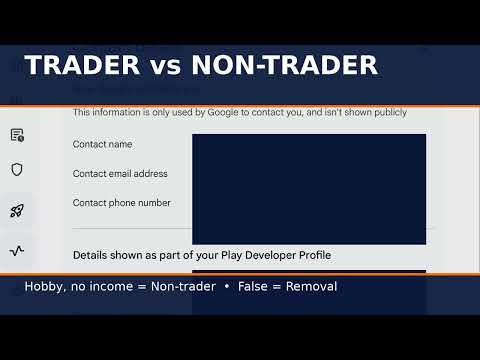
Anyone who sells an Android app, runs ads in one, or takes subscriptions has until February 1, 2027 to declare themselves a "trader" in Google Play Console. From March 1, Google will display that developer's phone number and address to users everywhere in the world, not only in Europe.

The trigger is European consumer law: the Digital Services Act requires platforms to verify who traders are and show their contact details. Google is applying the rule globally and will not accept a PO box, so a solo developer with no office has to publish a home address or pay for a business one.

Why it matters

Selling an app from a spare room now comes with a public phone number and street address attached.

Questions about this story

Free account needed to ask — your question is kept and asked for you right after sign-up. Answers are public.

No questions yet — be the first to ask.

Key Indicators

February 1, 2027
Trader declaration deadline
Every active developer account must declare trader or non-trader status by this date.
March 1, 2027
Date contact details go public
From this date, individual traders' phone numbers and addresses appear on Play Store listings.
0
PO boxes Google accepts
The address must match the physical address in the developer's Google payments profile.
27
EU states where Apple limits disclosure
Apple shows trader contact details only to EU users and accepts verified PO boxes.

Voices

Curated perspectives — historical figures and your fellow readers.

Sign up to generate historical perspectives on this story.

People Involved

Organizations Involved

Timeline

February 2024 March 2027

6 events Latest: Yesterday
Tap a bar to jump to that date
  1. Contact details go public on Play Store listings

    Upcoming Policy

    Individual traders' phone numbers and addresses become visible to users in every country.

  2. Trader declaration deadline

    Upcoming Deadline

    Undeclared accounts risk blocked updates and removal from the Play Store worldwide.

  3. Global scope and PO box ban draw objections

    Latest Reaction

    Developers object that the rule reaches outside Europe and leaves no address option but a home.

  4. Independent developers weigh renting offices

    Reaction

    Korean developers tell The Elec they may rent workspace to avoid publishing home addresses.

  5. Google announces trader declaration in Play Console

    Policy

    All active developer accounts must declare whether they are traders under EU and UK law.

  6. EU trader disclosure rules take full effect

    Regulation

    The Digital Services Act requires platforms to verify traders and show consumers their contact details.

Scenarios

1

Google narrows disclosure to Europe and accepts PO boxes

Possible Resolves by Mar 1, 2027

Discussed by: Developers quoted by The Verge and The Elec, who cite Apple's EU-only approach as the alternative

Under sustained complaint, Google aligns with Apple: trader contact details shown only to users in the European Economic Area and the UK, with verified PO boxes allowed as the public address. A Korean privacy inquiry or an EU regulator's question could supply the push. The rule would stay on the books while its reach shrinks.

2

Addresses and phone numbers appear worldwide on schedule

Likely Resolves by Mar 1, 2027

Discussed by: Google's own Play Console help documentation, which states the March 1, 2027 display date

Developers who rely on ad revenue or subscriptions declare as traders to keep their apps live, and their verified phone numbers and street addresses start showing on listings everywhere. Some use registered agents or rented offices; others publish a home address. Nobody outside Google has to approve the change for it to happen.

3

Korean privacy regulator opens an inquiry into the global rollout

Unlikely Resolves by Q2 2027

Discussed by: The Elec, which reports critics arguing the policy conflicts with South Korea's data minimization principle

South Korea's Personal Information Protection Act requires companies to collect and expose only the personal data needed for a stated purpose. Exposing a developer's home address to users worldwide, when the EU rule only covers European consumers, gives a regulator a concrete complaint to act on. An inquiry would not stop the policy but could force a Korean-specific carve-out.

Historical Context

2 moments from history that rhyme with this story — and how they unfolded.

2018

WHOIS redaction under European data law (2018)

Domain registrars had long published registrant names, phone numbers and street addresses in the public WHOIS directory. When Europe's General Data Protection Regulation took effect, ICANN adopted a temporary specification requiring registrars to redact that personal data. Security researchers and law enforcement said they lost a key tool for tracking bad actors.

Then

Public WHOIS records went dark for most registrants within weeks.

Now

Access became tiered and credentialed. The fully public directory never came back.

Why this matters now

The same collision: transparency that helps consumers and investigators versus the privacy of people running small online operations from home.

February 2024

Digital Services Act trader traceability (2024)

The Digital Services Act began requiring platforms to verify the identity and contact details of traders selling to EU consumers and to disclose relevant information. Platforms complied in different ways: Apple shows trader contact details only inside the EU and allows verified PO boxes; Google is applying its version globally with no PO box option.

Then

App stores added trader labels and contact blocks to listings for European users.

Now

The same legal duty produced visibly different disclosure regimes across platforms.

Why this matters now

Google's global reach and PO box ban are policy choices on top of the EU requirement, not the requirement itself.

Sources

(7)