

Pull to refresh
Logo
Indonesia and China sign four strategic partnership agreements

Indonesia and China sign four strategic partnership agreements

Money Moves

A $71.8 billion package covers 10 smart cities, renminbi infrastructure financing, coal-to-ethanol fuel and appliance manufacturing.

Overview

Updated 20 minutes ago

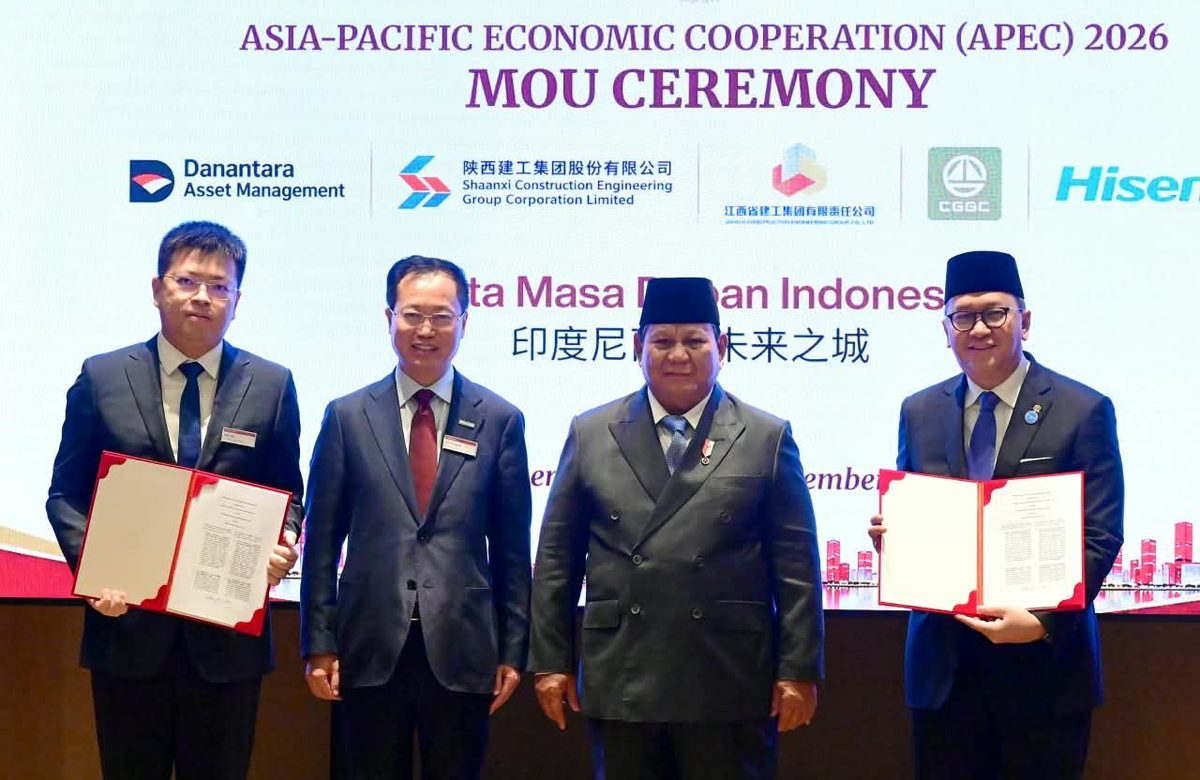
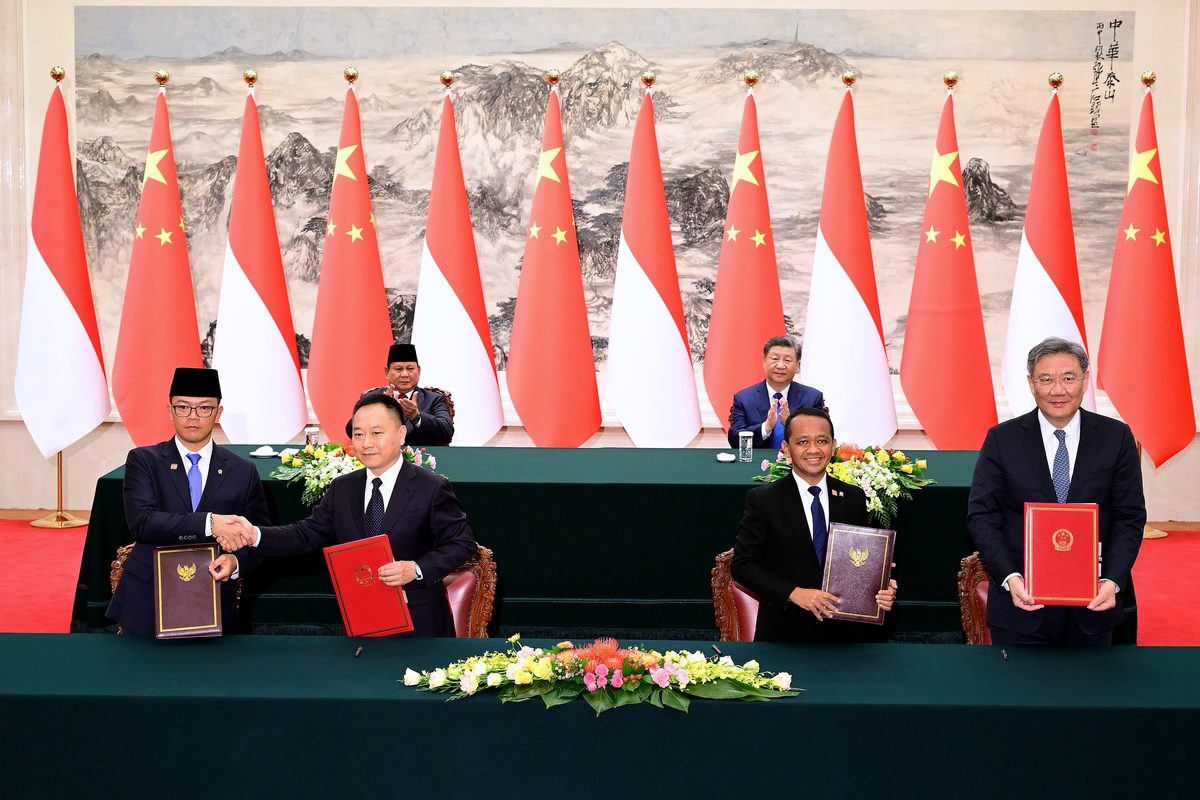
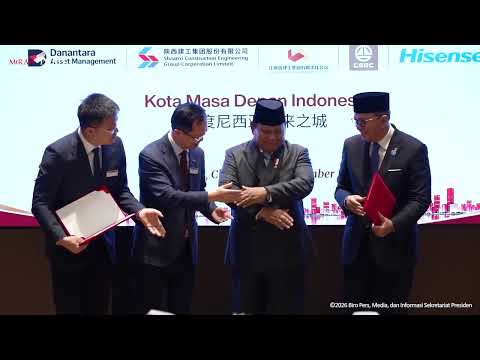
President Prabowo Subianto watched Indonesian and Chinese executives sign four partnership agreements in Shenzhen on November 18. The announced value was $71.8 billion, led by a plan for 10 smart cities with about 1.5 million homes for roughly 3 million people.

The agreements are memoranda of understanding, not binding contracts. Up to $10 billion of the total may be counted twice, because the proposed renminbi financing can also fund the smart city program. Indonesia ran a $21.2 billion trade deficit with China in the first nine months of 2026.

Why it matters

The package would fund housing for 3 million people and domestic fuel production, if the non-binding commitments turn into construction.

Questions about this story

Free account needed to ask — your question is kept and asked for you right after sign-up. Answers are public.

No questions yet — be the first to ask.

Key Indicators

$71.8B
Total value of four partnership agreements
Announced at APEC Economic Leaders' Week in Shenzhen on November 18, 2026.
$50B
Smart city program
Ten cities at an indicative $5 billion each, with about 1.5 million housing units.
$10B
Renminbi infrastructure financing
Proposed as $5 billion in panda bonds and $5 billion in dim sum bonds.
$21.2B
Indonesia-China trade deficit, January-September 2026
Imports of $76.67 billion against exports of $55.47 billion.
10
Smart cities planned
The consortium expects to deliver utilities and digital infrastructure over three to five years, subject to procurement.
$86.8B
Total including 35 business forum MoUs
Adds $15 billion in business-to-business agreements signed at the Indonesia-China Business Forum on November 20.

Voices

Curated perspectives — historical figures and your fellow readers.

Sign up to generate historical perspectives on this story.

People Involved

Organizations Involved

Timeline

3 events Latest: Yesterday
  1. 35 business MoUs add $15 billion

    Latest Agreement

    The Indonesia-China Business Forum in Shenzhen produces 35 agreements worth $15 billion, bringing the visit total to $86.8 billion.

  2. Four partnerships signed in Shenzhen

    Agreement

    Prabowo witnesses $71.8 billion in MoUs covering smart cities, renminbi financing, coal-to-ethanol and appliance manufacturing.

  3. Chinese lenders discuss $10 billion renminbi framework

    Financing

    Three Chinese financial institutions and Danantara discuss up to $10 billion in panda and dim sum bonds for Indonesian infrastructure.

Scenarios

1

Smart city consortium breaks ground on first of 10 cities

Possible Resolves by End of 2027

Discussed by: Indonesian government statements and the Media OutReach announcement

The Shaanxi-led consortium expects to deliver public amenities, utilities and digital infrastructure over three to five years, subject to procurement. The first visible sign would be site preparation or a construction contract for one of the 10 planned cities. KMDI and Danantara would need to complete procurement before any work begins.

2

Danantara issues panda or dim sum bonds

Possible Resolves by Q2 2027

Discussed by: The three Chinese financial institutions in their November 17 discussions

The proposed framework calls for up to $5 billion in panda bonds in mainland China and $5 billion in dim sum bonds in Hong Kong. The discussions were non-binding. An actual issuance would show that the financing side of the package is moving from proposal to capital markets.

3

Deals remain non-binding through 2027

Possible Resolves by End of 2027

Discussed by: Kompas and Jakarta Globe reporting on the gap between MoUs and realized investment

All four agreements are memoranda of understanding. Indonesian officials have not specified how much is new investment, how much extends existing cooperation, or when projects will start. If no binding contracts follow, the $71.8 billion remains an announcement rather than capital deployed.

4

Coal-to-ethanol plant reaches final investment decision

Uncertain Resolves by End of 2027

Discussed by: BPE and BIM statements

The coal-to-ethanol MoU has an indicative value of $1.8 billion, or about $2 billion as described in one announcement. A final investment decision would convert it into a construction project. BPE holds patents on coal-based ethanol technology developed with the Dalian Institute of Chemical Physics.

Historical Context

2 moments from history that rhyme with this story — and how they unfolded.

2016-2023

Jakarta-Bandung high-speed railway (2023)

China won the contract to build Indonesia's first high-speed rail line, beating Japan. The 142-kilometer line connecting Jakarta and Bandung opened in October 2023, years behind schedule and over budget.

Then

The project became a showcase for Chinese infrastructure investment in Southeast Asia.

Now

It also demonstrated the cost and schedule risks of large China-backed projects in Indonesia.

Why this matters now

The new smart city and energy deals carry the same structure: Chinese engineering and financing for Indonesian priorities, with execution risk to follow.

2020-present

Indonesia's nickel downstreaming policy (2020-present)

Indonesia banned exports of raw nickel ore in January 2020 to force processing at home. Chinese companies built smelters in Sulawesi and Halmahera, and Indonesia became the world's largest nickel producer.

Then

Nickel exports shifted from ore to processed metal, and investment surged.

Now

The policy created environmental and labor controversies and made Indonesia central to the global electric vehicle battery supply chain.

Why this matters now

The coal-to-ethanol and mineral-processing elements of the new deals follow the same playbook: use resource wealth to attract Chinese capital for domestic processing.

Sources

(8)