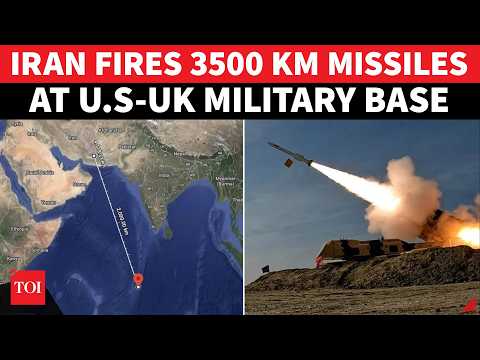
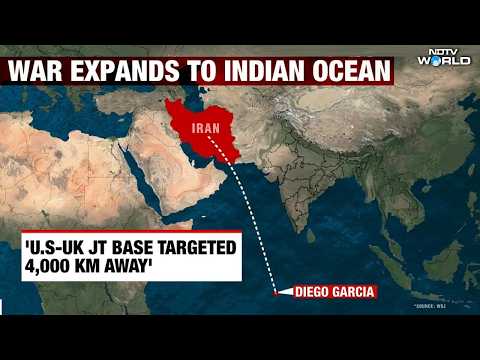
Iran's missile strike on Diego Garcia doubles its demonstrated range, putting Europe within reach
Force in Play
Both missiles failed to hit the remote US-UK base, but the 4,000-kilometer attempt shattered Iran's long-standing claim of a self-imposed 2,000-kilometer limit
Both missiles failed to hit the remote US-UK base, but the 4,000-kilometer attempt shattered Iran's long-standing claim of a self-imposed 2,000-kilometer limit
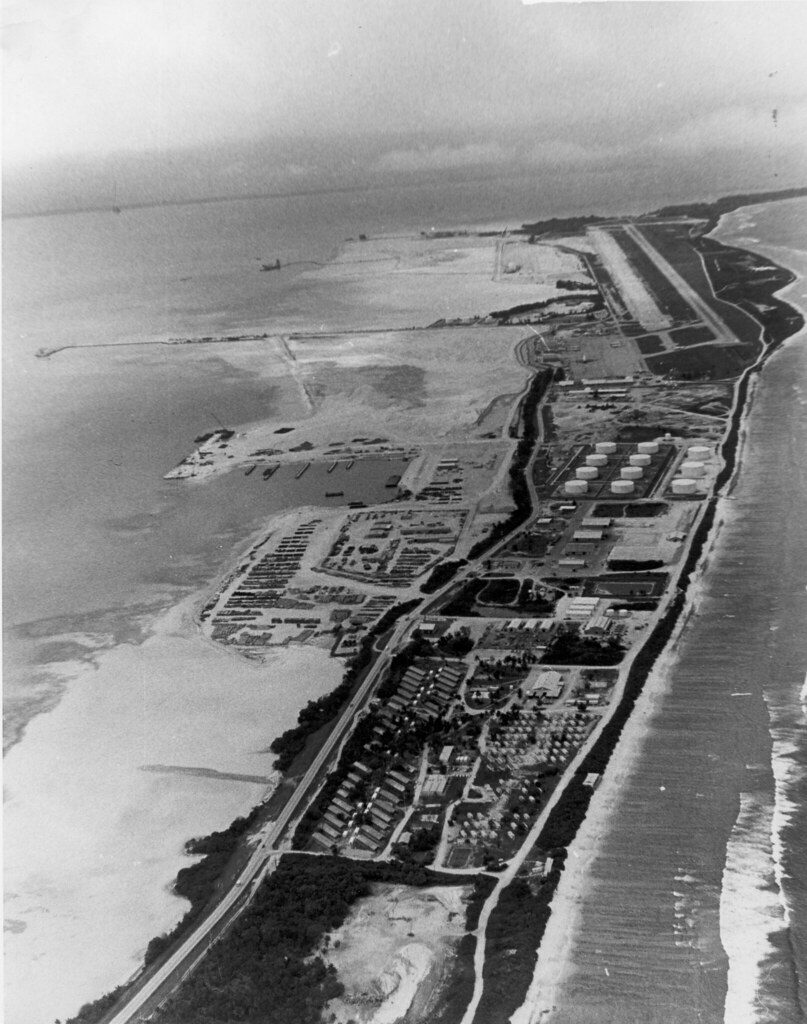
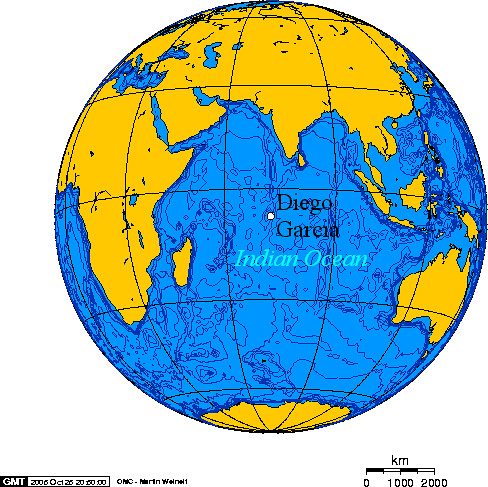
For nearly a decade, Iran insisted it had deliberately capped its ballistic missile range at 2,000 kilometers—enough to hit Israel and American bases in the Middle East but not Europe. On March 21, 2026, Iran fired two missiles 4,000 kilometers at Diego Garcia, a US-UK military base; one failed in flight, another was intercepted by a warship, yet Iran proved its range was double its former claim.
The strike demonstrates Iran has doubled its range. Israel's military identified the weapon as a two-stage intercontinental ballistic missile and warned that Berlin, Paris, and Rome now fall within Iran's reach. Operation True Promise 4, Iran's response to US and Israeli strikes in late February, extended from the Middle East to the Indian Ocean, targeting a base the Pentagon had considered beyond Iran's reach.
Why it matters
If Iran can hit targets 4,000 kilometers away, every European capital except Lisbon is now within its demonstrated strike range.
Questions about this story
Free account needed to ask — your question is kept and asked for you right after sign-up. Answers are public.
No questions yet — be the first to ask.
Key Indicators
4,000 km
Demonstrated missile range
Double Iran's previously claimed maximum of 2,000 kilometers
2
Missiles fired at Diego Garcia
One failed in flight, one intercepted by a US warship — neither hit the base
0
Missiles that reached the target
Both missiles were neutralized before striking the base
~40
European capitals now within range
Nearly every European capital except Lisbon falls within 4,000 kilometers of Iran
12 events
Latest: March 22nd, 2026 · 7 months ago
Showing 8 of 12
JK to step
Tap a bar to jump to that date
Jump to
March 2026
UK officially confirms the Diego Garcia attack
LatestStatement
UK minister Steve Reed publicly confirmed that Iran fired two missiles at Diego Garcia. Israel's IDF Chief of Staff identified the weapons as two-stage intercontinental ballistic missiles and warned that European capitals are now within Iran's demonstrated strike range.
UK approves US use of British bases for Hormuz strikes
Policy
The UK government authorized US forces to use British military facilities, including Royal Air Force Fairford in England and Diego Garcia, for operations to 'degrade missile sites and capabilities being used to attack ships in the Strait of Hormuz.'
Iran fires two missiles at Diego Garcia, 4,000 km away
Military
Iran launched two ballistic missiles at the joint US-UK base on Diego Garcia in the Indian Ocean. One missile failed in flight; a US warship intercepted the other with an SM-3 missile. Neither struck the base. The attack doubled Iran's demonstrated operational missile range.
Iran's retaliatory campaign reaches 500 missiles and 2,000 drones
Military
By this date, Iran had fired over 500 ballistic and naval missiles and nearly 2,000 drones at Israel, US bases across the Middle East, and Gulf states hosting American forces. The IRGC also effectively closed the Strait of Hormuz to Western-aligned shipping.
February 2026
US and Israel launch Operation Epic Fury against Iran
Military
US and Israeli forces launched coordinated strikes on Iran aimed at regime change and destruction of nuclear and missile infrastructure. The opening salvo killed Supreme Leader Ali Khamenei and senior military officials.
Iran's foreign minister reaffirms 2,000-kilometer range limit
Statement
Foreign Minister Abbas Araghchi stated publicly that Iran 'intentionally kept the range of our missiles below 2,000 km' and had no hostility toward the United States or Europe. One month later, Iran fired missiles at a target twice that distance.
September 2025
UN sanctions reimposed on Iran via snapback mechanism
Diplomatic
France, Germany, and the UK triggered the Joint Comprehensive Plan of Action (JCPOA) snapback mechanism, formally reimposing UN Security Council sanctions on Iran's ballistic missile and nuclear programs.
July 2025
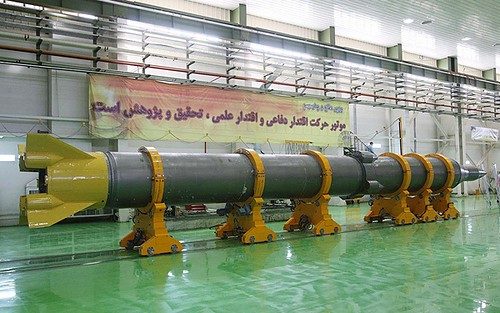
Iran unveils Khorramshahr-5 with claimed 12,000-kilometer range
Capability
Iran publicly revealed the Khorramshahr-5 missile, claiming it could reach targets 12,000 kilometers away — its most explicit declaration of intercontinental ambitions. No independent verification of the claimed range was conducted.
June 2025
Israel launches surprise strikes on Iran; Twelve-Day War begins
Military
Israel struck Iranian military and nuclear facilities, killing military leaders and nuclear scientists. Iran retaliated with over 550 ballistic missiles and 1,000 drones. The US bombed three Iranian nuclear sites on June 22. A ceasefire followed on June 24.
October 2024
Iran fires 200 ballistic missiles at Israel
Military
Iran launched approximately 200 ballistic missiles in two waves, retaliating for Israel's assassinations of Hamas leader Ismail Haniyeh, Hezbollah leader Hassan Nasrallah, and IRGC commander Abbas Nilforoushan. Again, all launches stayed within the 2,000-kilometer range.
April 2024
Iran launches first direct attack on Israel
Military
Iran fired over 170 drones, 30 cruise missiles, and 120 ballistic missiles at Israel in retaliation for the Israeli strike on Iran's consulate in Damascus. Most projectiles were intercepted. All weapons remained within the declared 2,000-kilometer range envelope.
October 2017
Iran declares 2,000-kilometer missile range cap
Policy
IRGC Commander-in-Chief Mohammad Ali Jafari announced that Supreme Leader Khamenei had imposed a 2,000-kilometer limit on Iran's ballistic missile range, saying the range was 'enough' to cover US forces and interests in the region.
Scenarios
1
Iran demonstrates verified ICBM capability, triggering European missile defense buildup
Possible
Discussed by: Defense Express, European defense analysts, NATO officials
If Iran's next missile test or strike exceeds 5,500 kilometers — the formal intercontinental threshold — European governments would face immediate pressure to invest in continental missile defense systems. NATO has discussed expanding its ballistic missile defense architecture since the Diego Garcia strike. This scenario becomes more likely if the war continues and Iran deploys the Khorramshahr-5 or a similar system operationally.
2
US-Israeli strikes destroy Iran's long-range missile infrastructure before further demonstrations
Possible
Discussed by: Israeli military leadership, US defense officials, Bloomberg analysts
IDF Chief of Staff Zamir described the campaign as 'halfway' complete, suggesting continued strikes on Iran's missile production and launch facilities. If Operation Epic Fury successfully degrades Iran's missile infrastructure — particularly its longer-range systems — the Diego Garcia strike may represent the high-water mark of Iran's demonstrated range rather than the beginning of an intercontinental capability. The effectiveness of this outcome depends on whether Iran has dispersed or hardened its missile production sites.
Discussed by: Western missile defense analysts, Gulf News, Arms Control Association
Neither missile that targeted Diego Garcia reached its target — one failed mechanically, the other was intercepted. Western analysts note that ranges beyond 5,000 kilometers typically require years of iterative testing, including successful multi-stage separation and atmospheric re-entry. If Iran's extended-range systems remain unreliable, the strategic threat to Europe may be more theoretical than operational, though the political impact of even a failed demonstration has already shifted the debate.
4
Ceasefire or regime change halts Iran's missile program
Unlikely
Discussed by: Chatham House, UK House of Commons Library, diplomatic analysts
If the 2026 Iran war concludes through negotiated ceasefire or internal regime change — particularly given the massive anti-government protests in late 2025 — a successor government might agree to verifiable missile range limits as part of a broader peace settlement. The killing of Supreme Leader Khamenei has created a leadership vacuum that could enable such an outcome, though the IRGC under Ahmad Vahidi has shown no signs of reducing military operations.
Historical Context
3 moments from history that rhyme with this story — and how they unfolded.
1 of 3
December 2012 - July 2017
North Korea's gradual ICBM reveal (2012-2017)
North Korea used civilian satellite launches — particularly the Unha-3 rocket in December 2012 — to demonstrate multi-stage missile technology while maintaining that its program was peaceful. Intelligence agencies debated for years whether Pyongyang had functional intercontinental missiles. In July 2017, North Korea openly tested the Hwasong-14, confirming it could reach the continental United States.
Then
The confirmed ICBM capability forced the US to accelerate missile defense investments and prompted emergency UN Security Council sessions.
Now
North Korea achieved a credible nuclear deterrent against the United States, fundamentally altering the strategic calculus on the Korean Peninsula and making military action far more costly to contemplate.
Why this matters now
Iran appears to be following a compressed version of the same trajectory — using wartime strikes to demonstrate capabilities it previously denied, rather than conducting formal tests. Like North Korea, each demonstration shifts the political landscape regardless of technical reliability.
2 of 3
January-February 1991
Iraq's extended-range Scud modifications (1991)
During the Gulf War, Saddam Hussein's forces launched modified al-Hussein missiles at Israel and Saudi Arabia. Iraqi engineers had extended the standard Scud's range from roughly 300 kilometers to 650 kilometers by reducing the warhead weight and increasing fuel capacity. Coalition forces and intelligence agencies had underestimated Iraq's ability to modify existing systems.
Then
The attacks forced the US to divert significant military resources to 'Scud hunting' missions and prompted emergency deployment of Patriot missile batteries to Israel to prevent Israeli retaliation that could fracture the coalition.
Now
The episode became a case study in how adversaries can extend missile range beyond assessed capabilities through relatively simple modifications, influencing missile proliferation assessments for decades.
Why this matters now
Iran's Diego Garcia strike echoes Iraq's approach — modifying existing missile platforms (likely the Khorramshahr family) to reach targets that adversaries believed were safely out of range. Both cases demonstrate that declared or assessed range limits can be exceeded through engineering tradeoffs.
3 of 3
1977-1987
Soviet SS-20 deployment and the Euromissile Crisis (1977-1987)
The Soviet Union deployed SS-20 intermediate-range ballistic missiles capable of striking Western European capitals with nuclear warheads. The deployment — which could reach targets 5,000 kilometers away — created a political crisis within NATO, as European publics faced the prospect of being within range of a new class of weapons while the US mainland remained protected by geographic distance.
Then
NATO's 1979 'dual-track' decision deployed US Pershing II missiles in Europe while simultaneously pursuing arms control negotiations, sparking massive anti-nuclear protests across Western Europe.
Now
The crisis ultimately produced the 1987 Intermediate-Range Nuclear Forces (INF) Treaty, which eliminated an entire class of nuclear weapons. But the decade-long episode demonstrated how a new missile capability targeting European capitals can fracture allied solidarity.
Why this matters now
Iran's demonstrated ability to reach European capitals creates a structurally similar dilemma: European nations must now weigh missile defense investments and alliance commitments against a threat that previously applied only to Middle Eastern states. The question of whether Europe needs its own missile defense layer — separate from US protection — mirrors the debates of the 1980s.