

Pull to refresh
Logo
ISO adds Class L fire rating for lithium-ion as New York enforces 1 kWh storage rule

ISO adds Class L fire rating for lithium-ion as New York enforces 1 kWh storage rule

Rule Changes

New international fire classification puts lithium-ion in its own category; New York City already requires FDNY approval for storage above 1 kWh, against 70 kWh for lead-acid

Yesterday: Allstate Sprinkler links ISO Class L to NYC threshold

Overview

Updated 1 hour ago

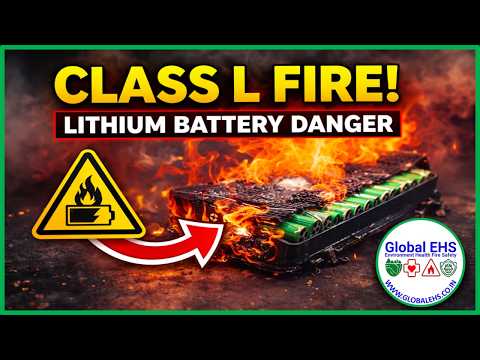
A lithium-ion battery fire no longer counts as an ordinary fire. In January, the International Organization for Standardization (ISO) published a revised fire classification that adds Class L, a dedicated category for lithium-ion cell and battery fires that contain no metallic lithium.

New York City had already moved ahead of the standard. Its amended version of NFPA 855 requires fire department approval for any lithium-ion energy storage system above 1 kilowatt-hour (kWh), a threshold 70 times lower than the 70 kWh allowed for lead-acid. The Bronx contractor Allstate Sprinkler published an analysis in September tying the two developments together.

Why it matters

Lithium-ion now has its own fire class; New York City's 1 kWh threshold puts fire department approval on even small home and business storage systems.

Questions about this story

Free account needed to ask — your question is kept and asked for you right after sign-up. Answers are public.

No questions yet — be the first to ask.

Key Indicators

1 kWh
NYC lithium-ion ESS approval threshold
Energy storage systems above this capacity require FDNY design approval and testing.
70 kWh
NYC lead-acid ESS approval threshold
Lead-acid systems get 70 times more capacity before the same regulatory requirements kick in.
277
FDNY lithium-ion battery fires in 2024
Down from the 110 fires recorded by mid-June 2025 pacing, deaths fell sharply from 18 in 2023 to 6 in 2024.
60%
2023 lithium-ion fires not charging
FDNY analysis found most reviewed fires occurred while batteries were not plugged in, countering a common assumption.

Voices

Curated perspectives — historical figures and your fellow readers.

Ever wondered what historical figures would say about today's headlines?

Sign up to generate historical perspectives on this story.

Organizations Involved

Timeline

2023 September 2026

6 events Latest: Yesterday
Tap a bar to jump to that date
  1. Allstate Sprinkler links ISO Class L to NYC threshold

    Latest Analysis

    The Bronx contractor publishes a study connecting the new fire class to New York's 1 kWh storage rule and two years of FDNY incident data.

  2. ISO publishes Class L fire classification

    Standards

    ISO 3941 third edition adds Class L for lithium-ion cell and battery fires without metallic lithium, citing thermal runaway and re-ignition hazards.

  3. New York state cord labeling rule takes effect

    Regulation

    Charging cords for micromobility devices, limited-use motorcycles, and e-bikes must carry warning tags in English and Spanish.

  4. FDNY tallies 110 battery fires by mid-2025

    Incident Data

    The department counted 110 lithium-ion fires and 25 injured residents year to date, with analysis showing most 2023 fires occurred while not charging.

  5. FDNY records 277 lithium-ion fires, 6 deaths

    Incident Data

    Fires rose to 277 while deaths fell 66% from 18 to 6 across the year.

  6. FDNY records 268 lithium-ion battery fires

    Incident Data

    The department logged 268 fires and 18 deaths across the year, the peak of recorded mortality.

Scenarios

1

NFPA brings Class L into US fire classification

Possible Resolves by End of 2028

Discussed by: Exponent, whose guidance notes NFPA does not recognize the ISO Class L designation

As lithium-ion storage spreads, NFPA faces pressure to adopt Class L into NFPA 10 or related suppression standards. Fire departments and insurers would then specify Class L-rated strategies. Adoption would require a formal code revision cycle, which NFPA typically runs on multi-year schedules.

2

NYC storage compliance wave follows 1 kWh rule

Possible Resolves by Q2 2027

Discussed by: Allstate Sprinkler, which recommends documented hazard assessments and FDNY approval for ESS above the threshold

Property owners with indoor lithium-ion storage above 1 kWh seek FDNY Certificates of Approval, UL 9540 listings, and large-scale fire testing. The rule is already in city law, so the open question is how aggressively FDNY enforces it and how many approvals it issues. Owners who do not comply face FDNY action.

3

Other US cities copy New York's low storage threshold

Possible Resolves by End of 2028

Discussed by: Trade press including Building Design, which notes the shift toward lithium-specific fire rules

Cities and states amend fire and building codes to adopt lithium-ion storage thresholds well below lead-acid, following New York's 70-fold gap. The ISO Class L designation gives jurisdictions a classification hook on which to base such rules, and FDNY's incident data provides the justification.

Historical Context

3 moments from history that rhyme with this story — and how they unfolded.

2019

NFPA 855 first edition (2019)

NFPA published the first edition of NFPA 855, the Standard for the Installation of Stationary Energy Storage Systems, setting spacing, ventilation, and suppression requirements for battery storage. It became the framework most US jurisdictions adopted for ESS.

Then

Jurisdictions adopted NFPA 855 as the baseline for battery storage approvals, giving fire departments a consistent review standard.

Now

New York City amended its adoption of NFPA 855 to set the 1 kWh lithium-ion threshold, well below the standard's typical capacity triggers.

Why this matters now

NFPA 855 is the exact framework New York City modified to impose its strict lithium-ion threshold.

February-March 2022

Felicity Ace cargo ship fire (2022)

The car carrier Felicity Ace caught fire in the Atlantic carrying roughly 4,000 vehicles, including electric cars, and burned for days before sinking on March 1. Salvage crews could not board for weeks due to re-ignition and heat.

Then

The ship sank with its cargo, and insurers faced billions in losses from the vehicles and vessel.

Now

The incident pushed shipping and fire authorities to treat lithium-ion battery fires as a re-ignition risk requiring specialized suppression and extended monitoring.

Why this matters now

It showed the same hazards ISO cites in Class L: rapid growth, vented gases, cascading thermal runaway, and re-ignition after apparent control.

Established classification

NFPA Class D for combustible metals

Fire classification systems long ago added a dedicated class for combustible metals like magnesium, titanium, and sodium, which burn at extreme temperatures and react violently with water. These fires require dry powder extinguishing agents, not conventional water or foam.

Then

Suppression equipment was rated and labeled specifically for metal fires, and responders were trained to avoid water on these hazards.

Now

Class D became a standing precedent that certain chemical hazards need their own fire class and dedicated suppression methods.

Why this matters now

Class L follows the same logic: lithium-ion fires resist conventional suppression, so regulators now treat them as a distinct hazard rather than an ordinary combustible.

Sources

(6)