



Pull to refresh
Logo
Daily Brief
Following
Why
America's 100-fold victory over lead

America's 100-fold victory over lead

Rule Changes
By Newzino Staff |

How Environmental Regulation Reversed a Century of Toxic Exposure

February 2nd, 2026: Study Documents 100-Fold Lead Decline

Overview

For most of the twentieth century, Americans inhaled roughly two pounds of lead per person annually from car exhaust alone. A new University of Utah study analyzing century-old hair samples confirms the scale of this unintentional mass poisoning—and the dramatic reversal that followed. Lead concentrations in human hair dropped from 100 parts per million before the 1970s to less than 1 part per million today, a 100-fold decline documented through specimens preserved in family scrapbooks.

The finding, published February 2, 2026 in the Proceedings of the National Academy of Sciences, provides the clearest evidence yet that the regulatory framework built after the Environmental Protection Agency's 1970 creation fundamentally changed Americans' chemical exposure. The cascade of bans on leaded gasoline, lead paint, and lead pipes has prevented an estimated 10.4 million lost IQ points annually among children—a generational transformation invisible to those living through it, now measured in the hair of grandparents and great-grandparents.

Key Indicators

100×
Decline in hair lead levels
From ~100 parts per million pre-1970 to less than 1 ppm in 2024
99%
Reduction in airborne lead
Lead air pollution decreased 99% between 1980 and 2018
93.6%
Blood lead level decline
Average blood lead dropped from 12.8 to 0.82 µg/dL (1976-2016)
10.4M
IQ points saved annually
Estimated cognitive damage prevented by 1990 alone through Clean Air Act

Interactive

Exploring all sides of a story is often best achieved with Play.

Mark Twain

Mark Twain

(1835-1910) · Gilded Age · wit

Fictional AI pastiche — not real quote.

"I see we've finally quit poisoning ourselves with quite the same enthusiasm we once showed for the enterprise. Two pounds of lead per citizen per annum—why, that's nearly the dedication we reserve for Sunday sermons and political promises, though considerably more toxic than either, and unlike those, it appears we've actually done something about it."

Ambrose Bierce

Ambrose Bierce

(1842-1914) · Gilded Age · wit

Fictional AI pastiche — not real quote.

"PROGRESS, n. The gradual replacement of one poison with another, celebrated as enlightenment by those who inhaled the first and taxation by those who must pay for its removal. That it took a century to cease deliberately aerosolizing a neurotoxin suggests our species learns at precisely the pace required to appear intentional rather than accidental."

Ever wondered what historical figures would say about today's headlines?

Sign up to generate historical perspectives on this story.

Sign Up

Debate Arena

Two rounds, two personas, one winner. You set the crossfire.

People Involved

Ken Smith
Ken Smith
Distinguished Professor Emeritus, University of Utah (Lead researcher on hair analysis study)
Thure Cerling
Thure Cerling
Distinguished Professor of Geology and Biology, University of Utah (Lead researcher on hair analysis study)
Clair Cameron Patterson
Geochemist, California Institute of Technology (1922–1995) (Deceased; foundational researcher)
Thomas Midgley Jr.
Thomas Midgley Jr.
Chemist, General Motors (1889–1944) (Deceased; invented leaded gasoline)

Organizations Involved

U.S. Environmental Protection Agency (EPA)
Federal Agency
Status: Primary enforcement body for lead regulations

The federal agency responsible for setting and enforcing environmental standards including lead exposure limits in air, water, and consumer products.

University of Utah
University of Utah
Research University
Status: Conducted 2026 hair analysis study

Public research university whose scientists documented the 100-fold decline in lead exposure through archived hair sample analysis.

Timeline

  1. Study Documents 100-Fold Lead Decline

    Scientific

    University of Utah researchers publish PNAS study showing lead concentrations in human hair dropped from 100 ppm before regulations to less than 1 ppm in 2024.

  2. EPA Orders Lead Pipes Removed Nationwide

    Regulatory

    EPA issues Lead and Copper Rule Improvements requiring removal of all lead service lines within 10 years and lowering the action level from 15 to 10 parts per billion.

  3. Flint Water Crisis Begins

    Crisis

    Flint, Michigan switches water source to the Flint River without proper corrosion control, causing lead pipes to leach into drinking water and exposing 99,000 residents.

  4. Leaded Gasoline Fully Banned

    Regulatory

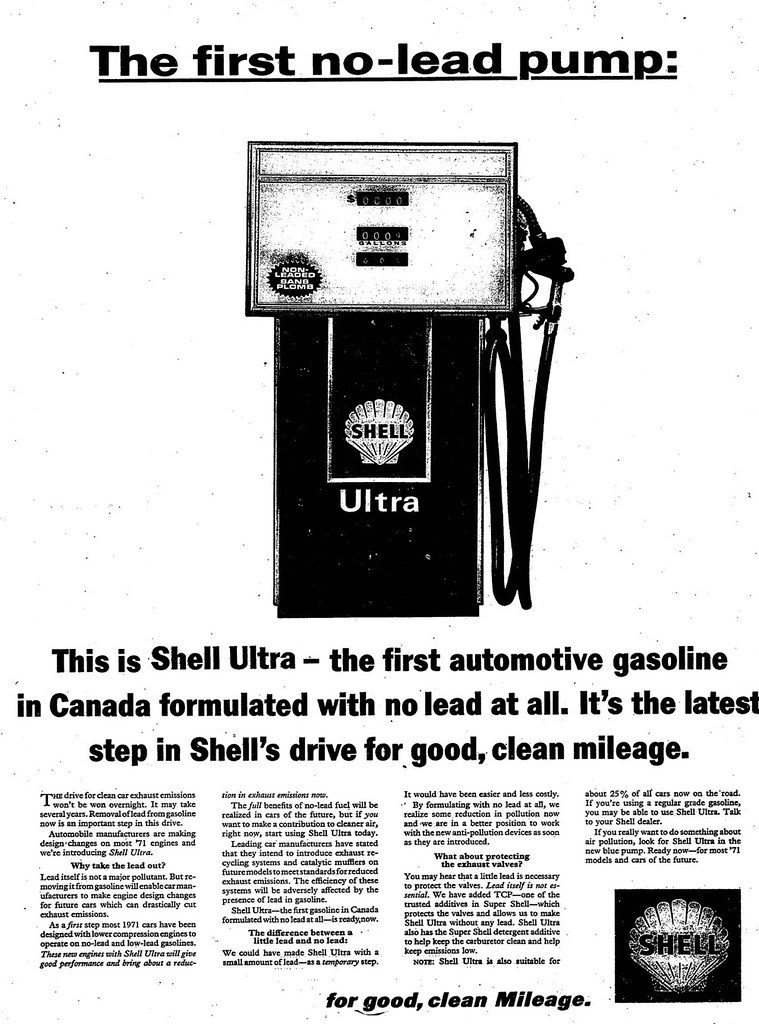
    Complete prohibition on leaded gasoline for on-road vehicles takes effect, ending a 73-year era of lead additives in American fuel.

  5. Lead and Copper Rule Published

    Regulatory

    EPA establishes action levels for lead in drinking water, requiring utilities to monitor and take action when concentrations exceed 15 parts per billion.

  6. Lead in Gasoline Cut 91%

    Regulatory

    EPA mandate reduces lead additive in gasoline by 91% from 1971 levels. Safe Drinking Water Act Amendments ban lead in new plumbing materials.

  7. Consumer Lead Paint Banned

    Regulatory

    Consumer Product Safety Commission bans lead paint in all consumer products including homes, toys, and furniture.

  8. EPA Begins Leaded Gasoline Phasedown

    Regulatory

    EPA issues regulation recognizing leaded gasoline as a public health risk, beginning mandatory phasedown of lead content in fuel.

  9. Congress Restricts Lead Paint in Federal Housing

    Legislative

    Lead-Based Paint Poisoning Prevention Act bans lead paint in federally-assisted residential construction.

  10. EPA Established

    Regulatory

    President Nixon creates the Environmental Protection Agency, consolidating federal environmental responsibilities and enabling coordinated regulation of pollutants including lead.

  11. Patterson Challenges Lead Safety Claims

    Scientific

    Caltech geochemist Clair Patterson publishes research showing modern humans contain up to 1,000 times more lead than prehistoric people, challenging industry claims of safety.

  12. Leaded Gasoline Goes on Sale

    Commercial

    First commercial sales of leaded gasoline begin in Dayton, Ohio. GM creates 'Ethyl Corporation' to market the additive, deliberately omitting 'lead' from the name.

  13. Tetraethyl Lead Discovered

    Scientific

    Thomas Midgley at General Motors discovers that adding tetraethyl lead to gasoline eliminates engine knock, beginning the era of leaded fuel.

Scenarios

1

Remaining Lead Sources Eliminated by 2035

Discussed by: EPA officials, environmental health researchers

The 2024 Lead and Copper Rule Improvements mandate complete replacement of lead service lines within 10 years. If fully funded and implemented, the estimated 9 million remaining lead pipes would be removed, eliminating the primary remaining source of acute lead exposure. Aviation fuel remains a smaller ongoing source that could be addressed through separate regulation.

2

Implementation Stalls, Disparities Persist

Discussed by: NRDC, environmental justice advocates

Lead pipe replacement requires an estimated $45 billion, with federal funding covering only a portion. Smaller and poorer water systems may struggle to meet deadlines. If funding gaps persist, lead exposure could remain elevated in low-income communities and communities of color, where legacy infrastructure is most common and where blood lead disparities already exist.

3

Regulatory Rollback Reverses Progress

Discussed by: Public health researchers, former EPA officials

Changes in federal priorities or industry pressure could weaken enforcement of existing standards or delay implementation of new requirements. While leaded gasoline and paint are unlikely to return, enforcement of water standards and remediation requirements could be reduced, slowing the elimination of remaining exposure sources.

Historical Context

Surgeon General's Tobacco Report (1964)

January 1964

What Happened

Surgeon General Luther Terry released a 387-page report definitively linking cigarette smoking to lung cancer and other diseases. The tobacco industry had spent decades funding research to cast doubt on health effects. The report triggered warning labels, advertising bans, and a generational decline in smoking rates.

Outcome

Short Term

Cigarette warning labels mandated in 1965. Broadcast advertising banned in 1971.

Long Term

Adult smoking rates dropped from 42% in 1965 to 11% in 2022. The report established the template for public health action against industry opposition.

Why It's Relevant Today

Both tobacco and lead regulation followed similar patterns: industry-funded doubt, accumulating scientific evidence, and eventual regulatory action that produced dramatic public health improvements over decades.

CFCs and the Ozone Layer (1974–1996)

1974–1996

What Happened

Scientists discovered that chlorofluorocarbons used in refrigerants and aerosols were destroying the ozone layer. The same Thomas Midgley who invented leaded gasoline also invented CFCs. Despite industry resistance, the Montreal Protocol of 1987 phased out CFCs globally.

Outcome

Short Term

CFC production banned in developed countries by 1996.

Long Term

The ozone hole is projected to recover completely by 2066. The Montreal Protocol is considered the most successful international environmental agreement.

Why It's Relevant Today

Like lead, CFCs were an industrial product with invisible harms that accumulated over decades. Both required international coordination and industry opposition was overcome through scientific evidence and regulatory will.

Ancient Rome's Lead Exposure

27 BCE–476 CE

What Happened

Romans used lead extensively in water pipes, cookware, and as a wine sweetener. Tap water contained up to 100 times more lead than natural sources. Some historians theorized widespread lead poisoning contributed to Rome's decline, though this remains debated.

Outcome

Short Term

Contemporary Romans showed elevated blood lead and experienced documented poisoning symptoms.

Long Term

Modern research estimates Roman children lost 2.5-3 IQ points on average due to lead exposure, though insufficient to explain Rome's fall.

Why It's Relevant Today

The Roman example shows lead poisoning is not unique to the industrial age and that civilizations can expose populations to neurotoxins for centuries without recognizing the harm—a pattern the EPA and modern regulations interrupted.

11 Sources: